Where Safety Meets Expert Tree Service.

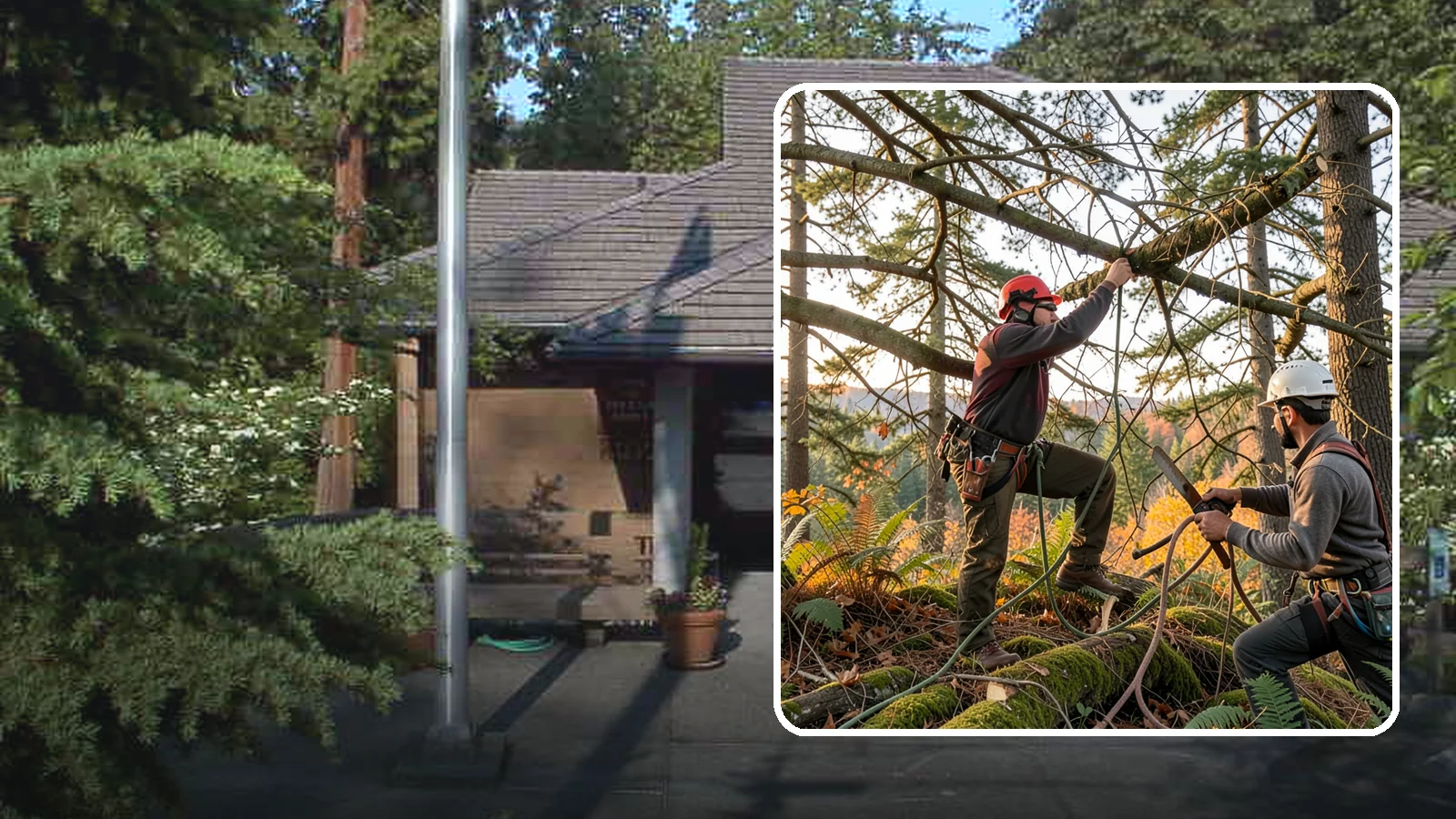
Yarrow Point Crown Thinning
The selective removal of live branches to reduce crown density.
Will thinning the crown of a tree make it safer in a storm? It can help, when the work removes a modest share of live branches and keeps the tree's natural shape. Thinning opens the canopy so wind can pass through it instead of pushing against a dense mass of foliage.
Crown thinning is selective. It is not a way to shrink a tree or cut it back to a set size. Below is how thinning works, what the local wind and rain record suggests about timing, and what to ask before any limbs come off a tree in Yarrow Point.
About Crown Thinning in Yarrow Point
Crown thinning helps improve your tree’s structure by selectively removing live branches to reduce density in the canopy. This process is ideal for homeowners who want better light penetration and increased air movement through their trees while reducing wind load. We work with you to determine if this service fits the specific needs of your landscape.
What Yarrow Point Crown Thinning Includes
This service involves carefully selecting cuts that match the tree species, site conditions, and current access limitations. Our goal is to enhance health and appearance without over-pruning or causing stress to the living tissue. By lowering wind resistance, we help protect both the trees and nearby structures from potential damage during storms.
Yarrow Point Crown Thinning Process
We begin by assessing your canopy condition and defining clear pruning objectives for each tree on site. Trained crews then make clean cuts at proper points using methods suited to the specific species and season. Afterward, all cut material is processed through a wood chipper before we thoroughly clean up the work area around your property.
Equipment We Use for Yarrow Point Crown Thinning
Our teams utilize hand saws, pole saws, chainsaws, and climbing or rigging gear depending on the tree’s height and location. When necessary, aerial lifts are deployed to safely reach higher branches that require attention. We also use wood chippers to efficiently process removed limbs and personal protective equipment for everyone involved in the job.
Yarrow Point Crown Thinning Safety & Best Practices
Safety is a priority as we follow recognized pruning standards to avoid making harmful cuts or removing too much healthy tissue at once. Our crews stay alert for overhead power lines and unstable limbs that could pose risks during removal work. When working aloft, our technicians always use proper fall protection gear to ensure everyone stays secure throughout the project.
Signs You Need Crown Thinning in Yarrow Point
You may need crown thinning if you notice deadwood or weak unions in your trees that increase the risk of branch failure. Interference with sightlines or structures caused by an overly dense canopy is another clear indicator that this service would be beneficial. If wind seems to push against a heavy top, reducing density can help stabilize the tree and improve its overall vigor over time.
What Affects the Cost of Crown Thinning in Yarrow Point
The final cost depends on factors like species-specific timing sensitivities which dictate when certain trees should not be pruned. Access requirements for aerial lifts or climbing gear will also influence how much labor is needed to complete the job safely. Additionally, the volume of cut material that must be processed through a wood chipper plays a role in determining the overall price.
Best Time of Year for Yarrow Point Crown Thinning
In our local climate, it is best to schedule this work outside of late spring and early summer when many native trees are actively transpiring. We often recommend dormant seasons or specific windows dictated by individual species requirements to ensure healthy healing after cuts. Planning ahead for these seasonal constraints helps us provide the highest quality care without harming your landscape’s natural cycle.
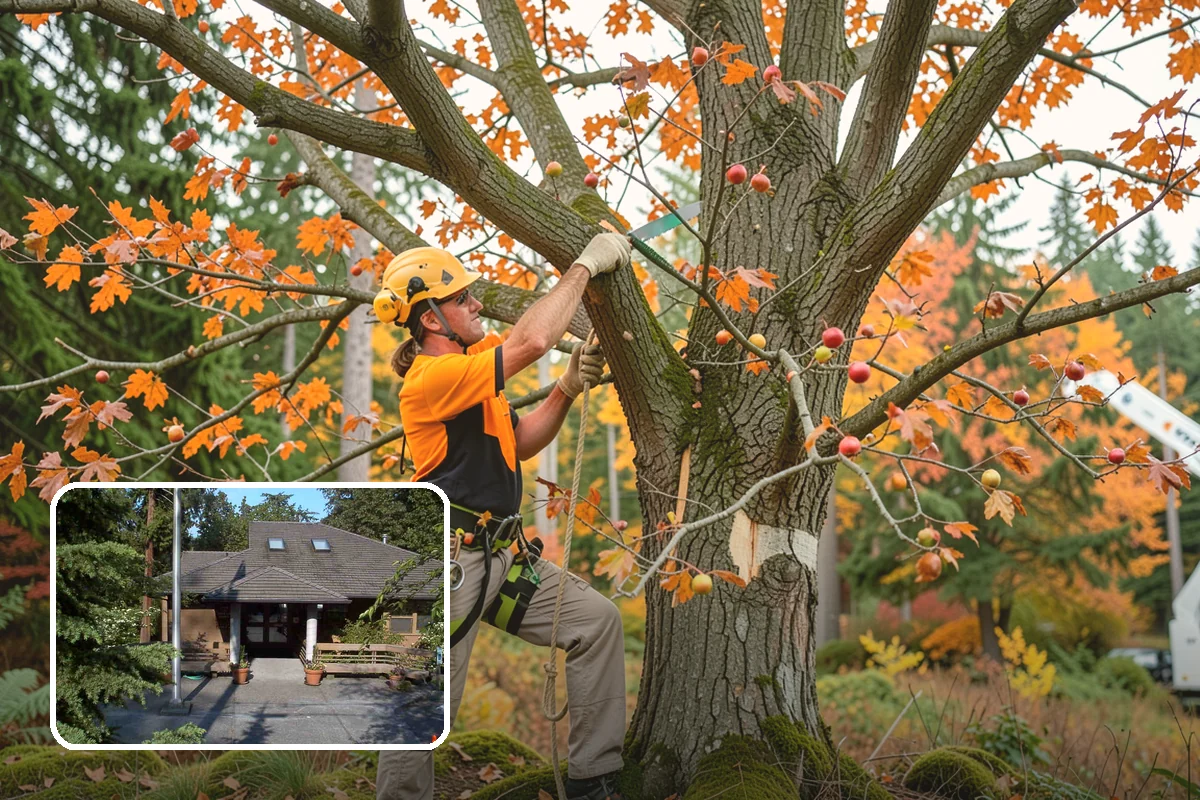
Crown thinning in Yarrow Point: timing, wind and limits
Why wind and wet months shape the plan
The forecast zone that includes Yarrow Point logged 33 high and strong wind episodes from 2005 to 2025. That is zone-wide data, not a reading for any one yard. It does suggest that a dense, heavy canopy will face wind more than once over its life. Removing select interior and crossing branches reduces sail area and lets air move through.
Daymet data for 2005 to 2025 shows 81% of Yarrow Point's yearly rain and snow falls from October to April. Wet foliage and saturated soil add load in those months. Planning thinning ahead of that season, rather than during it, gives the tree a more open crown when storms are most likely.
What good thinning looks like
Standard practice, in line with ISA and ANSI A300 guidance, is to make small, clean cuts back to a branch collar or a suitable lateral. The aim is even spacing of branches along the limbs, not stripping the inside of the crown. Removing too much live foliage at once stresses a tree and can prompt weak, fast regrowth.
- Dead, crossing and rubbing branches come out first.
- Branch structure and the tree's natural outline stay intact.
- Cuts are made to the proper point, never flush and never as stubs.
Thinning is not height reduction
If the real goal is a lower tree, that is a different job. Linda Chalker-Scott of the WSU Puyallup Research and Extension Center advises that height reduction should use reduction cuts to a lateral at least one-third the diameter of the removed limb, and only on rounded trees, not conifers. Topping is not a substitute.
Thinning rules for city trees are not always clear. Before any work starts, we check with the city about whether anything applies to your tree. Call or text 425-484-4442 for a free estimate.
Yarrow Point tree conditions at a glance
| USDA hardiness zone | 9a (8b to 9a across the city) |
|---|---|
| Rain and snow falling October to April | 81% of the year’s total |
| Days that freeze at night and thaw by day | 28 a year |
| Tree City USA | 16 years |
| Electric utility | unconfirmed |
Sources: Daymet daily weather (NASA/ORNL), NOAA Storm Events, USDA plant hardiness map 2023, NRCS soil survey, USGS elevation, WA DNR landslide inventory, USDA Forest Service aerial survey, WSDA, city tree assessments and street-tree inventories, SILVIS Lab, Arbor Day Foundation, and official city and utility pages.
Crown Thinning Serving Yarrow Point
Yarrow Point
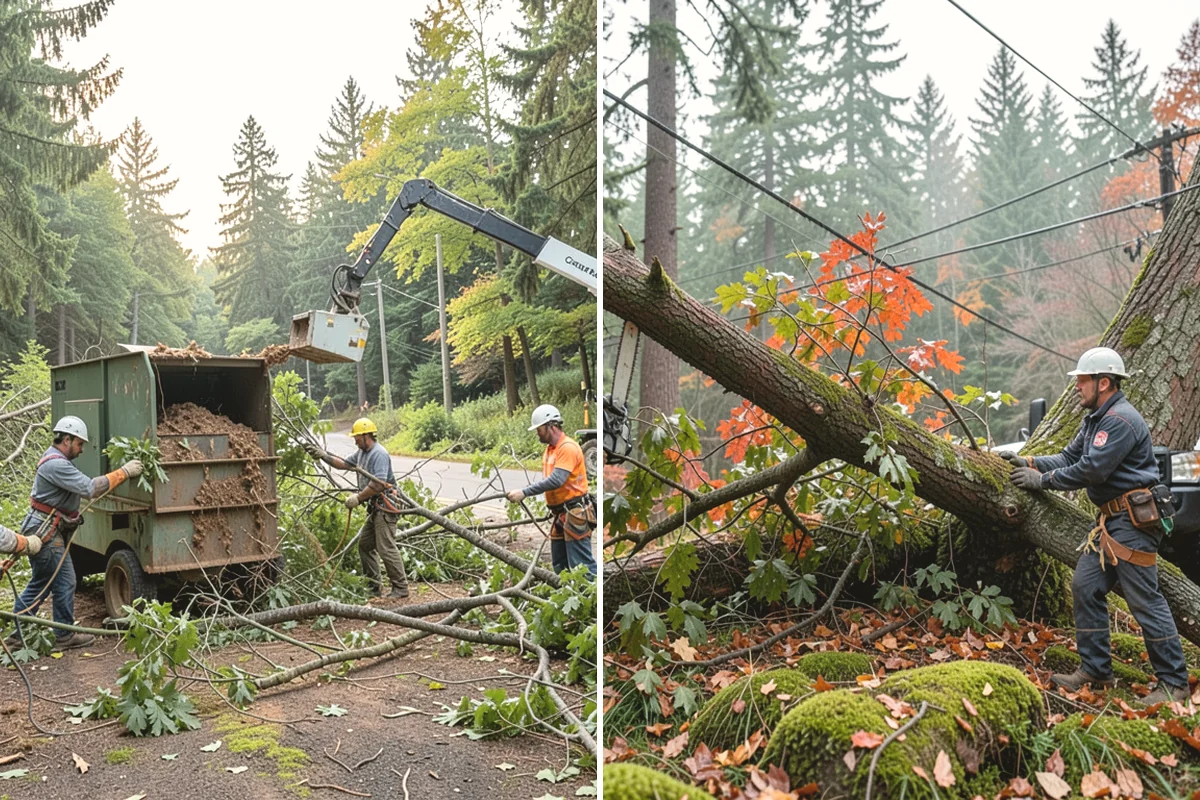

Crown thinning in nearby areas
Also serving Yarrow Point
- Japanese Maple Pruning in Yarrow Pointat Washington Landscaping
- Roof Algae Treatment in Yarrow Pointat Washington Roofing
- Invasive Vegetation Removal in Yarrow Pointat Washington City Services