Where Safety Meets Expert Tree Service.

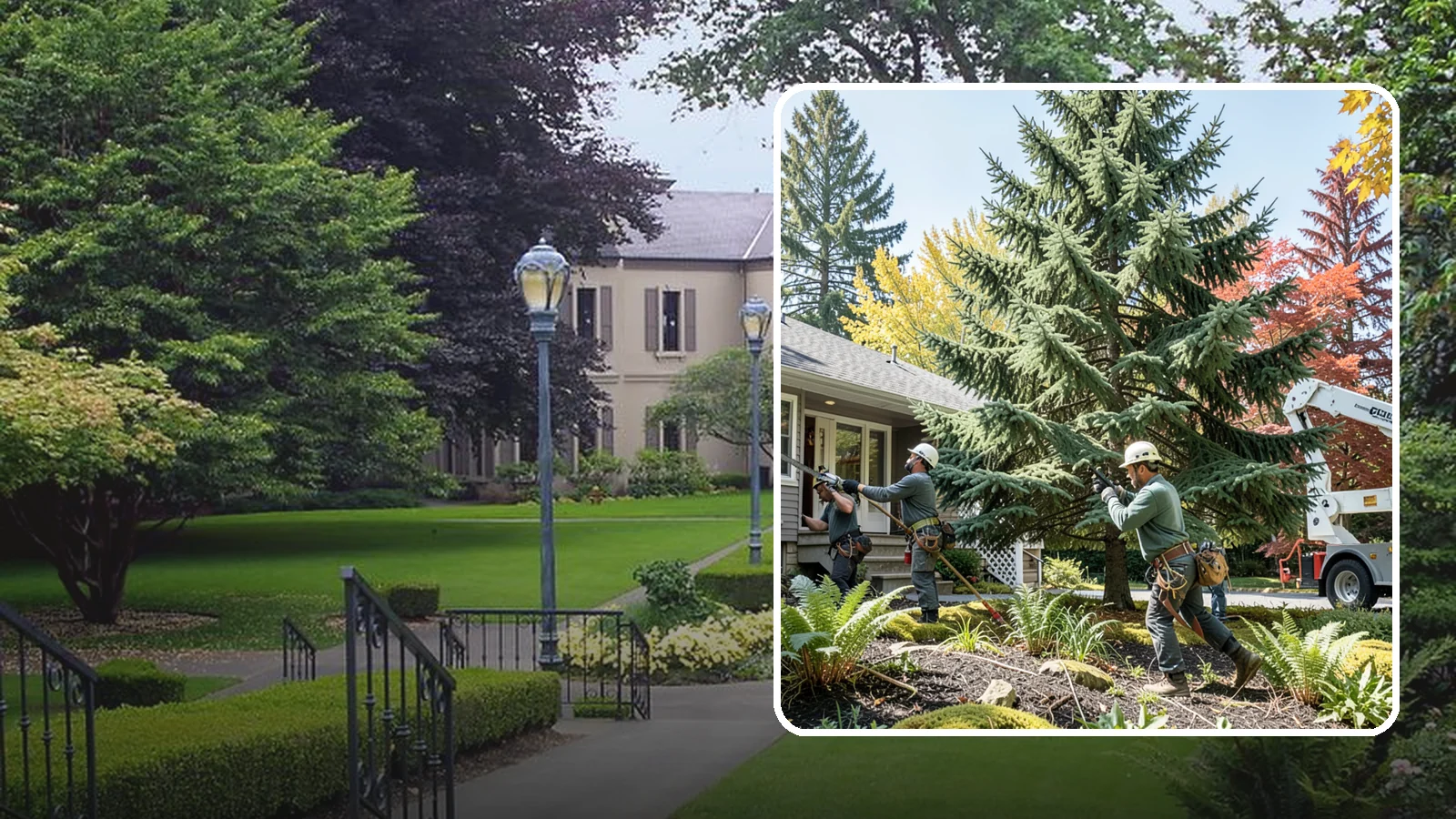
Woodinville HOA Tree Management
Coordinated tree management for homeowner associations.
A board member walks the common areas and sees a leaning alder over the path, a limb resting on a fence, and a few owners asking who pays for the tree at the property line. These are the moments when an HOA realizes it needs a plan for its trees, not just a response to each complaint.
A plan starts with a walk-through of the common areas, a written list of every tree that matters, and a rough order of what needs attention first. It gives the board something concrete to bring to owners and to budget meetings.
About HOA Tree Management in Woodinville
HOA tree management provides coordinated care for shared trees across a community, ensuring they remain safe and presentable for all residents. This service is designed specifically for homeowner associations that need consistent maintenance without the burden of individual scheduling or oversight. We work with trained crews to handle these communal assets using methods matched to each specific site condition.
What Woodinville HOA Tree Management Includes
Our approach includes maintaining shared trees consistently while following recognized arboricultural standards throughout the entire community. Work plans are tailored to match tree species and local access challenges, ensuring every project fits its unique environment. This category of service focuses on property maintenance that keeps common areas looking their best year after year.
Woodinville HOA Tree Management Process
The typical process begins with a thorough inventory and assessment of all trees within the association’s boundaries. We then develop a clear maintenance schedule and priorities based on those findings before performing recurring pruning, inspections, and care tasks. Throughout the project, we document our work to keep your plan updated as conditions change over time.
Equipment We Use for Woodinville HOA Tree Management
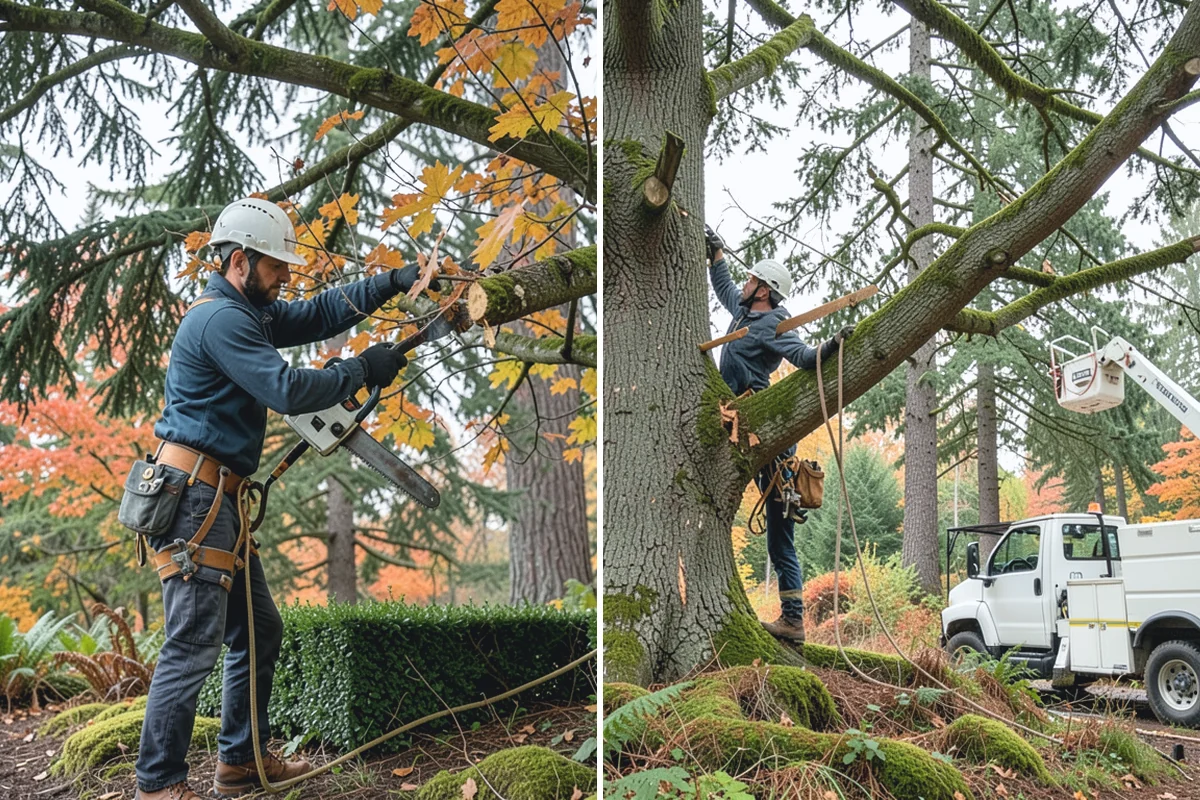
To complete these projects effectively, crews utilize specialized pruning and rigging gear along with aerial lifts when necessary for difficult-to-reach branches. Inspection tools help identify potential issues early, while chipper and hauling equipment manage debris efficiently on-site. All workers wear personal protective equipment to ensure a safe environment during every operation.
Woodinville HOA Tree Management Safety & Best Practices
We coordinate all work carefully around occupied homes and active traffic flows to minimize disruption and risk. Maintaining strict safety zones in public areas is essential when managing trees near shared walkways or driveways. By following recognized standards and keeping detailed records, we hold ourselves accountable for the highest level of care at every step.
Signs You Need HOA Tree Management in Woodinville
You may need this service if your association faces deferred maintenance backlogs that threaten tree health across multiple properties. High-traffic areas often require extra attention to prevent damage from falling limbs or roots encroaching on sidewalks and roads. Varied conditions within a single site can also indicate the need for a unified plan rather than ad-hoc repairs.
What Affects the Cost of HOA Tree Management in Woodinville
Several factors influence the final cost, including any existing backlogs of deferred maintenance that must be addressed first. Areas with high foot traffic require careful coordination to protect people while working around busy shared spaces. The varied conditions found across different parts of your site and the complexity of scheduling access for multiple trees also play a role in pricing.
Best Time of Year for Woodinville HOA Tree Management
Work is performed year-round, allowing us to address needs as they arise rather than waiting for a single optimal season. Our methods are matched to specific tree species and current site conditions so that care can happen whenever it is most beneficial. This flexibility ensures consistent maintenance regardless of the weather or time of year in Washington State.

Managing HOA trees in Woodinville: causes and local conditions
Most HOA tree problems build slowly. Trees in shared areas get planted at the same time, grow at the same pace, and age together. Nobody is assigned to look at them, so defects such as dead limbs, included bark unions, root heave under pavement, and crowded crowns go unnoticed until a storm or a complaint draws attention.
Local conditions raise the stakes. Satellite tree-canopy data (USFS/NLCD 2025) puts Woodinville among the most heavily treed Puget Sound cities we compared. For an HOA, that means trees are likely a large part of the community's shared landscape and its shared risk. More trees means more places where a limb can reach a roof, a road, or a neighbor's yard, so a community-wide review is worth more here than a one-off fix.
Housing type matters too. Single-family detached houses make up about 51% of Woodinville's housing, according to the Census ACS 2020-2024. That figure covers the city as a whole, not any one association. But where houses sit on their own lots, trees often straddle boundaries between a private yard and a common area. Boards should sort out early who owns and maintains each tree, using the governing documents and the plat, because that decides who authorizes the work and who pays.
Permission is the other thing to settle. The published Woodinville tree rules we found don't spell out clearly which removals need city approval. So we check with the city before work starts, and we suggest the board does not assume anything either way.
The work itself usually follows a set order. An ISA Certified Arborist inspects the trees in the common areas and records species, condition, and location. Trees are then sorted by urgency: hazards first, routine pruning next, monitoring after that. Pruning follows ANSI A300 practice, which means removing dead, broken, or crossing branches and keeping live crown reductions modest, with no topping. Removals are scheduled only after ownership and city requirements are confirmed. The board then receives a written summary it can keep for future boards.
Woodinville tree conditions at a glance
| Tree canopy | Among the most heavily treed Puget Sound cities (satellite data) |
|---|---|
| USDA hardiness zone | 8b (8b to 9a across the city) |
| Tree City USA | 30 years |
| High and strong wind episodes, 2005-2025 | 33 in the forecast zone |
| Soils | 55% of land has hardpan or another restrictive layer within 40 in; most common series Alderwood |
Tree removal rules in Woodinville
Woodinville’s published rules don’t spell out clearly which removals need city approval. We check with the city before work starts.
Sources: Daymet daily weather (NASA/ORNL), NOAA Storm Events, USDA plant hardiness map 2023, NRCS soil survey, USGS elevation, WA DNR landslide inventory, USDA Forest Service aerial survey, WSDA, city tree assessments and street-tree inventories, SILVIS Lab, Arbor Day Foundation, and official city and utility pages.
HOA Tree Management Serving Woodinville
Woodinville

Also serving Woodinville
- Brush Clearing in Woodinvilleat Washington City Services
- Commercial Landscape Maintenance in Woodinvilleat Washington Landscaping
- Restaurant Buildout in Woodinvilleat Washington Construction
- Parking Garage Cleaning in Woodinvilleat Washington Pressure Washing