Where Safety Meets Expert Tree Service.


Wilkeson Tree Risk Assessment
A structured assessment of the likelihood and consequences of tree failure.
A tree risk assessment is for property owners with a tree that worries them: one leaning over a house, driveway or play area, one that took a hit in a winter storm, or one with dead limbs, cracks or fungus at the base. It also suits owners who simply want a second opinion before deciding to keep, prune or remove.
An assessment is a trained look at the tree, its site and what it could hit if part of it failed. The result is a clear picture of the risk and your options, so you can act on the tree that needs it and leave the others alone.
About Tree Risk Assessment in Wilkeson
A tree risk assessment helps you understand if your trees are likely to fail and what that failure could mean for your property. This structured evaluation supports informed decisions about keeping a tree, mitigating potential hazards, or removing it safely. It is designed for homeowners who want to ensure the long-term stability of their landscape while protecting people and structures nearby.
What Wilkeson Tree Risk Assessment Includes
Tree risk assessment examines both the likelihood of failure and the consequences if an event occurs. Our trained crews follow recognized arboricultural standards to match methods with your specific tree species, site conditions, and access points. This process helps catch problems early before they escalate into serious issues for your valued trees or home safety.
Wilkeson Tree Risk Assessment Process
The work begins by inspecting each tree along with its surrounding environment to identify key factors like soil quality, pests, disease, or past construction impacts. Based on these findings, we recommend and apply appropriate treatments such as pruning, fertilization, or cabling to improve root conditions and overall health. We document all observations clearly so you have a record of the current status and any follow-up care needed later.
Equipment We Use for Wilkeson Tree Risk Assessment
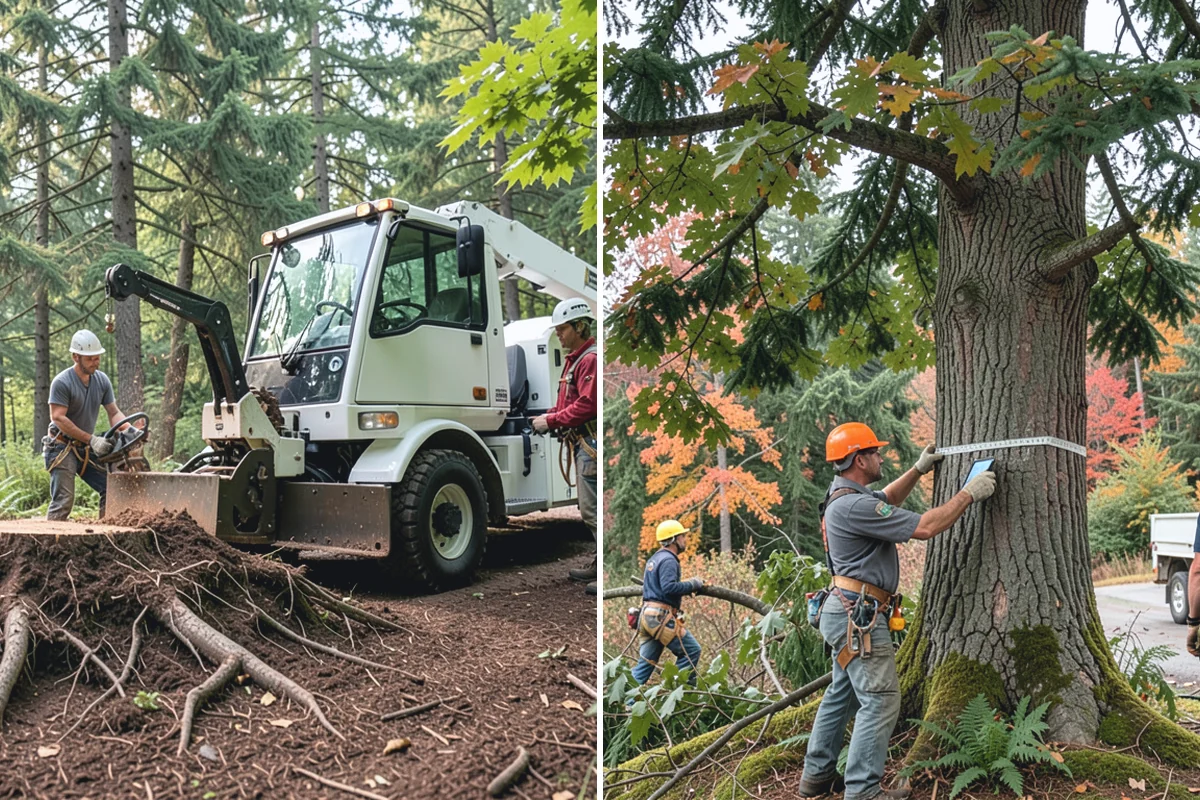
Our crews utilize diagnostic tools and soil probes to gather accurate data about underground roots and ground stability without causing unnecessary damage. Specialized sampling kits allow us to test for pests or disease, while injection equipment delivers treatments directly where they are most effective. When necessary, air excavation tools help inspect root zones carefully, ensuring we protect the tree during every step of the assessment.
Wilkeson Tree Risk Assessment Safety & Best Practices
We strictly follow label and application guidelines for any products used to ensure safety for both our crew and your landscape. Our methods prioritize avoiding damage to roots or trunks while keeping surrounding plantings healthy throughout the work process. Accurate documentation of site conditions is essential, helping us maintain a safe environment that accounts for weather changes and soil limitations.
Signs You Need Tree Risk Assessment in Wilkeson
You may need this service if you notice signs like compacted soils, girdling roots, or visible decline from past construction activities nearby. It becomes especially important when pests or disease are suspected to be affecting the structural integrity of your trees over time. If recent grade changes have altered how water drains near a tree’s base, an assessment helps determine if mitigation is required now.
What Affects the Cost of Tree Risk Assessment in Wilkeson
The investment for this service depends on factors such as the size of the trees and how difficult it is to access them safely. Sites with complex soil conditions that require specialized probing equipment will naturally influence the overall cost more than open areas. Additionally, identifying multiple contributing issues like widespread disease or pest infestations during inspection can affect the final price.
Best Time of Year for Wilkeson Tree Risk Assessment
In our Puget Sound climate, these assessments can be performed year-round to keep your trees healthy and stable throughout all seasons. However, we may need to adjust scheduling when the ground is frozen because proper soil probing becomes difficult in those conditions. We also plan around extreme weather events that could affect crew safety or make it unsafe to work near unstable branches.
Choosing a Tree Risk Assessment Approach in Wilkeson
Owners in Wilkeson usually choose between a few approaches. The right one depends on what you see on the tree and what is underneath it.
Option 1: Visual check from the ground
This is the basic look at the trunk, root flare, crown and surroundings. It suits a tree with no obvious defects that you want checked as a precaution. It is quick, but it can miss problems inside the wood or below ground.
Option 2: Closer assessment after storm damage
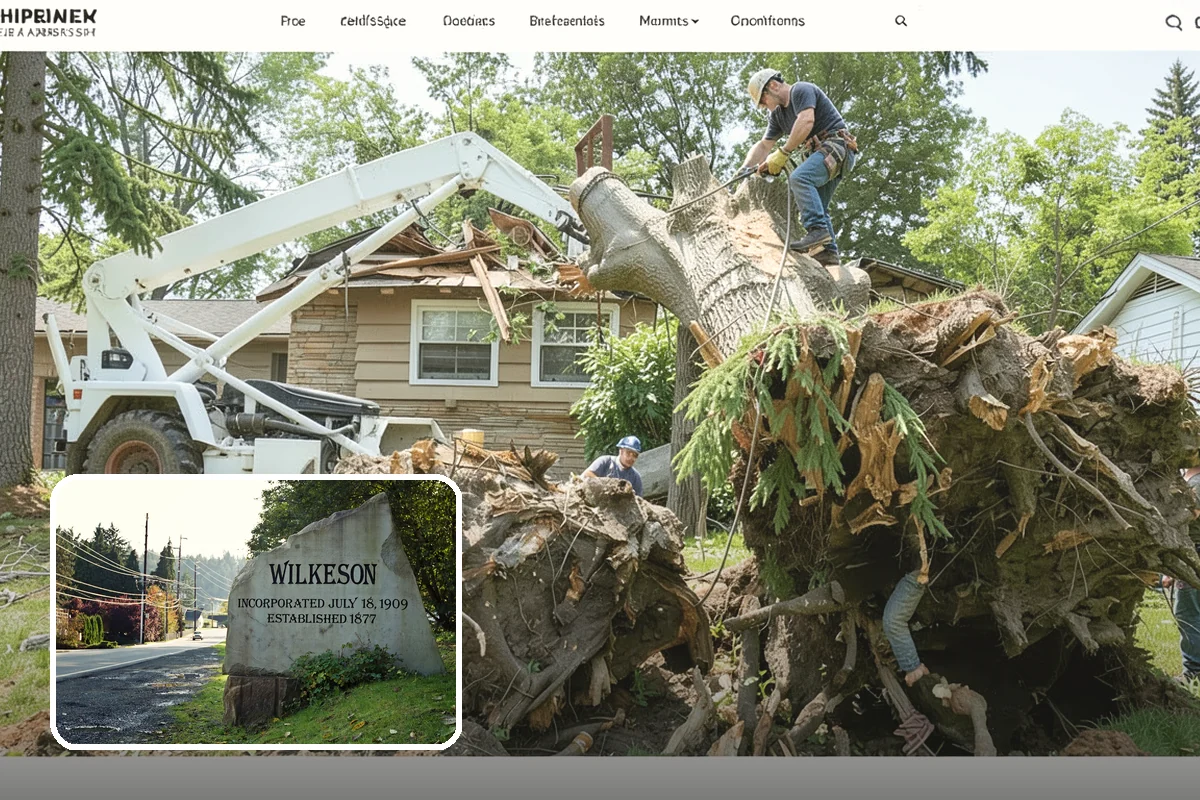
If a storm has passed, this is the one to pick. WA DNR's Tree Link guidance, Timely Tree Tips - Assessing Damage After a Winter Storm (January 11, 2022), lists what to look for:
- Broken or hanging branches
- Torn bark
- Frost cracks
- Split trees
- Broken leaders
Wind is the reason this matters here. The National Weather Service forecast zone that includes Wilkeson logged 40 high and strong wind episodes between 2005 and 2025. That is a zone-wide figure, not a measure of any one yard, but it tells us a tree that has been stressed once may be tested again. A split or hanging limb should be looked at soon, and kept clear of in the meantime.
Option 3: Advanced inspection of a specific concern
When a tree has a lean, decay, a cavity or fungus, a basic look may not be enough. A deeper inspection can include probing the base and checking the roots. It is worth it when the tree stands near a structure or a place where people gather.
What happens after the assessment
Findings usually point to one of a few paths: leave the tree and monitor it, prune to remove dead or weak parts following ANSI A300 practice, add support, or remove it. We do not recommend topping, which weakens a tree.
The published rules we found do not clearly say which removals in Wilkeson need city approval. If removal comes up, we check with the city before any work starts.
Our ISA Certified Arborist can do the assessment. Estimates are free, and you can call or text 425-484-4442.
Wilkeson tree conditions at a glance
| Slopes | More steep ground than most Puget Sound cities |
|---|---|
| Soils | 37% of land has hardpan or another restrictive layer within 40 in; most common series Indianola; 61% well drained |
| Tree canopy | Among the most heavily treed Puget Sound cities (satellite data) |
| High and strong wind episodes, 2005-2025 | 40 in the forecast zone |
| USDA hardiness zone | 8b |
Tree removal rules in Wilkeson
Wilkeson’s published rules don’t spell out clearly which removals need city approval. We check with the city before work starts.
Sources: Daymet daily weather (NASA/ORNL), NOAA Storm Events, USDA plant hardiness map 2023, NRCS soil survey, USGS elevation, WA DNR landslide inventory, USDA Forest Service aerial survey, WSDA, city tree assessments and street-tree inventories, SILVIS Lab, Arbor Day Foundation, and official city and utility pages.
Tree Risk Assessment Serving Wilkeson
Wilkeson

Tree risk assessment in nearby areas
Also serving Wilkeson
- Tree Transplanting in Wilkesonat Washington Landscaping
- Seasonal Flower Planting in Wilkesonat Washington City Services