Where Safety Meets Expert Tree Service.


Wilkeson Small Tree Removal
The removal of small or young trees.
The best window for removing a small tree in Wilkeson is often the drier part of the year, from late spring into early fall. Roughly 79% of the town's yearly rain and snow falls between October and April (Daymet, 2005-2025), so soils are most likely to be soft and soggy in those months.
Small trees are easier to handle than large ones, but timing still affects your lawn, your drive and how cleanly the stump and debris come out. If a tree is dead, leaning or crowding a structure, do not wait for a better season. Plan the removal, then pick the best day you can.
About Small Tree Removal in Wilkeson
We specialize in taking down small or young trees that may be causing trouble on your property. Our trained crews work efficiently to clear these compact trees while keeping your home and landscape safe. This service is perfect for homeowners who need space opened up without the complexity of larger removal jobs.
What Wilkeson Small Tree Removal Includes
Small tree removal focuses specifically on removing smaller, younger specimens from your yard or garden. The process includes carefully taking down limbs or felling the stem in a controlled sequence to ensure safety. We handle everything from rigging and lowering branches to processing wood and clearing debris so you are left with a clean site.
Wilkeson Small Tree Removal Process
Our team starts by assessing hazards and establishing clear drop zones around your property before beginning work. Once safe access is confirmed, we use specific methods matched to the tree species and current ground conditions. After the tree comes down, we process the wood, haul away debris, and perform final cleanup to restore your area.
Equipment We Use for Wilkeson Small Tree Removal
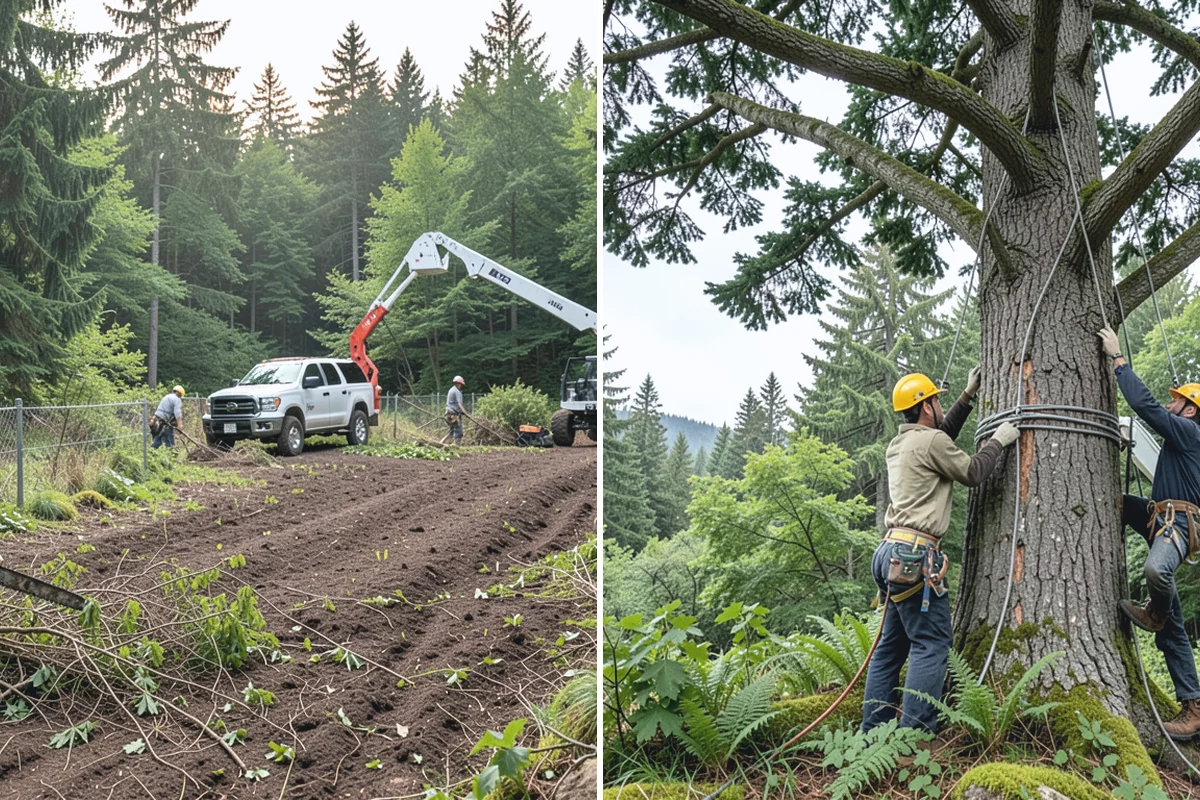
We utilize chainsaws and climbing gear to safely reach and remove branches from these smaller trees. Depending on site access needs, an aerial lift or crane may be brought in to assist with lowering limbs or stems. Additional tools like a wood chipper and ground protection mats help us work efficiently while protecting your landscaping.
Wilkeson Small Tree Removal Safety & Best Practices
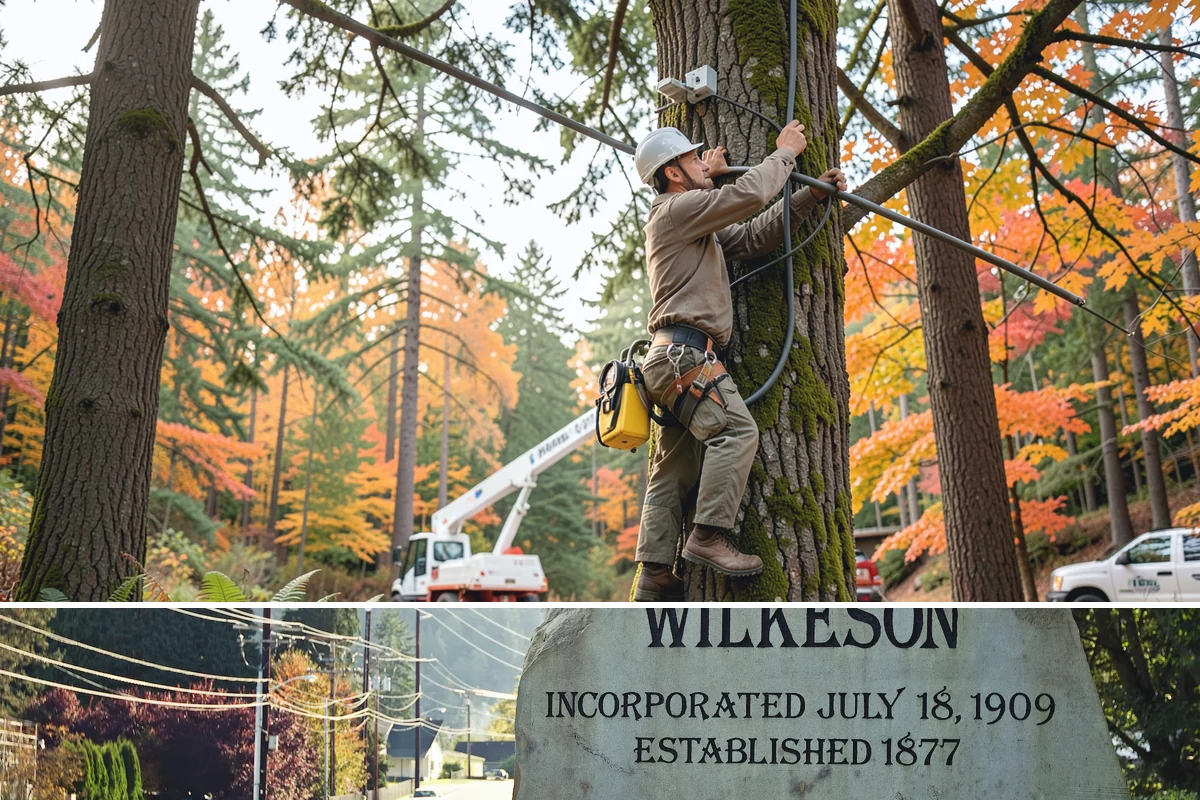
Safety is our priority as we maintain clear drop zones and identify any overhead utility lines before starting. We inspect every tree for hidden decay or structural defects that could change how it needs to be taken down. Our crew uses fall protection gear and maintains constant communication between climbers and ground workers throughout the job.
Signs You Need Small Tree Removal in Wilkeson
You might need this service if a young tree is leaning unpredictably toward your house, fence, or power lines. Signs of hidden internal decay or limited space for equipment often indicate that professional removal is necessary to prevent accidents. If you notice pests spreading from one small tree to others nearby, removing the source can help protect your entire grove.
What Affects the Cost of Small Tree Removal in Wilkeson
The price depends on factors like the specific size of the tree and how difficult it will be to access the site. Hidden issues such as internal decay or proximity to power lines may require specialized rigging techniques that affect pricing. Additionally, the complexity of processing and hauling away the debris plays a significant role in determining the final cost.
Best Time of Year for Wilkeson Small Tree Removal
In our local climate, this work can generally be done at any time during the year for small trees. However, we exercise extra caution during wet seasons when soft ground makes equipment access harder and increases fall hazards. Planning your project outside of heavy rain periods ensures a safer environment for both our crew and your property.
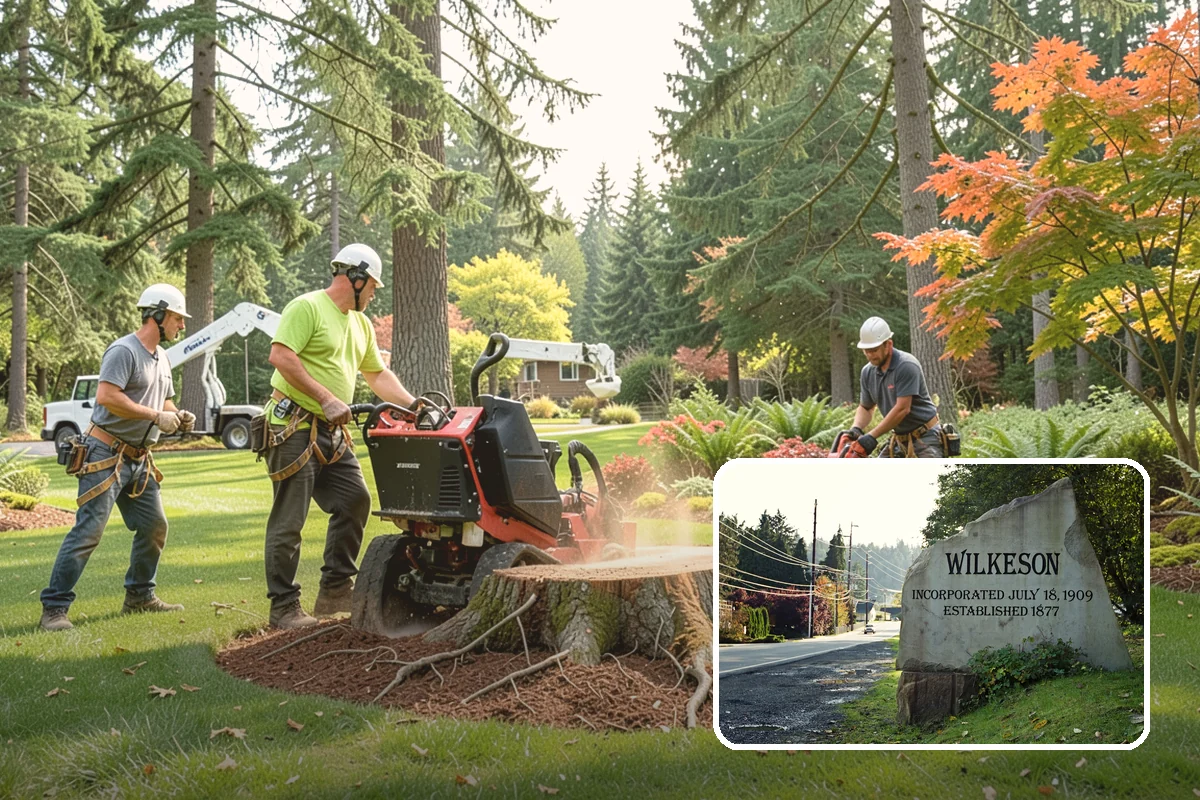
Planning a small tree removal in Wilkeson
Start by deciding what you want when the tree is gone. Some owners want the stump ground out so they can plant or mow. Others only need the trunk down and are fine leaving a low stump for now. Say which in your first call, because it changes the job.
City rules come first
The published Wilkeson rules we found do not spell out clearly which removals need city approval. So we check with the city before work starts. That keeps you from cutting a tree and then learning a step was missed. It is also worth asking us about any tree near a property line or a neighbor's fence.
What affects the scope
Size and species matter, but access matters just as much. A tree in an open yard is simple to drop in sections or fell in one piece. A tree beside a house, a power line or a steep slope takes more rigging and more care. Wet ground can also limit where we can walk or roll material out. Wilkeson is in USDA hardiness zone 8b (USDA map, 2023). That is a general climate guide, not a read on your tree, but it helps explain why many local trees keep growing vigorously and may leave heavy roots behind.
What to expect on the day
The crew walks the site, sets up a drop zone and protects what is nearby. The tree is cut down in controlled pieces. Branches go through a chipper, and the wood is cut into lengths. You can ask to keep logs for firewood or have them hauled off. If you booked stump grinding, it comes after the tree is down. We rake up the work area before leaving.
Our ISA Certified Arborist can look at the tree during a free estimate, and we are licensed, bonded and insured.
Practical tip: before we arrive, walk the route from the tree to the driveway and move hoses, planters and toys out of the way. A clear path speeds the work and lowers the chance of damage.
Wilkeson tree conditions at a glance
| USDA hardiness zone | 8b |
|---|---|
| Tree canopy | Among the most heavily treed Puget Sound cities (satellite data) |
| Slopes | More steep ground than most Puget Sound cities |
| Soils | 37% of land has hardpan or another restrictive layer within 40 in; most common series Indianola; 61% well drained |
| High and strong wind episodes, 2005-2025 | 40 in the forecast zone |
| Electric utility | Puget Sound Energy (PSE) |
Tree removal rules in Wilkeson
Wilkeson’s published rules don’t spell out clearly which removals need city approval. We check with the city before work starts.
Trees near the power line to your house
Puget Sound Energy (PSE): Service line (wire from PSE pole to home or meter pole): PSE does not trim it; homeowner/private arborist trims.
PSE performs a safety disconnection so the homeowner or private tree trimmer/arborist can work; Call at least 5 business days ahead to check crew availability and potential charges.
Safety disconnect: 1-888-321-7779 (5+ business days ahead). Utility page.
Any fee for a disconnect is set by the utility.
Strongest wind events near Wilkeson
- Dec 17, 2010: gusts to 72 mph
- Feb 1, 2017: gusts to 70 mph
- Feb 7, 2012: gusts to 70 mph
NOAA Storm Events, forecast zone that includes Wilkeson, 2005-2025.
Sources: Daymet daily weather (NASA/ORNL), NOAA Storm Events, USDA plant hardiness map 2023, NRCS soil survey, USGS elevation, WA DNR landslide inventory, USDA Forest Service aerial survey, WSDA, city tree assessments and street-tree inventories, SILVIS Lab, Arbor Day Foundation, and official city and utility pages.
Small Tree Removal Serving Wilkeson
Wilkeson
Small tree removal in nearby areas
Also serving Wilkeson
- Ornamental Tree Planting in Wilkesonat Washington Landscaping
- Tree Mulching in Wilkesonat Washington City Services
- Fallen Tree Firewood in Wilkesonat Washington Firewood