Where Safety Meets Expert Tree Service.


Wilkeson Sidewalk Clearance Pruning
Pruning to provide clearance over walkways.
You notice it when you walk the sidewalk. Branches brush your shoulder, a stroller has to swerve, or a neighbor ducks under a limb that hangs lower than it did last year. Low growth over a walkway is easy to spot and usually easy to fix before it gets worse.
Sidewalk clearance pruning removes the lower or outward-reaching branches that hang into the walking space. Done in a measured way, it keeps the path open and leaves the tree with a sound shape. Here is what causes the problem in Wilkeson and how the work is done.
About Sidewalk Clearance Pruning in Wilkeson
Sidewalk clearance pruning helps keep your pedestrian paths safe and unobstructed by managing tree branches near walkways. This service is designed for homeowners who want clear sightlines while maintaining the health of their trees. We work with you to ensure that people can move freely without worrying about overhead limbs.
What Wilkeson Sidewalk Clearance Pruning Includes
This specific type of pruning focuses on providing adequate clearance over sidewalks and other walkable areas. Our trained crews follow recognized arboricultural standards, selecting methods that match your tree species and site conditions. The goal is to keep paths open while preserving the natural structure and beauty of each tree.
Wilkeson Sidewalk Clearance Pruning Process
We begin by assessing the current canopy condition and defining clear pruning objectives for your property. Careful cuts are made at proper points without over-pruning, ensuring minimal stress on the trees. Afterward, we lower and process all cut material before thoroughly cleaning up the work area to leave everything tidy.
Equipment We Use for Wilkeson Sidewalk Clearance Pruning
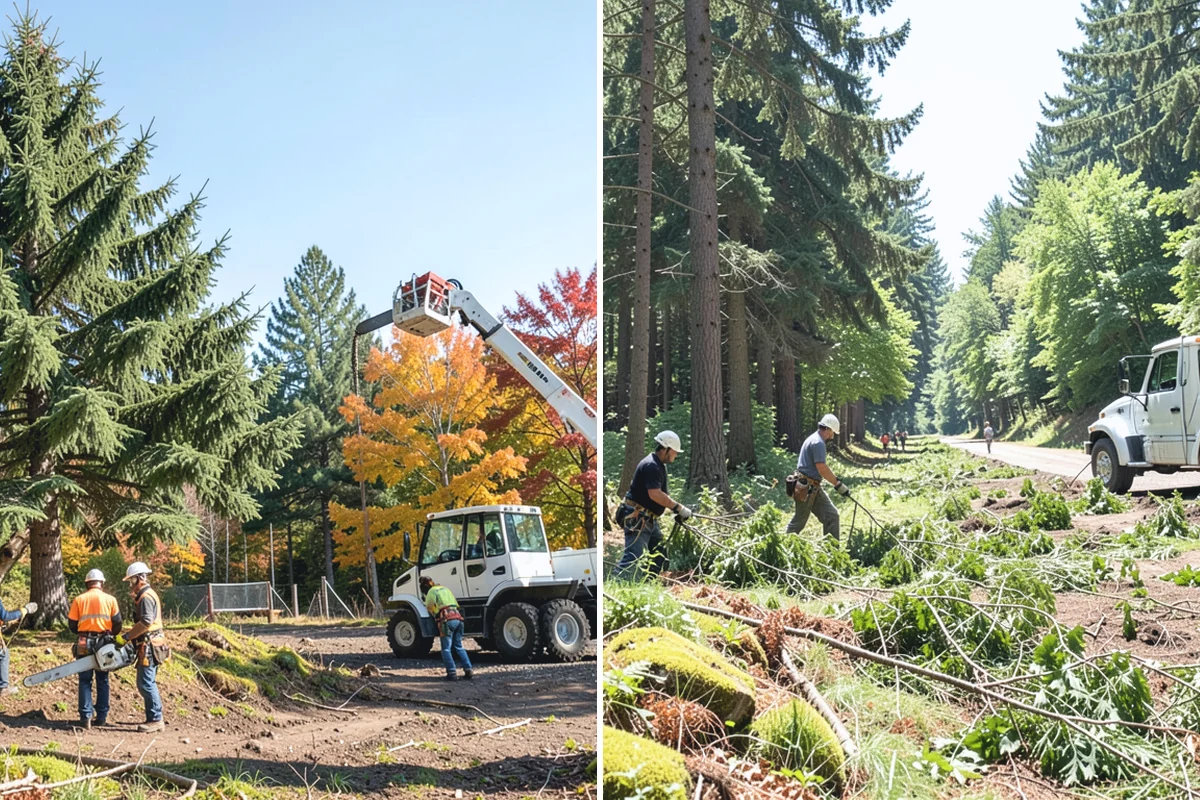
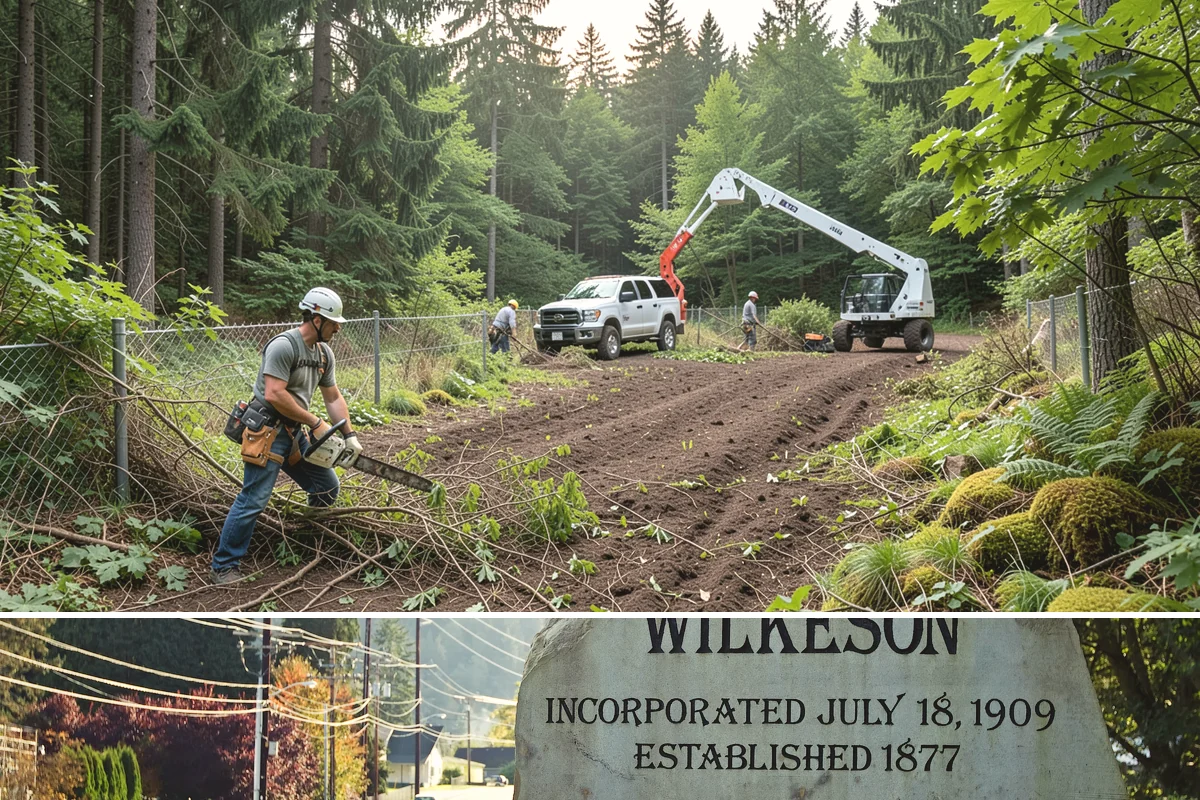
Our crews use a variety of tools including hand saws, pole saws, chainsaws, and wood chippers depending on the job size. When branches are high or hard to reach, we utilize climbing gear, rigging equipment, or aerial lifts as needed. All team members wear necessary personal protective equipment while operating these machines safely around your home.
Wilkeson Sidewalk Clearance Pruning Safety & Best Practices
We strictly follow recognized pruning standards to avoid making harmful cuts that could weaken a tree’s structure. Our approach limits removal to healthy amounts of live tissue and keeps an eye out for unstable limbs or overhead power lines. When working at height, we always use proper fall protection to ensure the safety of our crew on your property.
Signs You Need Sidewalk Clearance Pruning in Wilkeson
You may need this service if you notice branches hanging low over sidewalks where pedestrians walk daily. Deadwood in weak unions or interference with nearby structures are also common reasons to schedule a clearance pruning session. If you feel that sightlines along your path are blocked by dense foliage, it is time to contact us for an assessment.
What Affects the Cost of Sidewalk Clearance Pruning in Wilkeson
The final cost depends on the specific tree species and their overall canopy condition at the site. Access requirements such as using climbing gear or aerial lifts will also influence how much work is needed. Additionally, the volume of material that must be processed through our wood chipper plays a role in the total price.
Best Time of Year for Wilkeson Sidewalk Clearance Pruning
While we follow recognized arboricultural standards matched to your specific site conditions, it is best to avoid dormant seasons for certain Pacific Northwest species. We aim to schedule this work when tree health will not be stressed by seasonal changes or weather patterns. Our team will advise you on the ideal time based on the unique needs of each tree in your yard.

Sidewalk clearance pruning in Wilkeson: causes and approach
Branches hang over walkways for a simple reason. Limbs grow outward toward light, and a sidewalk edge is often the brightest open space near a tree. Each year they add length and weight. Wet foliage and fruit pull them lower still, so a limb that cleared a pedestrian in summer may sag into the path by winter.
Local weather plays a part. Daymet climate data for 2005 to 2025 shows that 79% of Wilkeson's yearly rain and snow falls from October to April. That means the heaviest, wettest months come when branches are already carrying the most water, and snow can bend low limbs further down. It also means the dry season is a practical time to see how much clearance you really have and to plan the cuts. Check the walkway after a storm too, because a limb that bounces back in dry weather may stay low when it is loaded.
The USDA map lists Wilkeson in plant hardiness zone 8b (2023). That is a general guide to winter cold, and it tells you the kinds of trees that commonly grow here. It does not tell you how any single tree on your property will respond, so we judge each one by its species, health and structure.
How the work is done
Good clearance pruning follows ISA and ANSI A300 style practice. We cut back to a branch union or the branch collar rather than leaving stubs. We take only as much live growth as the tree can spare, and we favor removing a few well-chosen limbs over shearing the whole canopy. We do not top trees, since it leaves weak regrowth and open wounds.
Clearance is set by the walking space you need, plus allowance for the branch to sag under load. We also look at what is causing the low growth. Sometimes a split or a dead limb is the real concern, and that changes the plan.
Wilkeson's published tree rules do not clearly spell out which removals need city approval. If the job turns toward removing a tree or a large limb, we check with the city before work starts. For a free estimate, call or text 425-484-4442.
Wilkeson tree conditions at a glance
| USDA hardiness zone | 8b |
|---|---|
| Rain and snow falling October to April | 79% of the year’s total |
| Tree canopy | Among the most heavily treed Puget Sound cities (satellite data) |
| Days that freeze at night and thaw by day | 43 a year |
| Electric utility | Puget Sound Energy (PSE) |
Trees near the power line to your house
Puget Sound Energy (PSE): Service line (wire from PSE pole to home or meter pole): PSE does not trim it; homeowner/private arborist trims.
PSE performs a safety disconnection so the homeowner or private tree trimmer/arborist can work; Call at least 5 business days ahead to check crew availability and potential charges.
Safety disconnect: 1-888-321-7779 (5+ business days ahead). Utility page.
Any fee for a disconnect is set by the utility.
Sources: Daymet daily weather (NASA/ORNL), NOAA Storm Events, USDA plant hardiness map 2023, NRCS soil survey, USGS elevation, WA DNR landslide inventory, USDA Forest Service aerial survey, WSDA, city tree assessments and street-tree inventories, SILVIS Lab, Arbor Day Foundation, and official city and utility pages.
Sidewalk Clearance Pruning Serving Wilkeson
Wilkeson
Sidewalk clearance pruning in nearby areas
Also serving Wilkeson
- Fruit Tree Pruning in Wilkesonat Washington Landscaping
- Roof Debris Removal in Wilkesonat Washington Roofing
- Tree Mulching in Wilkesonat Washington City Services