Where Safety Meets Expert Tree Service.

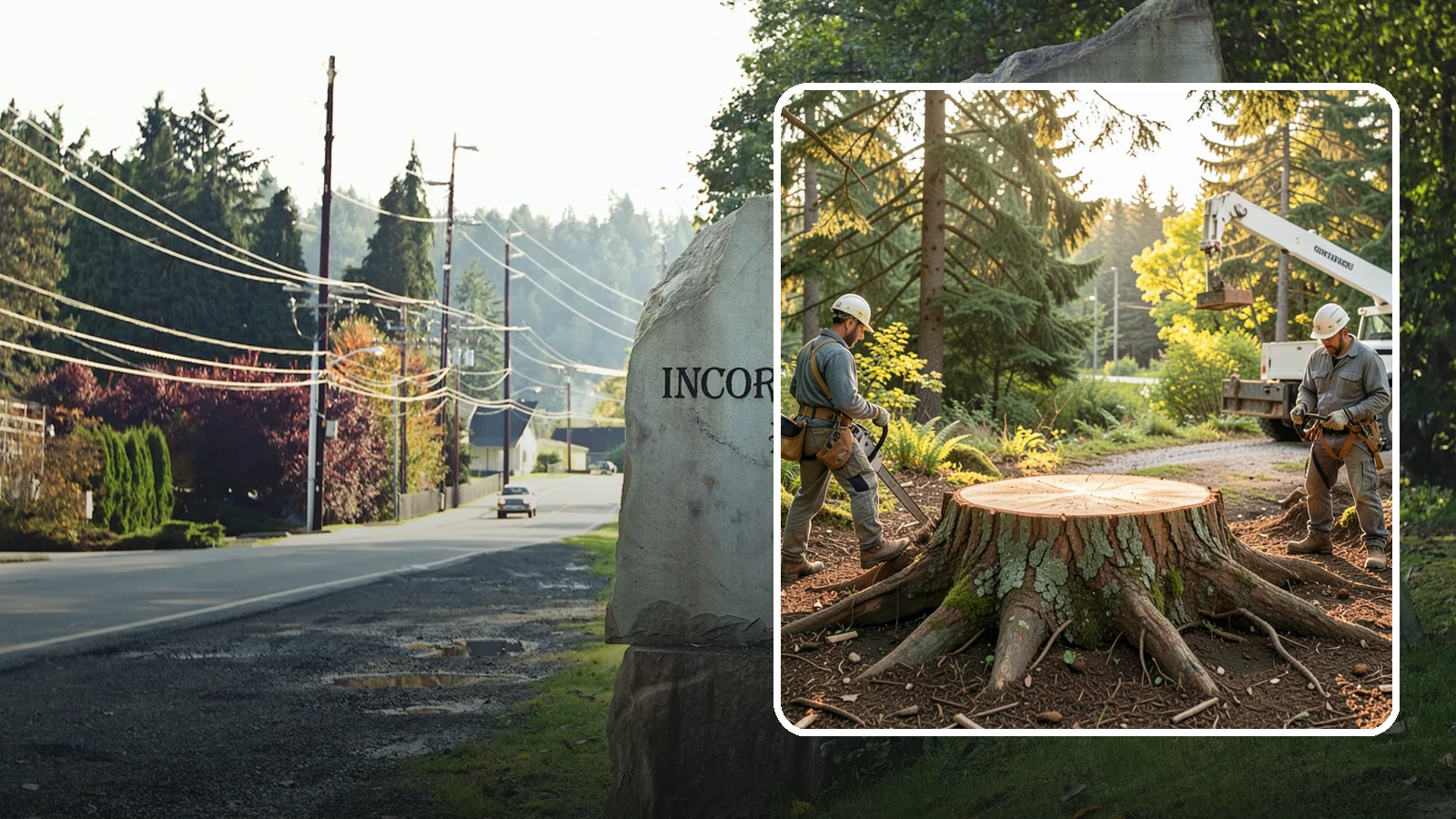
Wilkeson Root Collar Excavation
The careful exposure of the root collar to relieve burial or girdling.
You may notice a trunk that goes straight into the ground with no flare at the base, like a post instead of a tree. Or mulch is piled against the bark, the crown is thinning, or the bark near the soil looks dark and damp.
Any of these can mean the root collar is buried. Root collar excavation exposes the point where the trunk widens into the roots, so the tree can be checked and the area can dry out and get air again.
About Root Collar Excavation in Wilkeson
Root collar excavation is a specialized tree care practice designed to protect your trees from hidden underground stressors. This helpful intervention supports the long-term health of valued specimens by addressing issues like buried trunks or restrictive roots before they escalate into serious decline. We work with homeowners throughout our service area who want to preserve their landscape’s stability and beauty for years to come.
What Wilkeson Root Collar Excavation Includes
This service involves carefully exposing the root collar to relieve burial caused by excess soil or damage from girdling roots. Our trained crews follow recognized arboricultural standards, tailoring every step of the excavation to match your specific tree species and site conditions. The goal is to improve soil and root access while ensuring no harm comes to the trunk during the repair process.
Wilkeson Root Collar Excavation Process
We begin by inspecting each tree and its surrounding environment to identify contributing factors such as poor soils or past construction changes. Once issues are identified, we recommend and apply appropriate treatments that address pests, disease, or physical constraints on the root system. Throughout the project, we document our findings so you understand exactly what was found and how follow-up care will support recovery.
Equipment We Use for Wilkeson Root Collar Excavation
Our crews utilize diagnostic tools and soil probes to assess conditions before making any changes to your landscape. Depending on access limitations and site needs, we may use air excavation equipment or specialized injection systems to treat the root zone gently. We also wear full personal protective gear at all times to ensure a safe environment for our team and your property.
Wilkeson Root Collar Excavation Safety & Best Practices
Safety is central to every job, so we strictly follow label guidelines when applying any products near your plants and soil. Our methods are designed specifically to avoid damaging roots or the trunk while working in tight spaces or around delicate surrounding plantings. We take great care to protect your existing landscape by managing soft soils carefully during wetter periods of the year.
Signs You Need Root Collar Excavation in Wilkeson
You may need this service if you notice signs that excess soil is burying part of your tree’s base or girdling roots are restricting growth. Other indicators include general decline from past construction, grade changes, compacted ground, or infections caused by pests and disease in the root zone. Catching these problems early helps extend the useful life of trees that might otherwise face unnecessary stress or loss.
What Affects the Cost of Root Collar Excavation in Wilkeson
The investment for this work depends on factors like your tree’s species, soil compaction levels, and how difficult it is to access the site. Removing excess soil or untangling girdling roots without harming the trunk adds complexity that influences the final price. Because every landscape is unique, these variables ensure we provide a solution tailored specifically to your situation rather than a one-size-fits-all approach.
Best Time of Year for Wilkeson Root Collar Excavation
While this service can be performed year-round in our region, wet seasons may require specialized equipment to handle soft soils effectively. During times of heavy rain, we take extra precautions to prevent further disturbance to compromised root systems while still addressing urgent needs. Planning your project with us allows us to choose the right timing that balances soil conditions with the health requirements of your specific trees.

Root collar excavation in Wilkeson, Pierce County
The root collar, also called the trunk flare, is where the trunk meets the major roots. It is meant to sit at or just above the soil line. Extra soil, fill from past grading, or deep mulch can bury it over time. Bark is not built to stay wet. Buried bark can stay damp, rot, and become a place where roots wrap around the trunk and squeeze it as both grow.
Mulch is a common cause. A WSU Extension publication on arborist wood chips as landscape mulch (archived) notes that piled mulch creates a dark, moist, low-oxygen environment. That is why chips should be kept back from the trunk, not heaped against it. If you see a mulch volcano at the base of a tree, pulling it back is a good first step.
Local conditions can add to the problem. The NRCS soil survey shows that 37% of the land in Wilkeson has a hard or restrictive layer, such as glacial hardpan, within 40 inches of the surface. Water can sit above a layer like that. The same survey lists the area as 61% well drained and 0% poorly drained, so many sites drain fine, but your own yard may differ. Daymet climate data for 2005 to 2025 show that 79% of Wilkeson's yearly rain and snow falls from October to April. A buried collar that stays wet through those months has little chance to dry out.
The work itself is careful. We remove soil or mulch from around the base, usually by hand or with air or low-pressure tools, so roots are not cut or scraped. Once the flare is open, we look for rot, girdling roots, and bark damage. Where a root is circling the trunk, it may be pruned if the tree can tolerate it. We then leave the flare exposed and set mulch back from the trunk in a thin, even layer.
Results depend on how long the collar was buried and how the tree is doing. Excavation does not guarantee recovery, but it lets us see what is happening and removes a common stress. If a tree is close to a structure or the work could affect roots near it, we check with the city before work starts. Call or text 425-484-4442 for a free estimate.
Wilkeson tree conditions at a glance
| USDA hardiness zone | 8b |
|---|---|
| Soils | 37% of land has hardpan or another restrictive layer within 40 in; most common series Indianola; 61% well drained |
| Rain and snow falling October to April | 79% of the year’s total |
| Days with 0.1 in or more of rain | 142 a year |
| Tree canopy | Among the most heavily treed Puget Sound cities (satellite data) |
| Days that freeze at night and thaw by day | 43 a year |
Tree health near Wilkeson
- Bears6,697 ac
- Decline, cause not identified907 ac
- Douglas-fir engraver894 ac
Forest damage mapped from the air within 10 km of Wilkeson, 2021-2025 (USDA Forest Service and WA DNR). This covers forest land, not street or yard trees. “Decline, cause not identified” is dieback with no single cause found.
Sources: Daymet daily weather (NASA/ORNL), NOAA Storm Events, USDA plant hardiness map 2023, NRCS soil survey, USGS elevation, WA DNR landslide inventory, USDA Forest Service aerial survey, WSDA, city tree assessments and street-tree inventories, SILVIS Lab, Arbor Day Foundation, and official city and utility pages.
Root Collar Excavation Serving Wilkeson
Wilkeson
Root collar excavation in nearby areas
Also serving Wilkeson
- Evergreen Pruning in Wilkesonat Washington Landscaping
- Weed Control in Wilkesonat Washington City Services