Where Safety Meets Expert Tree Service.

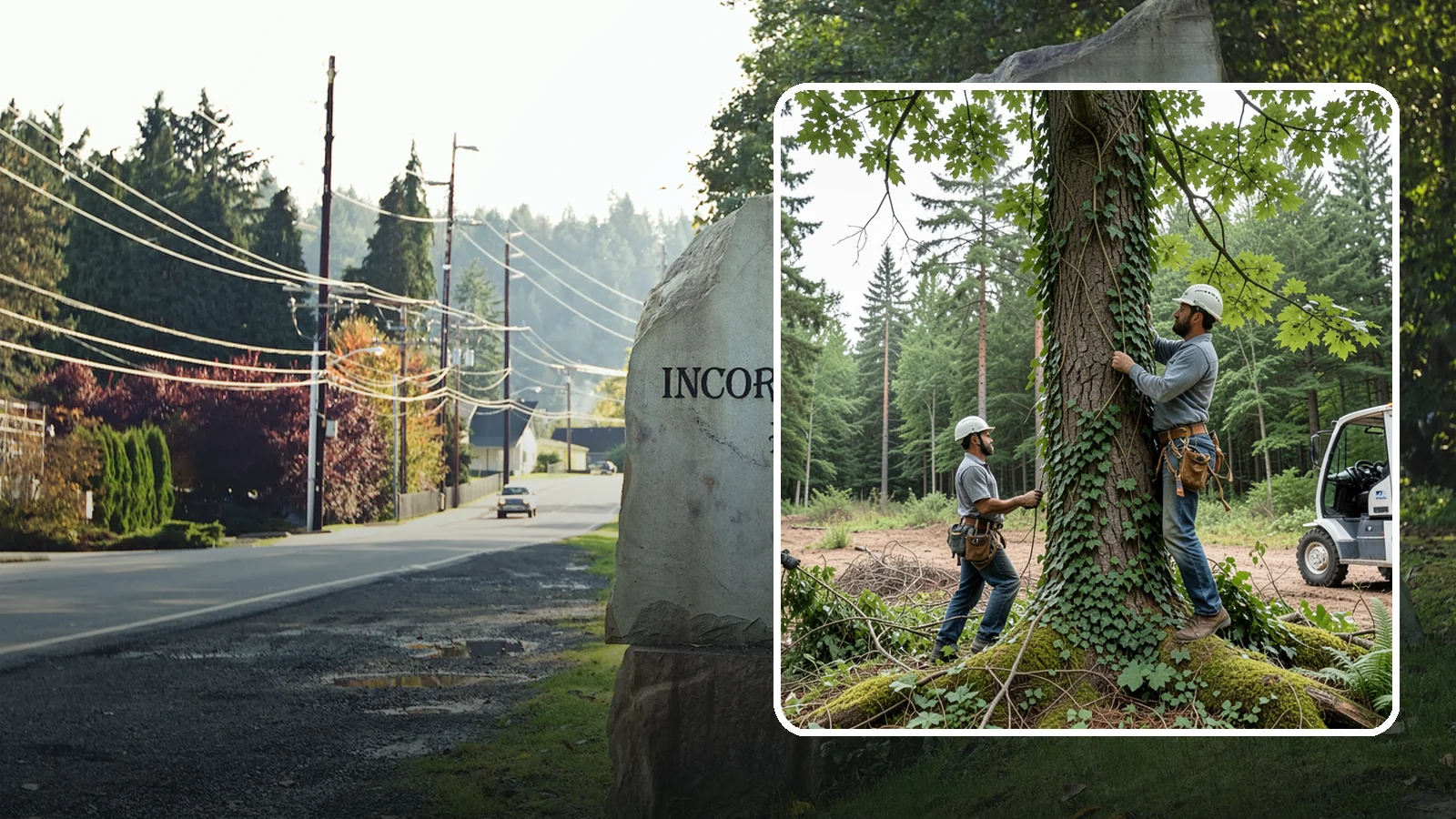
Wilkeson Ivy Removal From Trees
The removal of ivy and climbing vines from trees.
You notice the trunk disappearing under a thick green sleeve. Leaves crowd the lower branches, and ivy stems as thick as a wrist climb toward the crown. That is usually the point when owners start asking whether the tree is in trouble.
Ivy on a tree is easier to deal with early, while the stems are still small enough to cut cleanly. Below, we explain how ivy harms trees, why Wilkeson's setting matters, and how the removal is done.
About Ivy Removal From Trees in Wilkeson
Removing ivy from trees is a vital part of keeping your landscape healthy and stable. This care helps protect long-term tree health while allowing for proper inspection of the trunk and branches. It supports the stability of valued specimens by addressing issues before they escalate into larger problems.
What Wilkeson Ivy Removal From Trees Includes
Our crews specialize in removing climbing vines like ivy to restore natural conditions around the root system. The work is tailored to match specific tree species, site conditions, and access constraints for a safe outcome. This process also improves soil and root conditions that may have been compromised by heavy vine growth.
Wilkeson Ivy Removal From Trees Process
We begin with a thorough inspection of the tree and its surrounding area to identify contributing factors such as pests or disease. Based on these findings, we recommend and apply appropriate treatments while documenting all observations for follow-up care. Our methods are designed to avoid damage to roots and trunks during removal operations.
Equipment We Use for Wilkeson Ivy Removal From Trees
Trained crews use diagnostic tools and soil probes to assess the health of your trees before starting work. We utilize injection or application equipment as needed, along with air excavation tools when specific conditions require them. All personnel wear necessary personal protective equipment to ensure safety throughout every step of the job.
Wilkeson Ivy Removal From Trees Safety & Best Practices
Safety is a priority, so we strictly follow label and application guidelines for any products used during removal. Our team takes care to protect nearby soil and surrounding plantings while avoiding damage to roots or trunks. We also document conditions accurately to maintain clear records of our work and recommendations.
Signs You Need Ivy Removal From Trees in Wilkeson
You may need this service if you notice signs of decline from past construction, grade changes, or compacted soils. Girdling roots caused by vines are another indicator that ivy removal could benefit your tree’s stability. Catching these problems early allows us to improve soil conditions before they lead to serious health issues.
What Affects the Cost of Ivy Removal From Trees in Wilkeson
The cost is influenced by the height and spread of each individual tree being treated. Access constraints for equipment can also impact pricing, as well as the volume of ivy debris that requires removal. These factors ensure we provide a fair estimate based on the specific needs of your property.
Best Time of Year for Wilkeson Ivy Removal From Trees
This work can be performed year-round in our local climate to address issues whenever they arise. However, extra caution is required during wet seasons to prevent soil erosion or slipping hazards while working near trees. Planning around these weather patterns helps ensure the safety of both workers and your landscape.
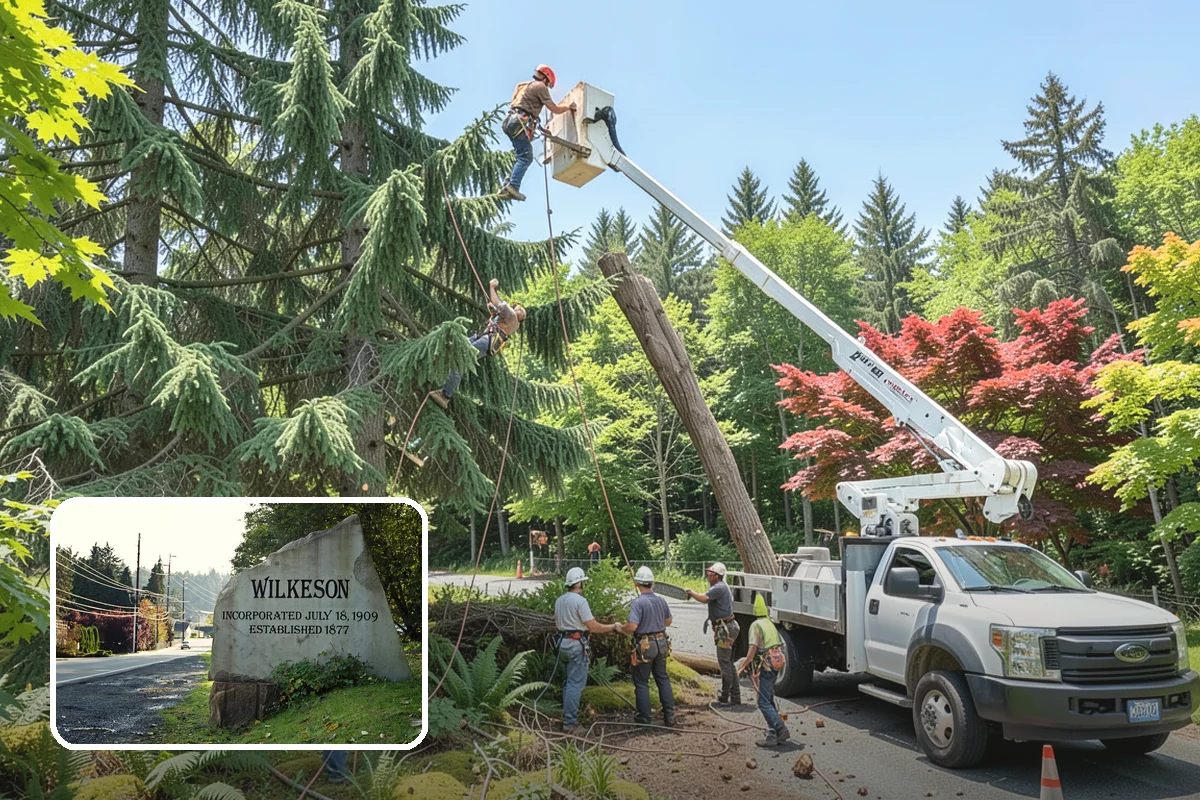
How ivy removal works on Wilkeson trees
English ivy roots into bark and climbs by tiny holdfasts. It does not take water from the tree the way a parasite would. The harm comes from other effects. Dense foliage shades the tree's own leaves. It adds weight and sail area to the crown. It also hides the bark, so cracks, decay and fungal growth go unseen.
Moisture makes ivy thrive. Daymet climate data for 2005-2025 shows about 142 days a year in Wilkeson with 0.1 inch of rain or more. That is a lot of damp days, and ivy stays green and keeps growing through them. Damp conditions also keep bark wet under the vines, which is one more reason to get a clear look at the trunk.
Wilkeson is also among the most heavily treed Puget Sound cities we compared, based on satellite canopy data (USFS/NLCD 2025). Many properties here have mature trees, and ivy can spread from the ground into several of them. A federal and state aerial survey (USDA Forest Service and WA DNR, 2021-2025) mapped damage in forest within 10 km of town, mostly bear damage to Douglas-fir. That covers forest land, not yard trees. We mention it because a tree with other stress deserves a careful look before and after the ivy comes off.
The work follows standard practice. We cut the ivy stems all the way around the trunk at about chest height, leaving a clear gap. We do not pull vines off the bark, because that tears the bark and can injure the tree. The vines above the cut then die and are left to dry and loosen over time, while the ground-level plants are dug out or cut back so they cannot regrow up the trunk. Once the trunk is visible, we check it for decay, cavities and loose bark.
Ivy on the ground is a separate job from the trees, and we will tell you where it ends. If you want an assessment, call or text 425-484-4442 for a free estimate from our ISA Certified Arborist team.
Wilkeson tree conditions at a glance
| Homes in the wildland-urban interface | 100% |
|---|---|
| Land under dense tree cover (50%+ canopy) | 51% |
| Slopes | More steep ground than most Puget Sound cities |
| Rain and snow falling October to April | 79% of the year’s total |
Tree removal rules in Wilkeson
Wilkeson’s published rules don’t spell out clearly which removals need city approval. We check with the city before work starts.
Tree health near Wilkeson
- Bears6,697 ac
- Decline, cause not identified907 ac
- Douglas-fir engraver894 ac
Forest damage mapped from the air within 10 km of Wilkeson, 2021-2025 (USDA Forest Service and WA DNR). This covers forest land, not street or yard trees. “Decline, cause not identified” is dieback with no single cause found.
Sources: Daymet daily weather (NASA/ORNL), NOAA Storm Events, USDA plant hardiness map 2023, NRCS soil survey, USGS elevation, WA DNR landslide inventory, USDA Forest Service aerial survey, WSDA, city tree assessments and street-tree inventories, SILVIS Lab, Arbor Day Foundation, and official city and utility pages.
Ivy Removal From Trees Serving Wilkeson
Wilkeson
Ivy removal from trees in nearby areas
Also serving Wilkeson
- Tree Staking in Wilkesonat Washington Landscaping
- Turf Edging in Wilkesonat Washington City Services