Where Safety Meets Expert Tree Service.

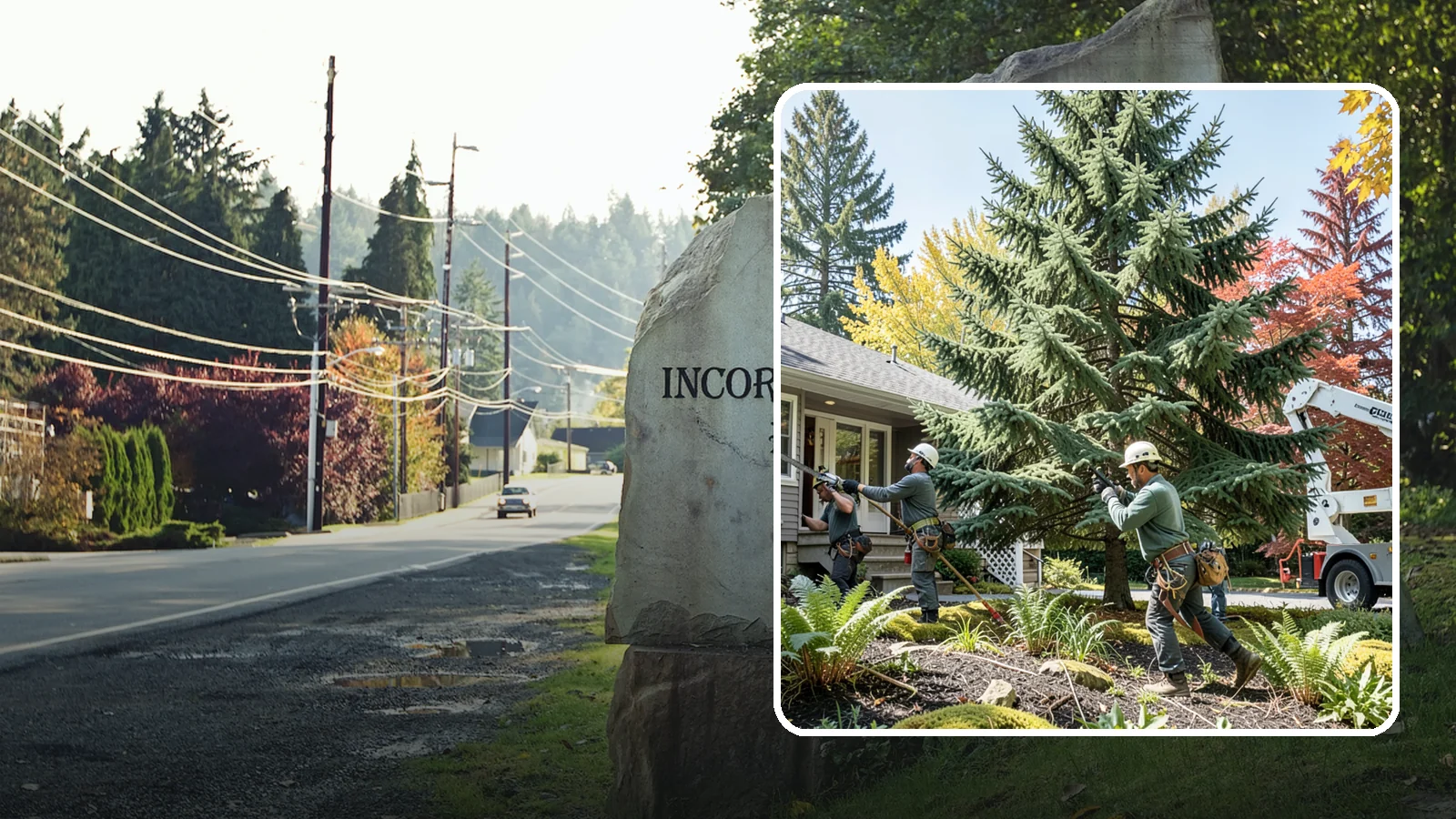
Wilkeson HOA Tree Management
Coordinated tree management for homeowner associations.
A board member walks the common areas and sees a leaning fir over the path, deadwood in a maple, and a stump that nobody remembers scheduling. Owners email about limbs over roofs. Nobody knows which tree is whose job, or which complaint came first.
HOA tree management turns those scattered calls into one plan. It starts with a walk of the common ground, a written list of trees by condition, and a schedule the board can follow and explain to residents.
About HOA Tree Management in Wilkeson
HOA tree management provides coordinated care for shared trees across a community, ensuring they remain safe and presentable for all residents. This service is designed specifically for homeowner associations that need consistent maintenance without the burden of individual scheduling or oversight. We work with trained crews to handle these communal assets using methods matched to each specific site condition.
What Wilkeson HOA Tree Management Includes
Our approach includes maintaining shared trees consistently while following recognized arboricultural standards throughout the entire community. Work plans are tailored to match tree species and local access challenges, ensuring every project fits its unique environment. This category of service focuses on property maintenance that keeps common areas looking their best year after year.
Wilkeson HOA Tree Management Process
The typical process begins with a thorough inventory and assessment of all trees within the association’s boundaries. We then develop a clear maintenance schedule and priorities based on those findings before performing recurring pruning, inspections, and care tasks. Throughout the project, we document our work to keep your plan updated as conditions change over time.
Equipment We Use for Wilkeson HOA Tree Management
To complete these projects effectively, crews utilize specialized pruning and rigging gear along with aerial lifts when necessary for difficult-to-reach branches. Inspection tools help identify potential issues early, while chipper and hauling equipment manage debris efficiently on-site. All workers wear personal protective equipment to ensure a safe environment during every operation.
Wilkeson HOA Tree Management Safety & Best Practices
We coordinate all work carefully around occupied homes and active traffic flows to minimize disruption and risk. Maintaining strict safety zones in public areas is essential when managing trees near shared walkways or driveways. By following recognized standards and keeping detailed records, we hold ourselves accountable for the highest level of care at every step.
Signs You Need HOA Tree Management in Wilkeson
You may need this service if your association faces deferred maintenance backlogs that threaten tree health across multiple properties. High-traffic areas often require extra attention to prevent damage from falling limbs or roots encroaching on sidewalks and roads. Varied conditions within a single site can also indicate the need for a unified plan rather than ad-hoc repairs.
What Affects the Cost of HOA Tree Management in Wilkeson
Several factors influence the final cost, including any existing backlogs of deferred maintenance that must be addressed first. Areas with high foot traffic require careful coordination to protect people while working around busy shared spaces. The varied conditions found across different parts of your site and the complexity of scheduling access for multiple trees also play a role in pricing.
Best Time of Year for Wilkeson HOA Tree Management
Work is performed year-round, allowing us to address needs as they arise rather than waiting for a single optimal season. Our methods are matched to specific tree species and current site conditions so that care can happen whenever it is most beneficial. This flexibility ensures consistent maintenance regardless of the weather or time of year in Washington State.
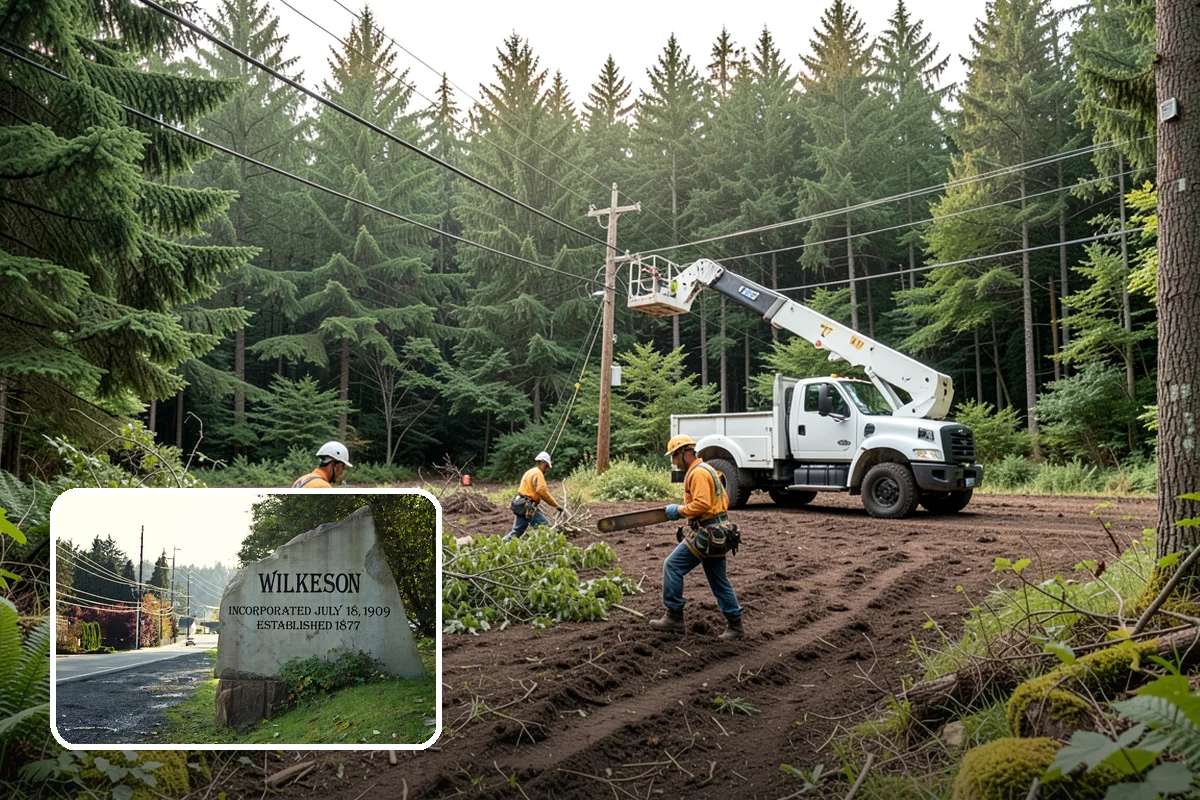
HOA tree management in Wilkeson: planning for a heavily treed town
Most HOA tree trouble comes from reacting one complaint at a time. A branch fails, a resident calls, the board approves a quick fix, and the next problem waits. Trees in shared areas change slowly, then fail suddenly. A routine inventory catches defects such as cracks, dead limbs, decay at the base, and root damage before they become emergencies.
Wilkeson is a small town of about 198 homes, so an association here may be managing a modest number of shared trees. That helps. A full walk-through of common areas is realistic, and the board can see every tree on one map and decide in one meeting what to do first.
Canopy matters too. Satellite tree-canopy data (USFS/NLCD 2025) puts Wilkeson among the most heavily treed Puget Sound cities we compared. That is a town-level measure, not a count of trees in your community. Still, it suggests that trees are part of nearly every common area, road edge, and property line. Plan for ongoing care rather than a one-time cleanup, and expect shared trees to overhang homes, fences, and paths.
How the work is organized
We begin with an assessment of the common areas, led by our ISA Certified Arborist. Each tree is noted by species, size, condition, and what it could hit if it failed. From that, the board gets priorities: urgent hazards, pruning that should happen this year, trees to monitor, and trees that can wait. Pruning follows ISA and ANSI A300 practice. That means removing dead, damaged, or crossing branches and keeping live growth, not topping.
Removal is the part where the rules matter. The published Wilkeson rules we found don't spell out clearly which removals need city approval. So we check with the city before work starts, and the board should hold removals until that answer is in hand. Your governing documents may also require a board vote or notice to residents, so confirm that before scheduling.
The result is a written plan, a work order the board can approve in stages, and a record to show residents why a tree was kept, pruned, or removed. To start, call or text 425-484-4442 for a free estimate.
Wilkeson tree conditions at a glance
| Tree canopy | Among the most heavily treed Puget Sound cities (satellite data) |
|---|---|
| USDA hardiness zone | 8b |
| High and strong wind episodes, 2005-2025 | 40 in the forecast zone |
| Soils | 37% of land has hardpan or another restrictive layer within 40 in; most common series Indianola; 61% well drained |
Tree removal rules in Wilkeson
Wilkeson’s published rules don’t spell out clearly which removals need city approval. We check with the city before work starts.
Sources: Daymet daily weather (NASA/ORNL), NOAA Storm Events, USDA plant hardiness map 2023, NRCS soil survey, USGS elevation, WA DNR landslide inventory, USDA Forest Service aerial survey, WSDA, city tree assessments and street-tree inventories, SILVIS Lab, Arbor Day Foundation, and official city and utility pages.
HOA Tree Management Serving Wilkeson
Wilkeson

HOA tree management in nearby areas
Also serving Wilkeson
- Brush Clearing in Wilkesonat Washington City Services
- Apartment Landscape Maintenance in Wilkesonat Washington Landscaping
- Warehouse Construction in Wilkesonat Washington Construction
- Parking Garage Cleaning in Wilkesonat Washington Pressure Washing