Where Safety Meets Expert Tree Service.

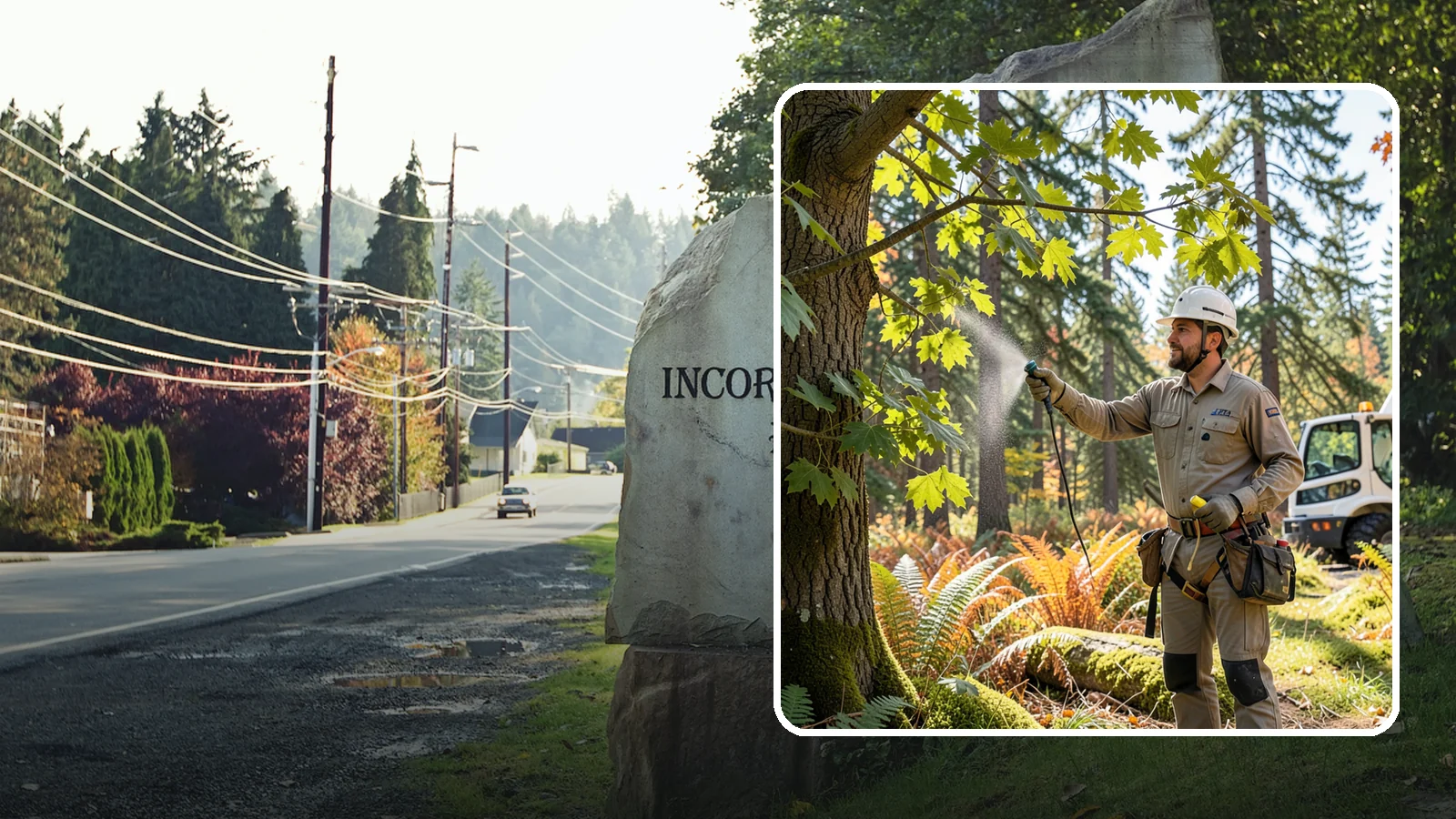
Wilkeson Growth Regulator Applications
Applications that slow shoot growth to support tree health.
Wilkeson gets 79% of its yearly rain and snow between October and April, based on Daymet data for 2005 to 2025. That matters for growth regulators, because most of the year the soil is wet and the product has to be timed around it.
A growth regulator slows a tree's shoot growth. Owners use it to keep a tree near a roof, fence, or wire from needing as much pruning. It is not a fix for every tree. Here is how the work goes and what to check first.
About Growth Regulator Applications in Wilkeson
Growth regulator applications help your trees grow more slowly so they stay healthy under stress. This care is perfect for homeowners who want their valued specimens to last longer without needing frequent pruning. We focus on supporting tree health while working carefully around the unique conditions of your property.
What Wilkeson Growth Regulator Applications Includes
This service involves applying specific treatments that slow shoot growth to support overall tree stability. By reducing how fast new shoots develop, we help trees handle stress better and catch problems before they get worse. The goal is to improve soil and root conditions so your trees remain strong for years to come.
Wilkeson Growth Regulator Applications Process
Our trained crews start by inspecting the tree and its site to find issues like poor soil or pests. We identify contributing factors such as girdling roots or disease, then recommend and apply the right treatments for that specific species. Afterward, we document our findings so you know exactly what was done and how to care for it afterward.
Equipment We Use for Wilkeson Growth Regulator Applications
To do this work correctly, we use diagnostic tools and soil probes to check the ground beneath your trees. We bring injection or application equipment along with air excavation tools when needed to reach difficult areas safely. All crew members wear personal protective equipment while handling these specialized supplies on site.
Wilkeson Growth Regulator Applications Safety & Best Practices
We follow strict label guidelines for any products used to ensure they are applied correctly and protect surrounding plants. Our methods avoid damaging the tree’s roots or trunk during application, keeping your landscape intact throughout the job. Accurate documentation of conditions helps us maintain a safe environment while we work around existing vegetation.
Signs You Need Growth Regulator Applications in Wilkeson
You might need this service if you notice compacted soil, girdling roots, or signs that pests and disease are affecting your trees. Decline caused by past construction projects or changes in ground grade can also signal it is time for growth regulation. If pruning has become too frequent because shoots grow back quickly, our treatments can help slow that cycle down effectively.
What Affects the Cost of Growth Regulator Applications in Wilkeson
The price depends on the species of tree you have and how difficult access might be to reach them. We must identify complex factors like soil quality or root issues before applying any treatment, which influences the final cost. Site conditions play a major role in determining what approach works best for your specific situation without inventing fixed rates.
Best Time of Year for Wilkeson Growth Regulator Applications
Applications work best when trees are actively growing so they can take up the treatments effectively. We avoid working during extreme heat or dormant periods that are common here to ensure the products perform as intended. Timing is key to matching our methods with the natural rhythm of growth in your local climate.

How growth regulator applications work in Wilkeson
A growth regulator is a chemical applied to a tree, usually as a soil drench or a trunk treatment, that reduces how fast new shoots lengthen. The tree stays alive and keeps its leaves. It simply puts less energy into extension growth. Results vary by species and by the condition of the tree, so we do not promise a set outcome.
The steps
- Walk the property and confirm the goal, such as slowing growth toward a structure or wire.
- Check the tree's health. A stressed tree is a poor candidate.
- Pick the product and method that suit the species and site.
- Apply it according to the label, then plan a follow-up check.
Why the wet season matters
Daymet figures show 79% of Wilkeson's yearly precipitation falls from October to April. Soil drenches rely on the tree taking up the product through the roots. Saturated ground can move product away from the root zone, so we look at the forecast and the soil before applying. A dry spell in the growing season is usually a better window than a soaking week.
Dry summers and conifers
If you have cedars, note the WSU HortSense guidance: cedars may need extra irrigation during summer drought to reduce flagging, the browning of individual branches. A tree already stressed by drought should not be treated until it has recovered, so watering comes first.
Trees near the service line
In Wilkeson the electric utility is Puget Sound Energy. For the service line, the wire from the PSE pole to your home or meter pole, PSE does not trim it. The homeowner or a private arborist does. A growth regulator can help slow regrowth near that wire, but it does not replace pruning. Any work close to a line should be planned carefully.
USDA lists Wilkeson in plant hardiness zone 8b (2023 map). That is a general guide to winter cold, and we use it as one input when choosing species-appropriate treatment. Call or text 425-484-4442 for a free estimate.
Wilkeson tree conditions at a glance
| USDA hardiness zone | 8b |
|---|---|
| Soils | 37% of land has hardpan or another restrictive layer within 40 in; most common series Indianola; 61% well drained |
| Rain and snow falling October to April | 79% of the year’s total |
| Days with 0.1 in or more of rain | 142 a year |
| Tree canopy | Among the most heavily treed Puget Sound cities (satellite data) |
| Days that freeze at night and thaw by day | 43 a year |
Tree health near Wilkeson
- Bears6,697 ac
- Decline, cause not identified907 ac
- Douglas-fir engraver894 ac
Forest damage mapped from the air within 10 km of Wilkeson, 2021-2025 (USDA Forest Service and WA DNR). This covers forest land, not street or yard trees. “Decline, cause not identified” is dieback with no single cause found.
Sources: Daymet daily weather (NASA/ORNL), NOAA Storm Events, USDA plant hardiness map 2023, NRCS soil survey, USGS elevation, WA DNR landslide inventory, USDA Forest Service aerial survey, WSDA, city tree assessments and street-tree inventories, SILVIS Lab, Arbor Day Foundation, and official city and utility pages.
Growth Regulator Applications Serving Wilkeson
Wilkeson

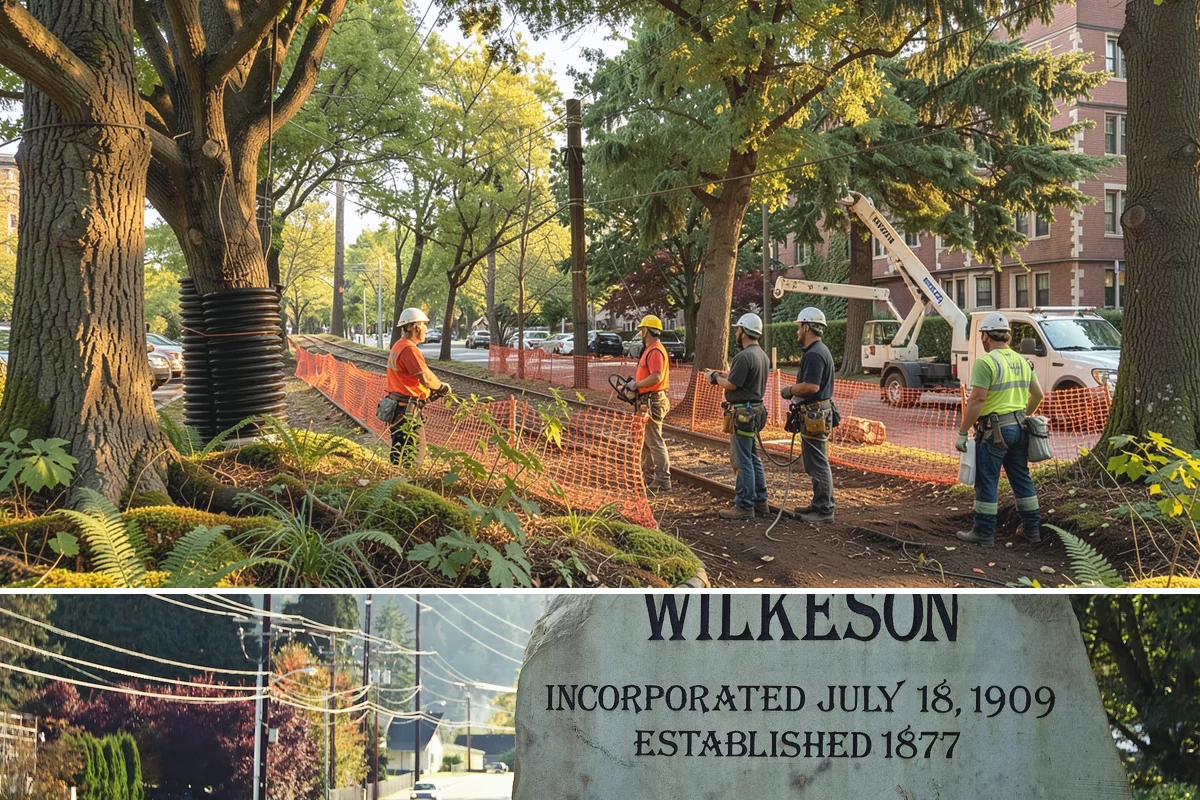
Growth regulator applications in nearby areas
Also serving Wilkeson
- Hedge Shaping in Wilkesonat Washington Landscaping
- Landscape Renovations in Wilkesonat Washington City Services