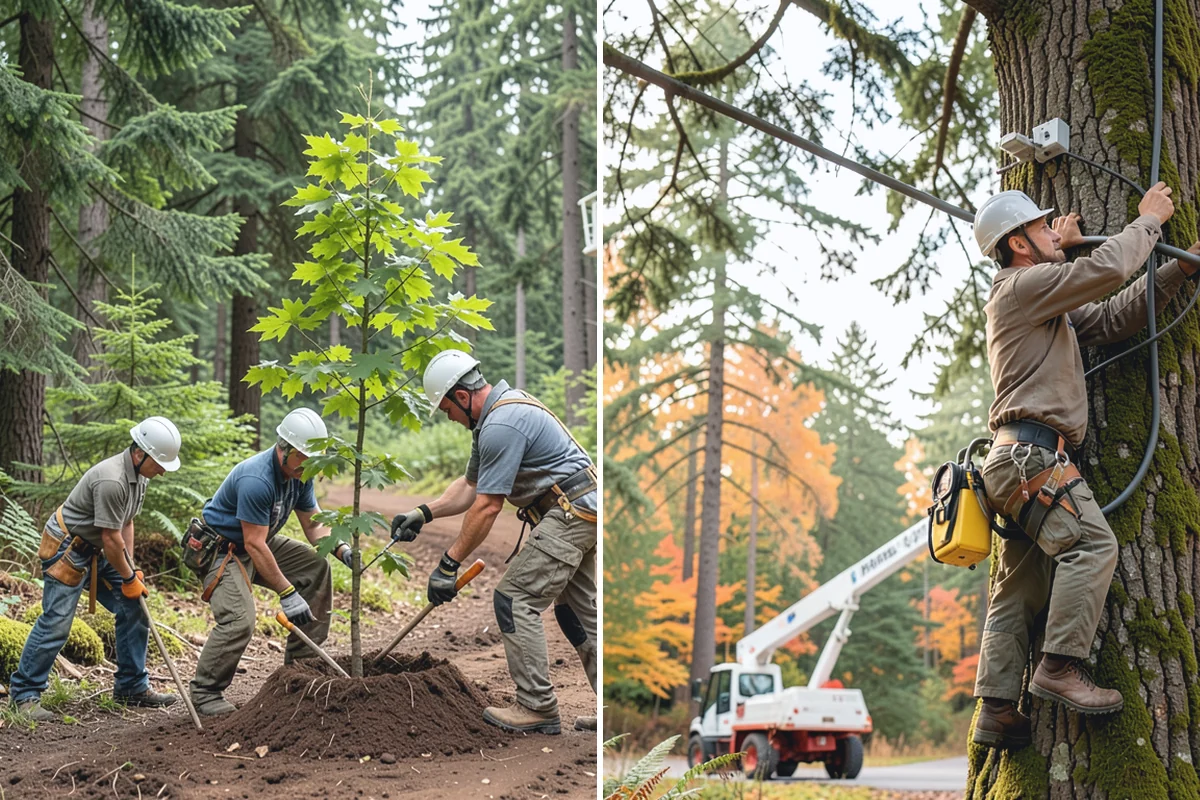
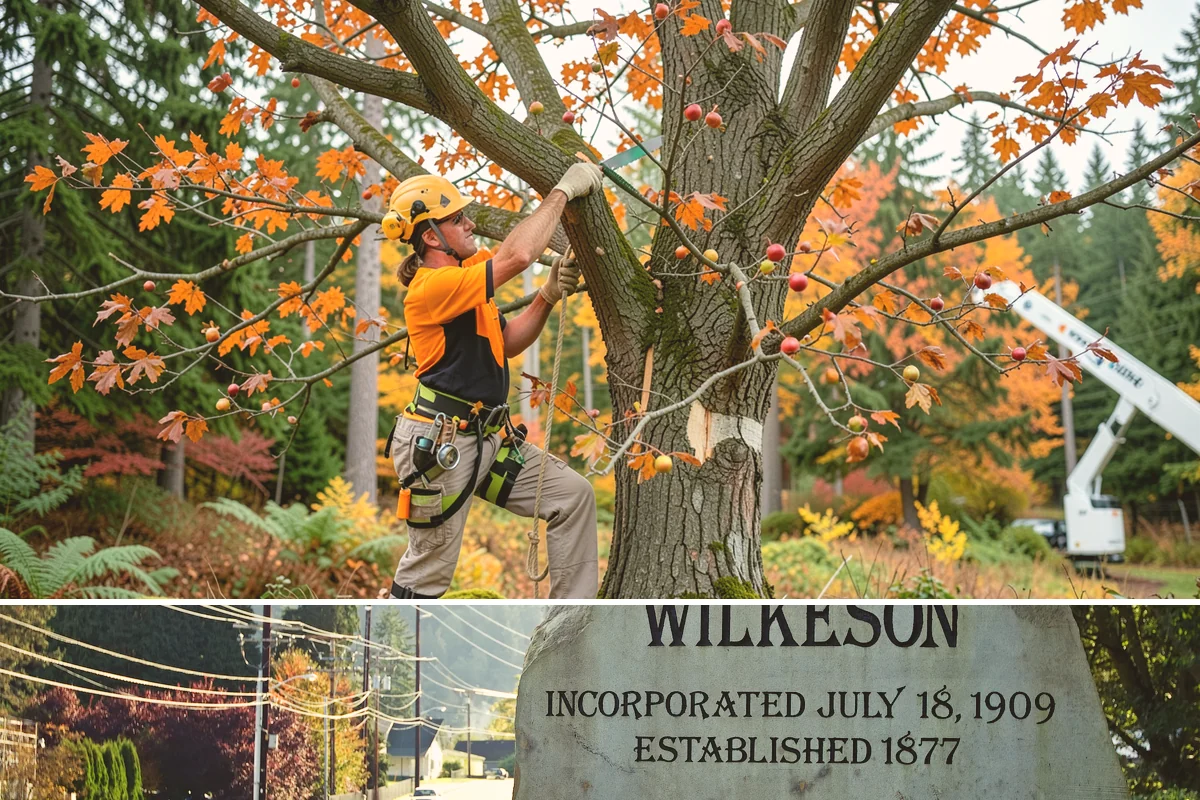
Where Safety Meets Expert Tree Service.

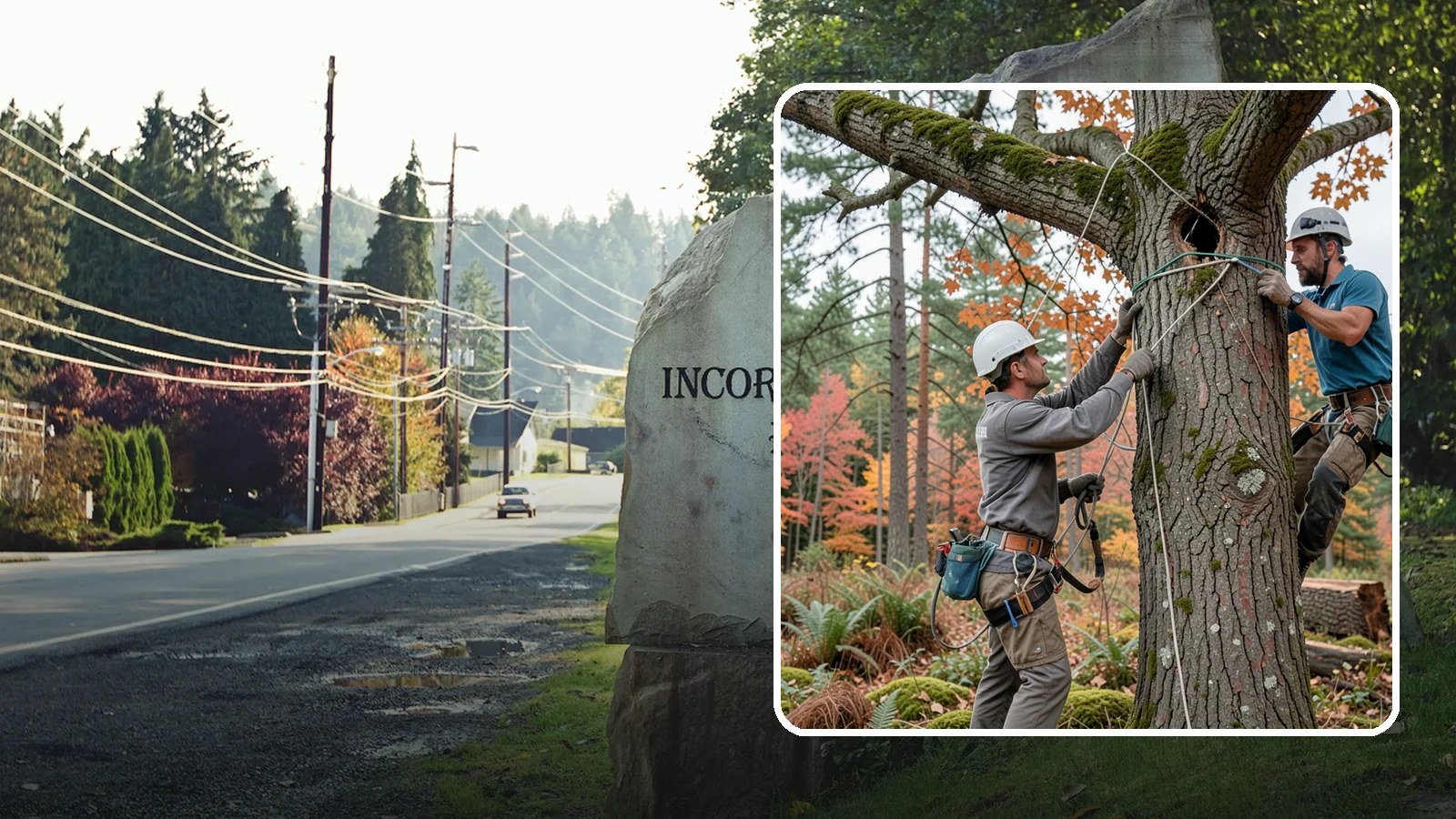
Wilkeson Dynamic Cabling Installation
The installation of flexible support systems that allow natural movement.
You may have a tree with two or more main stems joined in a tight V, and you can see one side leaning or flexing more than the other in a breeze. Maybe a limb has already dropped, or you notice a crack or a bulge where the stems meet. Those are the usual reasons people start asking about cabling.
Dynamic cabling adds a flexible support line high in the crown. It is meant to limit how far a weak stem or union can move, while still letting the tree sway and build strength. Here is how it works and when it makes sense in Wilkeson.
About Dynamic Cabling Installation in Wilkeson
Dynamic cabling installation helps protect your valued trees by adding flexible support systems that allow them natural movement. This service is ideal for homeowners who want to reduce the risk of limb or stem failure while preserving significant specimens on their property. We work with trained crews to ensure every tree receives care matched specifically to its species and site conditions.
What Wilkeson Dynamic Cabling Installation Includes
This category of cabling involves installing hardware designed to support weak unions without restricting a tree’s ability to build reinforcing wood over time. The process focuses on stabilizing heavy limbs or included-bark areas while following recognized arboricultural standards for safety and effectiveness. Our goal is to extend the safe life of your trees by addressing structural weaknesses before they become dangerous failures.
Wilkeson Dynamic Cabling Installation Process
Work begins with an assessment of structural defects, load paths, and specific access conditions at your property site. We select an appropriate support system based on these findings and install hardware precisely where it is needed for maximum benefit. After installation, we document the work performed and set up a schedule to inspect the systems periodically as part of ongoing maintenance.
Equipment We Use for Wilkeson Dynamic Cabling Installation
Our crews utilize specialized cabling and bracing hardware along with professional installation tools to complete each job safely. Depending on the tree’s height and location, we may use climbing and rigging gear or an aerial lift to reach difficult areas. All personnel wear personal protective equipment throughout the project to ensure a secure working environment for everyone involved.
Wilkeson Dynamic Cabling Installation Safety & Best Practices
We install cabling only where support is appropriate and effective, using hardware that is correctly rated for the specific load it will carry. It is important to recognize when removal might be the safer option rather than attempting to save a tree with compromised structural integrity. Regular inspections help identify aging hardware or shifting conditions so adjustments can be made before they become hazards.
Signs You Need Dynamic Cabling Installation in Wilkeson
You may need this service if you notice cracks, cavities, overextended limbs, or included-bark unions forming in your trees. Codominant stems that split under stress are another common situation where dynamic cabling provides necessary reinforcement to prevent sudden breakage. If a tree has reached an age where its hardware needs inspection and replacement, it is also time to consider this support system.
What Affects the Cost of Dynamic Cabling Installation in Wilkeson
The price of installation varies based on the species of your trees and how complex their structural defects are at each location. Site access conditions play a major role in cost, as reaching certain branches or navigating tight spaces requires additional planning and effort. Additionally, installing hardware at correct positions for multiple weak unions will naturally influence the final investment required for the project.
Best Time of Year for Wilkeson Dynamic Cabling Installation
There is no fixed season when this work must be done; instead, timing should follow recognized arboricultural standards matched to current site conditions. We evaluate weather patterns and tree health throughout the year to determine the best moment to install or inspect your cabling systems. This flexible approach ensures that our methods are always safe regardless of whether we are working in early spring or late fall.
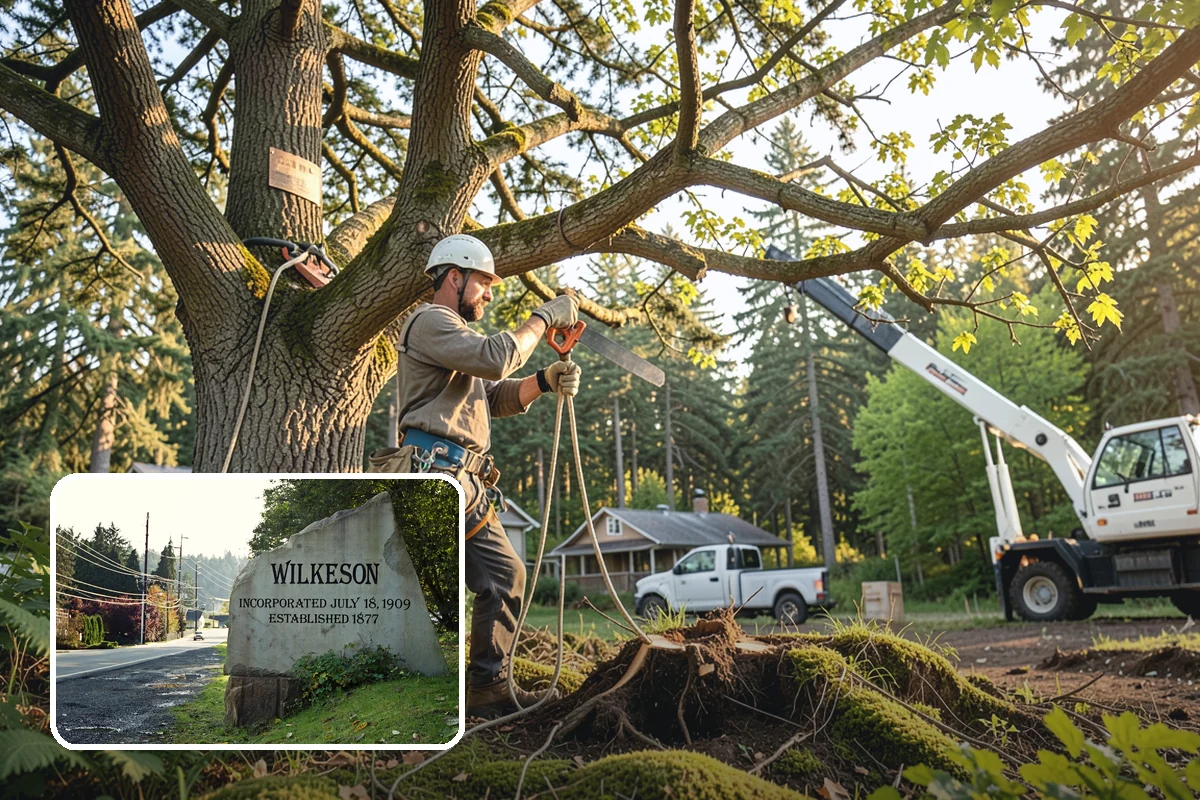
Dynamic cabling for Wilkeson trees: cause, wind and ice
Most trees that get cabling have a structural weakness. A common one is a pair of codominant stems with bark squeezed between them, called included bark. That union can split under load. Heavy limbs on one side, an old wound, or a past partial failure can also create a weak point.
Wind is the local factor to weigh. The National Weather Service records for the forecast zone that includes Wilkeson list 40 high and strong wind episodes from 2005 to 2025. The strongest gust recorded in that zone since 2005 was 72 mph, on December 17, 2010. These are zone-wide figures, not measurements from your yard, but they show that a tree with a weak union can expect repeated wind loading over its life.
The same zone had 3 ice storm episodes in that period. Ice adds weight to every branch, and a tree with a split-prone union carries that load at the weakest spot. If a tree is loaded with snow or ice, do not stand under it. WA DNR advises letting the load melt and watching from a distance. Wait until the tree is clear before anyone inspects it or starts work.
How the work goes
We start with a climbing or ground inspection of the union, the stems and the rest of the crown. Cabling is not right for every tree. If the wood is decayed or cracked through, or the tree is likely to fail anyway, removal may be the safer answer, and we will say so. Where cabling fits, an anchor point is chosen in the upper crown, usually about two thirds of the way up the stems above the weak union. A synthetic rope is installed there with hardware that does not require drilling through the stems in the way a rigid cable does. It is set with some slack so the stems can move, then it catches them if they move too far.
Cabling does not repair a defect or guarantee a tree will hold. It needs periodic inspection afterward, and often light pruning to reduce end weight on the stems. If a city permit might apply to any related work, we check with the city before work starts.
Wilkeson tree conditions at a glance
| High and strong wind episodes, 2005-2025 | 40 in the forecast zone |
|---|---|
| Ice storm episodes, 2005-2025 | 3 in the forecast zone |
| Average snowfall | 10.4 in a season (approximate) |
| Soils | 37% of land has hardpan or another restrictive layer within 40 in; most common series Indianola; 61% well drained |
| Slopes | More steep ground than most Puget Sound cities |
Strongest wind events near Wilkeson
- Dec 17, 2010: gusts to 72 mph
- Feb 1, 2017: gusts to 70 mph
- Feb 7, 2012: gusts to 70 mph
NOAA Storm Events, forecast zone that includes Wilkeson, 2005-2025.
Sources: Daymet daily weather (NASA/ORNL), NOAA Storm Events, USDA plant hardiness map 2023, NRCS soil survey, USGS elevation, WA DNR landslide inventory, USDA Forest Service aerial survey, WSDA, city tree assessments and street-tree inventories, SILVIS Lab, Arbor Day Foundation, and official city and utility pages.
Dynamic Cabling Installation Serving Wilkeson
Wilkeson