Where Safety Meets Expert Tree Service.

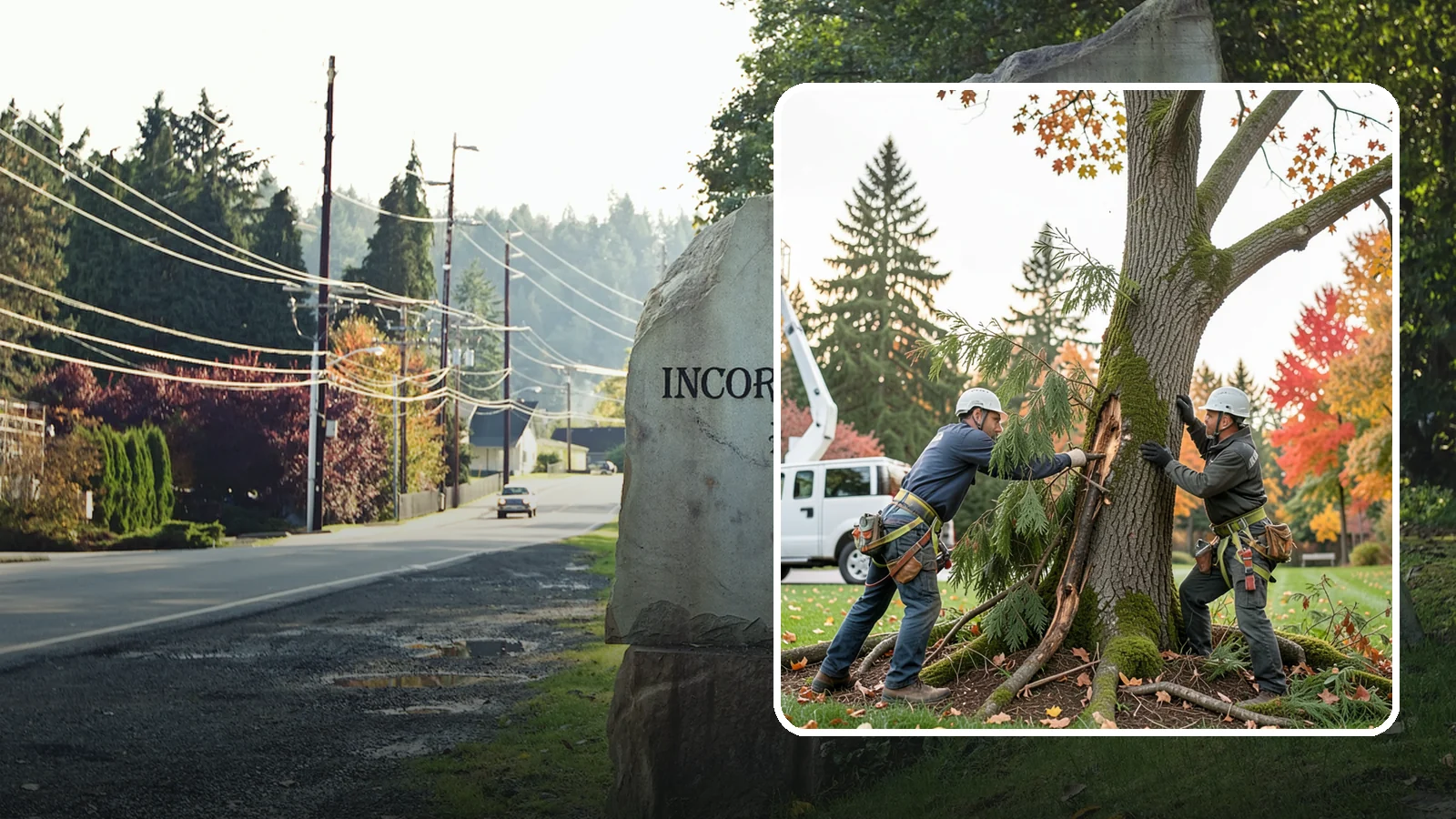
Wilkeson Diseased Tree Removal
The removal of trees affected by disease beyond recovery.
This service is for Wilkeson property owners with a tree that may be sick: a conifer with thinning or browning crown, a redcedar with dead top growth, or a trunk with fungal growth, oozing, or bark coming away. It also fits trees that have declined for several seasons with no clear reason.
Before you decide on removal, it helps to know what is wrong and whether the tree can be kept. Photos of the crown, the trunk base, and any damage give a good start for that conversation.
About Diseased Tree Removal in Wilkeson
When a tree on your property is affected by disease beyond recovery, our team can help remove it safely and efficiently. This specialized removal protects nearby healthy trees from infection while clearing away potential safety hazards for you and your family. We work with homeowners throughout the service area to restore peace of mind after an illness has compromised their landscape.
What Wilkeson Diseased Tree Removal Includes
Diseased tree removal focuses on taking down trees where disease has weakened the structure or threatens to spread further. Our trained crews follow recognized arboricultural standards, tailoring every method to match your specific tree species and site conditions. This service ensures that hazardous limbs are lowered safely while minimizing impact on surrounding areas during the work.
Wilkeson Diseased Tree Removal Process
The typical workflow begins with an on-site assessment to evaluate hazards before establishing clear drop zones and safety perimeters. We then rig and lower branches or fell the stem in a controlled sequence, followed by processing the wood and clearing debris from your property. Once all materials are hauled away, we complete final site cleanup to leave your landscape looking tidy again.
Equipment We Use for Wilkeson Diseased Tree Removal
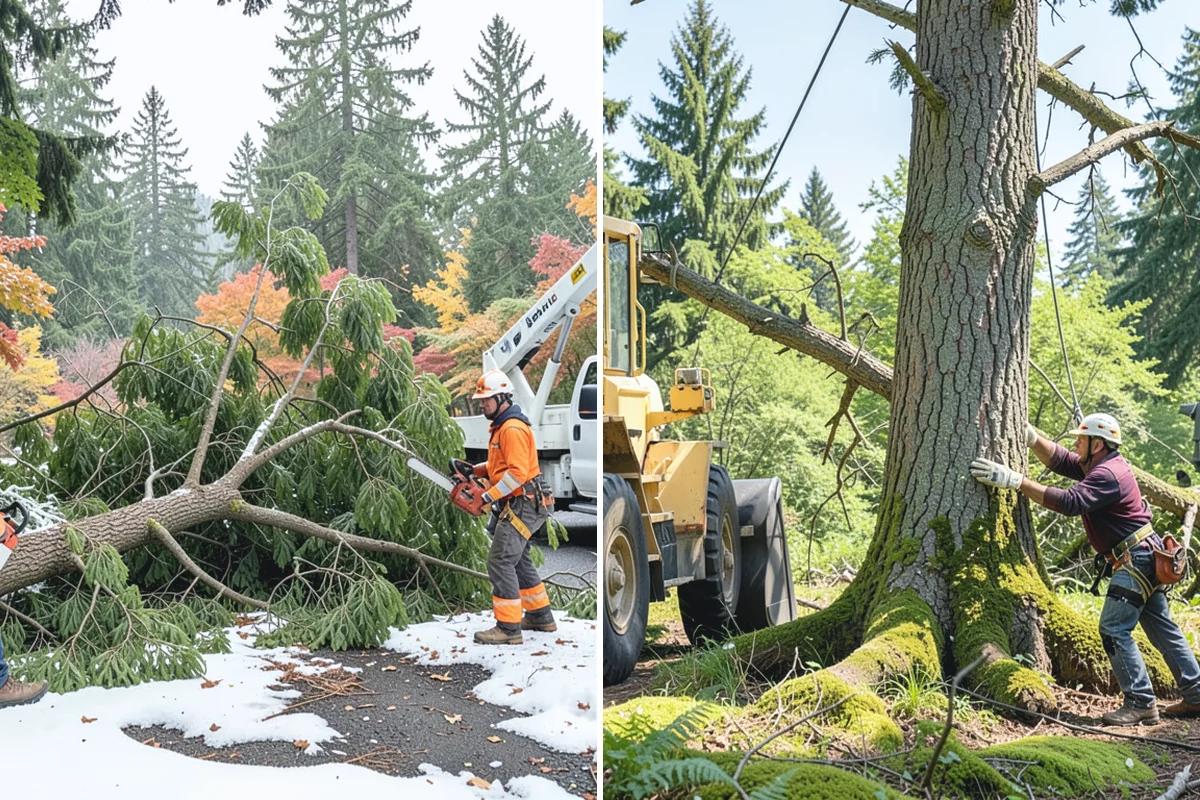
Our crews utilize chainsaws, climbing gear, and rigging equipment to handle trees of various sizes safely. Depending on access needs and tree location, we may also bring in a wood chipper, aerial lift, or crane as required for the job. Ground protection measures are always used alongside personal protective equipment to keep everyone safe during operations.
Wilkeson Diseased Tree Removal Safety & Best Practices
Safety is our priority, so we maintain clear drop zones and follow controlled fall paths at all times. Before starting any work, we identify overhead utility lines and inspect trees for hidden decay or structural defects that could affect climbing safety. Coordinated ground communication and proper use of fall protection ensure a secure environment throughout the removal process.
Signs You Need Diseased Tree Removal in Wilkeson
You may need this service if you notice disease has compromised your tree’s structure or poses a risk to nearby healthy plants. Other indicators include situations where the infection threatens to spread, creating an urgent need for professional intervention before conditions worsen. Recognizing these signs early helps prevent further damage to your property and surrounding vegetation.
What Affects the Cost of Diseased Tree Removal in Wilkeson
The cost of removal is influenced by factors such as tree size and site access limitations like proximity to structures or power lines. Hidden internal decay severity also plays a role, along with the complexity required for processing wood debris after felling. These variables determine the resources needed to complete your project safely without inventing specific price estimates.
Best Time of Year for Wilkeson Diseased Tree Removal
Work can be performed year-round in our local climate, offering flexibility when you need urgent removal services completed quickly. However, extra caution is advised during wet seasons due to slippery conditions that may affect rigging operations and ground stability. Planning ahead for these weather patterns helps ensure a smooth and safe execution of your diseased tree project.

Wilkeson diseased tree removal: remove, treat, or monitor
A sick tree does not always have to come down. The choice depends on the cause, how much of the tree is affected, and what stands within reach if it fails.
The three approaches
- Monitor and prune: suits a tree with limited dieback, no trunk or root decay, and nothing valuable beneath it. Pruning removes dead branches under ANSI A300 style practice. It does not cure a disease.
- Targeted treatment or care: suits cases where the cause is identified and the tree is otherwise sound. Watering and other care may help a stressed tree, with no promise of recovery.
- Removal: suits trees with decay at the base, a leaning or cracked trunk, widespread crown loss, or a spot where failure would hit a house, driveway, or power line.
What local conditions suggest
A federal aerial survey (USDA Forest Service and WA DNR, 2021-2025) covered forest within 10 km of Wilkeson. It is forest land, not yard trees, so it says nothing about a specific tree on your lot. It mapped bear damage on 6,697 acres of Douglas-fir and Douglas-fir engraver damage on 894 acres. If you have Douglas-fir, check for stripped bark and for thin, fading crowns.
The same survey mapped 907 acres of western redcedar in decline, cause not identified. That means dieback where no single cause was found. A WSU Extension forestry newsletter from July 2018 says redcedar mortality in western Washington appears to come from cumulative drought stress, and that the species tolerates drought poorly. A redcedar with a browning top may be stressed rather than infected, so a proper look matters before cutting.
Emerald ash borer has been confirmed in Washington only near Vancouver and College Place (WSDA, 2026), not in Puget Sound counties. Ash decline here should not be assumed to be that pest.
Permits
The published Wilkeson rules we found do not clearly say which removals need city approval. We check with the city before work starts, so you do not have to guess.
To start, call or text 425-484-4442 for a free estimate. An ISA Certified Arborist can assess the tree.
Wilkeson tree conditions at a glance
| USDA hardiness zone | 8b |
|---|---|
| Soils | 37% of land has hardpan or another restrictive layer within 40 in; most common series Indianola; 61% well drained |
| Rain and snow falling October to April | 79% of the year’s total |
| Days with 0.1 in or more of rain | 142 a year |
| Tree canopy | Among the most heavily treed Puget Sound cities (satellite data) |
| Days that freeze at night and thaw by day | 43 a year |
Tree health near Wilkeson
- Bears6,697 ac
- Decline, cause not identified907 ac
- Douglas-fir engraver894 ac
Forest damage mapped from the air within 10 km of Wilkeson, 2021-2025 (USDA Forest Service and WA DNR). This covers forest land, not street or yard trees. “Decline, cause not identified” is dieback with no single cause found.
Sources: Daymet daily weather (NASA/ORNL), NOAA Storm Events, USDA plant hardiness map 2023, NRCS soil survey, USGS elevation, WA DNR landslide inventory, USDA Forest Service aerial survey, WSDA, city tree assessments and street-tree inventories, SILVIS Lab, Arbor Day Foundation, and official city and utility pages.
Diseased Tree Removal Serving Wilkeson
Wilkeson

Diseased tree removal in nearby areas
Also serving Wilkeson
- Perennial Planting in Wilkesonat Washington Landscaping
- Trail Clearing in Wilkesonat Washington City Services
- Tree Removal for Firewood in Wilkesonat Washington Firewood