Where Safety Meets Expert Tree Service.

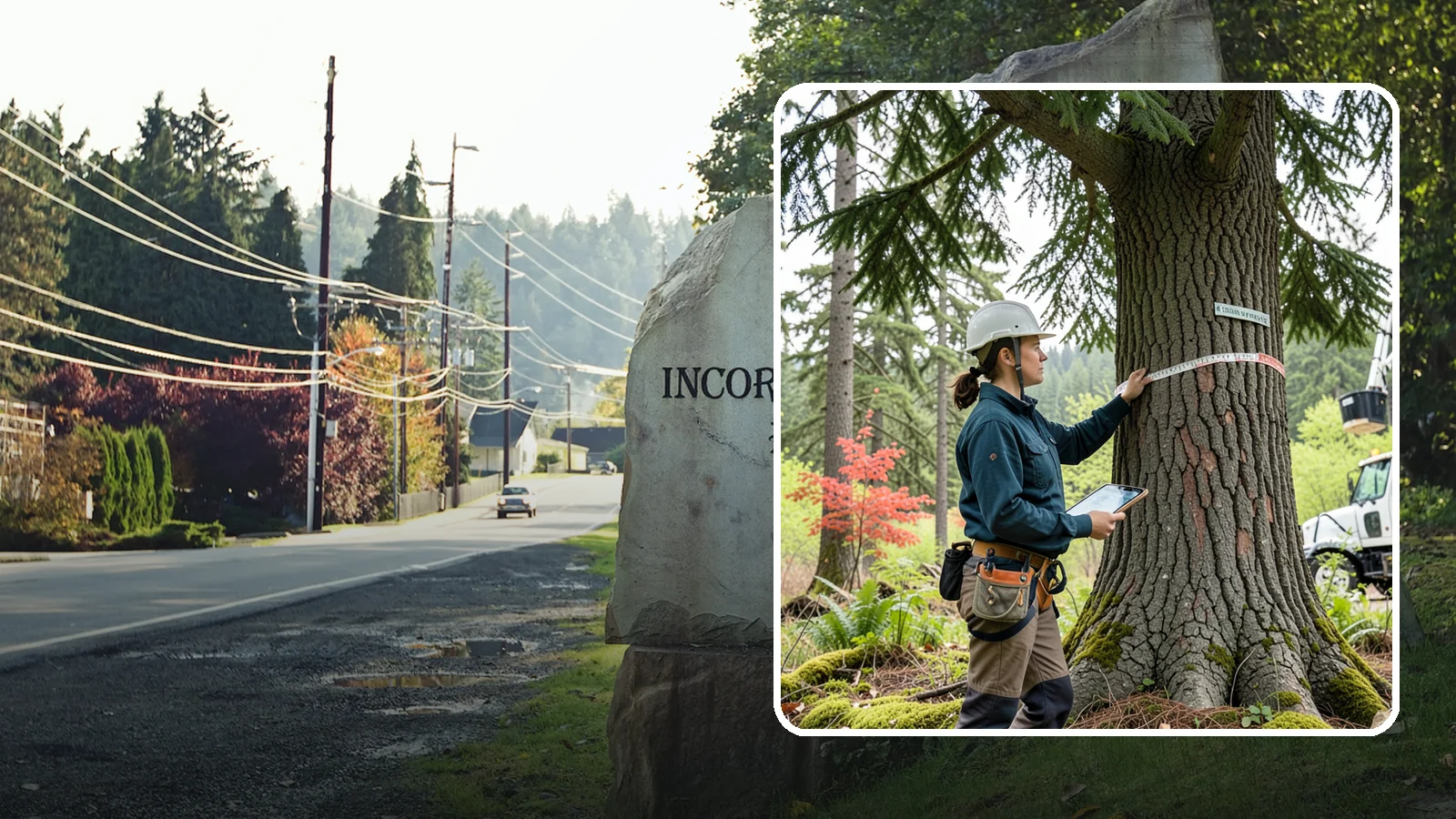
Wilkeson Certified Arborist Reports
Written reports prepared by a certified arborist.
You may have noticed a lean that wasn't there last year, a crack at the base, mushrooms near the roots, or a limb hanging over the roof. Maybe a neighbor, a lender or an insurer has asked for something in writing about a tree. That is when a certified arborist report is useful.
A report is a written assessment of one tree or a group of trees. It records what the arborist saw, how serious it is, and what options make sense. It gives you something concrete to act on or to hand to someone else.
About Certified Arborist Reports in Wilkeson
Our certified arborist reports provide expert documentation that helps homeowners make informed decisions about their property trees. Whether you need support for permitting or insurance purposes, our trained crews prepare clear records based on recognized standards. This service is designed to give you objective guidance when planning care or evaluating your landscape assets.
What Wilkeson Certified Arborist Reports Includes
A certified arborist prepares written reports tailored to the specific needs of your site and tree species. These documents are created using methods that match local conditions, ensuring accurate assessment for property decisions or regulatory requirements. The final output offers a reliable record of findings backed by professional expertise.
Wilkeson Certified Arborist Reports Process
We begin by gathering essential information about your trees and their surroundings before conducting a thorough inspection. Our team analyzes these observations against established objectives to develop clear recommendations included in the report. Finally, we review all findings with you to ensure you fully understand the results and next steps.
Equipment We Use for Wilkeson Certified Arborist Reports
The work utilizes specialized diagnostic tools for measurement as well as mapping and imaging equipment when necessary. We also use professional documentation software to create precise reports that stand up to scrutiny. All crew members wear appropriate personal protective gear while operating these advanced assessment tools on your property.
Wilkeson Certified Arborist Reports Safety & Best Practices
Our findings are always based strictly on observed evidence and recognized industry standards rather than assumptions. If an assessment has limitations or if uncertainty remains about certain conditions, we clearly disclose those factors in the report. We recommend follow-up actions whenever a situation requires further evaluation to ensure long-term safety for your trees.
Signs You Need Certified Arborist Reports in Wilkeson
You may need this service when facing incomplete site history that complicates tree care planning or hidden defects you cannot see from the ground. Regulatory requirements often vary by jurisdiction, and our reports help navigate these complex rules effectively. Competing objectives on a property can also benefit from an expert analysis to prioritize what matters most for your landscape.
What Affects the Cost of Certified Arborist Reports in Wilkeson
The price of this service is influenced by factors such as site complexity and variations in tree species found at the location. Access limitations around difficult-to-reach trees may require additional time or specialized approaches during the assessment phase. Additionally, if specialized diagnostic tools or mapping imaging are needed to fully understand a condition, these requirements will affect the overall cost.
Best Time of Year for Wilkeson Certified Arborist Reports
Reports can generally be performed year-round given our favorable Puget Sound climate conditions for outdoor work. However, inspections conducted during wet seasons may require extra caution from our crew to ensure safe access and accurate assessment of hidden defects. We schedule visits when we believe they offer the best opportunity for a thorough evaluation while keeping everyone secure.
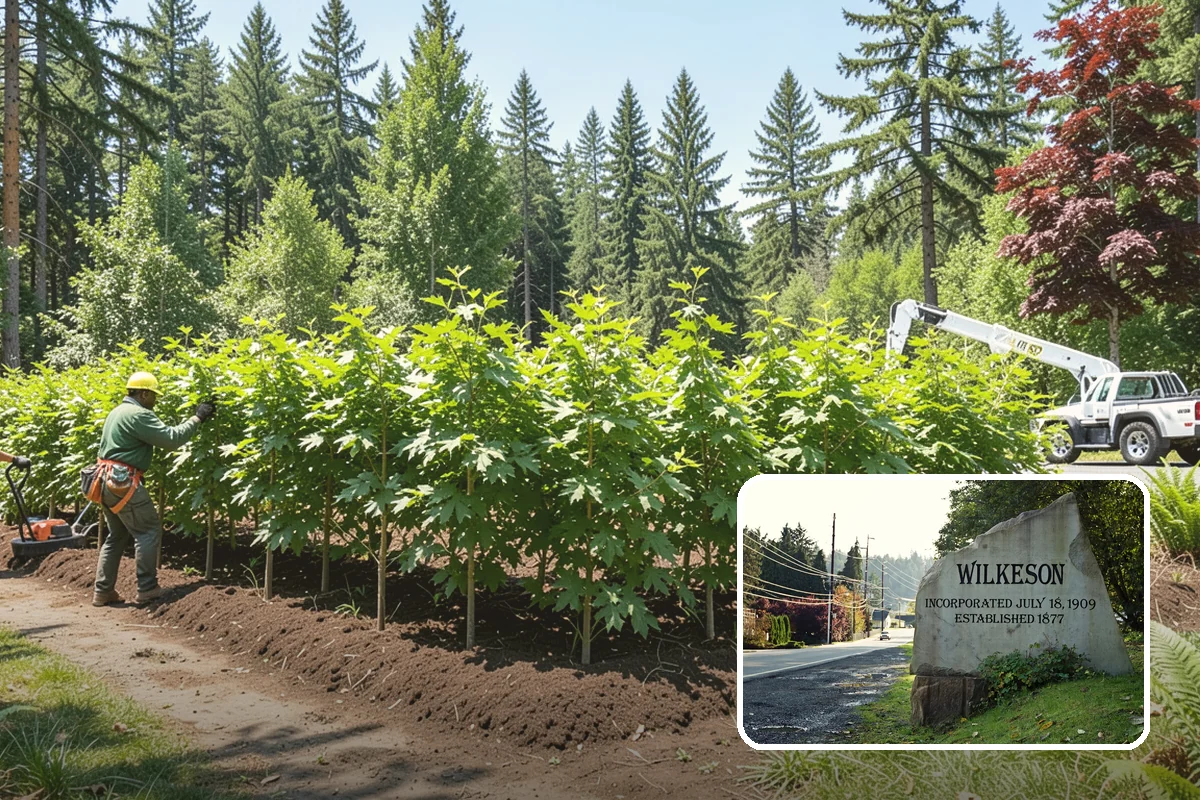
Arborist reports for Wilkeson properties: causes and local factors
Most reports start with a question about risk. A tree has visible decay, a split union, heaved soil, dead branches or root damage from digging or grading. The report names the likely cause and judges how likely the tree is to fail and what it could hit.
Local conditions shape what the arborist looks for. Daymet climate data for 2005-2025 shows that 79% of Wilkeson's yearly rain and snow falls from October to April. That means soil is often saturated through the months when storms arrive. Wet soil holds roots less firmly, and a tree with root decay or a heavy, lopsided crown is more likely to be a concern in that season. So we pay close attention to the root collar, the soil around it, and any signs of past movement. If a tree worries you, it is better to have it assessed before the wet months than during them.
The USDA plant hardiness map (2023) places Wilkeson in zone 8b. That tells us which species are generally suited to the area. It does not tell us whether a particular tree on your lot is healthy, so the report relies on what is found on site, not on the zone.
What the assessment covers
The arborist walks the property and examines the tree from the roots up. That means the trunk, the branch structure, the crown, the soil and any nearby targets such as buildings, driveways or play areas. Findings are recorded in writing, with photos where they help. The report then sets out recommendations. These might include pruning, cabling, monitoring, further testing or removal. A report describes condition and options. It can't promise how a tree will behave.
Removal is where city rules come in. The published rules we found for Wilkeson don't clearly spell out which removals need city approval. So we check with the city before any work starts, and we suggest you hold off on cutting until that is done. A report can also support a conversation with the city if one is needed.
If you want an assessment, call or text 425-484-4442. Our ISA Certified Arborist can look at the tree, and estimates are free.
Wilkeson tree conditions at a glance
| Slopes | More steep ground than most Puget Sound cities |
|---|---|
| Soils | 37% of land has hardpan or another restrictive layer within 40 in; most common series Indianola; 61% well drained |
| Tree canopy | Among the most heavily treed Puget Sound cities (satellite data) |
| High and strong wind episodes, 2005-2025 | 40 in the forecast zone |
| USDA hardiness zone | 8b |
Tree removal rules in Wilkeson
Wilkeson’s published rules don’t spell out clearly which removals need city approval. We check with the city before work starts.
Sources: Daymet daily weather (NASA/ORNL), NOAA Storm Events, USDA plant hardiness map 2023, NRCS soil survey, USGS elevation, WA DNR landslide inventory, USDA Forest Service aerial survey, WSDA, city tree assessments and street-tree inventories, SILVIS Lab, Arbor Day Foundation, and official city and utility pages.
Certified Arborist Reports Serving Wilkeson
Wilkeson


Certified arborist reports in nearby areas
Also serving Wilkeson
- Master Landscape Planning in Wilkesonat Washington Landscaping