Where Safety Meets Expert Tree Service.


Wilkeson Building Clearance Pruning
The pruning of branches away from walls and structures.
Wilkeson is among the most heavily treed Puget Sound cities in a satellite tree-canopy comparison (USFS/NLCD 2025). For a house, that means branches have plenty of chances to end up against the roof, siding or gutters.
Building clearance pruning removes or shortens the limbs that touch or hang over a structure. A good time to act is when you see branches rubbing shingles, leaves packing the gutters, or limbs shading a wall that never dries out. Here is how the work goes and what to think about first.
About Building Clearance Pruning in Wilkeson
Building clearance pruning helps keep your trees healthy while protecting your home from damage caused by touching branches. Our trained crews use recognized standards to safely remove growth that creates moisture contact or abrasion against walls and structures. This service is ideal for any homeowner who wants to maintain clear sightlines and reduce the risk of branch failure near their property.
What Wilkeson Building Clearance Pruning Includes
This pruning category focuses specifically on cutting branches away from buildings, fences, decks, and other hardscapes. The work includes making clean cuts at proper points without over-pruning, which supports long-term tree vigor and appearance. We match our methods to the specific species of your trees and the unique conditions of your site for a tailored result.
Wilkeson Building Clearance Pruning Process
Our team begins by assessing the canopy condition and selecting the correct cuts based on the season and tree type. After making precise incisions with minimal stress, we lower and process all cut material before thoroughly cleaning up the work area. This systematic approach ensures that debris is removed efficiently while leaving your property tidy after completion.
Equipment We Use for Wilkeson Building Clearance Pruning
We utilize a range of tools including hand saws, pole saws, chainsaws, and wood chippers to handle branches of various sizes. For higher reaches or difficult access points, our crews may use climbing gear, rigging equipment, or an aerial lift as needed. Every crew member also wears appropriate personal protective equipment while operating these machines safely around your home.
Wilkeson Building Clearance Pruning Safety & Best Practices
We follow recognized pruning standards to avoid harmful cuts that could stress the tree or compromise its structure. Our safety protocols include watching for overhead power lines and unstable limbs before making any incisions near structures. When working aloft, we strictly use fall protection measures to ensure everyone remains secure throughout the job.
Signs You Need Building Clearance Pruning in Wilkeson
You may need this service if you notice branches rubbing against siding, creating moisture pockets that can damage building materials. Signs of deadwood or weak unions interfering with your home’s structure also indicate it is time for clearance pruning. Additionally, reduced sightlines from overhanging limbs near windows or walkways suggest a need to restore proper spacing between trees and buildings.
What Affects the Cost of Building Clearance Pruning in Wilkeson
The price varies based on the size of each tree and how difficult site access conditions are, such as proximity to power lines. Crew complexity increases if rigging work is required to remove heavy branches safely from tight spaces around your property. Disposal costs also depend on the volume of debris generated after clearing all interfering growth away from walls.
Best Time of Year for Wilkeson Building Clearance Pruning
In our local climate, this type of pruning can be performed year-round with minimal restriction for most tree species. However, we generally avoid working during late winter dormancy breaks or periods when wet weather increases moisture contact risks against your building materials. Scheduling the work outside these sensitive times helps ensure optimal healing and reduces potential damage to both the tree and your home.
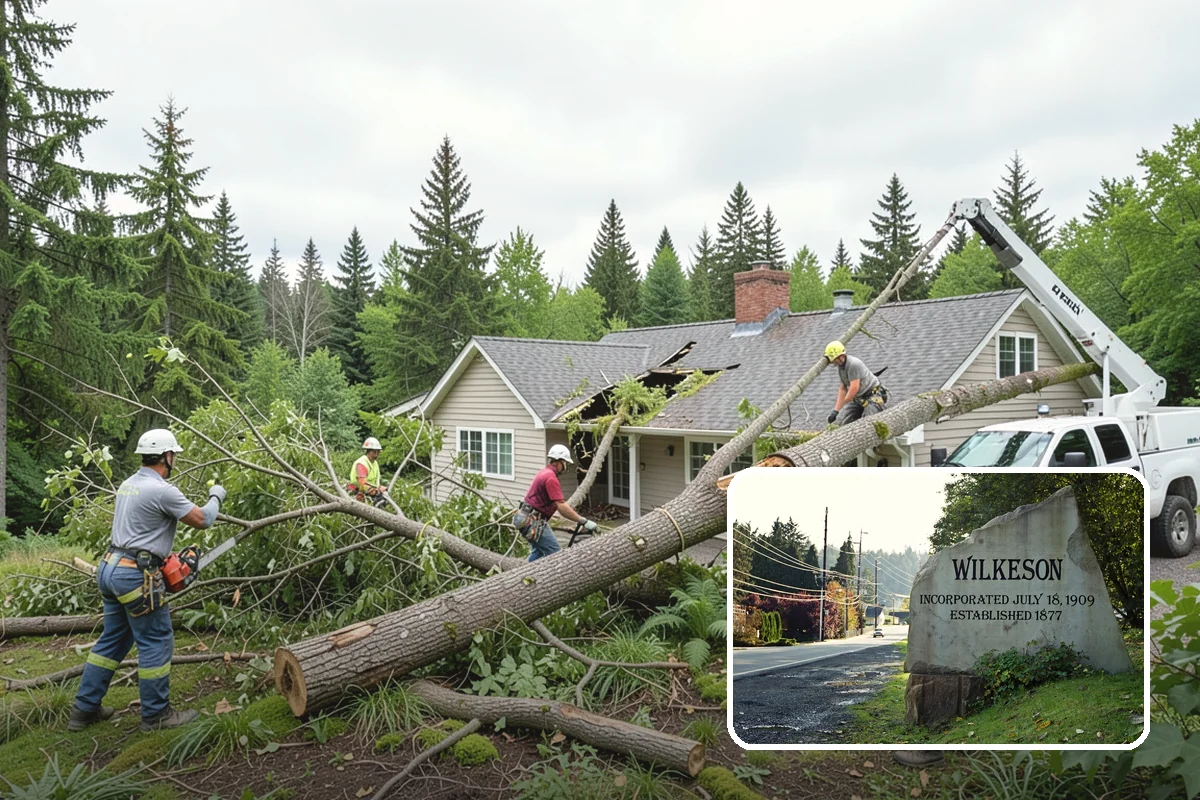
Clearing branches from buildings in Wilkeson
Clearance pruning keeps live branches off roofs, walls, chimneys and eaves. It also opens a gap so wind or wet weather does not push limbs into the building.
Why moisture matters here
Wilkeson gets about 142 days a year with 0.1 inch or more of rain (Daymet, 2005-2025). That is a lot of wet days. Branches that touch a roof hold moisture against shingles, and moss and rot set in faster. Shaded siding stays damp longer. Gaps between limbs and the building help surfaces dry between storms.
Why the canopy matters
The canopy data is a satellite measure for the town as a whole, not a count of trees on your lot. Still, in a heavily treed town with only about 198 homes, many properties sit close to trees, sometimes trees on a neighbor's land. Before work starts, we look at whose tree it is. Limbs that cross a property line raise questions you should settle with your neighbor first.
How the work goes
- Walk the property and mark the limbs that touch or overhang the building.
- Decide how much to remove. Standard practice (ANSI A300) avoids taking off too much live crown at once.
- Make cuts back to a branch union or the trunk, not flush stubs or random points. We do not top trees.
- Lower larger limbs with ropes so they do not hit the roof.
- Clean up debris, including roof and gutter debris from the cuts.
Some trees are too close to the building for pruning alone to solve the problem. If the trunk leans toward the house or the roots lift the foundation, we will tell you, and removal may be the better option. Removal can fall under city rules, and we check with the city before work starts when it is unclear.
If you want an assessment, call or text 425-484-4442 for a free estimate from our ISA Certified Arborist.
Wilkeson tree conditions at a glance
| USDA hardiness zone | 8b |
|---|---|
| Rain and snow falling October to April | 79% of the year’s total |
| Tree canopy | Among the most heavily treed Puget Sound cities (satellite data) |
| Days that freeze at night and thaw by day | 43 a year |
| Electric utility | Puget Sound Energy (PSE) |
Trees near the power line to your house
Puget Sound Energy (PSE): Service line (wire from PSE pole to home or meter pole): PSE does not trim it; homeowner/private arborist trims.
PSE performs a safety disconnection so the homeowner or private tree trimmer/arborist can work; Call at least 5 business days ahead to check crew availability and potential charges.
Safety disconnect: 1-888-321-7779 (5+ business days ahead). Utility page.
Any fee for a disconnect is set by the utility.
Sources: Daymet daily weather (NASA/ORNL), NOAA Storm Events, USDA plant hardiness map 2023, NRCS soil survey, USGS elevation, WA DNR landslide inventory, USDA Forest Service aerial survey, WSDA, city tree assessments and street-tree inventories, SILVIS Lab, Arbor Day Foundation, and official city and utility pages.
Building Clearance Pruning Serving Wilkeson
Wilkeson
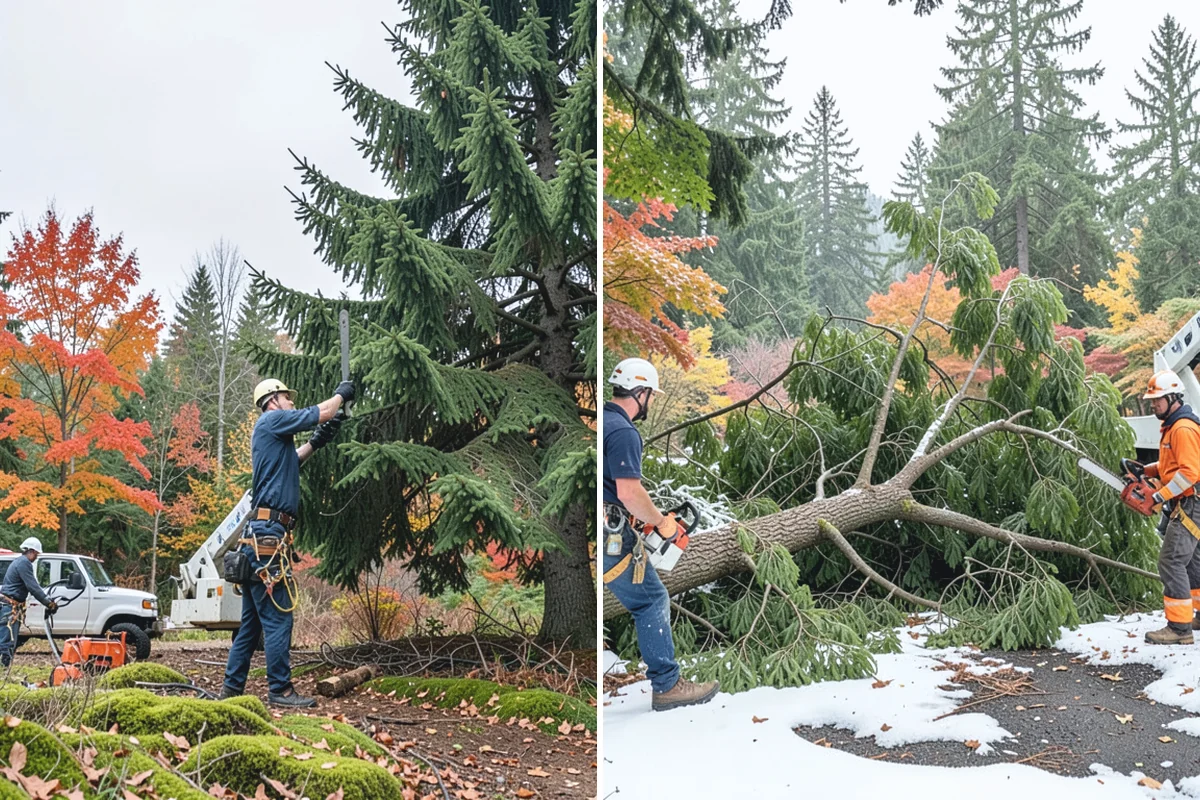
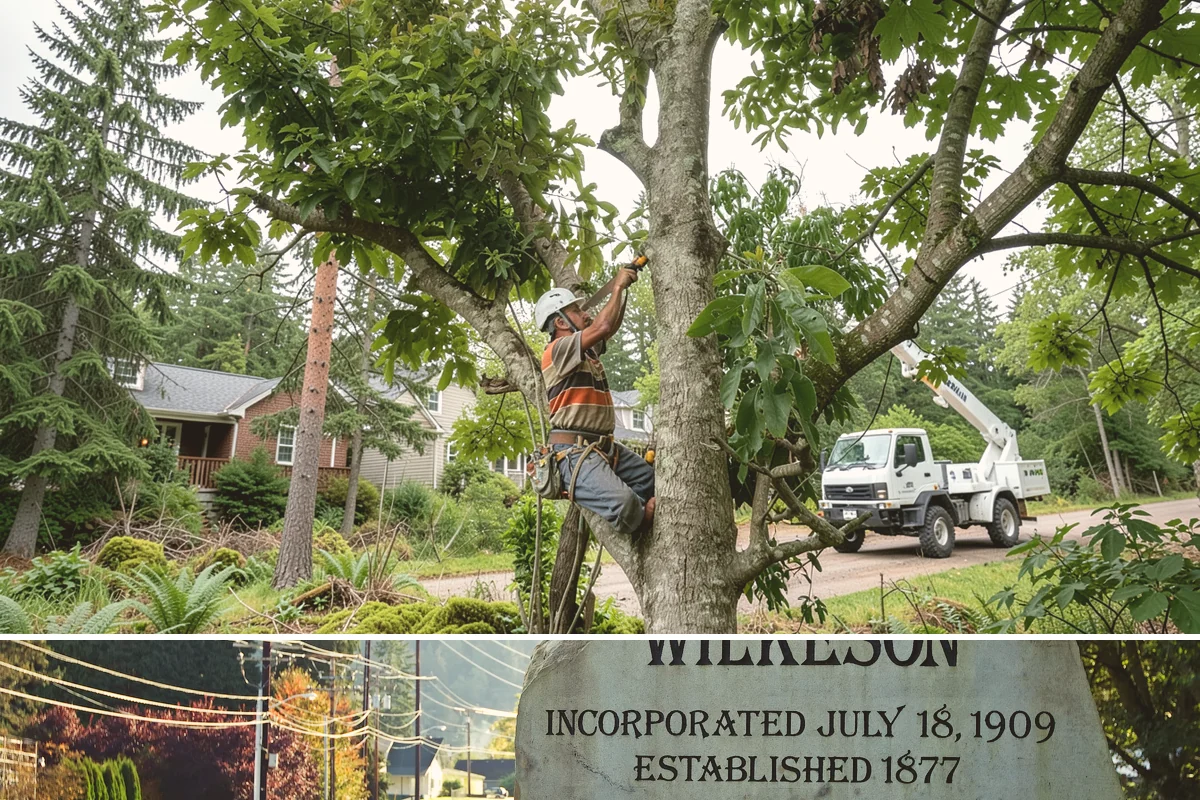
Building clearance pruning in nearby areas
Also serving Wilkeson
- Cedar Tree Pruning in Wilkesonat Washington Landscaping
- Roof Tune-Up in Wilkesonat Washington Roofing
- Vegetation Management in Wilkesonat Washington City Services