Where Safety Meets Expert Tree Service.


Wilkeson Brush Clearing
The removal of brush and light vegetation.
How much brush should you clear around your Wilkeson home? Start with the area closest to the house and work outward. Remove dead plants, dry grass and low shrubs that touch walls, decks or stairs. Then thin the growth beyond that so it is not one continuous mat of fuel.
Brush clearing also keeps access open, shows you what is growing on your lot, and gives trees room to stay healthy. Below we explain how Wilkeson's setting shapes the way this work is planned and done.
About Brush Clearing in Wilkeson
Brush clearing helps homeowners manage overgrown areas by removing light vegetation that can hinder access or increase fire risk. Our trained crews work carefully to prepare your site while protecting the features you want to keep. This service is ideal for anyone looking to reduce fuel loads and regain control of their land.
What Wilkeson Brush Clearing Includes
This category focuses on clearing brush and thinning out dense, light vegetation across a property. The goal is to improve usability by creating clear pathways and removing invasive plants that might otherwise take over. We tailor our methods to match the specific tree species and conditions found at your site.
Wilkeson Brush Clearing Process
We begin by assessing the area and marking important features like trees or structures that need protection. Crews then remove vegetation in a planned sequence, processing and hauling away debris responsibly as they go. Finally, we grade or tidy the cleared zone so it is ready for its intended use without leaving hazards behind.
Equipment We Use for Wilkeson Brush Clearing
Our teams utilize brush cutters, chainsaws, chippers, and hand tools to handle various types of growth efficiently. Hauling equipment ensures that all removed material is transported away from the property promptly. We also wear full personal protective gear to keep everyone safe while operating these powerful machines.
Wilkeson Brush Clearing Safety & Best Practices
Safety starts with identifying utility lines, uneven terrain, and hidden obstacles before any work begins. Our crews take extra care to manage debris properly so it does not create new hazards or damage retained trees. By respecting property boundaries and root zones, we ensure the site remains secure throughout the clearing process.
Signs You Need Brush Clearing in Wilkeson
You may need this service if you notice dense thorny growth making your yard difficult to navigate. Signs that include invasive species regrowing quickly or wet ground complicating access also indicate a time for intervention. If overgrown vegetation is threatening nearby structures or increasing fire risk, brush clearing can help restore safety and order.
What Affects the Cost of Brush Clearing in Wilkeson
The price of this work depends on how dense the vegetation is and whether the plants are thorny or invasive. Uneven terrain conditions that require special care will also influence the overall cost of the project. Additionally, any specific features at your site that must be protected during clearing can affect the final estimate.
Best Time of Year for Wilkeson Brush Clearing
While brush clearing can happen year-round in our region, we always check ground conditions before starting work. Wet or muddy weather common to the Puget Sound climate may require us to adjust schedules for better access and safety. Planning around these seasonal factors ensures that your crew can move efficiently without damaging the site.
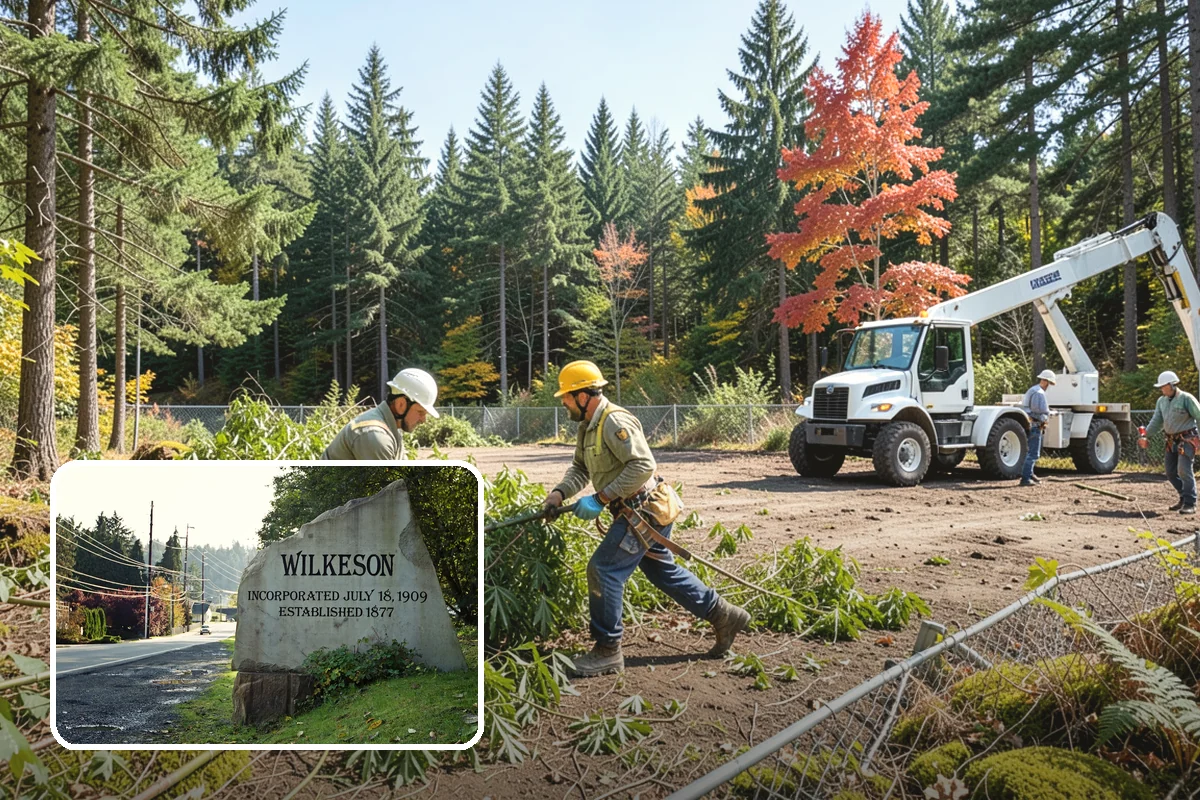
Planning brush clearing on a Wilkeson property
Two local details change how you should approach this job. Both come from public datasets, and neither describes your specific lot. They describe the town and the land around it.
Nearly every home sits where houses meet wildland
SILVIS Lab's 2020 mapping of the wildland-urban interface puts about 100% of Wilkeson's homes in that category, meaning homes close to wildland vegetation. For you, that means brush on your lot is likely connected to vegetation beyond it. Clearing works best when you think in zones: the ground right around the house, then a thinned band farther out, with gaps between shrub clumps and space between shrubs and tree branches. Removing the lower limbs of nearby trees can also help keep brush from carrying fire up into the crowns.
Dense tree cover and steep ground
Satellite data shows about 51% of Wilkeson's land under dense tree cover, with canopy of 50% or more. That tells us trees and brush are often intertwined here, so a clearing plan has to account for both. Overhead limbs, fallen branches and young trees growing up through shrubs all affect what should be cut and what should stay.
USGS elevation data also shows Wilkeson has a lot of steep ground compared with other Puget Sound cities. On a slope, roots of brush and small plants help hold soil. So we often recommend cutting stems and leaving roots in place on steeper areas, rather than digging everything out. Debris also needs to be hauled or chipped so it does not slide or pile up downhill.
Before work starts
Walk your property and mark anything you want kept, such as native shrubs, young trees or plants near a slope edge. Brush clearing can sometimes touch protected trees or critical areas, and we are not certain which city rules apply to a given lot, so we check with the city before work starts. Call or text 425-484-4442 for a free estimate.
Wilkeson tree conditions at a glance
| Homes in the wildland-urban interface | 100% |
|---|---|
| Land under dense tree cover (50%+ canopy) | 51% |
| Slopes | More steep ground than most Puget Sound cities |
| Rain and snow falling October to April | 79% of the year’s total |
Tree removal rules in Wilkeson
Wilkeson’s published rules don’t spell out clearly which removals need city approval. We check with the city before work starts.
Tree health near Wilkeson
- Bears6,697 ac
- Decline, cause not identified907 ac
- Douglas-fir engraver894 ac
Forest damage mapped from the air within 10 km of Wilkeson, 2021-2025 (USDA Forest Service and WA DNR). This covers forest land, not street or yard trees. “Decline, cause not identified” is dieback with no single cause found.
Sources: Daymet daily weather (NASA/ORNL), NOAA Storm Events, USDA plant hardiness map 2023, NRCS soil survey, USGS elevation, WA DNR landslide inventory, USDA Forest Service aerial survey, WSDA, city tree assessments and street-tree inventories, SILVIS Lab, Arbor Day Foundation, and official city and utility pages.
Brush Clearing Serving Wilkeson
Wilkeson

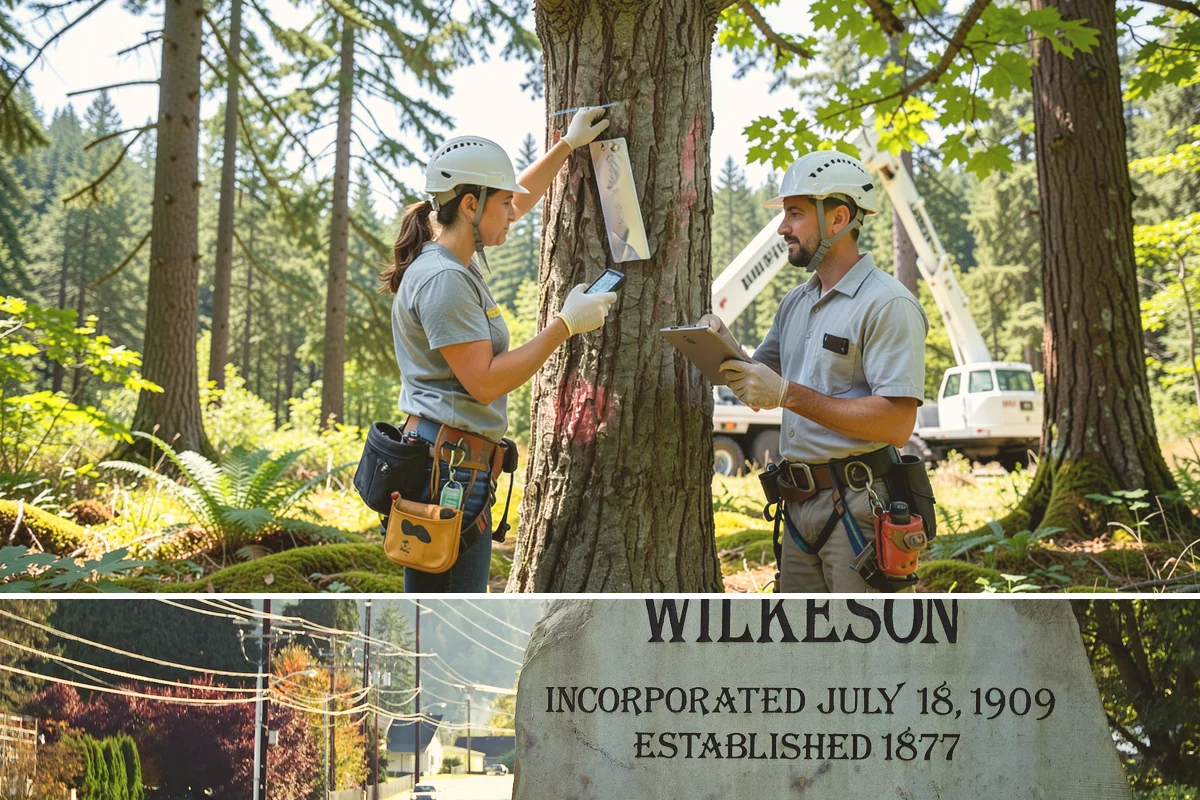
Brush clearing in nearby areas
Also serving Wilkeson
- Grading for Drainage in Wilkesonat Washington Landscaping
- Excavation in Wilkesonat Washington Construction
- Ivy Removal in Wilkesonat Washington City Services
- Firewood Processing in Wilkesonat Washington Firewood