Where Safety Meets Expert Tree Service.


University Place Surface Root Grinding
The grinding of exposed surface roots.
Can you grind down the roots that are humping up through your lawn? Usually, yes. Surface root grinding removes the exposed top section of a root with a grinder, so the ground can be mowed, walked on and leveled again without pulling out the tree.
The work is most useful when roots are a tripping hazard, catch the mower, or lift a walkway edge. Before anything is cut, it helps to know which roots feed the tree and how much of each one can come off. That decides how deep and how far the grinding goes.
About Surface Root Grinding in University Place
Surface root grinding is a helpful solution for homeowners dealing with exposed tree roots that create tripping hazards or block usable ground space. Our trained crews work carefully to remove these obstructions while respecting the unique conditions of your property. This service helps you reclaim safe, functional areas around your landscape without needing invasive excavation.
What University Place Surface Root Grinding Includes
This category focuses specifically on grinding away surface roots that are visible above the soil line rather than digging up entire stumps underground. We match our methods to your specific tree species and site layout to ensure effective removal of root systems near walkways or play areas. The goal is to clear out debris while preparing the area for future planting or general use.
University Place Surface Root Grinding Process
Before any work begins, we locate and mark all nearby utilities to keep everyone safe during the project. We then clear a workspace around the stump and proceed with grinding or extracting it along with the surface roots extending from it. Once removed, we process the grindings into mulch and backfill the area as needed to restore proper grading for your lawn.
Equipment We Use for University Place Surface Root Grinding
Our teams utilize specialized stump grinders designed to handle various root sizes while minimizing damage to surrounding turf. We also bring excavation tools, wheelbarrows, rakes, and utility locating support equipment to manage soil conditions effectively. All crew members wear necessary personal protective gear, including eye protection and hearing safety devices during operation.
University Place Surface Root Grinding Safety & Best Practices
Safety is our priority, so we always confirm that underground utilities are marked before starting any grinding work near your home or garden. We keep bystanders clear of the area while equipment runs to prevent injury from ejected debris flying outward. Crews also stay alert for buried obstructions like rocks and adjust their approach if access around a stump feels limited.
Signs You Need Surface Root Grinding in University Place
You likely need this service when you notice exposed roots causing people to trip or creating uneven surfaces in your yard. If pests are attracted to the wood left behind or if new shoots keep growing from old root systems, grinding can help stop that cycle. This work is also useful whenever you want to prepare a specific spot for replanting without disturbing deep underground structures.
What Affects the Cost of Surface Root Grinding in University Place
The final price depends on factors such as the size of the stump and how extensive the surface roots are in your soil. Conditions like rocks or debris mixed into the ground can influence the time required, while limited access for our equipment may also adjust costs. We consider utility locating requirements and proper disposal methods when determining a fair estimate for your specific situation.
Best Time of Year for University Place Surface Root Grinding
In Washington’s Puget Sound climate, this work can generally be performed throughout all seasons of the year with minimal interruption to your schedule. However, we will make scheduling adjustments if frozen ground makes grinding difficult or if heavy rain limits our ability to excavate safely. Planning ahead during dry periods often ensures smoother progress and better results for reclaiming your outdoor space.
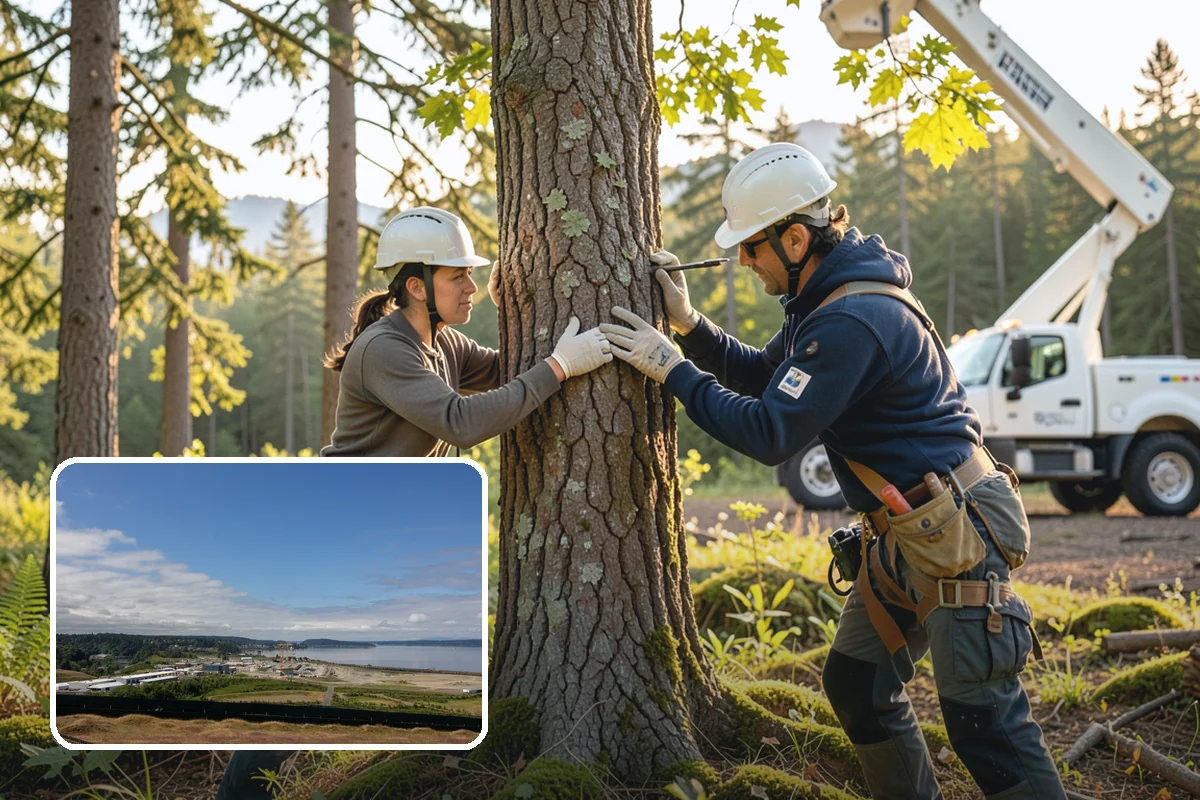
Surface root grinding in University Place: what to know first
Why roots surface in local soils
The NRCS soil survey shows that 56% of the land in University Place has a hard or restrictive layer, such as glacial hardpan, within 40 inches of the surface. Alderwood is the most common soil series. This is a survey of the city's soils, not a test of your yard. But where a dense layer sits close to the surface, roots often spread sideways through the upper soil instead of going down. That is one common reason roots show up at the surface, and it is worth keeping in mind when deciding how much to remove.
Which roots are safe to grind
Grinding takes off only the exposed part of a root, working down from the top. Small roots are usually simple to treat. A large root close to the trunk is different, because it may anchor the tree and carry much of its water. Removing too much can stress the tree or make it less stable. Our ISA Certified Arborist looks at the size of each root, how close it is to the trunk, and the condition of the tree before deciding what to take. In some cases the better choice is to leave a root alone and build a path or edging around it.
Planning for a house lot
Census ACS 2020-2024 figures show that single-family detached houses make up about 54% of University Place housing. For many of those owners, the roots in question sit close to a driveway, walkway, patio or lawn edge. Tell us where the roots cause trouble and what you want to do with the space afterward. Grinding can be followed by filling with soil and reseeding, though roots may regrow or resurface over time.
Surface root grinding is not tree removal. If you are also thinking about removing the tree, we check with the city about any rules before work starts. Call or text 425-484-4442 for a free estimate.
University Place tree conditions at a glance
| Soils | 56% of land has hardpan or another restrictive layer within 40 in; most common series Alderwood |
|---|---|
| Rain and snow falling October to April | 83% of the year’s total |
| Days that freeze at night and thaw by day | 36 a year |
Tree removal rules in University Place
Tree Removal Permit required to cut or remove six or more trees in any consecutive 36-month period; 'limited tree removal' (five trees or less in 36 consecutive months) is exempt with City notification, except in landslide/erosion hazard areas, fish & wildlife habitat areas or buffers, and wetlands/buffers. Permit application submitted with building/development/land-use permit.
Regulated size: 'Tree' = 6 inches DBH or more (measured 4.5 ft above ground).
Official city source. Rules change; we confirm with the city before work starts.
Sources: Daymet daily weather (NASA/ORNL), NOAA Storm Events, USDA plant hardiness map 2023, NRCS soil survey, USGS elevation, WA DNR landslide inventory, USDA Forest Service aerial survey, WSDA, city tree assessments and street-tree inventories, SILVIS Lab, Arbor Day Foundation, and official city and utility pages.
Surface Root Grinding Serving University Place
University Place
Surface root grinding in nearby areas
Also serving University Place
- Sod Repair in University Placeat Washington Landscaping
- Park Tree Maintenance in University Placeat Washington City Services