Where Safety Meets Expert Tree Service.

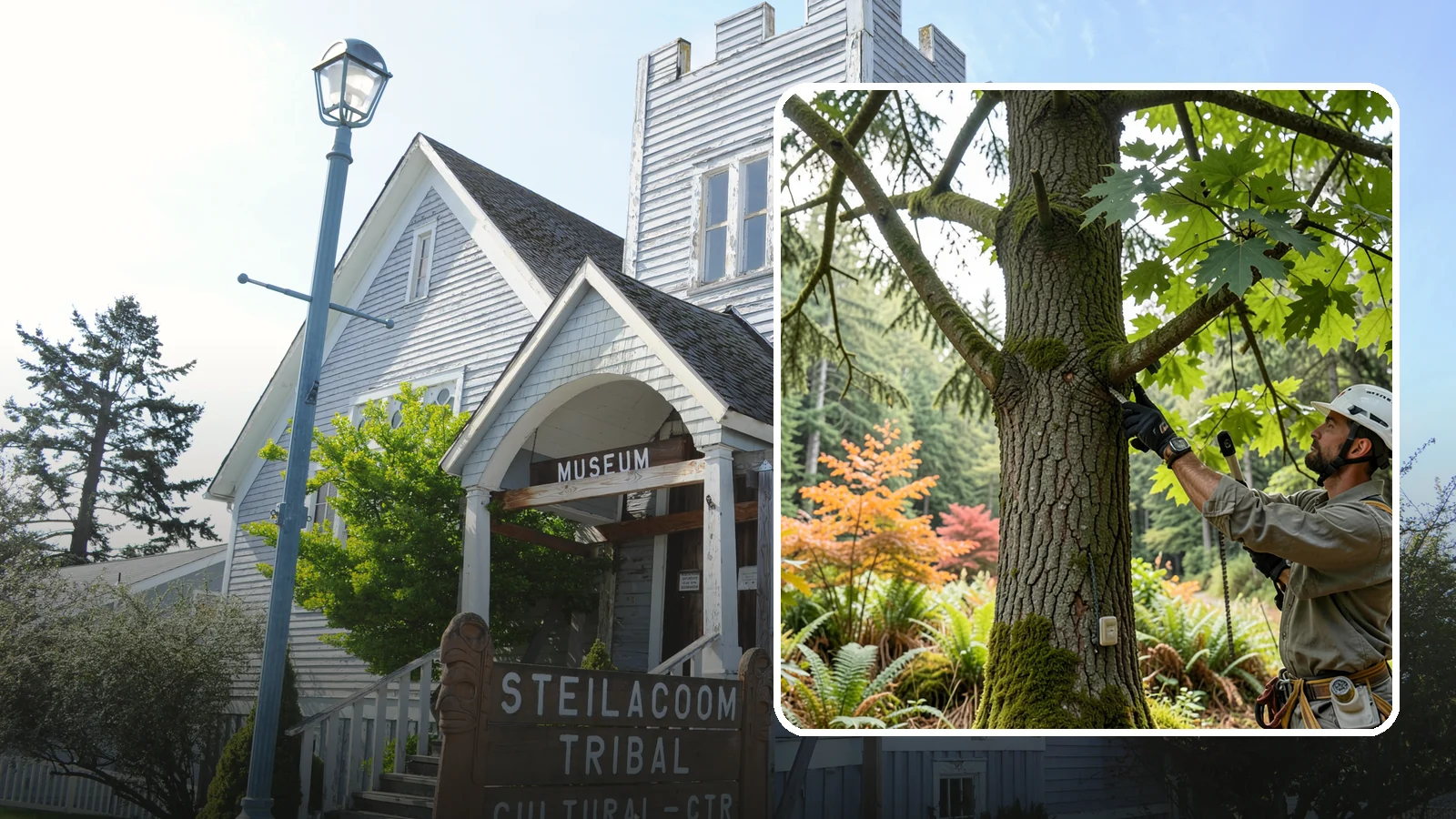
Steilacoom Tree Health Inspection
A professional evaluation of a tree’s overall condition.
A federal aerial survey of forest within 10 km of Steilacoom mapped Douglas-fir beetle damage on 546 acres between 2021 and 2025. That is forest land, not yard trees, but it shows which pests are active in the surrounding landscape. If you have a Douglas-fir, Oregon white oak or madrone, it is worth a close look.
A tree health inspection checks for thinning crowns, dead branches, fungal growth, and root or trunk problems before they become emergencies. Early signs are easy to miss from the ground, so a scheduled look can tell you whether a tree needs monitoring, treatment, pruning or removal.
About Tree Health Inspection in Steilacoom
A tree health inspection offers a professional look at your trees’ overall condition to help keep them safe and strong for years to come. This valuable check-up is designed specifically for homeowners who want to catch potential issues before they become serious problems. It serves as the first step in creating a customized care plan that supports long-term stability and life extension for valued specimens.
What Steilacoom Tree Health Inspection Includes
Tree health inspection provides an expert evaluation of your trees’ current status, focusing on identifying early warning signs of trouble. Our trained crews follow recognized arboricultural standards to assess soil quality, root structure, pest presence, and disease indicators while matching methods to each tree’s specific species and site conditions. The goal is to clearly identify contributing factors like compacted soils or girdling roots so you can guide an effective care plan forward.
Steilacoom Tree Health Inspection Process
Our team begins by carefully inspecting the tree within its surrounding environment to understand how soil, pests, or past construction might be affecting it. Once we have identified these issues, we recommend and apply appropriate treatments while documenting our findings for your records. We ensure that follow-up care is planned based on accurate documentation of conditions found during the initial visit.
Equipment We Use for Steilacoom Tree Health Inspection
To get a complete picture, we utilize diagnostic tools along with soil probes and sampling kits to examine what lies beneath the surface. Depending on access needs or wet season conditions, our crews may bring air excavation tools to gently assess root zones without causing damage. We also use specialized injection equipment for treatments while wearing necessary personal protective gear throughout the workday.
Steilacoom Tree Health Inspection Safety & Best Practices
During any inspection involving products, we strictly follow label instructions and application guidelines to ensure everyone remains safe. Our methods are designed to protect your soil and surrounding plantings while avoiding accidental damage to roots or trunks during our visit. We take great care to document all conditions accurately so that future treatments remain effective without risking the tree’s health.
Signs You Need Tree Health Inspection in Steilacoom
You may need this service if you notice signs of decline caused by poor soils, pests, disease, or changes in ground grade from past construction. Girdling roots and other hidden issues often go unnoticed until a professional evaluation reveals them early enough to prevent escalation. If your trees have experienced stress from environmental shifts or nearby development, an inspection can help determine the best path forward for their recovery.
What Affects the Cost of Tree Health Inspection in Steilacoom
The investment for this service varies based on several factors including the specific species of tree being evaluated and the complexity of diagnosing soil issues. Site conditions such as difficult access requirements will also influence how much time and resources are needed to complete a thorough assessment. Additionally, identifying pests or diseases requires specialized attention that impacts the overall cost structure of your care plan.
Best Time of Year for Steilacoom Tree Health Inspection
In our Puget Sound climate, you can schedule this inspection at any point throughout the year since trees remain active in most seasons. However, during wetter periods, we may need to use air excavation tools specifically to effectively assess root zones without getting bogged down by mud or water. Planning your visit allows us to choose the right timing and equipment for clear results regardless of current weather patterns.

Tree health inspections in Steilacoom: what we check and why
An inspection starts at the base of the tree and works upward. We look at how the tree is built, how it is growing and what is stressing it.
The steps
- Root collar and soil: signs of decay, fungi, lifted soil, cut or buried roots.
- Trunk: cracks, cavities, oozing, bark loss, pest entry holes.
- Crown: leaf size and color, dieback, dead branches, weak unions.
- Surroundings: nearby structures, grade changes, and anything under the canopy that would be hit by a failure.
We then explain what we found and what we would do about it. That can mean no action, a pruning plan that follows ISA/ANSI A300 practice, a follow-up check, or removal if the tree is a hazard.
Local details that shape the advice
The same survey mapped 546 acres of Douglas-fir beetle and 347 acres of Douglas-fir engraver damage, both in Douglas-fir. It also mapped 439 acres of decline with no cause identified in Oregon white oak, Pacific madrone and other hardwoods. That label means dieback where no single cause was found. So if a hardwood is thinning, we look at several possible causes rather than assume one. These figures describe nearby forests, not the trees on your property.
Armillaria root rot matters for wind safety. WSU HortSense notes that Armillaria-infected trees have damaged roots and are more likely to fall in high winds. Because the roots are underground, the crown may look fairly normal while the base is compromised, which is why we check the root collar.
About 83% of Steilacoom's yearly rain and snow falls from October to April, according to Daymet data for 2005 to 2025. Saturated soil during storm season can make a weakened tree more likely to fail, so a late-summer or early-fall inspection leaves time to act before the wet months.
Call or text 425-484-4442 to schedule an inspection. Estimates are free. If a tree needs removal, we check with the city before any work starts.
Steilacoom tree conditions at a glance
| USDA hardiness zone | 8b |
|---|---|
| Soils | 43% of land has hardpan or another restrictive layer within 40 in; most common series Alderwood |
| Rain and snow falling October to April | 83% of the year’s total |
| Days with 0.1 in or more of rain | 111 a year |
| Tree canopy | Among the most heavily treed Puget Sound cities (satellite data) |
| Days that freeze at night and thaw by day | 37 a year |
Tree health near Steilacoom
Spongy moth (WSDA 2016): WSDA trap detection(s): 1 moth(s) in 1 trap catch record(s).
- Douglas-fir beetle546 ac
- Decline, cause not identified439 ac
- Douglas-fir engraver347 ac
Forest damage mapped from the air within 10 km of Steilacoom, 2021-2025 (USDA Forest Service and WA DNR). This covers forest land, not street or yard trees. “Decline, cause not identified” is dieback with no single cause found.
Sources: Daymet daily weather (NASA/ORNL), NOAA Storm Events, USDA plant hardiness map 2023, NRCS soil survey, USGS elevation, WA DNR landslide inventory, USDA Forest Service aerial survey, WSDA, city tree assessments and street-tree inventories, SILVIS Lab, Arbor Day Foundation, and official city and utility pages.
Tree Health Inspection Serving Steilacoom
Steilacoom

Tree health inspection in nearby areas
Also serving Steilacoom
- Tree Staking in Steilacoomat Washington Landscaping
- Bark Installation in Steilacoomat Washington City Services