Where Safety Meets Expert Tree Service.

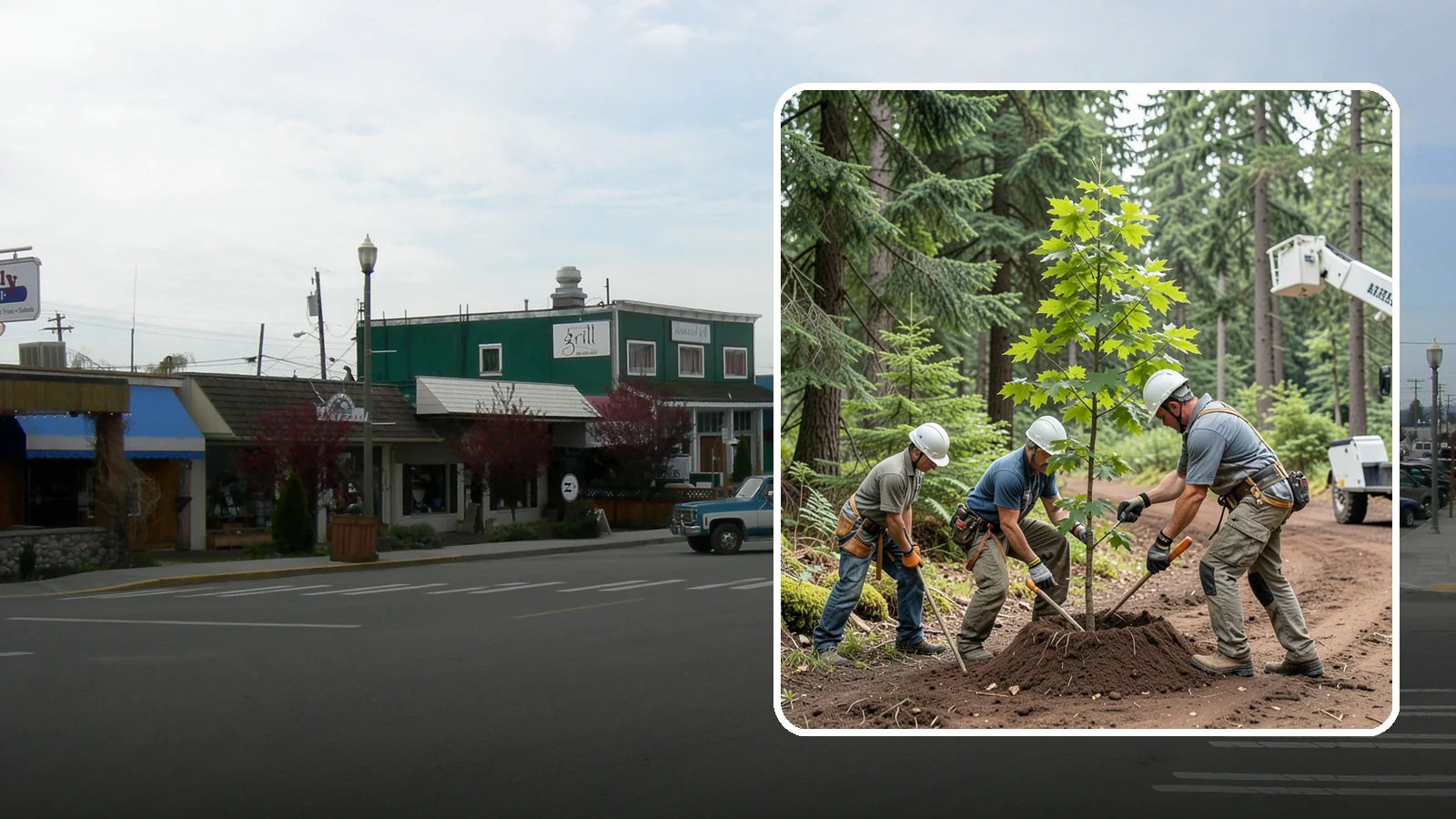
Stanwood Reforestation Planting
Larger-scale planting to re-establish tree cover.
You may be looking at a cleared slope, a stand thinned by storm or disease, or a back acre that never regrew the way you hoped. Bare ground like that can fill with blackberry and other weeds before anything useful takes hold.
Reforestation planting puts the right young trees back in the right spots. The choices that matter most come early: which species, where each one goes, and how the roots are handled on planting day. Here is how those choices play out in Stanwood.
About Reforestation Planting in Stanwood
Reforestation planting helps homeowners restore tree cover on larger areas that have been cleared or degraded. This approach brings back the benefits of shade, privacy, and improved site ecology for your property. Our trained crews work to establish healthy trees that are well-suited to your specific location.
What Stanwood Reforestation Planting Includes
This service focuses on re-establishing broad canopy coverage rather than planting individual specimens in isolation. We match our methods carefully to the tree species chosen, current site conditions, and available access points. The goal is to create a resilient forest layer that supports long-term environmental health for your land.
Stanwood Reforestation Planting Process
Our team begins by assessing your site to select suitable species before preparing the soil and planting area. Each tree is planted at the correct depth with proper spacing, followed by mulching and watering in. We also provide guidance on establishment care to ensure these new trees thrive as they grow into a mature canopy.
Equipment We Use for Stanwood Reforestation Planting
The work utilizes digging tools for site preparation alongside equipment designed specifically for efficient planting operations. Soil amendments and fresh mulch are applied to support root development, while specialized watering gear ensures adequate moisture levels. Staking materials and personal protective equipment are used whenever necessary to secure young trees and keep crews safe.
Stanwood Reforestation Planting Safety & Best Practices
Before any ground is broken, we locate underground utilities to prevent damage during the digging process. We strictly select species suited to your site conditions to avoid future conflicts with structures or other vegetation. Planting at the proper depth and handling roots carefully are essential steps that protect both the new trees and our workers.
Signs You Need Reforestation Planting in Stanwood
You may need this service if you have areas of land where tree cover has been lost due to clearing or degradation. Signs include compacted soil, existing gaps in your canopy, or a desire to expand privacy and shade across a larger footprint. This project is ideal when the goal is to restore ecological balance rather than just adding isolated trees.
What Affects the Cost of Reforestation Planting in Stanwood
The overall investment depends on how accessible your site is for our crews and equipment teams. Costs are also influenced by soil conditions that might require amendments, the complexity of species selection, and whether staking or specialized watering gear is needed. These factors determine the resources required to successfully establish a new forest layer on your property.
Best Time of Year for Stanwood Reforestation Planting
In Washington’s Puget Sound climate, planting is generally best performed during dormant seasons to minimize stress on young trees. However, specific timing must always match the unique establishment requirements of the tree species you choose for your site. We will coordinate with you to schedule work when conditions are optimal for successful root growth and survival.

How reforestation planting works in Stanwood
Most failed plantings fail for ordinary reasons. The species doesn't suit the site, the roots were left circling in the container, or the seedlings dried out in their first summer. Each can be planned for.
Timing is the first local detail to use. Daymet climate data for 2005-2025 shows that 78% of Stanwood's yearly rain and snow falls from October to April. Planting in that wet window gives roots time to settle before the dry months. A planting done in late spring leaves the young trees depending on you for water.
The second is the condition of nearby forest. A federal aerial survey by the USDA Forest Service and WA DNR, covering 2021 to 2025, mapped forest within 10 km of Stanwood. This is forest land, not yard trees, so it doesn't describe your property. Still, it shows what is happening around town. The largest mapped category was 4,026 acres of decline with no cause identified, mostly in unknown hardwoods and western redcedar. That label means dieback where no single cause was found. Bears damaged 158 acres of Douglas-fir, and Douglas-fir engraver beetles affected 113 acres. For a planting plan, this is a reason to mix species rather than put everything into one. If one species struggles, the others still stand.
The third is root handling. The WSU Extension Pacific Northwest Gardener's Handbook advises straightening or cutting circling roots at planting, because they can cause poor anchorage up to 30 years later. We check every root ball for this before a tree goes in the ground.
The work itself is straightforward. We look over the site, choose species suited to its light, soil and drainage, and note that Stanwood is in USDA hardiness zone 8b, so the plants need to be reliable in that zone. Then we clear competing growth around each planting spot, set the trees at the correct depth, and mulch without piling it against the stems. If the site is near a stream, a steep slope or a protected tree, we check city rules with Stanwood before work starts.
Stanwood tree conditions at a glance
| USDA hardiness zone | 8b |
|---|---|
| Soils | 31% of land has hardpan or another restrictive layer within 40 in; most common series Tokul; 1% well drained |
| Rain and snow falling October to April | 78% of the year’s total |
| Days that freeze at night and thaw by day | 37 a year |
Tree removal rules in Stanwood
Stanwood’s published rules don’t spell out clearly which removals need city approval. We check with the city before work starts.
Sources: Daymet daily weather (NASA/ORNL), NOAA Storm Events, USDA plant hardiness map 2023, NRCS soil survey, USGS elevation, WA DNR landslide inventory, USDA Forest Service aerial survey, WSDA, city tree assessments and street-tree inventories, SILVIS Lab, Arbor Day Foundation, and official city and utility pages.
Reforestation Planting Serving Stanwood
Stanwood

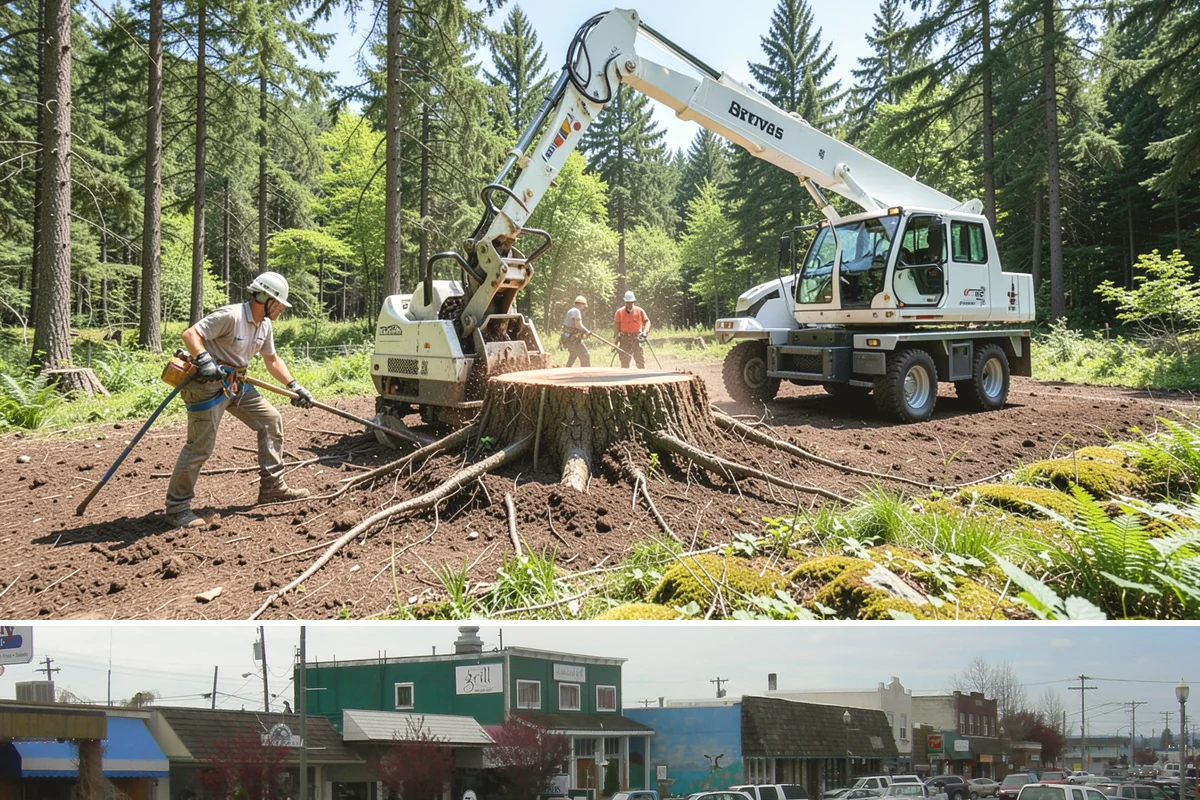
Reforestation planting in nearby areas
Also serving Stanwood
- Perennial Planting in Stanwoodat Washington Landscaping
- Municipal Irrigation Installation in Stanwoodat Washington City Services