Where Safety Meets Expert Tree Service.

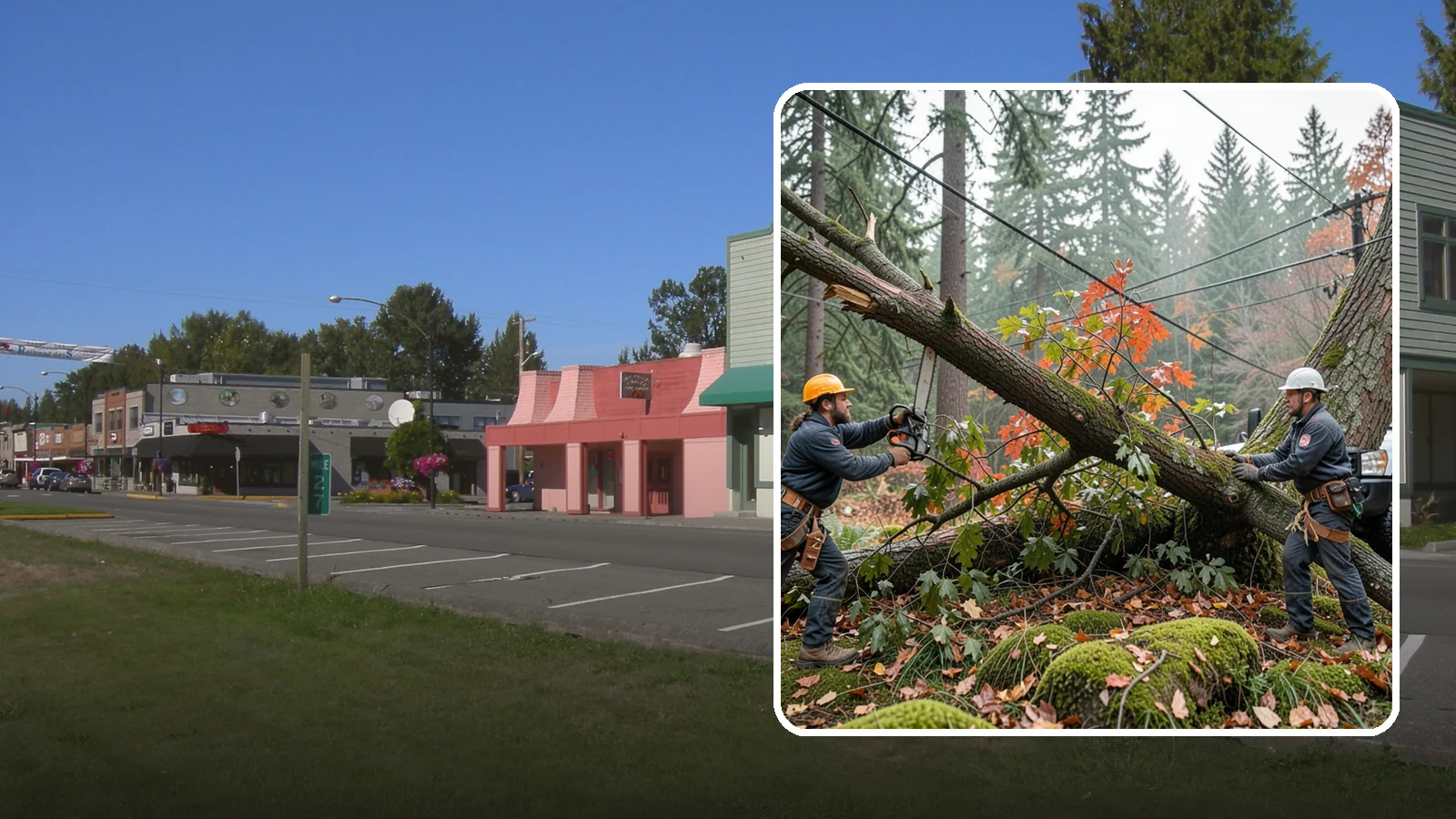
Snoqualmie Emergency On-call Arborist
On-call access to an arborist for urgent situations.
What should you do when a tree comes down or splits during a storm in Snoqualmie? Get everyone away from it first, then look at what it is touching. A tree on a house, a car or a driveway needs a different response than one that fell across open lawn.
Take photos from a safe distance, note any cracks in the trunk or lifted soil around the roots, and keep people and pets clear of the area. If a line is down or sagging, treat it as live and call the utility. Then call an arborist to assess the tree.
About Emergency On-call Arborist in Snoqualmie
When a tree situation turns urgent, you need an arborist who can respond quickly without delay. This on-call access is designed for homeowners facing sudden issues that require immediate professional attention. It ensures expert guidance arrives exactly when it matters most to protect your property and family safety.
What Snoqualmie Emergency On-call Arborist Includes
Emergency on-call arborist provides direct access to a trained crew ready to handle urgent situations as they arise. The work follows recognized standards while carefully matching methods to the specific tree species, site conditions, and available access points. This service delivers objective guidance that helps you make informed decisions during critical moments for your landscape.
Snoqualmie Emergency On-call Arborist Process
We begin by gathering essential information about your site and the trees involved before moving forward with an inspection. Our team assesses current conditions and analyzes findings against established objectives to ensure a thorough evaluation. Clear recommendations or reports are then prepared and reviewed directly with you so everyone understands the next steps.
Equipment We Use for Snoqualmie Emergency On-call Arborist
Trained crews utilize specialized diagnostic and measurement tools to accurately evaluate tree health and structural integrity. Mapping, imaging equipment, and reporting software help document conditions for permits, insurance claims, or future planning needs. Personal protective gear is worn throughout all tasks to ensure safety for both our team and your property during the response.
Snoqualmie Emergency On-call Arborist Safety & Best Practices
All findings are grounded in observed evidence and recognized industry standards rather than assumptions made under pressure. We openly disclose any limitations within an assessment so you understand exactly what can be determined at that moment. If uncertainty remains after inspection, we recommend necessary follow-up actions to address potential risks before they escalate.
Signs You Need Emergency On-call Arborist in Snoqualmie
You may need this service when a storm has damaged branches or if hidden defects suddenly become visible during high winds. Situations where incomplete site history complicates the picture often require an expert’s eye to separate fact from speculation. Regulatory requirements that vary by location can also create urgent needs for guidance on how best to proceed legally and safely.
What Affects the Cost of Emergency On-call Arborist in Snoqualmie
The final cost is influenced by specific conditions such as difficult access points or unique characteristics of the tree species in question. Diagnosing defects while managing time pressure adds complexity to the work, which naturally impacts the overall expense. These factors ensure you receive a fair price that reflects the true effort required for your urgent situation.
Best Time of Year for Snoqualmie Emergency On-call Arborist
This service is available year-round despite our typical Puget Sound weather patterns and seasonal changes. However, heavy rain or snow can create logistical challenges that may complicate rapid emergency response efforts in certain conditions. Planning ahead when possible helps us navigate these environmental factors while still providing the support you need quickly.

Storm tree emergencies in Snoqualmie: what to expect
Why storm damage is not a rare event here
Weather records for the forecast zone that includes Snoqualmie show 40 high and strong wind episodes between 2005 and 2025. That is a regional figure, not a count for any one yard. It does tell you that wind is a recurring risk, so a tree that looks leaning, cracked or poorly anchored is worth having checked before the next system arrives, not after.
Ice is less frequent, but it changes the work
The same zone logged 3 ice storm episodes over those 20 years. Ice loads branches with weight they were not built to carry, and limbs can fail hours after the ice forms or while it melts. If you hear cracking or see limbs bowed low, stay out from under them. Broken limbs that are still hanging in the crown, often called hangers, are a real hazard during cleanup and are best left to someone trained and equipped to remove them.
Power lines and cleanup
If branches or a trunk are touching a power line, keep away and call Puget Sound Energy. We could not find a published PSE policy on storm debris, so do not assume the utility will clear wood from your property. Routine utility work generally leaves cut wood on site in manageable pieces, and we would plan for that possibility.
When you call 425-484-4442, tell us what the tree is touching, whether anyone is at risk, and send photos by text if you can. A certified arborist can then judge whether the tree needs immediate stabilizing, sectioning, or removal. If a city permit could apply to removal, we check with Snoqualmie before work starts.
Snoqualmie tree conditions at a glance
| High and strong wind episodes, 2005-2025 | 40 in the forecast zone |
|---|---|
| Ice storm episodes, 2005-2025 | 3 in the forecast zone |
| Average snowfall | 17.6 in a season |
| Soils | 48% of land has hardpan or another restrictive layer within 40 in; most common series Tokul |
| Rain and snow falling October to April | 80% of the year’s total |
| Electric utility | Puget Sound Energy (PSE) |
Tree removal rules in Snoqualmie
Snoqualmie has no standalone private-tree permit; tree cutting is regulated as clearing under SMC 15.20. A clearing and grading permit is required for all clearing except listed exemptions.
Regulated size: Significant tree = evergreen at least 15 in DBH.
Official city source. Rules change; we confirm with the city before work starts.
Trees near the power line to your house
Puget Sound Energy (PSE): Service line (wire from PSE pole to home or meter pole): PSE does not trim it; homeowner/private arborist trims.
PSE performs a safety disconnection so the homeowner or private tree trimmer/arborist can work; Call at least 5 business days ahead to check crew availability and potential charges.
Safety disconnect: 1-888-321-7779 (5+ business days ahead). Utility page.
Any fee for a disconnect is set by the utility.
Strongest wind events near Snoqualmie
- Dec 17, 2010: gusts to 72 mph
- Feb 1, 2017: gusts to 70 mph
- Feb 7, 2012: gusts to 70 mph
NOAA Storm Events, forecast zone that includes Snoqualmie, 2005-2025.
Sources: Daymet daily weather (NASA/ORNL), NOAA Storm Events, USDA plant hardiness map 2023, NRCS soil survey, USGS elevation, WA DNR landslide inventory, USDA Forest Service aerial survey, WSDA, city tree assessments and street-tree inventories, SILVIS Lab, Arbor Day Foundation, and official city and utility pages.
Emergency On-call Arborist Serving Snoqualmie
Snoqualmie


Emergency on-call arborist in nearby areas
Also serving Snoqualmie
- Xeriscaping in Snoqualmieat Washington Landscaping