Where Safety Meets Expert Tree Service.

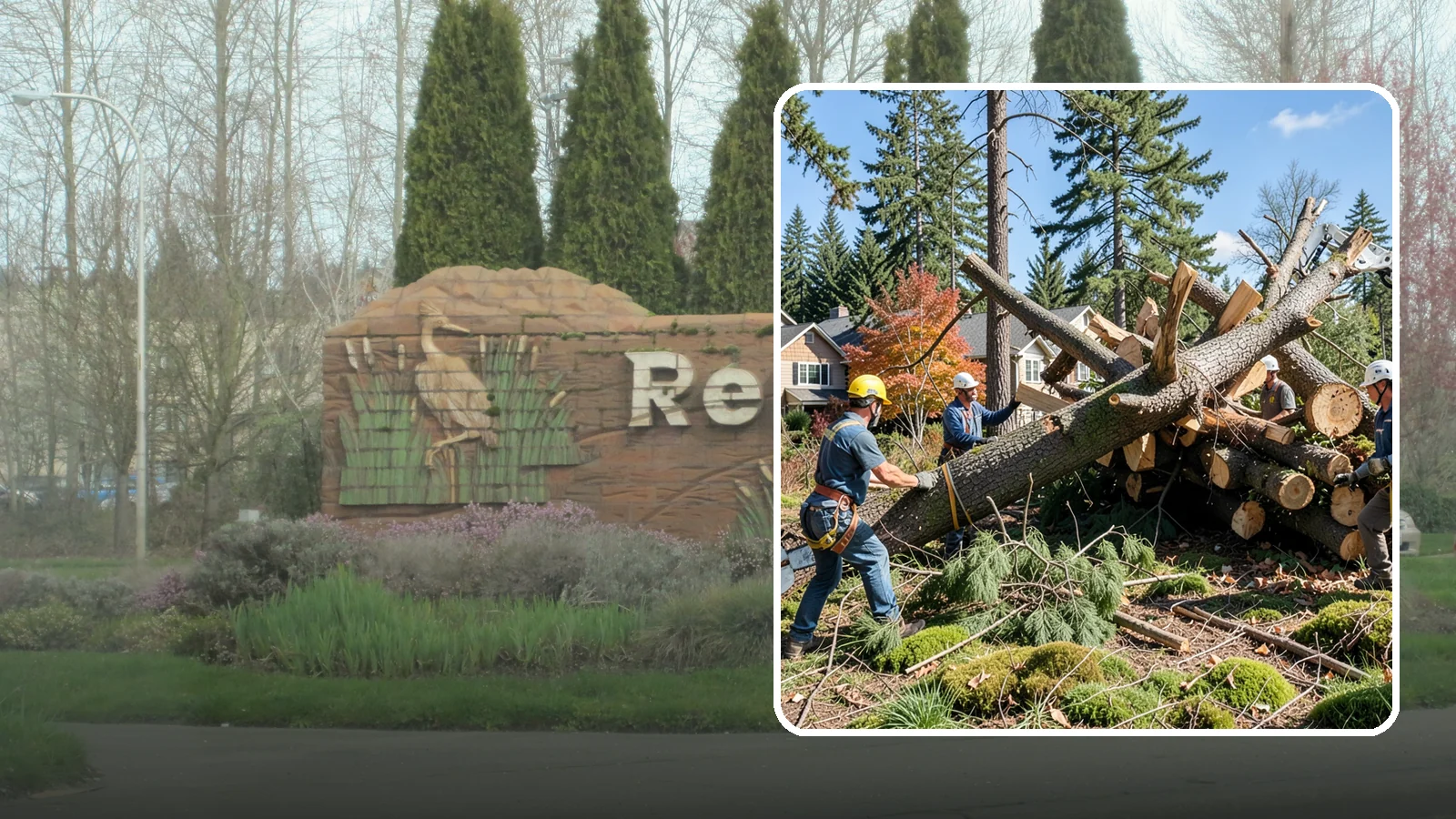
Renton Hazardous Tree Removal
The controlled removal of trees that pose a safety risk due to structural defects, decay, or dangerous lean.
How do you know if a tree in your Renton yard is hazardous? Start with the crown. A large volume of dead or dying branches is a warning sign, according to the WSU Extension Pacific Northwest Gardener's Handbook. Also look at the trunk, the base and the soil around it for cracks, leaning that is new, or heaving roots.
If you see any of these, have the tree assessed before the next storm season. A trained eye can tell you whether the tree needs removal, pruning or just monitoring.
About Hazardous Tree Removal in Renton
If a tree on your property shows signs of danger, our team is here to help you remove it safely. This specialized service protects people, homes, and utilities from trees that have become unstable or decayed. We work with homeowners across the region who need immediate attention for hazardous conditions.
What Renton Hazardous Tree Removal Includes
Hazardous tree removal involves carefully taking down trees that pose a safety risk due to structural defects, decay, or dangerous lean. This process is necessary when a tree threatens your property and cannot be made safe through simple pruning or support systems. Our crews use controlled methods matched specifically to the species of tree and conditions on your site.
Renton Hazardous Tree Removal Process
The work begins with an on-site assessment to evaluate hazards before establishing clear drop zones and safety perimeters. Trained professionals then rig limbs or fell the stem in a controlled sequence while processing the wood for disposal. Once the removal is complete, we clear all debris from the area to leave your property clean and safe.
Equipment We Use for Renton Hazardous Tree Removal
We utilize chainsaws and climbing gear along with specialized rigging equipment to handle difficult removals safely. Depending on the job site requirements, an aerial lift or crane may be used alongside a wood chipper for efficient cleanup. Ground protection measures are also in place to shield your landscaping during these operations.
Renton Hazardous Tree Removal Safety & Best Practices
Our crews maintain strict safety protocols by keeping drop zones clear and planning controlled fall paths away from structures. We always identify overhead utility lines before starting work and inspect trees thoroughly for hidden decay or defects. Every team member uses proper fall protection and communicates constantly with ground personnel to ensure a safe environment.
Signs You Need Hazardous Tree Removal in Renton
You may need this service if you notice an unpredictable lean, visible cracks in the trunk, or signs of internal rot that threaten your home. Situations where a tree is close to power lines or blocking access often require immediate professional intervention rather than simple trimming. If standard pruning cannot stabilize the situation, removal becomes the necessary step for safety.
What Affects the Cost of Hazardous Tree Removal in Renton
The final cost depends on factors such as the size of the tree and any hidden internal decay that complicates the work. Proximity to structures or power lines also influences pricing, as does limited access for heavy equipment at your site. Additionally, requirements for wood disposal will play a role in determining the overall expense of the project.
Best Time of Year for Renton Hazardous Tree Removal
While we can perform this service year-round with appropriate planning, wet seasons may require specialized rigging gear to manage slippery conditions. Operations must pause immediately if high winds threaten an unstable tree leaning dangerously toward your property or neighbors. We schedule work at times that prioritize safety while accommodating the specific needs of each site condition.
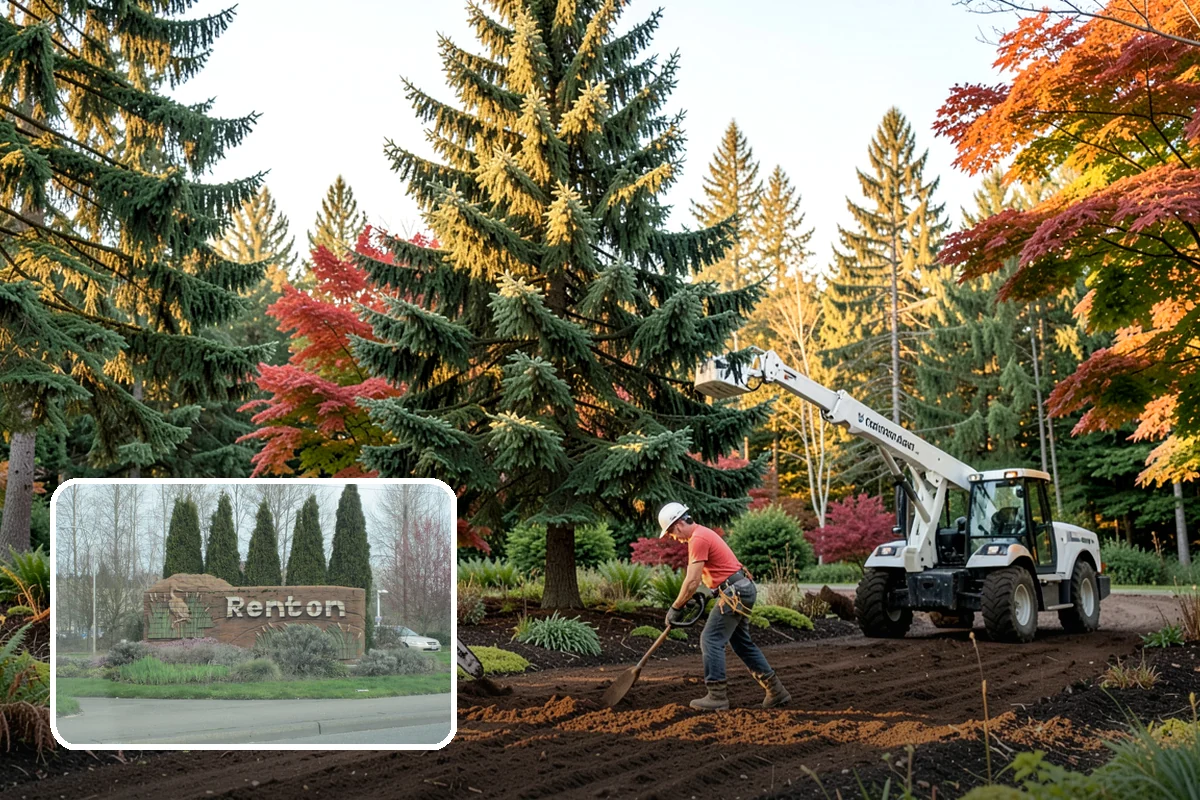
Hazardous tree removal in Renton: what to check first
Signs worth acting on
Dead or dying branches covering much of the crown are the clearest sign the WSU Extension handbook points to. Add other things you can see from the ground: deep cracks, fungus at the base, soil lifting on one side, or a lean that has changed. Take photos with dates. They help when we compare the tree over time and when we talk with the city.
Wind and slopes
Federal weather records for the forecast zone that includes Renton show 38 high and strong wind episodes from 2005 to 2025. The strongest gust recorded in that zone was 74 mph on December 14, 2006. These are zone-wide figures, not measurements from your yard. They do show that a weakened tree here will likely face real wind more than once.
WA DNR also maps 14 landslides in Renton. If your tree stands on or near a slope, tell us. Roots on unstable ground change how a tree should be assessed and how it is taken down.
Renton's rule on hazard trees
According to the city's tree code, up to 3 high-risk trees in one year may be removed without an RVMP, outside shorelines and critical areas, provided no landmark trees are removed. That wording is narrow. If your tree is a landmark tree, or sits in a shoreline or critical area, the exception does not apply. When the situation is unclear, we check with the city before any work starts.
A free estimate is a practical first step, and our ISA Certified Arborist can look at the tree with you. Call or text 425-484-4442.
Renton tree conditions at a glance
| USDA hardiness zone | 9a (8b to 9a across the city) |
|---|---|
| Slopes | Some steep slopes |
| Landslides mapped by WA DNR | 14 |
| Soils | 60% of land has hardpan or another restrictive layer within 40 in; most common series Alderwood |
| High and strong wind episodes, 2005-2025 | 38 in the forecast zone |
| Electric utility | Puget Sound Energy (PSE) |
Tree removal rules in Renton
Outside shorelines, critical areas and buffers, no Routine Vegetation Management Permit (RVMP) is needed to remove up to 2 significant trees within a one-year period (max 5 in five years) if: no active land development permit/application; the tree is not a protected or landmark tree; it is not within 10 ft of a surface parking lot with 10+ spaces.
Regulated size: 6 in.+ DBH.
Official city source. Rules change; we confirm with the city before work starts.
Trees near the power line to your house
Puget Sound Energy (PSE): Service line (wire from PSE pole to home or meter pole): PSE does not trim it; homeowner/private arborist trims.
PSE performs a safety disconnection so the homeowner or private tree trimmer/arborist can work; Call at least 5 business days ahead to check crew availability and potential charges.
Safety disconnect: 1-888-321-7779 (5+ business days ahead). Utility page.
Any fee for a disconnect is set by the utility.
Strongest wind events near Renton
- Dec 14, 2006: gusts to 74 mph
- Feb 3, 2006: gusts to 67 mph
- Jan 12, 2021: gusts to 61 mph
NOAA Storm Events, forecast zone that includes Renton, 2005-2025.
Sources: Daymet daily weather (NASA/ORNL), NOAA Storm Events, USDA plant hardiness map 2023, NRCS soil survey, USGS elevation, WA DNR landslide inventory, USDA Forest Service aerial survey, WSDA, city tree assessments and street-tree inventories, SILVIS Lab, Arbor Day Foundation, and official city and utility pages.
Hazardous Tree Removal Serving Renton
Renton
Also serving Renton
- Vegetable Garden Installation in Rentonat Washington Landscaping
- Trail Clearing in Rentonat Washington City Services
- On-Site Firewood Milling in Rentonat Washington Firewood