Where Safety Meets Expert Tree Service.


Redmond Commercial Tree Maintenance
Ongoing tree maintenance for commercial properties.
You notice a limb hanging over a parking stall, leaves clogging a drain, or a tree blocking the view of your sign. On a commercial property, these small signs often point to trees that need a scheduled look, not a one-time fix.
Commercial tree maintenance means regular inspection and care across a site: pruning, deadwood removal, clearance from buildings, walkways and lots, and notes on trees that are declining. A steady plan lets you handle small problems before they become a closed entrance or a damaged vehicle.
About Commercial Tree Maintenance in Redmond
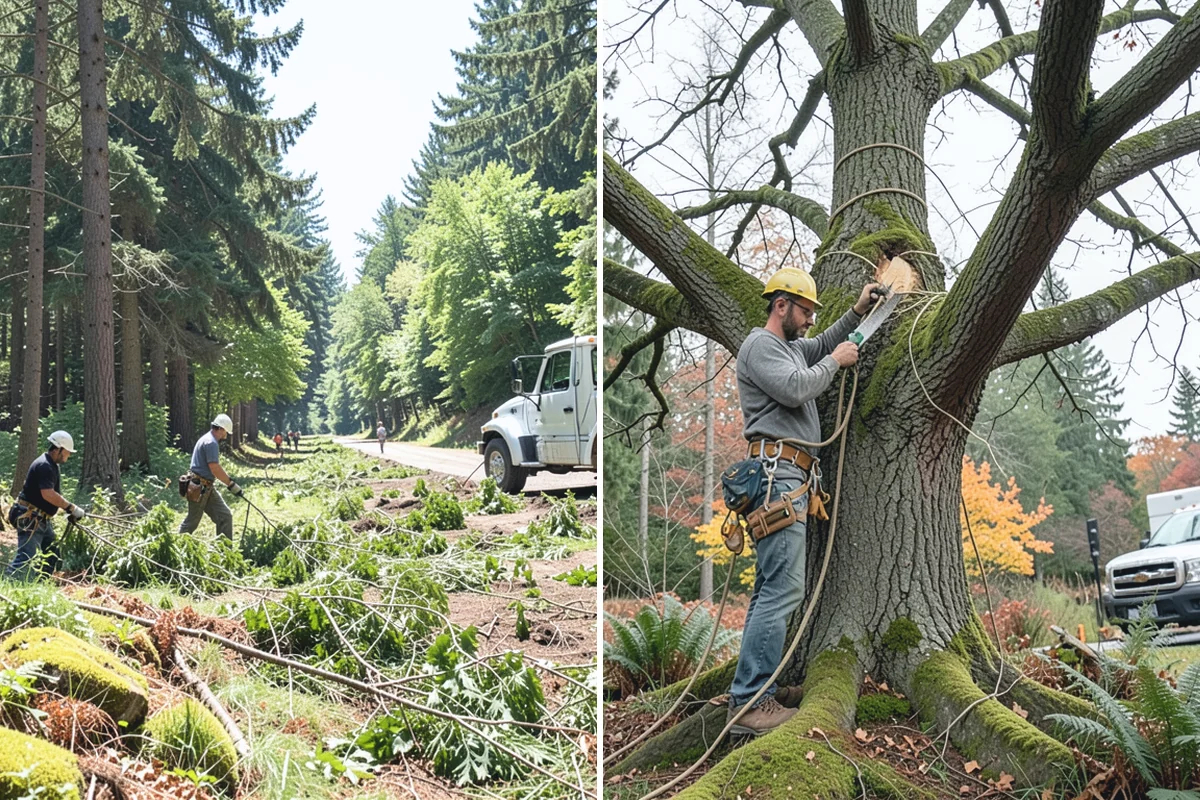
This ongoing tree maintenance is designed specifically for commercial properties that need their landscapes kept safe and presentable. Our trained crews work alongside your team to ensure consistent care without disrupting daily operations or traffic flow. We help businesses maintain a professional appearance while reducing potential liability risks associated with large trees on site.
What Redmond Commercial Tree Maintenance Includes
Commercial tree maintenance includes recurring pruning, inspections, and general care tailored to the specific species and conditions of each tree. Our methods are matched carefully to your unique site layout and access points to provide effective results every time. This service supports a budget-friendly approach by addressing deferred backlogs and keeping high-traffic areas secure for everyone.
Redmond Commercial Tree Maintenance Process
The work begins with an inventory and assessment of all trees across the property to identify priorities and develop a customized schedule. We then perform the necessary pruning, inspections, and care tasks while documenting our progress to keep your plan up to date. This cycle ensures that varied tree conditions are managed consistently throughout large sites without causing unnecessary delays.
Equipment We Use for Redmond Commercial Tree Maintenance
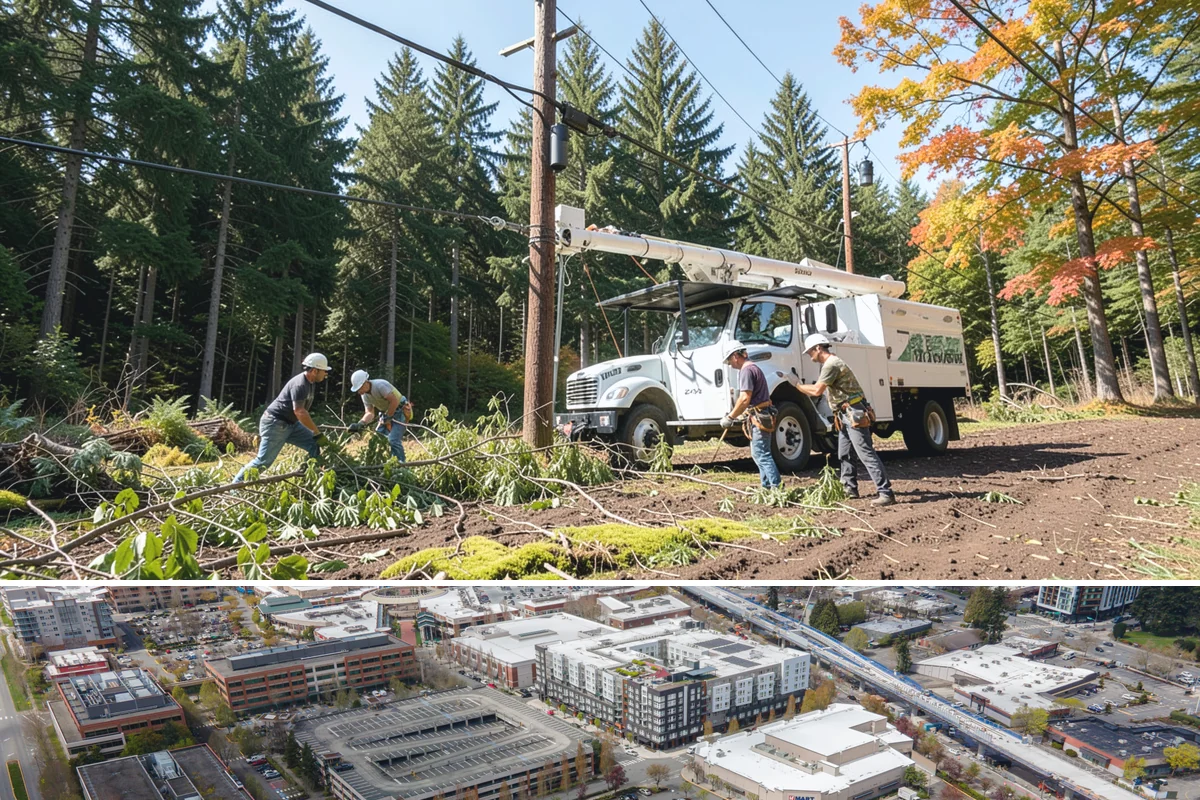
Our crews utilize specialized pruning and rigging gear along with aerial lifts when needed to reach difficult branches safely. We bring inspection tools, chippers, hauling equipment, and full personal protective gear to handle every job efficiently. Having the right machinery on hand allows us to navigate complex access challenges while keeping work zones clear for occupants.
Redmond Commercial Tree Maintenance Safety & Best Practices
Every project starts by coordinating our activities around building occupants and active traffic patterns to maintain a safe environment. We strictly follow recognized arboricultural standards and keep detailed records in public areas to ensure full accountability at all times. Maintaining these safety protocols helps protect workers, visitors, and the property itself from potential hazards during maintenance work.
Signs You Need Commercial Tree Maintenance in Redmond
You may need this service if you notice deferred maintenance backlogs building up or see varied tree conditions affecting different parts of your site. High-traffic areas that require extra attention to keep them safe are also a clear indicator that professional care is needed now. If coordinating access and scheduling has become difficult due to the size or complexity of your property, this service can help streamline those challenges.
What Affects the Cost of Commercial Tree Maintenance in Redmond
The investment for commercial tree maintenance depends on factors like existing deferred backlogs and the specific requirements of high-traffic areas within your site. Varied conditions across a large property and coordination challenges related to access will also influence how much care is needed overall. By addressing these elements proactively, you can support consistent, budget-friendly care that preserves your property value over time.
Best Time of Year for Redmond Commercial Tree Maintenance
Work on commercial landscapes continues year-round based on specific pruning needs rather than being limited to a single fixed season. Safety priorities dictated by recognized arboricultural standards guide our schedule whenever weather or tree health requires immediate attention. This flexible approach ensures that critical tasks are completed when they matter most for your property’s safety and appearance.

Commercial tree care in Redmond: wind, size and permits
Most tree trouble on commercial sites has a slow cause. Branches grow toward light and over pavement. Codominant stems form weak unions. Roots lose room under paving. Cuts made years ago leave decay. None of it shows until a branch drops or a tree leans, so regular inspection matters more than waiting for a storm.
Wind is one local reason to keep up with it. A federal weather record for the forecast zone that includes Redmond lists 33 high and strong wind episodes from 2005 to 2025. That figure covers the whole zone, not your lot, and it does not say how any one tree will hold up. It does mean a tree with deadwood, a heavy overextended limb or a cracked union may be tested more than once. We would rather find those defects during a calm-weather visit and prune to reduce the risk.
The work itself follows standard practice under ANSI A300 pruning guidelines. An arborist walks the site and looks at the crown, trunk, root flare and soil. Then we agree on a scope. That might be removing dead and broken branches, raising the canopy over drive aisles and walkways, or reducing end weight on a long limb. We do not recommend topping, because it leaves weak regrowth and open wounds. Trees that are failing may be flagged for removal rather than pruned.
Removal is where Redmond's rules come in. The city's tree removal tip sheet says a Tree Removal Permit is required to remove any Significant Tree, and the regulated size is 6 inches in diameter at 4.5 feet above grade. The yearly allowance of up to 2 trees applies to developed residential lots up to 10,000 square feet, so it should not be assumed to fit a business property. The rule speaks to removal, not pruning. Before any removal, we check with the city about what applies to your site.
If you manage a property with many trees, ask for a free estimate and we can walk through which ones need attention first. Call or text 425-484-4442.
Redmond tree conditions at a glance
| Tree canopy | 37.36% of the city (city assessment, 2023) |
|---|---|
| USDA hardiness zone | 8b (8b to 9a across the city) |
| Tree City USA | 27 years |
| High and strong wind episodes, 2005-2025 | 33 in the forecast zone |
| Soils | 62% of land has hardpan or another restrictive layer within 40 in; most common series Alderwood |
Tree removal rules in Redmond
A Tree Removal Permit is required to remove any Significant Tree. Developed neighborhood residential lots may remove per year: lots up to 10,000 sq ft - up to 2; 10,001-20,000 - up to 4.
Regulated size: 6 in. diameter at 4.5 ft above grade.
Official city source. Rules change; we confirm with the city before work starts.
Most common street trees in Redmond
- Maple44.9%
- Oak14.4%
- Ash11.8%
- London Planetree9.6%
- Honeylocust6.2%
- Pear4.0%
Share of 7,985 trees in the city’s street-tree inventory.
Sources: Daymet daily weather (NASA/ORNL), NOAA Storm Events, USDA plant hardiness map 2023, NRCS soil survey, USGS elevation, WA DNR landslide inventory, USDA Forest Service aerial survey, WSDA, city tree assessments and street-tree inventories, SILVIS Lab, Arbor Day Foundation, and official city and utility pages.
Commercial Tree Maintenance Serving Redmond
Redmond
Commercial tree maintenance in nearby areas
Also serving Redmond
- Emergency Tree Removal in Redmondat Washington City Services
- Retail Landscape Maintenance in Redmondat Washington Landscaping
- Office Buildout in Redmondat Washington Construction
- Dumpster Pad Cleaning in Redmondat Washington Pressure Washing