Where Safety Meets Expert Tree Service.


Redmond Canopy Reduction
The reduction of overall canopy size with measured cuts.
Canopy reduction suits owners of mature trees that have grown too wide or heavy for their space. Common cases are branches over a roof, limbs crowding a power line or a neighbor's fence, and dense crowns that block light from a yard or windows.
The goal is a smaller, balanced crown, not a shorter tree at any cost. Before choosing an approach, decide what problem you want solved: clearance, light, or lower weight on long limbs. That choice shapes the cuts.
About Canopy Reduction in Redmond
Canopy reduction helps homeowners manage large trees by carefully lowering their overall size while keeping a natural look. This approach improves safety around your property without harming the tree’s long-term health or structure. It is an ideal solution for those dealing with heavy branches that might interfere with overhead lines or viewlines.
What Redmond Canopy Reduction Includes
This service reduces the total canopy volume using precise, measured cuts designed to lower weight and wind resistance. We focus on maintaining the tree’s natural form while removing excess growth that could lead to branch failure. The work is tailored specifically to your tree species and current site conditions for a balanced result.
Redmond Canopy Reduction Process
Our trained crews begin by assessing the condition of your canopy and defining clear pruning objectives before making any cuts. Each cut is placed at proper points using techniques matched to the specific needs of your tree type and season. Afterward, we lower all removed material safely and clean up the entire work area to leave your property tidy.
Equipment We Use for Redmond Canopy Reduction
We utilize a range of tools including hand saws, pole saws, chainsaws, and wood chippers to handle branches efficiently. Climbing gear and rigging equipment allow our team to access high limbs securely when necessary. An aerial lift is used only if the site conditions or tree size require additional height assistance.
Redmond Canopy Reduction Safety & Best Practices
We strictly follow recognized arboricultural standards to avoid making harmful cuts that could stress your trees. Our crew watches closely for unstable limbs and overhead power lines while working at heights with proper fall protection. By limiting removal to healthy amounts of live tissue, we prevent unnecessary shock or damage during the process.
Signs You Need Canopy Reduction in Redmond
You may need this service if you notice deadwood in weak unions or branches that block sightlines near your home. Interference with structures or utility lines often indicates it is time for a measured reduction of canopy size. Over-pruning from past attempts can also signal a need to correct structure and restore the tree’s natural vigor.
What Affects the Cost of Canopy Reduction in Redmond
The price varies based on the overall size of the trees, how complex the site access is, and the volume of wood that needs disposal. Larger jobs with difficult terrain or significant amounts of cut material will naturally require more time and resources. These factors combine to determine a fair estimate for your specific project scope.
Best Time of Year for Redmond Canopy Reduction
Work should be scheduled according to species-specific timing sensitivities common in our region to avoid stressing trees during active growth. We plan around dormancy periods so that cuts do not coincide with times when the tree is most vulnerable to weather or disease. Following these seasonal windows ensures the best recovery and health for your canopy after reduction.
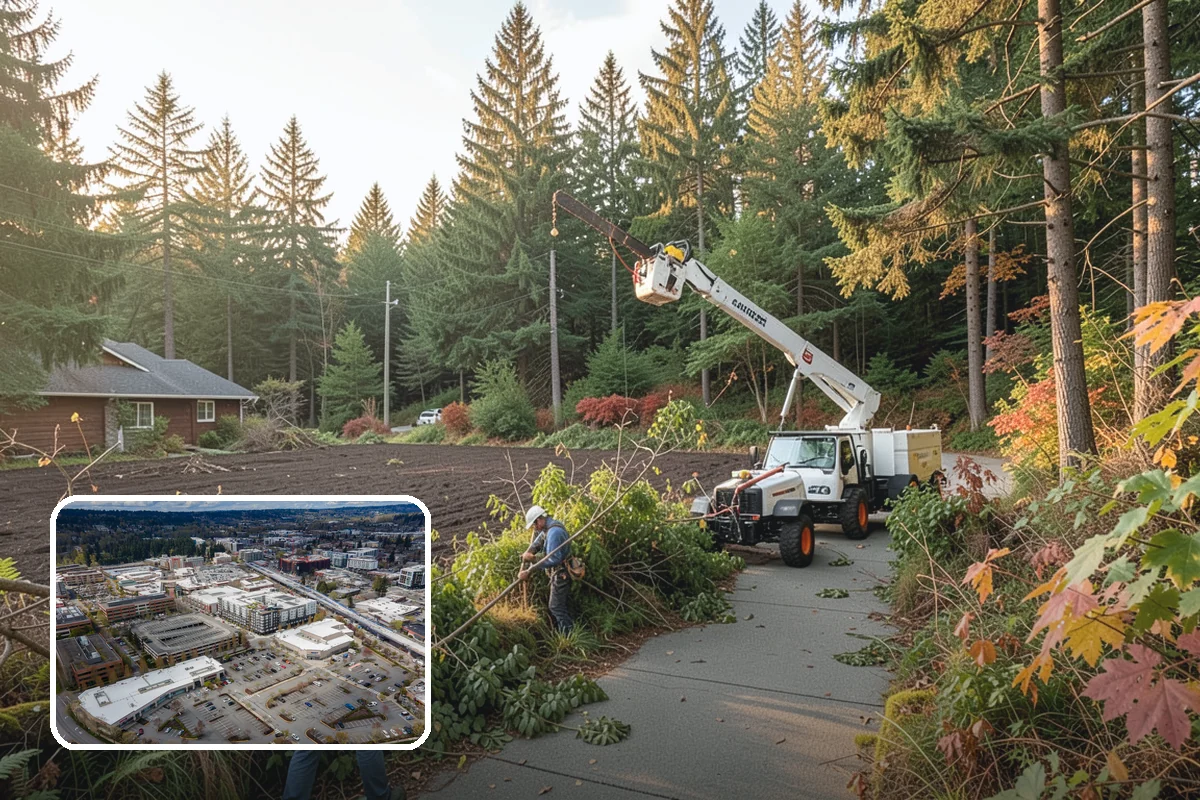
Canopy reduction options for Redmond properties
Owners usually choose between three approaches. Each fits different trees and goals.
- Crown cleaning and thinning: removes dead, crossing or weak branches and opens the crown. It suits trees that are the right size but dense.
- Reduction by cutting back to side branches: shortens limbs to a lateral branch large enough to take over as the new end. It suits trees that have outgrown their space.
- Removal: makes sense when a tree is too large, declining or poorly structured for reduction to help.
Why reduction cuts matter
Where a cut is made decides how the tree responds. Cutting limbs back to a stub is not the same as reducing to a lateral. WSU Extension's Pacific Northwest Gardener's Handbook says topping is harmful: stubs decay and can become a safety hazard in large trees, and it is not an appropriate pruning strategy. So a reduction should be modest and made at proper branch junctions.
Local conditions that favor each choice
The forecast zone that includes Redmond recorded 33 high and strong wind episodes from 2005 to 2025. That is zone-wide data, not a reading of any one yard. It does favor reducing long, heavy limbs over a house or driveway, since less leverage at the branch tips means less load on the attachment.
Redmond's own canopy assessment puts tree cover at 37.36% of the city in 2023. Because tree cover is a community priority here, we lean toward keeping a tree and trimming it carefully when it is healthy. The USDA lists Redmond in zone 8b, with parts of the city from 8b to 9a, so a wide range of species grow here, and each tolerates cuts differently.
If removal is on the table, we check with the city before work starts. Call or text 425-484-4442 for a free estimate, and our ISA Certified Arborist can look at which approach fits your tree.
Redmond tree conditions at a glance
| USDA hardiness zone | 8b (8b to 9a across the city) |
|---|---|
| Rain and snow falling October to April | 80% of the year’s total |
| Tree canopy | 37.36% of the city (city assessment, 2023) |
| Days that freeze at night and thaw by day | 31 a year |
| Tree City USA | 27 years |
| Electric utility | Puget Sound Energy (PSE) |
Trees near the power line to your house
Puget Sound Energy (PSE): Service line (wire from PSE pole to home or meter pole): PSE does not trim it; homeowner/private arborist trims.
PSE performs a safety disconnection so the homeowner or private tree trimmer/arborist can work; Call at least 5 business days ahead to check crew availability and potential charges.
Safety disconnect: 1-888-321-7779 (5+ business days ahead). Utility page.
Any fee for a disconnect is set by the utility.
Most common street trees in Redmond
- Maple44.9%
- Oak14.4%
- Ash11.8%
- London Planetree9.6%
- Honeylocust6.2%
- Pear4.0%
Share of 7,985 trees in the city’s street-tree inventory.
Sources: Daymet daily weather (NASA/ORNL), NOAA Storm Events, USDA plant hardiness map 2023, NRCS soil survey, USGS elevation, WA DNR landslide inventory, USDA Forest Service aerial survey, WSDA, city tree assessments and street-tree inventories, SILVIS Lab, Arbor Day Foundation, and official city and utility pages.
Canopy Reduction Serving Redmond
Redmond
Canopy reduction in nearby areas
Also serving Redmond
- Willow Pruning in Redmondat Washington Landscaping
- Preventive Roof Maintenance in Redmondat Washington Roofing
- Tree Planting in Redmondat Washington City Services