Where Safety Meets Expert Tree Service.

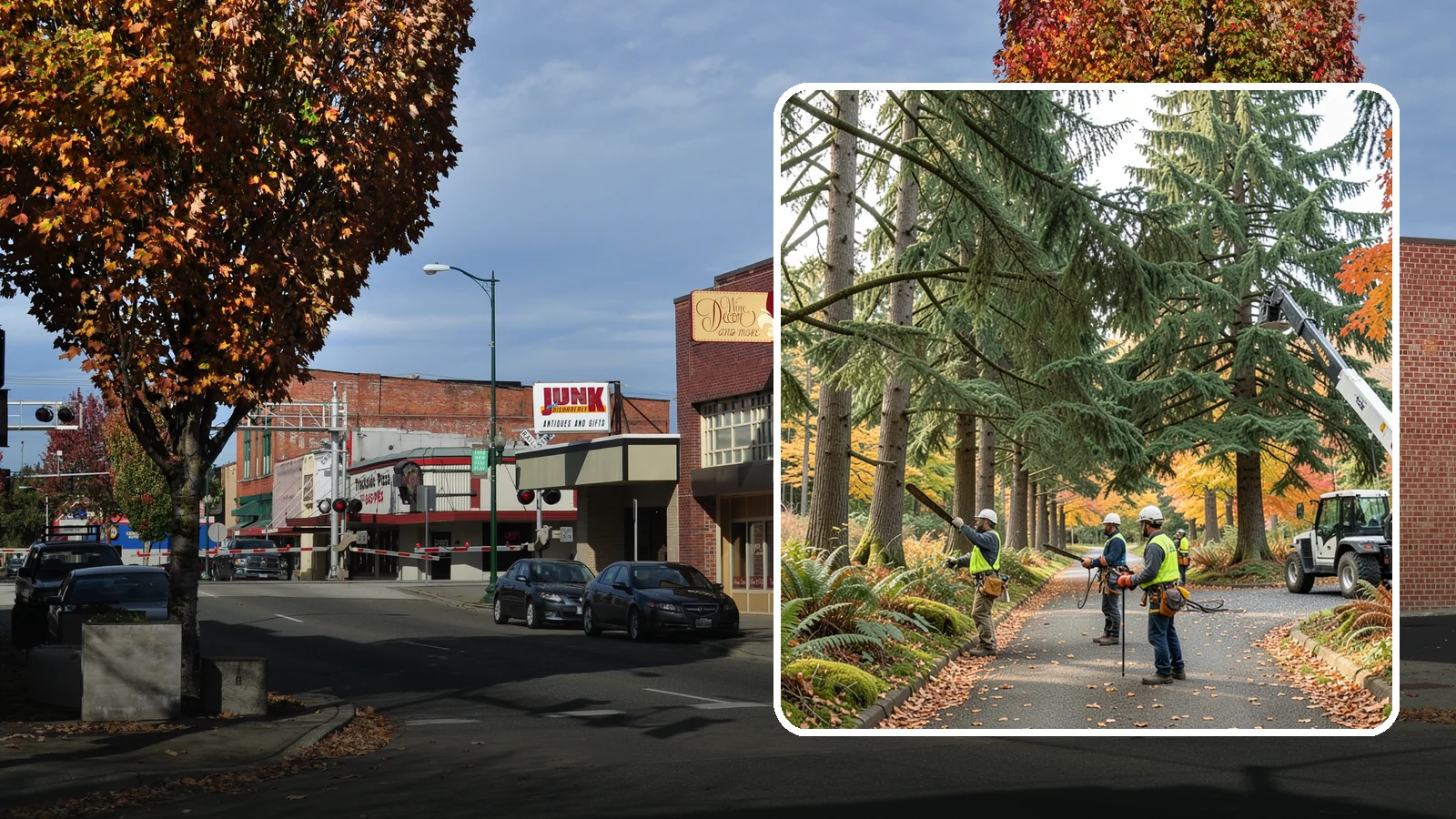
Puyallup Municipal Tree Maintenance
Tree maintenance for public and municipal spaces.
Municipal tree maintenance is for the people who look after trees on public or shared ground: HOAs with common areas, business parks, schools, churches, and property managers with street frontage. It also fits owners who have a row of street-style trees and want one plan for all of them.
A good plan starts with a count and a species list, not a single cut. Knowing what you have tells you what to prune, what to watch, and what to schedule first. Here is how the main approaches compare in Puyallup.
About Municipal Tree Maintenance in Puyallup
This specialized maintenance is designed specifically for public parks, government grounds, and other municipal spaces where tree care goes beyond simple residential trimming. Our trained crews work across these shared properties to ensure every community green stays safe, presentable, and healthy for everyone who visits or lives nearby. We handle the unique challenges of managing trees on a scale that requires careful coordination with traffic patterns and public access needs.
What Puyallup Municipal Tree Maintenance Includes
Municipal tree maintenance focuses entirely on caring for trees located in public areas rather than private yards. Our approach includes regular inspections to spot potential issues, followed by pruning and other treatments matched to each specific species and site condition. We also manage the logistics of keeping these spaces looking their best while ensuring that work aligns with recognized arboricultural standards.
Puyallup Municipal Tree Maintenance Process
The job begins with a thorough inventory where we assess every tree on the property to understand its current health and structural needs. Based on this assessment, we develop a customized maintenance schedule that prioritizes tasks like recurring pruning and detailed inspections throughout the year. As crews complete their work, they document everything carefully so plans can be updated for future seasons or changing conditions at the site.
Equipment We Use for Puyallup Municipal Tree Maintenance
To handle trees in public spaces safely, our teams bring along specialized gear such as rigging equipment and inspection tools tailored to different job requirements. When a tree is too high to reach from the ground, we deploy aerial lifts with precision to access branches without damaging surrounding infrastructure. We also utilize heavy-duty chippers and hauling units to manage debris efficiently while wearing full personal protective equipment at all times.
Puyallup Municipal Tree Maintenance Safety & Best Practices
Working in public areas requires strict safety protocols that coordinate our crew movements around pedestrians, vehicles, and other occupants of the space. We establish safe work zones before beginning any task and follow recognized standards to protect both our workers and the general public from hazards like falling branches or dropped tools. Detailed records are kept for every project to ensure full accountability and transparency regarding how safety measures were implemented on site.
Signs You Need Municipal Tree Maintenance in Puyallup
You may know this service is needed when a municipal property faces deferred maintenance backlogs that threaten tree stability in high-traffic areas. Varied conditions across a large public site often reveal specific trees requiring immediate attention due to storm damage, disease, or structural weakness. Coordinating access around busy streets and ensuring the schedule fits with community events are also key indicators that professional management is required for these spaces.
What Affects the Cost of Municipal Tree Maintenance in Puyallup
The investment in municipal tree maintenance depends heavily on existing deferred maintenance backlogs that may require more extensive work than routine care. Locations with heavy foot traffic or vehicle flow often need careful coordination, which can influence how resources and time are allocated to the project. Additionally, the wide variety of tree conditions found across different public sites and the complexity of accessing certain areas without disrupting daily life will shape the overall budget for the service.
Best Time of Year for Puyallup Municipal Tree Maintenance
While we aim to keep trees healthy year-round in our local Puget Sound climate, work follows a recurring schedule aligned with recognized arboricultural standards rather than rushing through every season blindly. We plan tasks so that pruning and inspections happen when they are most effective for each species while accounting for typical weather patterns throughout the year. This approach ensures consistent care without interrupting public access or safety during peak usage times in any given month.

Choosing a Tree Maintenance Approach in Puyallup
Most groups choose between three approaches. The right one depends on how many trees you have, what species they are, and how much risk sits near people or buildings.
- Reactive care: call when a limb fails or a tree looks wrong.
- Scheduled cycle pruning: work through all trees on a set rotation.
- Inventory first, then a phased plan: map and assess every tree, then rank the work by risk.
What Puyallup's tree mix suggests
The city's street-tree inventory lists 812 trees. The most common are Flowering Pear at 14.6%, Hornbeam at 9.4%, Crabapple at 8.9%, Linden at 7.3% and Ash at 6.9%. That is a city inventory of public street trees, not a count of trees on your property. Still, it hints at what many street plantings here look like: smaller ornamental trees alongside a few larger shade trees.
Smaller ornamentals such as pear and crabapple usually do well with scheduled structural pruning. Done early and kept light, it can steer branch spacing and reduce weak unions. That favors a cycle plan. Larger species such as linden and ash tend to need a closer look at the crown and trunk, so an inventory-first approach makes sense when you have several of them.
Where reactive care fits
Reactive care can work for a small number of low-risk trees. It tends to cost more in disruption, since failures happen on their own schedule. For anything over walkways, parking or play areas, we suggest a planned approach.
Permits and city rules
Puyallup is a current Tree City USA, a program run by the Arbor Day Foundation, and has held that status for 8 years. That signals the city takes tree care seriously. Rules on public-right-of-way trees or removals can differ by site, so we check with the city before work starts. To talk through your trees, call or text 425-484-4442. Estimates are free, and an ISA Certified Arborist is on staff.
Puyallup tree conditions at a glance
| USDA hardiness zone | 8b |
|---|---|
| Tree City USA | 8 years |
| High and strong wind episodes, 2005-2025 | 25 in the forecast zone |
| Soils | 13% of land has hardpan or another restrictive layer within 40 in; most common series Puyallup; 47% well drained |
Tree removal rules in Puyallup
Significant tree protections do not apply to lots containing single-family, duplex, triplex or up to four-unit residential development unless the tree is in a critical area. A permit is required on such lots only if the tree is on the City's Heritage Tree register, or is within or associated with a critical area (wetland/buffer, steep slope, stream buffer, habitat area/greenbelt). Significant trees are regulated on commercial, industrial, institutional and multifamily (5+ units) property.
Regulated size: Healthy, living tree greater than 15 in DBH (black cottonwood and red alder not typically regulated unless in a critical area).
Official city source. Rules change; we confirm with the city before work starts.
Most common street trees in Puyallup
- Flowering Pear14.6%
- Hornbeam9.4%
- Crabapple8.9%
- Linden7.3%
- Ash6.9%
- Green ash5.9%
Share of 812 trees in the city’s street-tree inventory; median trunk diameter 9.5 in, 0.0% at 24 in or wider.
Sources: Daymet daily weather (NASA/ORNL), NOAA Storm Events, USDA plant hardiness map 2023, NRCS soil survey, USGS elevation, WA DNR landslide inventory, USDA Forest Service aerial survey, WSDA, city tree assessments and street-tree inventories, SILVIS Lab, Arbor Day Foundation, and official city and utility pages.
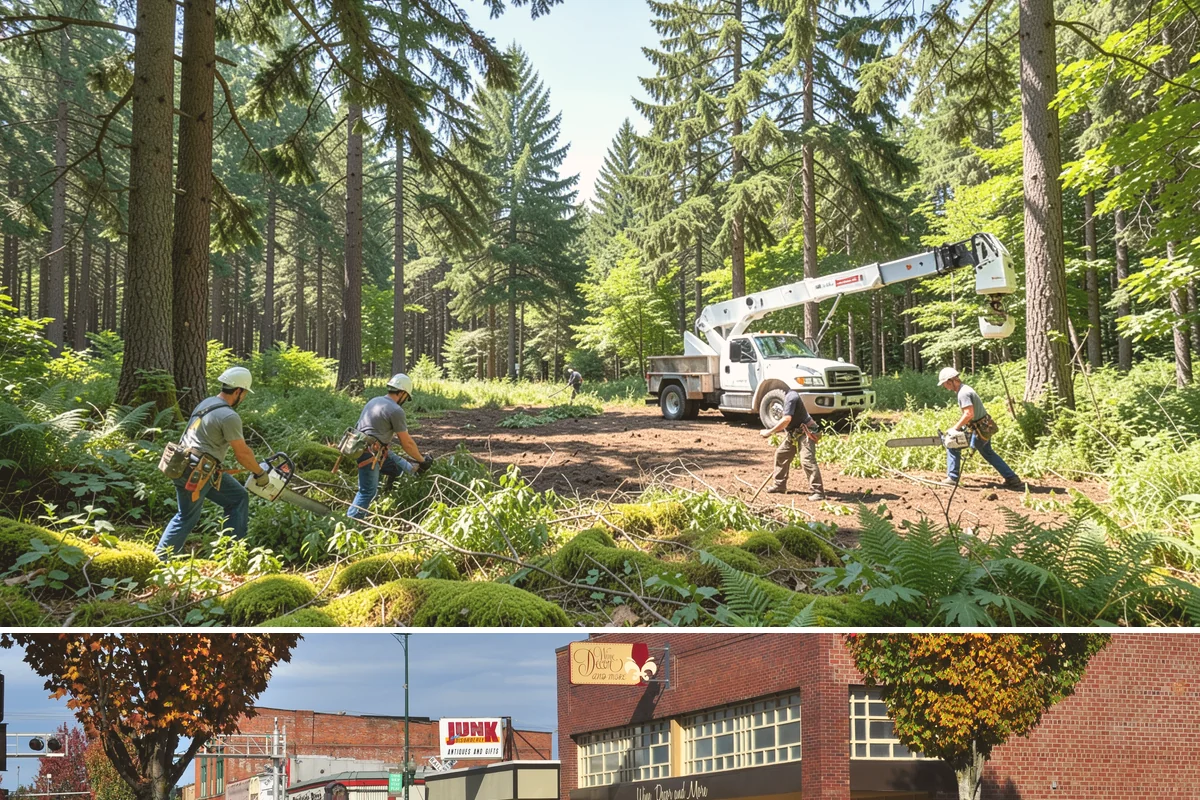
Municipal Tree Maintenance Serving Puyallup
Puyallup

Also serving Puyallup
- Storm Cleanup in Puyallupat Washington City Services
- Apartment Landscape Maintenance in Puyallupat Washington Landscaping
- Tenant Improvement in Puyallupat Washington Construction
- Loading Dock Cleaning in Puyallupat Washington Pressure Washing