Where Safety Meets Expert Tree Service.

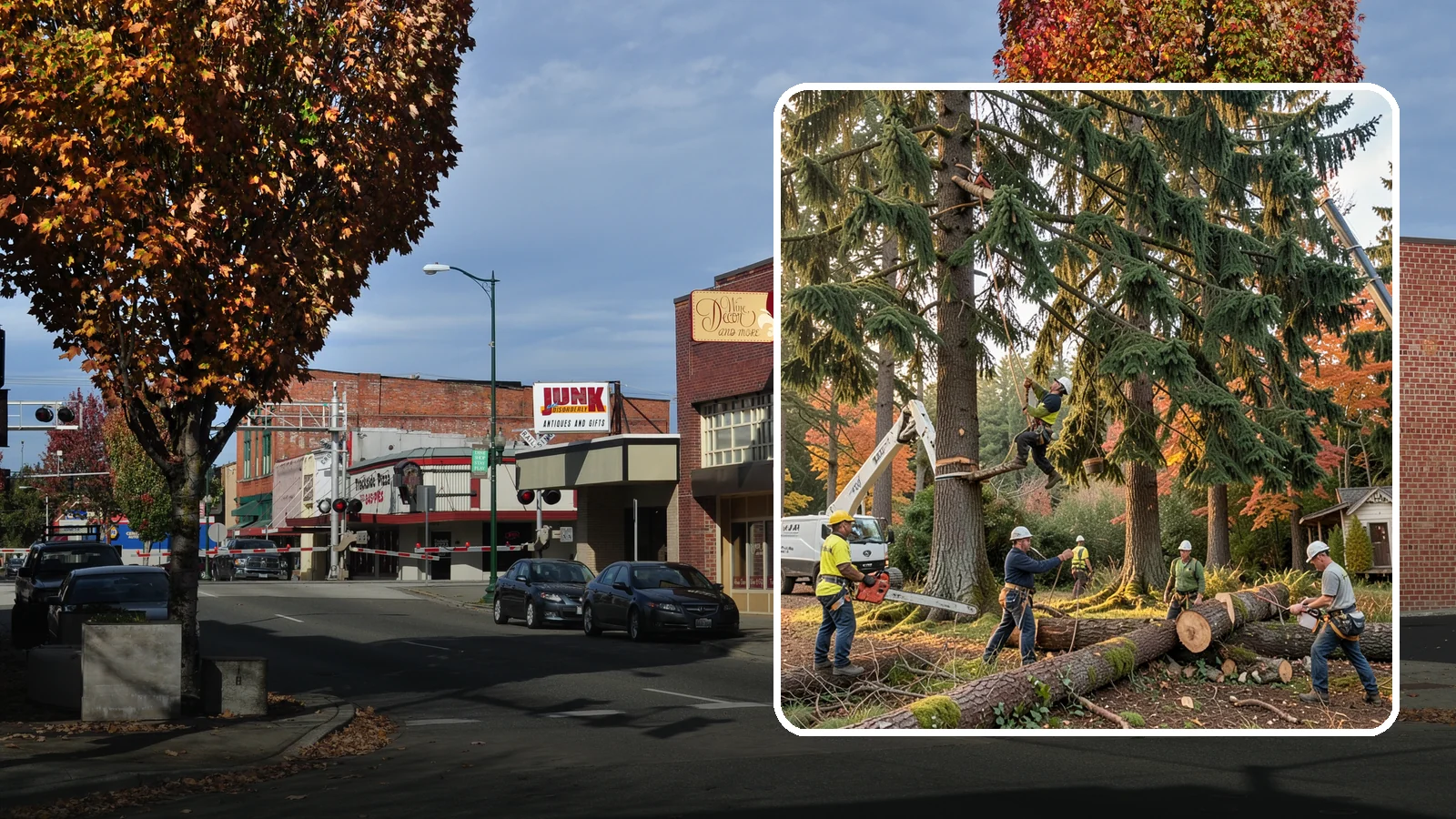
Puyallup Multi-tree Removal
The coordinated removal of several trees in a single project.
The best window for removing several trees at once is usually late summer into early fall, when ground is dry and firm. Dry soil holds up better under equipment, and lawns and beds take less damage. Dormant months can also work, since bare branches make the structure of each tree easier to read.
Puyallup sits in USDA hardiness zone 8b (USDA map, 2023), a mild zone where many trees stay in leaf late into the year. That is one reason to walk the property early and decide which trees come out, and in what order, before you book a date.
About Multi-tree Removal in Puyallup
If you have a cluster of trees on your property that need attention at once, our multi-tree removal service is designed for homeowners facing larger projects like site preparation or safety clearance. Our trained crews work together to handle these groups efficiently while keeping your home and family safe throughout the process.
What Puyallup Multi-tree Removal Includes
This coordinated approach allows us to remove several trees in a single project rather than tackling them one by one over multiple visits. We use methods that match each tree species, site conditions, and access points to ensure a smooth operation for clearing groups of trees due to safety or health concerns.
Puyallup Multi-tree Removal Process
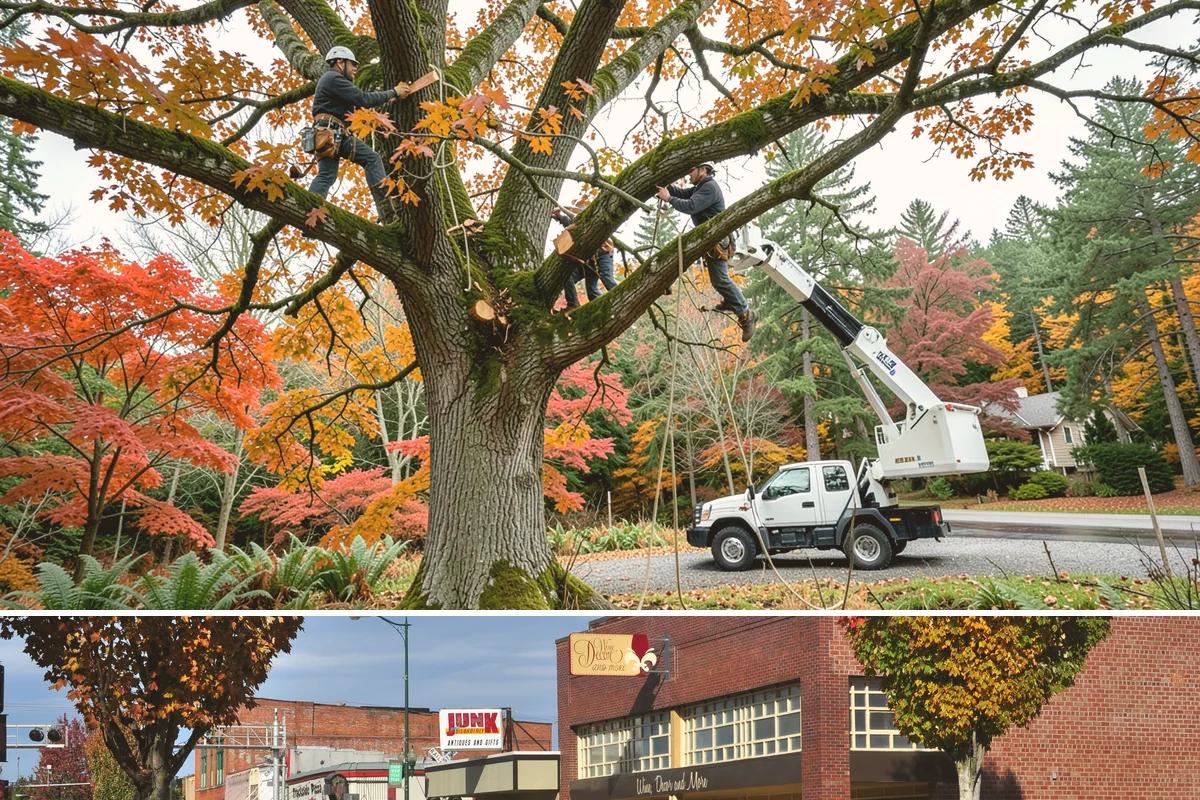
The work begins with an on-site assessment where we evaluate hazards and establish clear drop zones before any cutting starts. Our crew will then rig limbs or fell stems in a controlled sequence using proper communication between climbers and ground workers, followed by processing the wood and clearing all debris from your yard.
Equipment We Use for Puyallup Multi-tree Removal
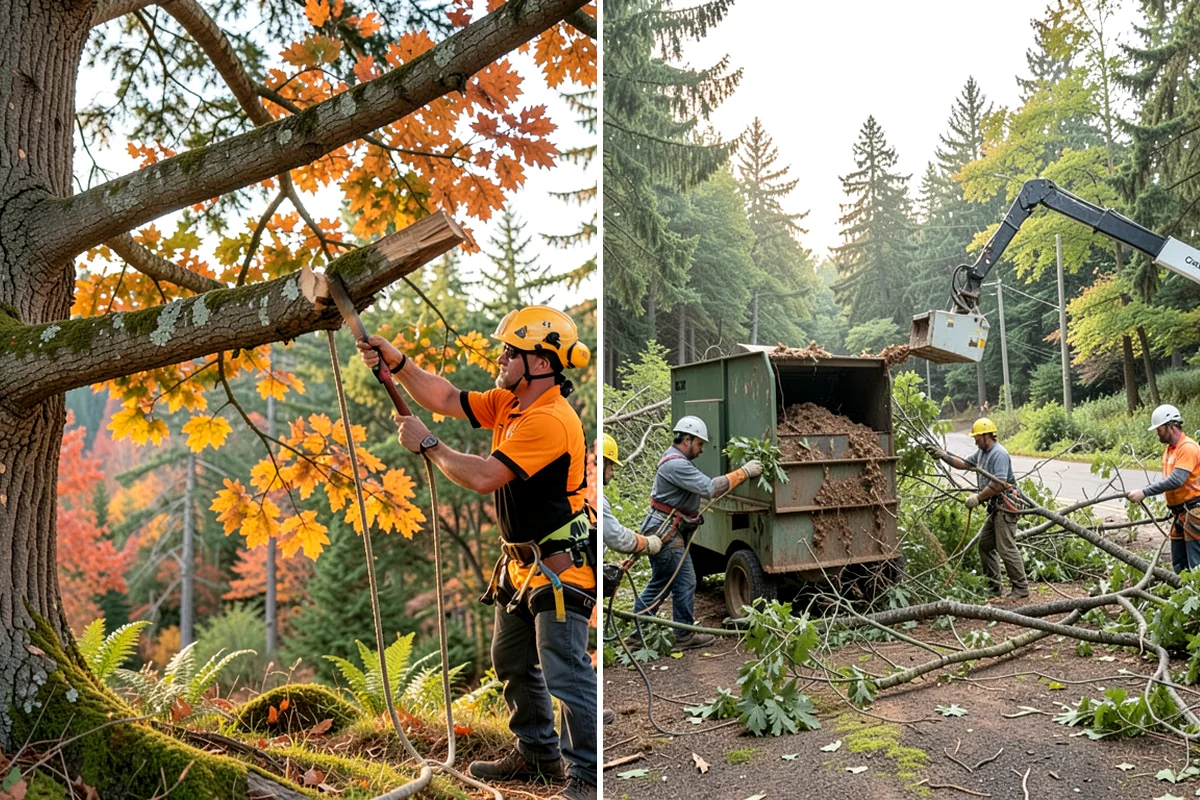
We bring professional tools to every job site, including chainsaws for precise cuts and powerful chippers to process branches into mulch. Depending on the specific needs of your property, we may also utilize aerial lifts or cranes along with climbing gear and ground protection mats to keep surfaces safe during removal.
Puyallup Multi-tree Removal Safety & Best Practices
Safety is our top priority, so we always identify overhead utility lines before starting and inspect every tree for hidden decay or structural defects. Our team maintains strict control over fall paths and drop zones while using personal protective equipment and coordinated communication to prevent accidents around your home.
Signs You Need Multi-tree Removal in Puyallup
You might need this service if you notice safety hazards forming in a group of trees, disease spreading between them, or simply want to free up usable space on your land. Situations such as limited access for standard equipment or unpredictable lean patterns often require our specialized multi-tree removal expertise to manage safely.
What Affects the Cost of Multi-tree Removal in Puyallup
The investment for removing multiple trees is influenced by how difficult it is to reach the site and whether nearby structures or power lines complicate the work. Additional factors include the complexity required to safely manage drop zones during coordinated felling sequences, which ensures everyone stays protected while we complete the job.
Best Time of Year for Puyallup Multi-tree Removal
In our local climate, this service can be performed year-round as long as ground conditions allow equipment mobility without damaging sensitive soil areas. We monitor weather and site stability closely to ensure that work proceeds smoothly regardless of the season, provided safety remains a priority for every step taken.
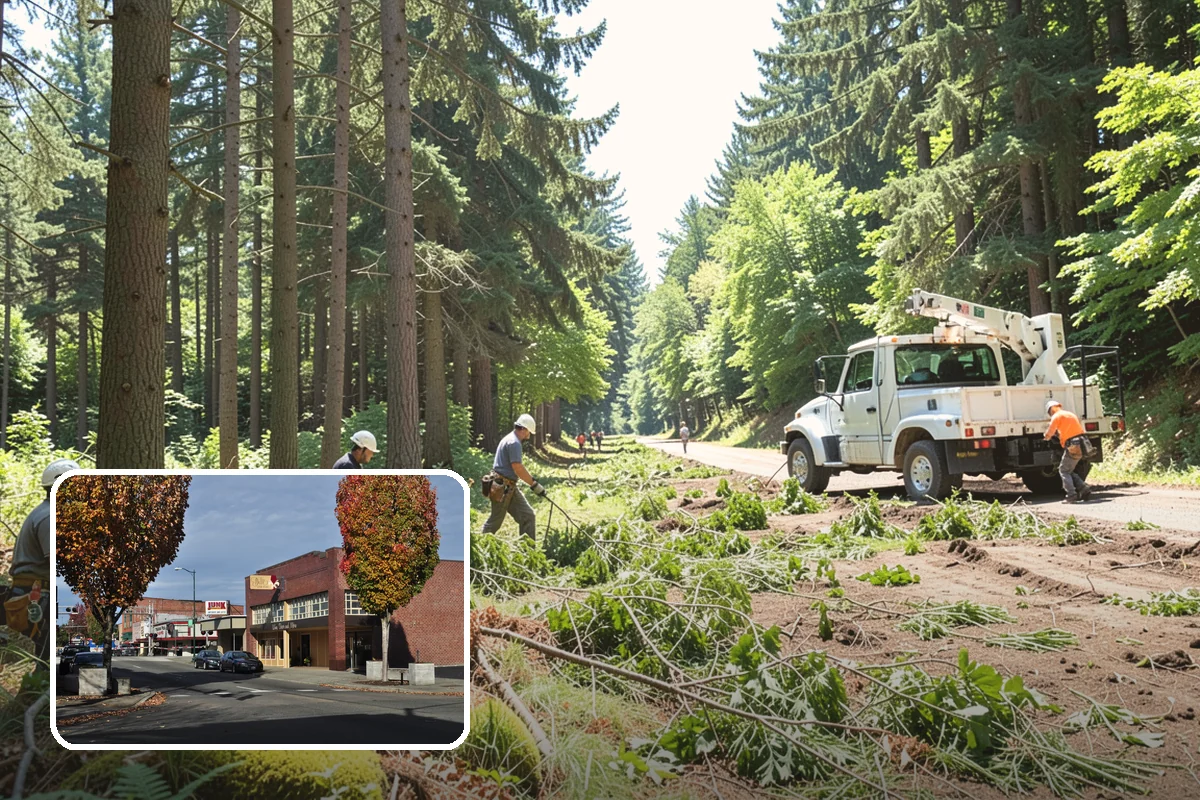
Planning a multi-tree removal in Puyallup
Removing several trees is one project, not several small ones. Start by marking every tree you are considering, then note what sits under and around each one: fences, sheds, septic areas, power lines, and neighboring yards. Those details decide how each tree can come down.
Check the city rule first
The City of Puyallup's significant tree guidance says its protections do not apply to lots with single-family, duplex, triplex or up to four-unit residential development, unless a tree is in a critical area. On those lots, a permit is required only if a tree is on the City's Heritage Tree register, or is within or associated with a critical area. The size the city regulates is a healthy, living tree greater than 15 inches DBH. Black cottonwood and red alder are not typically regulated unless they are in a critical area.
This matters in a multi-tree job because one tree near a critical area can change the paperwork for the whole project. The city's code also says trees removed in or near a critical area must be replaced with two new trees for each one removed, and replacement may be required for other approved removals. That rule covers removal only. If we are unsure how it applies to your lot, we check with the city before work starts.
What affects scope
Tree size, lean, and condition matter most. Access matters too. A tree you can reach with a clear drop zone is a different job from one over a roof. Whether you want stumps ground out and wood hauled off or left on site also changes the plan.
On the day
Expect the crew to review the plan with you, mark drop zones, and protect anything that needs it. Trees are usually taken down in sections where space is tight, and the work follows ISA and ANSI A300 style practice. Brush and wood are then cleared according to what you agreed on.
Practical tip: photograph each tree and mark it with ribbon before the estimate visit, so everyone is talking about the same trees. Our estimates are free, and you can text photos to 425-484-4442.
Puyallup tree conditions at a glance
| USDA hardiness zone | 8b |
|---|---|
| Soils | 13% of land has hardpan or another restrictive layer within 40 in; most common series Puyallup; 47% well drained |
| High and strong wind episodes, 2005-2025 | 25 in the forecast zone |
| Electric utility | unconfirmed |
Tree removal rules in Puyallup
Significant tree protections do not apply to lots containing single-family, duplex, triplex or up to four-unit residential development unless the tree is in a critical area. A permit is required on such lots only if the tree is on the City's Heritage Tree register, or is within or associated with a critical area (wetland/buffer, steep slope, stream buffer, habitat area/greenbelt). Significant trees are regulated on commercial, industrial, institutional and multifamily (5+ units) property.
Regulated size: Healthy, living tree greater than 15 in DBH (black cottonwood and red alder not typically regulated unless in a critical area).
Official city source. Rules change; we confirm with the city before work starts.
Strongest wind events near Puyallup
- Oct 18, 2007: gusts to 62 mph
- Jan 6, 2019: gusts to 61 mph
- Feb 25, 2025: gusts to 60 mph
NOAA Storm Events, forecast zone that includes Puyallup, 2005-2025.
Most common street trees in Puyallup
- Flowering Pear14.6%
- Hornbeam9.4%
- Crabapple8.9%
- Linden7.3%
- Ash6.9%
- Green ash5.9%
Share of 812 trees in the city’s street-tree inventory; median trunk diameter 9.5 in, 0.0% at 24 in or wider.
Sources: Daymet daily weather (NASA/ORNL), NOAA Storm Events, USDA plant hardiness map 2023, NRCS soil survey, USGS elevation, WA DNR landslide inventory, USDA Forest Service aerial survey, WSDA, city tree assessments and street-tree inventories, SILVIS Lab, Arbor Day Foundation, and official city and utility pages.
Multi-tree Removal Serving Puyallup
Puyallup
Also serving Puyallup
- Garden Bed Installation in Puyallupat Washington Landscaping
- Tree Risk Assessments in Puyallupat Washington City Services
- Tree Removal for Firewood in Puyallupat Washington Firewood