Where Safety Meets Expert Tree Service.

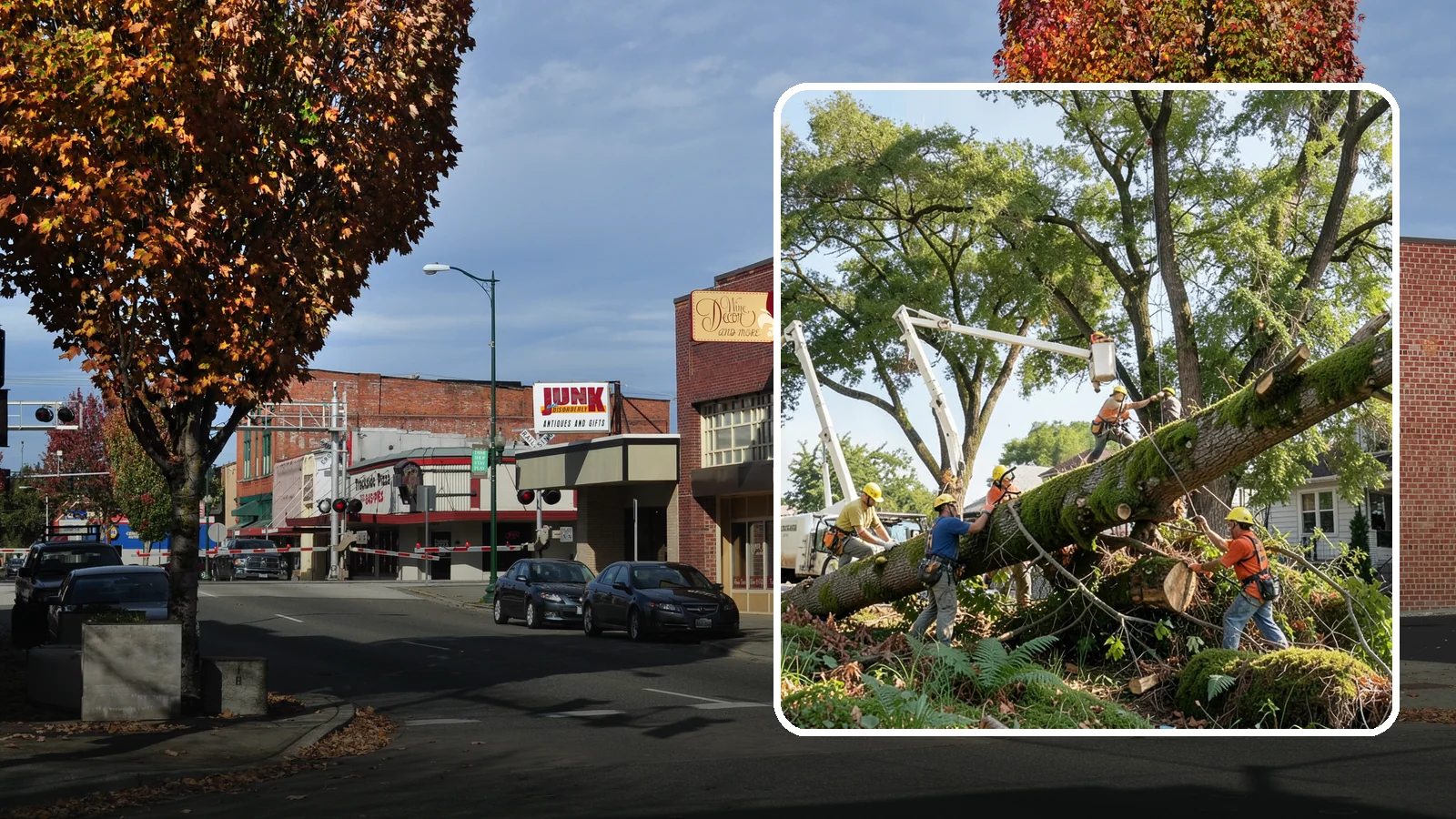
Puyallup Leaning Tree Removal
The removal of trees with a pronounced or unstable lean.
The best time to deal with a leaning tree is right after a storm, once the wind has died down and you can see what changed. A tree that leaned slightly last month may lean more now. Check the base for lifted soil, look for cracks in the trunk, and note any dead or hanging branches. Photograph what you see with the date.
The state forestry agency's post-storm guidance (WA DNR Tree Link, Feb 5 2026) lists these same signs. Fresh soil upheaval is the one that should move you to act quickly, and to keep people and vehicles away from the tree until it has been looked at.
About Leaning Tree Removal in Puyallup
We help homeowners manage trees that have developed a dangerous lean toward your home or other property features. Our trained crews are ready to safely remove these unstable specimens using methods matched to your specific site conditions. This service restores peace of mind by eliminating immediate safety hazards from your yard.
What Puyallup Leaning Tree Removal Includes
Leaning tree removal focuses on taking down trees with pronounced or unstable leans that pose a risk of falling. The work includes removing the entire stem and limbs in a controlled sequence while protecting nearby structures, utilities, and landscaping. We also process the wood and clear all debris to leave your property clean after the job is done.
Puyallup Leaning Tree Removal Process
Our team begins by assessing the tree for decay and establishing safe drop zones around your home. Once safety perimeters are set, we rig the limbs or fell the stem carefully using recognized arboricultural standards. The final steps involve hauling away branches and roots to ensure a tidy site without leaving behind hidden dangers.
Equipment We Use for Puyallup Leaning Tree Removal
We use chainsaws and climbing gear to navigate trees with difficult access points while maintaining control over their fall path. A wood chipper processes the cut material on-site, and we may bring an aerial lift or crane if equipment cannot reach from the ground. All crew members wear personal protective equipment to ensure safety throughout the removal process.
Puyallup Leaning Tree Removal Safety & Best Practices
Safety is our priority as we maintain clear drop zones and monitor for unstable soil that could shift during wet weather. We always identify overhead utility lines before starting work to prevent electrical hazards or damage to power infrastructure. Coordinated ground communication and fall protection measures are used at every step to keep everyone safe on the job site.
Signs You Need Leaning Tree Removal in Puyallup
You may need this service if your tree shows visible signs of root failure, trunk cracks, or a sudden increase in lean toward a target. This work is also necessary when hidden internal decay weakens the structure enough that it threatens nearby buildings or fences. If you notice unpredictable load distribution or limited access making manual removal unsafe, our team can evaluate the situation for you.
What Affects the Cost of Leaning Tree Removal in Puyallup
The price of this service depends on factors like proximity to power lines and structures which require extra caution during the fall. Hidden internal decay often changes how we must rig the tree, influencing both time and equipment needs. Limited space for machinery or an unpredictable lean distribution will also affect the overall cost of removing your leaning tree.
Best Time of Year for Puyallup Leaning Tree Removal
This service can be performed year-round in our local climate to address hazards as they appear on your property. However, extra caution is required during wet seasons when saturated soil might cause unstable leans to shift unexpectedly before removal. We plan around these conditions to ensure a safe and successful outcome for every job we undertake.
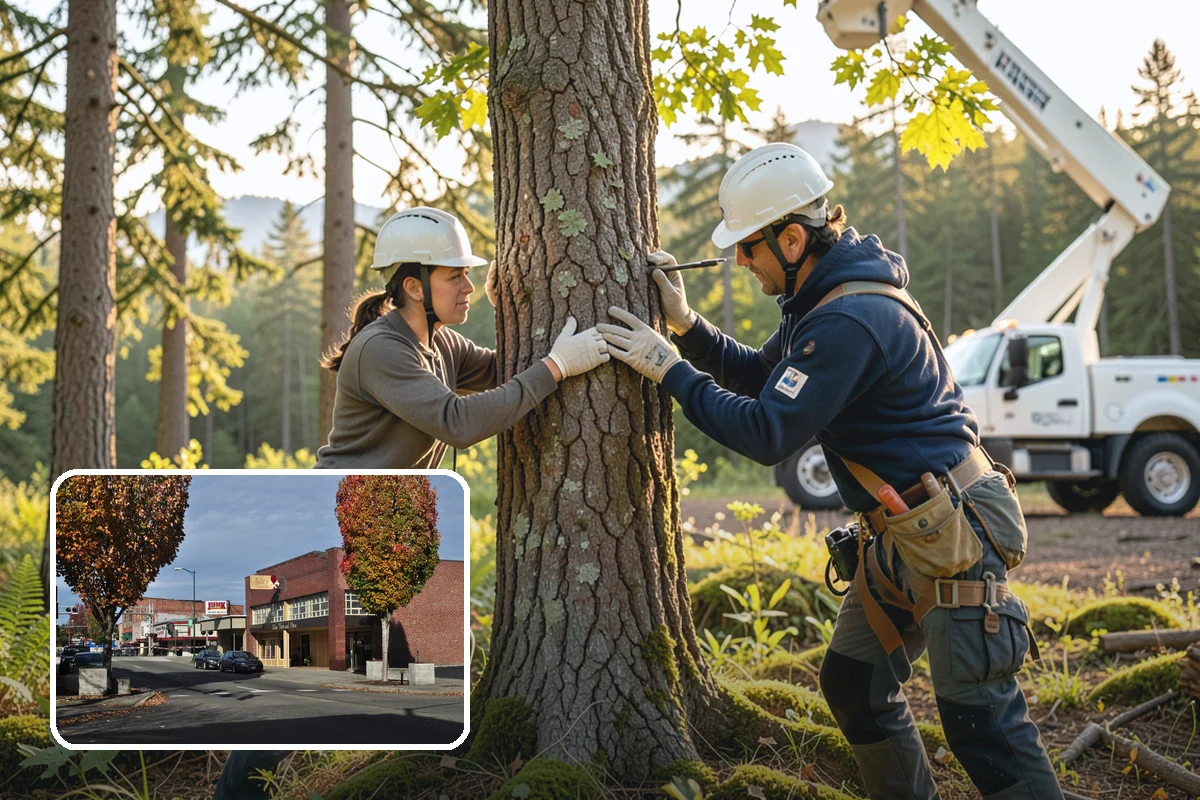
Planning a leaning tree removal in Puyallup
Start by deciding whether the lean is new. A tree that has leaned for decades and grown a curved trunk is different from one that tipped after a storm. Cracked soil, a raised root plate, or a gap opening on one side of the trunk points to a root problem.
Soil matters here. The federal soil survey (NRCS) shows that about 13% of Puyallup's land has a hard or restrictive layer, such as glacial hardpan, within 40 inches of the surface. Roots that meet such a layer tend to spread sideways instead of down. That is general behavior, and it does not tell us how any one tree is anchored. It is one reason we look closely at the ground around a leaning tree. The same survey shows 47% of the land is well drained and 11% poorly drained, so wet ground can also loosen the hold of roots.
Permission from the city
Puyallup's tree code limits removal of regulated trees. According to the city's code on hazard or dead trees, removal is allowed only if an ISA Tree Risk Assessment by a qualified risk-assessment arborist rates the tree high risk (moderate may qualify with additional factors), or if the tree threatens infrastructure or utilities with no reasonable alternative. I found no provision for after-the-fact emergency removal. So do not cut first and ask later. We check with the city before work starts, and a written risk assessment is often the first step.
What affects scope
Scope depends on the tree's size, the direction of the lean, and what is under it. A house, fence, or power line in the fall path means the tree usually comes down in sections, with ropes and rigging to control each piece. Soft or saturated ground can limit where equipment can go.
On the day
Expect the crew to walk the site, set up drop zones, and remove the tree in a planned order. Branches are taken first, then the trunk. Wood and brush are handled as agreed beforehand. Stump grinding is a separate decision, so ask about it in advance.
Practical tip: before anyone arrives, move cars, play equipment, and patio furniture out of the area around the tree and mark where buried lines run. Call 425-484-4442 for a free estimate.
Puyallup tree conditions at a glance
| USDA hardiness zone | 8b |
|---|---|
| Soils | 13% of land has hardpan or another restrictive layer within 40 in; most common series Puyallup; 47% well drained |
| High and strong wind episodes, 2005-2025 | 25 in the forecast zone |
| Electric utility | unconfirmed |
Tree removal rules in Puyallup
Significant tree protections do not apply to lots containing single-family, duplex, triplex or up to four-unit residential development unless the tree is in a critical area. A permit is required on such lots only if the tree is on the City's Heritage Tree register, or is within or associated with a critical area (wetland/buffer, steep slope, stream buffer, habitat area/greenbelt). Significant trees are regulated on commercial, industrial, institutional and multifamily (5+ units) property.
Regulated size: Healthy, living tree greater than 15 in DBH (black cottonwood and red alder not typically regulated unless in a critical area).
Official city source. Rules change; we confirm with the city before work starts.
Strongest wind events near Puyallup
- Oct 18, 2007: gusts to 62 mph
- Jan 6, 2019: gusts to 61 mph
- Feb 25, 2025: gusts to 60 mph
NOAA Storm Events, forecast zone that includes Puyallup, 2005-2025.
Most common street trees in Puyallup
- Flowering Pear14.6%
- Hornbeam9.4%
- Crabapple8.9%
- Linden7.3%
- Ash6.9%
- Green ash5.9%
Share of 812 trees in the city’s street-tree inventory; median trunk diameter 9.5 in, 0.0% at 24 in or wider.
Sources: Daymet daily weather (NASA/ORNL), NOAA Storm Events, USDA plant hardiness map 2023, NRCS soil survey, USGS elevation, WA DNR landslide inventory, USDA Forest Service aerial survey, WSDA, city tree assessments and street-tree inventories, SILVIS Lab, Arbor Day Foundation, and official city and utility pages.
Leaning Tree Removal Serving Puyallup
Puyallup

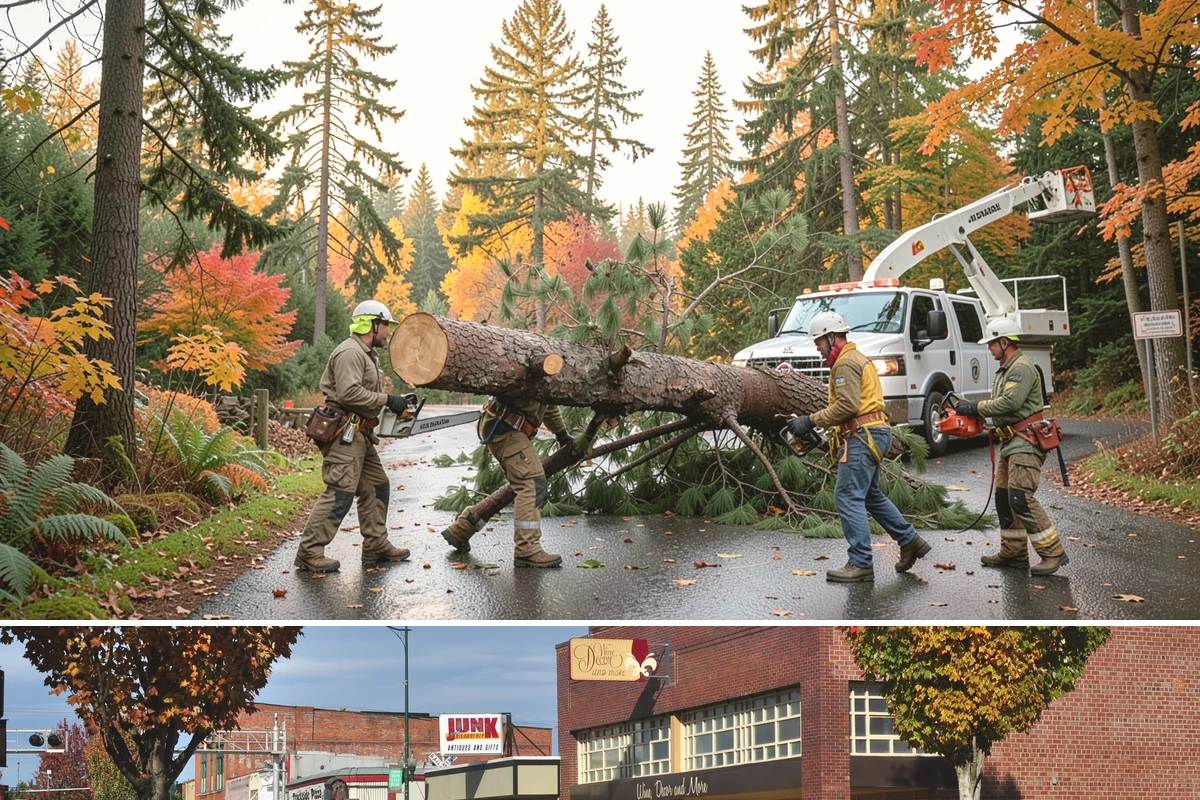
Also serving Puyallup
- Container Gardening in Puyallupat Washington Landscaping
- Storm Cleanup in Puyallupat Washington City Services
- Storm Wood Processing in Puyallupat Washington Firewood