Where Safety Meets Expert Tree Service.

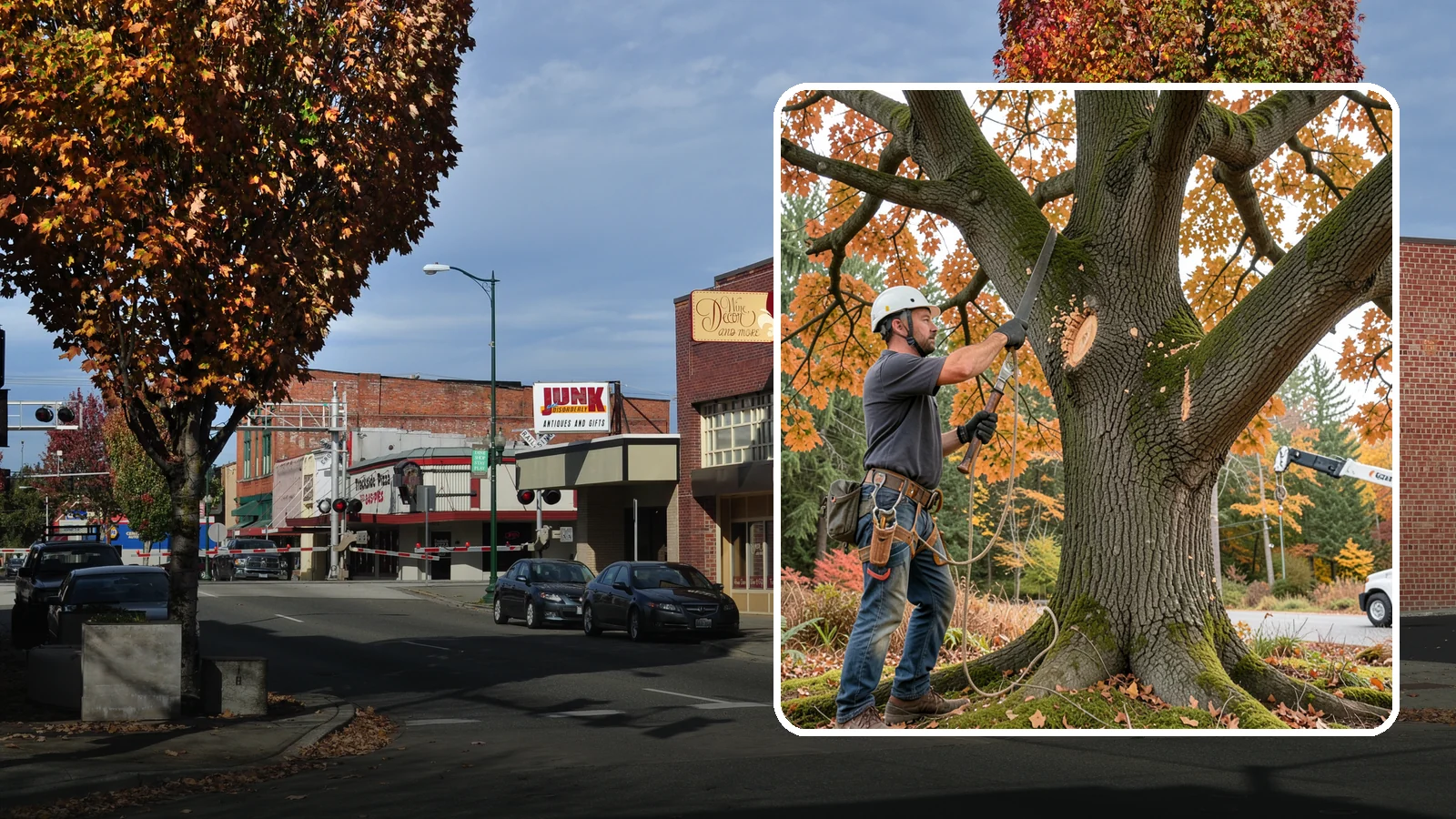
Puyallup Crown Reduction
The reduction of a crown’s height or spread using proper reduction cuts.
Crown reduction suits owners of Puyallup properties with a tree that has grown too large for its spot: branches over a roof, limbs crowding a driveway, or a canopy that blocks light from a garden. It also fits a tree that is healthy but heavy on one side.
The aim is to shorten the overall height or spread while keeping the tree's natural shape. Below, we compare the main ways to handle an oversized tree and explain which local details point toward each one.
About Crown Reduction in Puyallup
Crown reduction is a thoughtful tree care option designed to help you manage large trees safely while keeping them healthy. This service supports homeowners who want better clearance around their home or improved sightlines without removing the entire canopy. Our trained crews work with your specific trees to find solutions that fit your property needs.
What Puyallup Crown Reduction Includes
We perform crown reduction by making proper cuts to lower a tree’s height or spread, which helps manage size and reduce structural stress. This process is done carefully to preserve the long-term health of your tree while improving its structure and appearance. The goal is always to maintain natural growth patterns rather than simply cutting back branches indiscriminately.
Puyallup Crown Reduction Process
Our team starts by assessing the condition of your canopy and defining clear pruning objectives for each tree. We select specific cuts that match the species and current season, ensuring we do not over-prune or harm the wood. After making clean reductions at proper points, our crew lowers cut material safely and cleans up the work area completely.
Equipment We Use for Puyallup Crown Reduction
To complete this job effectively, crews use hand saws, pole saws, chainsaws, and climbing gear tailored to each site’s access needs. An aerial lift may be utilized when necessary to reach higher branches without compromising safety or tree stability. We also bring wood chippers for efficient debris processing and wear full personal protective equipment throughout the workday.
Puyallup Crown Reduction Safety & Best Practices
Safety is our priority, so we follow recognized pruning standards that avoid harmful cuts which can stress a living tree. Our technicians watch closely for overhead power lines and unstable limbs to prevent accidents during any part of the job. When working aloft, every crew member uses appropriate fall protection gear to ensure everyone stays secure on site.
Signs You Need Crown Reduction in Puyallup
You may need crown reduction if you notice deadwood, weak unions in your branches, or interference with nearby structures and utility lines. This service is also beneficial when a tree’s size creates clearance issues for vehicles or blocks important sightlines from windows and driveways. Addressing these signs early helps prevent branch failure and supports the overall vigor of your landscape trees.
What Affects the Cost of Crown Reduction in Puyallup
The investment for this work depends on factors like tree species, current canopy condition, and structural complexity that influence cut selection. More complex rigging requirements may also impact pricing based on how difficult it is to safely lower heavy branches from specific locations. We evaluate these variables carefully so you understand exactly what drives the cost before any job begins.
Best Time of Year for Puyallup Crown Reduction
The best time for crown reduction follows recognized arboricultural standards matched to the growing seasons of trees in our local Puget Sound climate. Scheduling work during appropriate windows ensures that cuts heal properly and minimizes stress on your specific tree species throughout the year. We plan projects around these natural cycles to support long-term health rather than rushing jobs into unsuitable weather or growth periods.
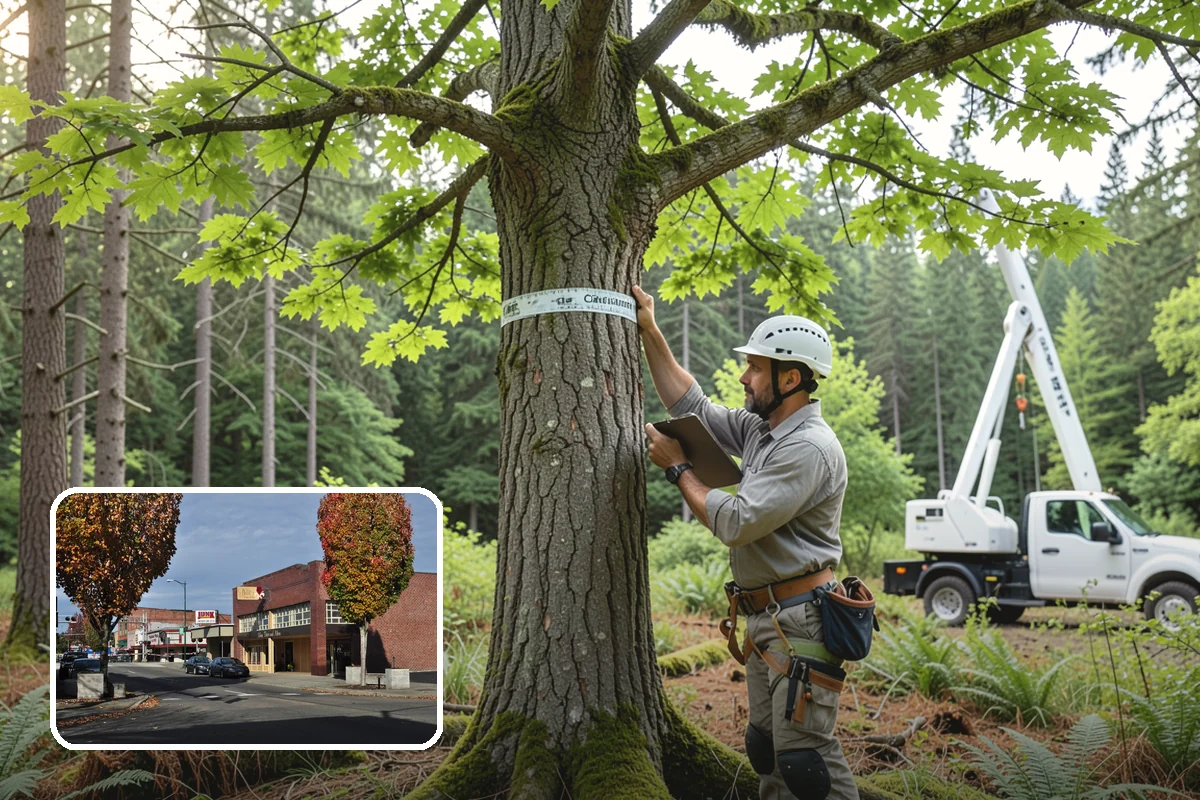
Crown reduction options for oversized trees in Puyallup
An owner with a tree that is too big usually has three realistic choices. Each suits a different situation.
- Crown reduction: Branches are cut back to side branches large enough to take over as the new growing tips. This follows standard pruning practice (ISA/ANSI A300 style) and keeps the tree's structure.
- Selective thinning or clearance pruning: Only certain branches are removed to open the canopy or lift it off a roof or wires. This works when the tree's size is acceptable and only a few limbs cause trouble.
- Removal: This is the choice when a tree is dead, badly decayed, or too large for the site even after reduction.
Why we steer away from topping
Some owners ask for the cheapest-looking fix: cutting every branch back to stubs. Research from Linda Chalker-Scott at the WSU Puyallup Research and Extension Center, in The Myth of Tree Topping, notes that shoots sprouting after topping are weakly attached and become more likely to fall as they grow. A reduction cut made to a proper side branch avoids that problem. We do not recommend topping.
What local details change the choice
Puyallup's street-tree inventory shows a median trunk diameter of 9.5 inches, and none of the inventoried trees are 24 inches or wider. That is a city inventory of street trees, not a measure of your yard tree. Still, if your tree is far larger than that, it may be unusually big for the area, and reduction deserves careful thought about how much can safely come off.
Puyallup sits in USDA hardiness zone 8b (USDA map, 2023). That is a mild zone, and most trees there tolerate pruning well when cuts are sized and placed properly. Even so, we remove only a limited share of the crown in one visit, since heavy cuts stress a tree.
We could not confirm which electric utility serves your address. If branches are near power lines, tell us up front so we can sort out who handles that work. We also check with the city before work starts if any rule may apply.
For a free estimate, call or text 425-484-4442.
Puyallup tree conditions at a glance
| USDA hardiness zone | 8b |
|---|---|
| Rain and snow falling October to April | 81% of the year’s total |
| Days that freeze at night and thaw by day | 29 a year |
| Tree City USA | 8 years |
| Electric utility | unconfirmed |
Most common street trees in Puyallup
- Flowering Pear14.6%
- Hornbeam9.4%
- Crabapple8.9%
- Linden7.3%
- Ash6.9%
- Green ash5.9%
Share of 812 trees in the city’s street-tree inventory; median trunk diameter 9.5 in, 0.0% at 24 in or wider.
Sources: Daymet daily weather (NASA/ORNL), NOAA Storm Events, USDA plant hardiness map 2023, NRCS soil survey, USGS elevation, WA DNR landslide inventory, USDA Forest Service aerial survey, WSDA, city tree assessments and street-tree inventories, SILVIS Lab, Arbor Day Foundation, and official city and utility pages.
Crown Reduction Serving Puyallup
Puyallup

Also serving Puyallup
- Maple Tree Pruning in Puyallupat Washington Landscaping
- Commercial Roof Maintenance Program in Puyallupat Washington Roofing
- Utility Line Clearance in Puyallupat Washington City Services