Where Safety Meets Expert Tree Service.

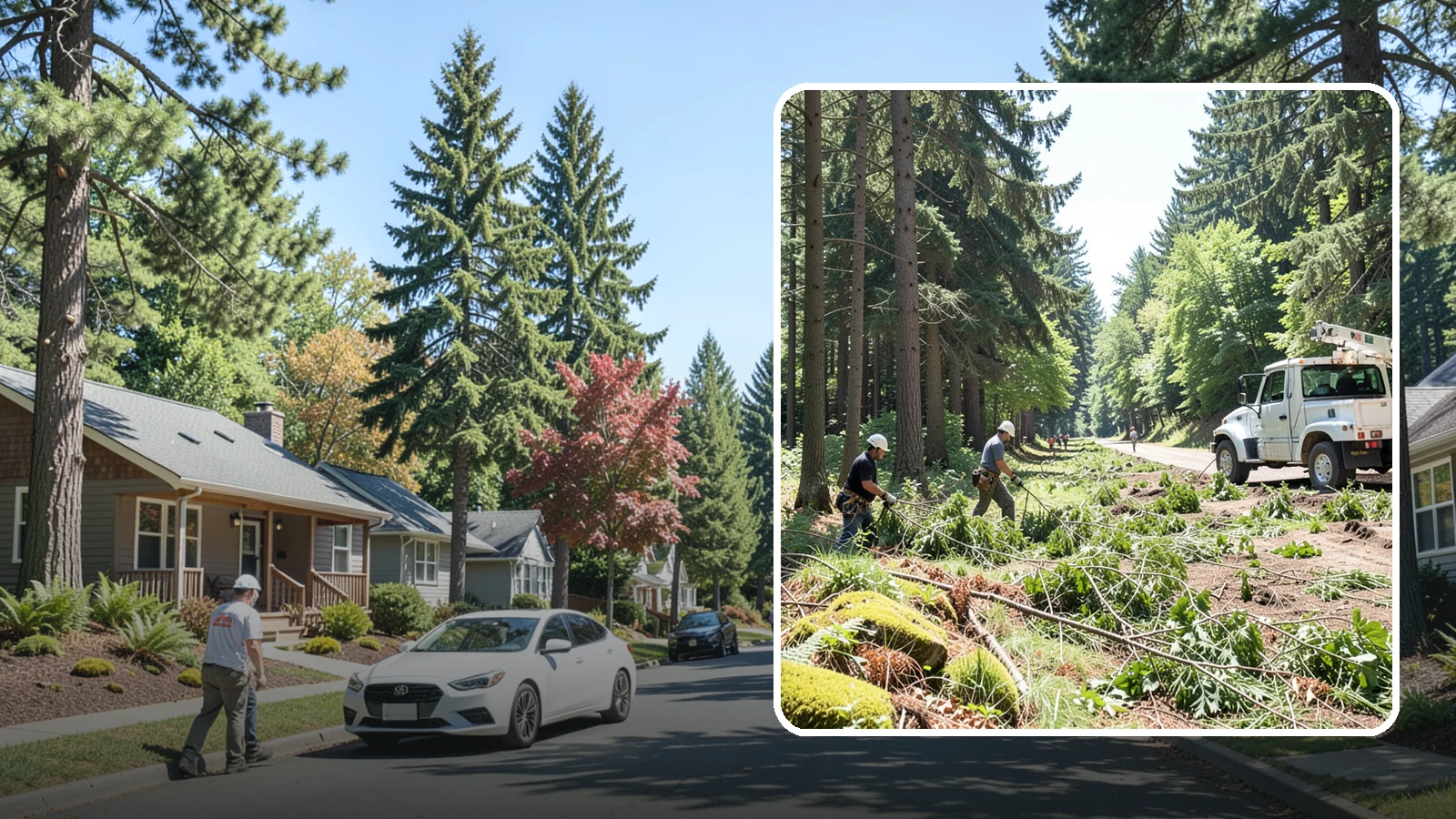
Orting Right-of-way Clearing
The clearing of vegetation along easements and access corridors.
The best time to plan right-of-way clearing is before you need it, ideally weeks ahead of any work date. Growth along a driveway, road edge or utility corridor changes through the season, so walk the line in late spring and again in early fall and note what is reaching into the open space.
Orting sits in USDA hardiness zone 8b, according to the 2023 USDA map. That is a mild zone, and it means many trees and shrubs along an edge can keep growing for much of the year. Planning ahead also matters if a wire to your house is involved, because that step has its own lead time.
About Right-of-way Clearing in Orting
Right-of-way clearing helps homeowners keep their easements and access corridors safe from overgrown vegetation. Our trained crews work carefully to maintain these important pathways so they remain usable for everyone who needs them. This service is designed to reduce fire risks while preparing your land exactly as you intend it to be used.
What Orting Right-of-way Clearing Includes
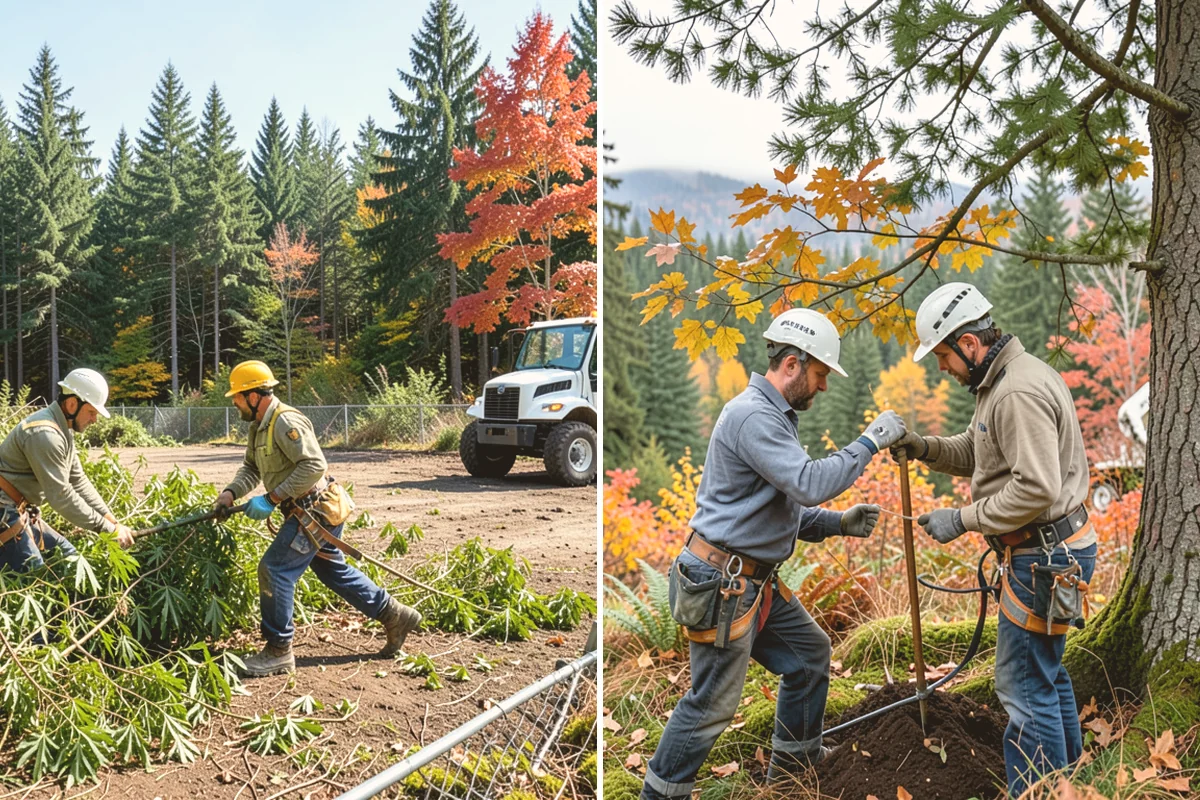
We clear unwanted plants along designated rights-of-way using methods that match the specific tree species and site conditions on your property. Our goal is to remove thorny growth, invasive species, and dense thickets without damaging features that must stay intact. This process ensures a clean corridor while protecting retained trees and their root zones from unnecessary disturbance.
Orting Right-of-way Clearing Process
We begin by assessing the entire area and marking key features to ensure they are protected during work. Vegetation is then removed in a planned sequence before we grade or tidy the surface as needed for your specific goals. Finally, all debris is processed responsibly so that the land looks neat and ready for its intended purpose once our crew leaves.
Equipment We Use for Orting Right-of-way Clearing
Our crews use brush cutters, chainsaws, chippers, and hauling equipment to handle vegetation of any density efficiently. Hand tools are available when precision work near sensitive areas or unique tree species requires a gentler touch. We also wear full personal protective gear throughout the job to keep everyone safe while we operate these powerful machines.
Orting Right-of-way Clearing Safety & Best Practices
Before starting, our team identifies property lines and utility locations to avoid accidental damage during clearing operations. We stay alert for uneven terrain and hidden obstacles that could create hazards if debris is not managed properly. Every step of the work prioritizes keeping retained trees healthy and ensuring no features are compromised by heavy machinery or falling branches.
Signs You Need Right-of-way Clearing in Orting
You may need this service when you notice dense, thorny growth blocking your path or invasive species taking over an easement. If your land has uneven ground that feels unsafe to walk on, clearing vegetation can restore stability and visibility. Overgrown corridors also increase fire risk by creating continuous fuel loads that connect across your property boundaries.
What Affects the Cost of Right-of-way Clearing in Orting
The final price depends heavily on how dense the vegetation is and whether thorny plants or invasive species require special handling methods. Uneven terrain conditions add complexity to the job, as does the responsibility of properly disposing of all removed debris. We tailor our approach based on these factors rather than using a one-size-fits-all pricing structure for every site.
Best Time of Year for Orting Right-of-way Clearing
This work can be performed year-round in Puget Sound weather when ground conditions allow for safe operations and efficient progress. During winter months, we adjust our methods to account for wet or frozen ground that is common during the colder seasons. By planning around these seasonal changes, we ensure high-quality results regardless of whether you need service now or later this season.
Planning right-of-way clearing in Orting
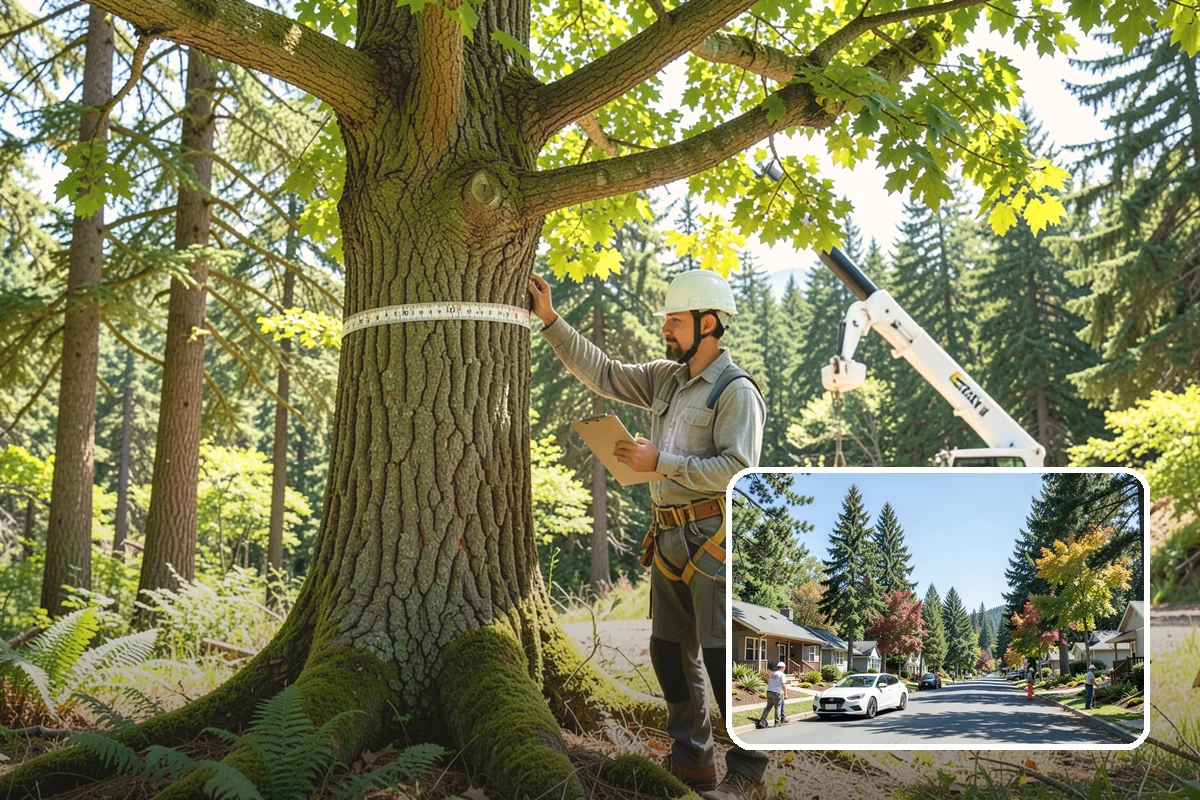
Start by deciding what the cleared space is for. A driveway, an access lane, a road shoulder and a line to the house each call for different cuts. Walk it and mark the branches that overhang, rub vehicles, or block sight lines.
What affects the scope
Scope depends on how much growth is there, how large the stems are, and what sits beside them. Small brush can be cut back by hand. Larger limbs over a drive need controlled cuts and lowering. Where a tree is close to a wire, the question of who is allowed to do the work comes first.
In Orting the electric utility is Puget Sound Energy (PSE). Its rule for the service line, the wire from the PSE pole to your home or meter pole, is that PSE does not trim it. The homeowner or a private arborist handles that trimming. So if branches are on the line to your house, the job falls to you, and it should not be done by someone without the right training near energized wire.
For that kind of work, PSE can perform a safety disconnection so a homeowner or private tree trimmer can work. PSE asks that you call at least 5 business days ahead to check crew availability and possible charges. Any fee is set by the utility, not by us. Build that wait into your schedule.
We also check with the city before work starts whenever removal of a tree is part of the plan, since we do not assume a rule is silent.
What to expect on the day
We walk the marked line with you first and confirm what stays and what goes. Cuts follow standard ISA and ANSI A300 practice: branches are removed at the right point, not stubbed or topped. Debris is chipped or hauled according to what you agreed on. Then we walk it again with you.
Practical tip: tie bright flagging tape on the branches you care about, and photograph the line before we arrive, so the scope is clear to both of us.
Orting tree conditions at a glance
| Electric utility | Puget Sound Energy (PSE) |
|---|---|
| Land under dense tree cover (50%+ canopy) | 10% |
| High and strong wind episodes, 2005-2025 | 25 in the forecast zone |
| Ice storm episodes, 2005-2025 | 2 in the forecast zone |
Trees near the power line to your house
Puget Sound Energy (PSE): Service line (wire from PSE pole to home or meter pole): PSE does not trim it; homeowner/private arborist trims.
PSE performs a safety disconnection so the homeowner or private tree trimmer/arborist can work; Call at least 5 business days ahead to check crew availability and potential charges.
Safety disconnect: 1-888-321-7779 (5+ business days ahead). Utility page.
Any fee for a disconnect is set by the utility.
Sources: Daymet daily weather (NASA/ORNL), NOAA Storm Events, USDA plant hardiness map 2023, NRCS soil survey, USGS elevation, WA DNR landslide inventory, USDA Forest Service aerial survey, WSDA, city tree assessments and street-tree inventories, SILVIS Lab, Arbor Day Foundation, and official city and utility pages.
Right-of-way Clearing Serving Orting
Orting
Right-of-way clearing in nearby areas
Also serving Orting
- Land Grading in Ortingat Washington Landscaping
- Garage Demolition in Ortingat Washington Construction
- Roadside Spraying in Ortingat Washington City Services
- On-Site Firewood Milling in Ortingat Washington Firewood