Where Safety Meets Expert Tree Service.


Normandy Park Leaning Tree Removal
The removal of trees with a pronounced or unstable lean.
This page is for owners in Normandy Park whose tree has started to lean, or leans more than it used to. It matters most when the tree sits over a house, driveway, or a slope. A new tilt, soil heaved on one side, or fresh cracks near the base are all reasons to get a closer look.
Not every lean means the tree must come down. Some trees grow at an angle for decades and stay sound. The useful first step is to tell a long-standing lean from a recent shift, then choose between watching, reducing, or removing.
About Leaning Tree Removal in Normandy Park
We help homeowners manage trees that have developed a dangerous lean toward your home or other property features. Our trained crews are ready to safely remove these unstable specimens using methods matched to your specific site conditions. This service restores peace of mind by eliminating immediate safety hazards from your yard.
What Normandy Park Leaning Tree Removal Includes
Leaning tree removal focuses on taking down trees with pronounced or unstable leans that pose a risk of falling. The work includes removing the entire stem and limbs in a controlled sequence while protecting nearby structures, utilities, and landscaping. We also process the wood and clear all debris to leave your property clean after the job is done.
Normandy Park Leaning Tree Removal Process
Our team begins by assessing the tree for decay and establishing safe drop zones around your home. Once safety perimeters are set, we rig the limbs or fell the stem carefully using recognized arboricultural standards. The final steps involve hauling away branches and roots to ensure a tidy site without leaving behind hidden dangers.
Equipment We Use for Normandy Park Leaning Tree Removal
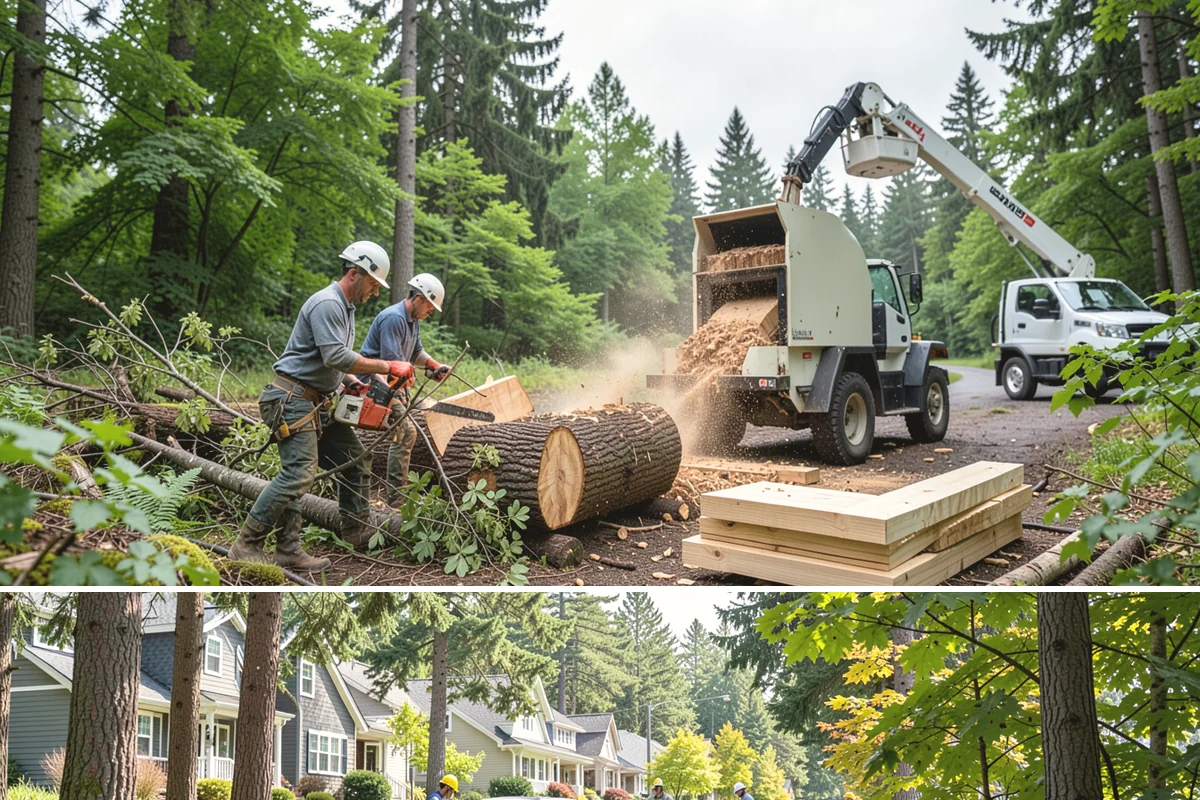
We use chainsaws and climbing gear to navigate trees with difficult access points while maintaining control over their fall path. A wood chipper processes the cut material on-site, and we may bring an aerial lift or crane if equipment cannot reach from the ground. All crew members wear personal protective equipment to ensure safety throughout the removal process.
Normandy Park Leaning Tree Removal Safety & Best Practices
Safety is our priority as we maintain clear drop zones and monitor for unstable soil that could shift during wet weather. We always identify overhead utility lines before starting work to prevent electrical hazards or damage to power infrastructure. Coordinated ground communication and fall protection measures are used at every step to keep everyone safe on the job site.
Signs You Need Leaning Tree Removal in Normandy Park
You may need this service if your tree shows visible signs of root failure, trunk cracks, or a sudden increase in lean toward a target. This work is also necessary when hidden internal decay weakens the structure enough that it threatens nearby buildings or fences. If you notice unpredictable load distribution or limited access making manual removal unsafe, our team can evaluate the situation for you.
What Affects the Cost of Leaning Tree Removal in Normandy Park
The price of this service depends on factors like proximity to power lines and structures which require extra caution during the fall. Hidden internal decay often changes how we must rig the tree, influencing both time and equipment needs. Limited space for machinery or an unpredictable lean distribution will also affect the overall cost of removing your leaning tree.
Best Time of Year for Normandy Park Leaning Tree Removal
This service can be performed year-round in our local climate to address hazards as they appear on your property. However, extra caution is required during wet seasons when saturated soil might cause unstable leans to shift unexpectedly before removal. We plan around these conditions to ensure a safe and successful outcome for every job we undertake.
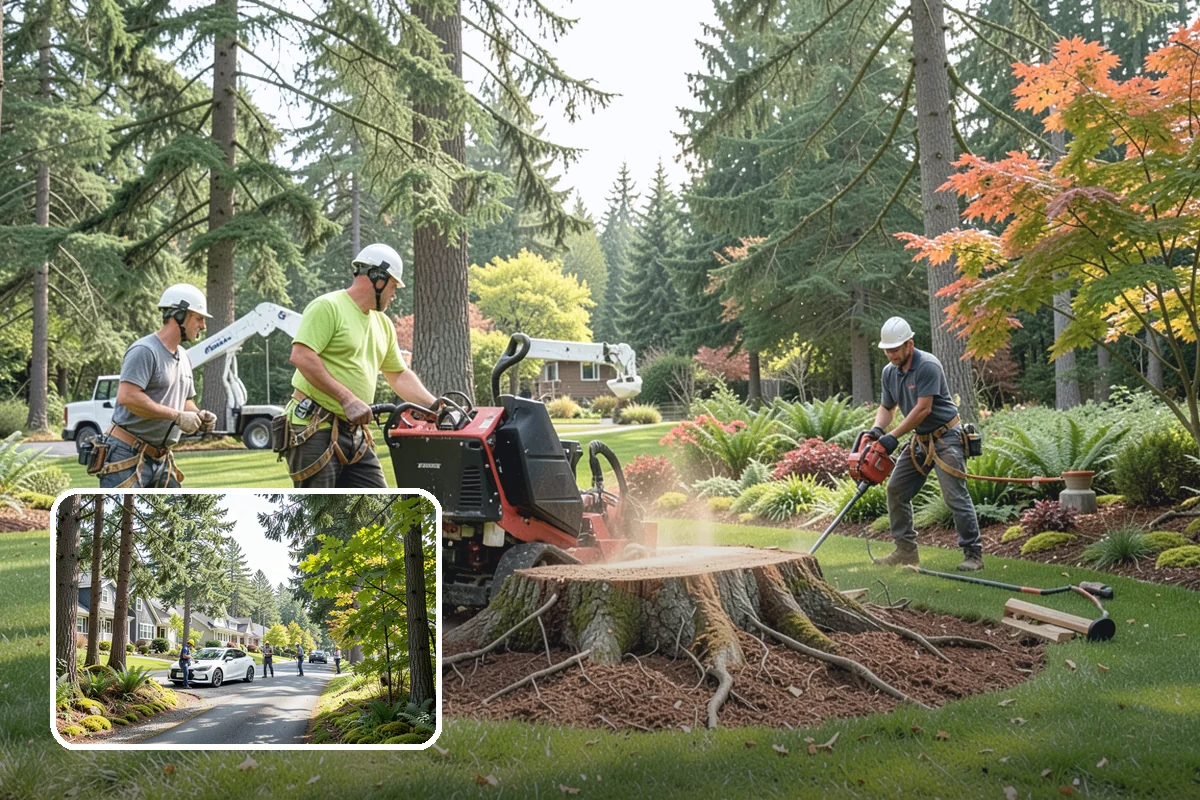
Leaning Tree Options in Normandy Park: Monitor, Reduce, or Remove
An owner usually has three choices. Which one fits depends on how the lean started and what the tree could hit.
Monitor
If the lean is old, the trunk curves upward to correct it, and the soil at the base is undisturbed, monitoring can be reasonable. Take a dated photo from the same spot every few months. Stake a string line or mark the ground so you can see any change. Fresh soil cracks, lifted roots, or a tilt that grows mean it is time to move on.
Reduce or support
Selective pruning can lower the weight on the leaning side of a tree that is otherwise healthy. Standard practice does not include topping, which weakens a tree. Reduction will not fix roots that have already failed.
Remove
Removal fits a tree with a recent lean, root plate movement, decay, or a target underneath that cannot be moved. Local conditions lean toward this choice more often than owners expect:
- Soils: the NRCS soil survey shows 37% of Normandy Park land has a hard or restrictive layer, such as glacial hardpan, within 40 inches of the surface. Alderwood is the most common soil series. Roots that meet a hard layer tend to spread sideways rather than down, which is worth weighing when a tree starts to tilt. This is a survey of the city's land, not a reading of your soil.
- Slopes: USGS elevation data shows Normandy Park has a lot of steep ground compared with other Puget Sound cities. A leaning tree on a slope can fall farther and be harder to bring down safely.
City rules and storms
The city's tree code (NPMC 18.36, per search-index text) says that in critical areas, hazardous trees may be removed with 5 days' notice to the City, and removed trees must be replaced. That covers removal only. If your tree may be in a critical area, we check with the city before work starts.
After snow or ice, stay out from under a loaded tree. WA DNR advises letting the load melt and watching from a distance. Call us for a free estimate at 425-484-4442 once it is safe, and an ISA Certified Arborist can assess the lean.
Normandy Park tree conditions at a glance
| USDA hardiness zone | 9a |
|---|---|
| Tree canopy | Among the most heavily treed Puget Sound cities (satellite data) |
| Slopes | More steep ground than most Puget Sound cities |
| Landslides mapped by WA DNR | 17 |
| Soils | 37% of land has hardpan or another restrictive layer within 40 in; most common series Alderwood |
| High and strong wind episodes, 2005-2025 | 38 in the forecast zone |
| Electric utility | Puget Sound Energy (PSE) |
Tree removal rules in Normandy Park
Property owners do not need a permit to cut down trees on their private property unless the trees are in a critical area, on a city easement, or the owner is doing land clearing, grading or filling (NPMC 13.20, 13.30). Street trees in planting strips need a written permit from the director (NPMC 10.26).
Regulated size: none for general private-lot removal (no private-property tree ordinance).
Official city source. Rules change; we confirm with the city before work starts.
Trees near the power line to your house
Puget Sound Energy (PSE): Service line (wire from PSE pole to home or meter pole): PSE does not trim it; homeowner/private arborist trims.
PSE performs a safety disconnection so the homeowner or private tree trimmer/arborist can work; Call at least 5 business days ahead to check crew availability and potential charges.
Safety disconnect: 1-888-321-7779 (5+ business days ahead). Utility page.
Any fee for a disconnect is set by the utility.
Strongest wind events near Normandy Park
- Dec 14, 2006: gusts to 74 mph
- Feb 3, 2006: gusts to 67 mph
- Jan 12, 2021: gusts to 61 mph
NOAA Storm Events, forecast zone that includes Normandy Park, 2005-2025.
Sources: Daymet daily weather (NASA/ORNL), NOAA Storm Events, USDA plant hardiness map 2023, NRCS soil survey, USGS elevation, WA DNR landslide inventory, USDA Forest Service aerial survey, WSDA, city tree assessments and street-tree inventories, SILVIS Lab, Arbor Day Foundation, and official city and utility pages.
Leaning Tree Removal Serving Normandy Park
Normandy Park

Leaning tree removal in nearby areas
Also serving Normandy Park
- Ornamental Grass Planting in Normandy Parkat Washington Landscaping
- Tree Planting in Normandy Parkat Washington City Services
- Firewood Hauling in Normandy Parkat Washington Firewood