Where Safety Meets Expert Tree Service.

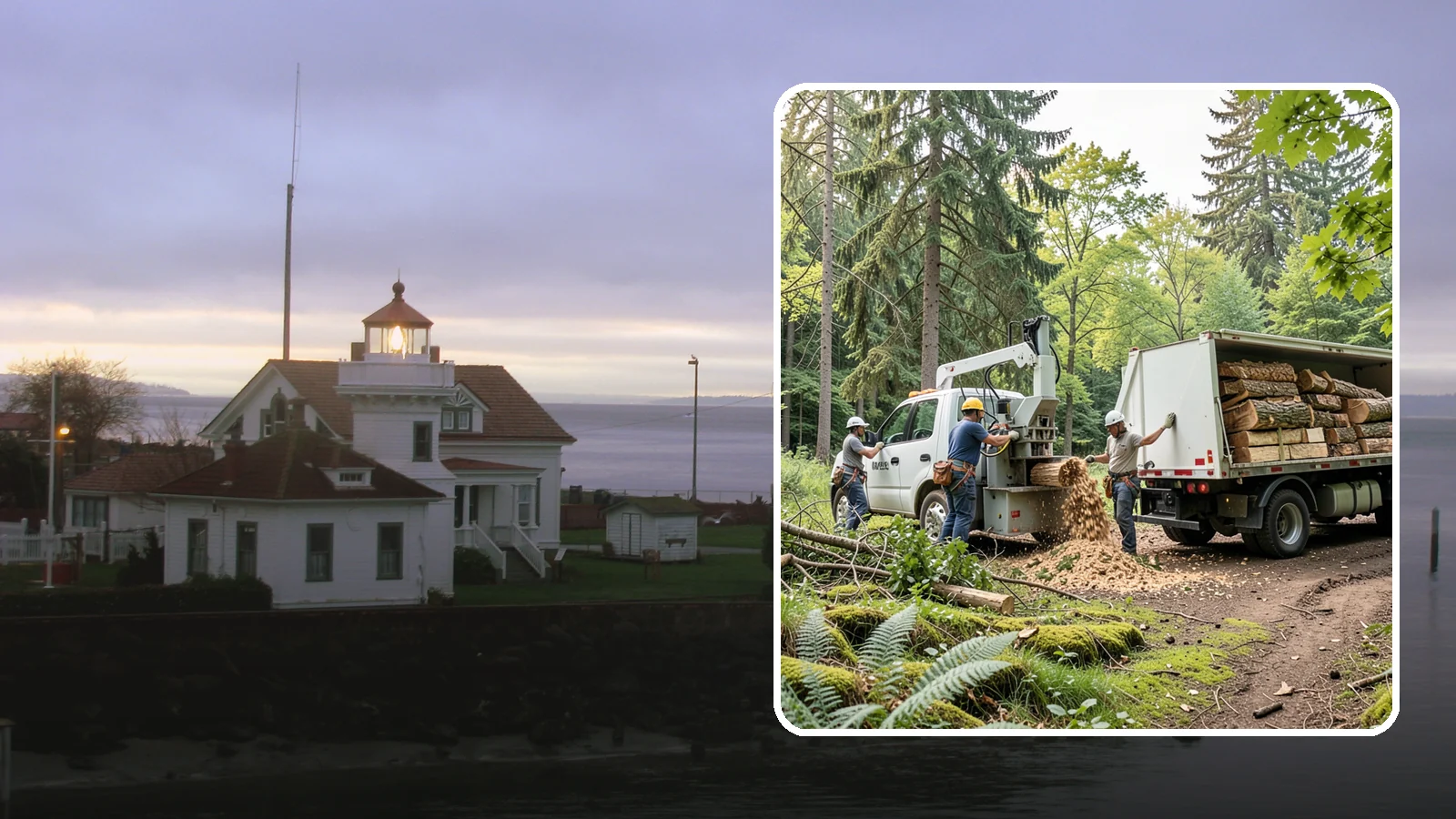
Mukilteo Firewood Cutting And Delivery
The cutting of logs into firewood and its delivery.
In Mukilteo, the best time to cut and order firewood is late winter through early summer, well before you plan to burn it. Rain and snow are heavy from October to April, and wood stacked wet in that stretch has little chance to dry. Wood cut in spring has the dry months ahead of it.
Washington Tree Services cuts logs to length and delivers them. This page explains how to plan an order, what changes the scope of the job, and what the day itself looks like.
About Firewood Cutting And Delivery in Mukilteo
Turn your removed logs into usable firewood so you can keep heat in your home during colder months. Our trained crews handle the entire process from cutting to delivery for homeowners across Washington State who want a clean site and quality fuel. We work with various tree species and access conditions to ensure your wood is ready when you need it most.
What Mukilteo Firewood Cutting And Delivery Includes
This service transforms leftover timber into seasoned firewood that supports responsible reuse of materials while keeping your property tidy. It includes sorting, cutting, milling, or chipping logs as needed before they are loaded for transport to your location. The goal is to convert debris into a valuable product without adding extra disposal burdens to your household.
Mukilteo Firewood Cutting And Delivery Process
We begin by sorting material based on its type and size to determine the best method for processing each piece. Crews then chip, cut, mill, or load the wood according to your specific requirements before hauling it away or delivering it directly. Finally, we clean up the work area to leave your site safe and free of debris after completion.
Equipment We Use for Mukilteo Firewood Cutting And Delivery
Our teams utilize chainsaws, wood chippers, loaders, and hauling vehicles tailored to match tree species and site conditions. When necessary, specialized milling equipment is brought in to ensure logs are processed into high-quality firewood pieces. All operators wear personal protective equipment while using these tools to maintain a safe environment throughout the job.
Mukilteo Firewood Cutting And Delivery Safety & Best Practices
We keep hands and bystanders clear of feed equipment at all times during operations on your property. Loads are securely fastened before transport, and every crew member wears eye and hearing protection while working with loud machinery. Logs are handled with proper techniques and appropriate gear to prevent injury or damage to the wood being moved.
Signs You Need Firewood Cutting And Delivery in Mukilteo
You may need this service if you have large logs that require cutting down into manageable sizes for your fireplace. Situations where embedded metal, debris, or unusual moisture levels exist in removed trees also indicate a time to call us. If access limits make manual handling difficult, our crews can navigate these challenges to deliver seasoned firewood safely.
What Affects the Cost of Firewood Cutting And Delivery in Mukilteo
The final price depends on the size of the logs and how much equipment is needed to reach them. Embedded metal or debris within the wood can influence costs by requiring extra care during processing. Additionally, moisture levels that affect product quality will be considered when determining the best approach for your specific load.
Best Time of Year for Mukilteo Firewood Cutting And Delivery
Seasonal changes in weather impact how quickly wood seasons properly before it reaches you as finished firewood. We plan our deliveries to account for these variations and ensure your logs dry out effectively during transport or storage. Waiting until moisture levels are favorable helps guarantee that the delivered product meets quality standards for burning efficiently.
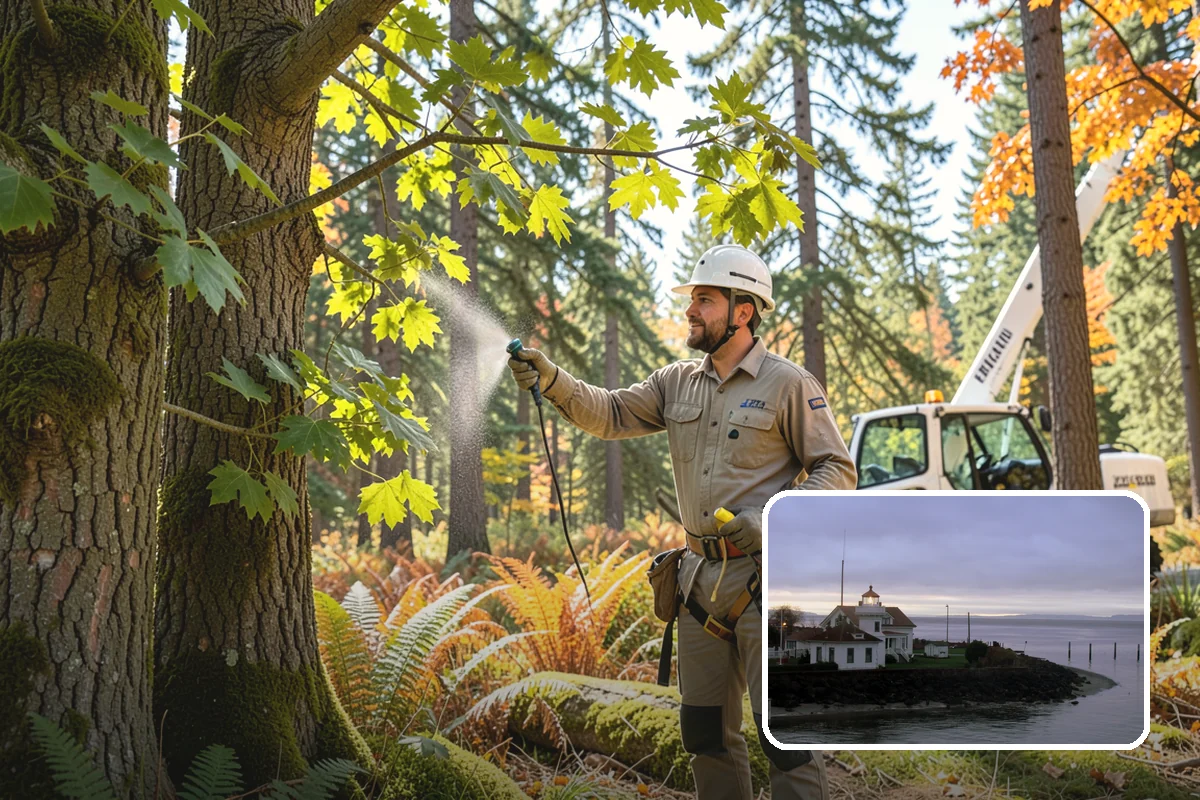
Planning firewood cutting and delivery in Mukilteo
Plan around the wet season
Daymet climate data for 2005 to 2025 shows that 79% of Mukilteo's yearly rain and snow falls from October to April. That matters for drying. Freshly cut wood holds a lot of moisture, and a stack that sits through those months mostly gets rewetted. July is the driest month on average, so wood cut and stacked by early summer gets the best drying window you will see here.
Seasoned wood usually needs several months to a year or more after cutting, depending on the species and the size of the splits. Softer woods tend to dry faster than dense hardwoods. Ask what species you are getting and when it was cut.
What affects the scope
The main questions are how much wood you want, what length your stove or fireplace takes, and whether the logs come from a tree already down on your property or from elsewhere. Access matters too. A narrow driveway, a steep slope or a gate can change where the load is dropped and how far the wood has to be moved.
Census ACS figures for 2020 to 2024 put the share of Mukilteo homes heated mainly with wood at 0%. So most owners here burn for ambiance or occasional backup heat, not as a primary source. That suggests ordering a modest amount at first, then adjusting once you see how much you actually use.
What to expect on the day
Wood is cut to the length you agreed on, loaded and delivered to the spot you pick. Plan where it will go ahead of time, and clear a path so the load can be placed without extra handling. If trees need to come down first, we check with the city about any rules before work starts.
Practical tip: stack the wood off the ground on pallets or rails, with the top covered and the sides open. Air moving through the stack does most of the drying.
Mukilteo tree conditions at a glance
| Tree canopy | Among the most heavily treed Puget Sound cities (satellite data) |
|---|---|
| Land under dense tree cover (50%+ canopy) | 28% |
| Rain and snow falling October to April | 79% of the year’s total |
| Days with 0.1 in or more of rain | 110 a year |
Tree health near Mukilteo
Spongy moth (WSDA 2022): WSDA trap detection(s): 1 catch record(s) listed (per-trap counts not given).
Spongy moth (WSDA 2018): WSDA trap detection(s): 2 moth(s) in 1 trap catch record(s).
- Decline, cause not identified312 ac
Forest damage mapped from the air within 10 km of Mukilteo, 2021-2025 (USDA Forest Service and WA DNR). This covers forest land, not street or yard trees. “Decline, cause not identified” is dieback with no single cause found.
Sources: Daymet daily weather (NASA/ORNL), NOAA Storm Events, USDA plant hardiness map 2023, NRCS soil survey, USGS elevation, WA DNR landslide inventory, USDA Forest Service aerial survey, WSDA, city tree assessments and street-tree inventories, SILVIS Lab, Arbor Day Foundation, and official city and utility pages.
Firewood Cutting And Delivery Serving Mukilteo
Mukilteo
Also serving Mukilteo
- Next-Day Firewood Delivery in Mukilteoat Washington Firewood
- River Rock Installation in Mukilteoat Washington Landscaping