Where Safety Meets Expert Tree Service.

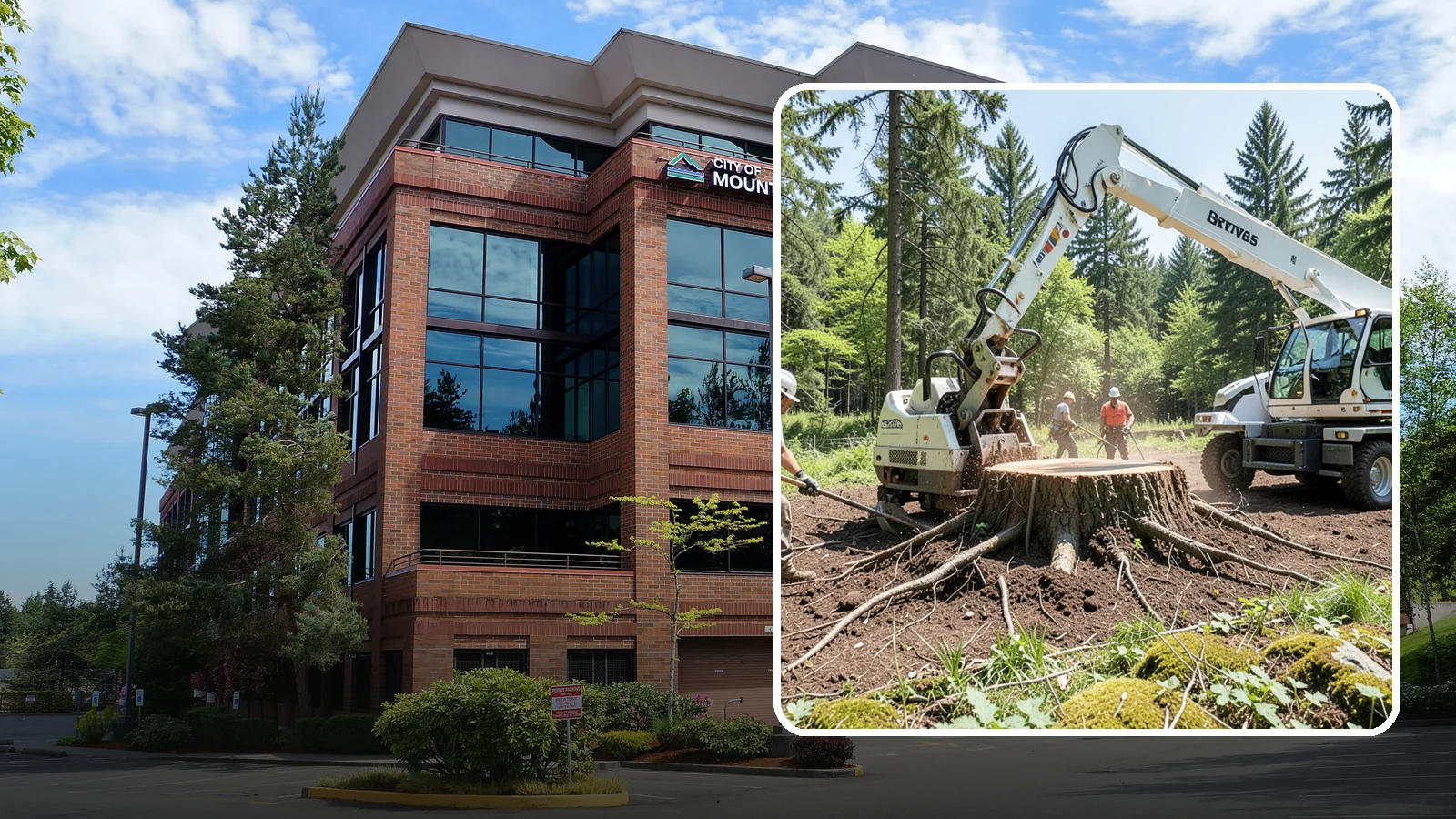
Mountlake Terrace Stump Removal
The full extraction of a stump and its major roots.
Should you grind the stump or pull it out whole? For most yards, grinding is the practical answer. A grinder cuts the stump and the upper roots down below grade, and you can then fill the hole and plant or seed over it. Full extraction means digging out the root mass, which leaves a much larger hole and more disturbed soil.
The right choice depends on what you plan to put there next, how deep the roots run, and whether a city rule applies to the tree you removed. Here is what to think through before you book the work.
About Stump Removal in Mountlake Terrace
If you need your yard cleared after a tree has been removed or if an old stump is causing trouble, our team can help get the job done safely. We specialize in removing stubborn stumps so you can reclaim that space for new plants or other uses without leaving behind hidden hazards.
What Mountlake Terrace Stump Removal Includes
This service involves the complete extraction of both the visible stump and its major root system from beneath the soil surface. It is specifically chosen when you need to clear the entire underground mass rather than just grinding it down below ground level. Our trained crews follow recognized standards to match their methods to your specific tree species, site conditions, and access points.
Mountlake Terrace Stump Removal Process
We begin by locating and marking any underground utilities before moving a single tool near your property. After clearing the area around the stump, we either grind or extract the root mass depending on what works best for your situation. Once removed, we process the debris, backfill the hole, and grade the soil as needed to restore your landscape.
Equipment We Use for Mountlake Terrace Stump Removal
Our crews use powerful stump grinders along with excavation tools designed to handle tough underground work. We also bring utility locating support, wheelbarrows, rakes, and personal protective equipment to ensure a smooth operation. All machinery is selected carefully to navigate around rocks, debris, or limited access areas without damaging your yard.
Mountlake Terrace Stump Removal Safety & Best Practices
Safety starts by confirming that all underground utilities are located before any grinding begins to prevent accidental damage. We keep bystanders clear of the work zone and watch for ejected debris while everyone wears proper eye and hearing protection. Our team also stays alert for buried obstructions or other hazards that could arise during excavation near your home.
Signs You Need Stump Removal in Mountlake Terrace
You may need this service if you are dealing with a tripping hazard, an obstruction in your garden bed, or signs of pests attracted to old roots. It is the right choice when regrowth from remaining roots becomes unwanted and you want to prepare the area for replanting. If equipment cannot reach the stump due to tight spaces, our methods can still be adapted to handle limited access situations.
What Affects the Cost of Stump Removal in Mountlake Terrace
The final price depends on factors like the size of the stump and how deep or extensive its root system is. Soil conditions such as rocks or debris in the ground will also influence the effort required for extraction. Additionally, any limitations that prevent large equipment from reaching your site can affect the overall cost of the project.
Best Time of Year for Mountlake Terrace Stump Removal
Work can be performed year-round here thanks to our mild Puget Sound climate and flexible scheduling. During wetter seasons, we may need to take special precautions because excavation tools face saturated soils that make digging more difficult. We will work with you to find a time when conditions are right for your specific site needs.

Stump removal in Mountlake Terrace: soil, rules and replanting
Why the soil matters for roots and replanting
The NRCS soil survey says 59% of the land in Mountlake Terrace has a hard or restrictive layer, such as glacial hardpan, within 40 inches of the surface. The most common soil series is Alderwood. That is a survey of the city's soils, not a test of your lot. Still, it is a reason to expect that roots may have spread sideways instead of straight down, and that a new tree may face the same shallow limit. After grinding, we suggest loosening the soil where you plan to plant and checking drainage before you choose a replacement.
Check the replacement tree rules first
The city's tree code addresses replacement trees. For development, replacement is based on the size of the tree removed, or a fee-in-lieu paid to the City tree fund. For critical areas, the code calls for a replacement or mitigation plan, with restoration started within one year. The code speaks to removal and replacement, so it does not tell us how it applies to grinding a stump that is already there. If your tree came out as part of a project, or your yard includes a critical area, we check with the city before work starts. Ask about this early, since it can shape where a new tree goes and when.
Planning what comes next
Mountlake Terrace is in USDA plant hardiness zone 9a, according to the 2023 USDA map. Zone is only one input, but it helps when you pick a replacement or a groundcover. Grinding leaves wood chips mixed with soil. You can rake out the larger pieces, or have the hole backfilled with clean soil before planting. Fresh chips can tie up nitrogen as they break down, so avoid planting directly into a pile of them.
- Mark sprinkler lines, drains and buried utilities before the grinder arrives.
- Decide whether you want a new tree, a bed or lawn in the spot.
- Tell us about any fence, wall or patio close to the stump.
Call or text 425-484-4442 for a free estimate, and we can talk through the options for your stump.
Mountlake Terrace tree conditions at a glance
| Soils | 59% of land has hardpan or another restrictive layer within 40 in; most common series Alderwood |
|---|---|
| Rain and snow falling October to April | 80% of the year’s total |
| Days that freeze at night and thaw by day | 33 a year |
Tree removal rules in Mountlake Terrace
City critical-areas tree FAQ: in general single-family homeowners do not need a permit to remove a tree unless it is in a critical area or the removal is associated with a land use action such as a development proposal; a clearing and grading permit may be needed if the ground is significantly disturbed by equipment (especially multiple trees). Under MTMC 19.130.170 (Ord.
Regulated size: Deciduous trees 6 inches DBH or greater, or coniferous trees at least 7 ft tall, excluding trees on the City's Prohibited Tree List (MTMC 16.30, Ord.
Official city source. Rules change; we confirm with the city before work starts.
Sources: Daymet daily weather (NASA/ORNL), NOAA Storm Events, USDA plant hardiness map 2023, NRCS soil survey, USGS elevation, WA DNR landslide inventory, USDA Forest Service aerial survey, WSDA, city tree assessments and street-tree inventories, SILVIS Lab, Arbor Day Foundation, and official city and utility pages.
Stump Removal Serving Mountlake Terrace
Mountlake Terrace

Also serving Mountlake Terrace
- Sod Repair in Mountlake Terraceat Washington Landscaping
- Memorial Tree Planting in Mountlake Terraceat Washington City Services