Where Safety Meets Expert Tree Service.

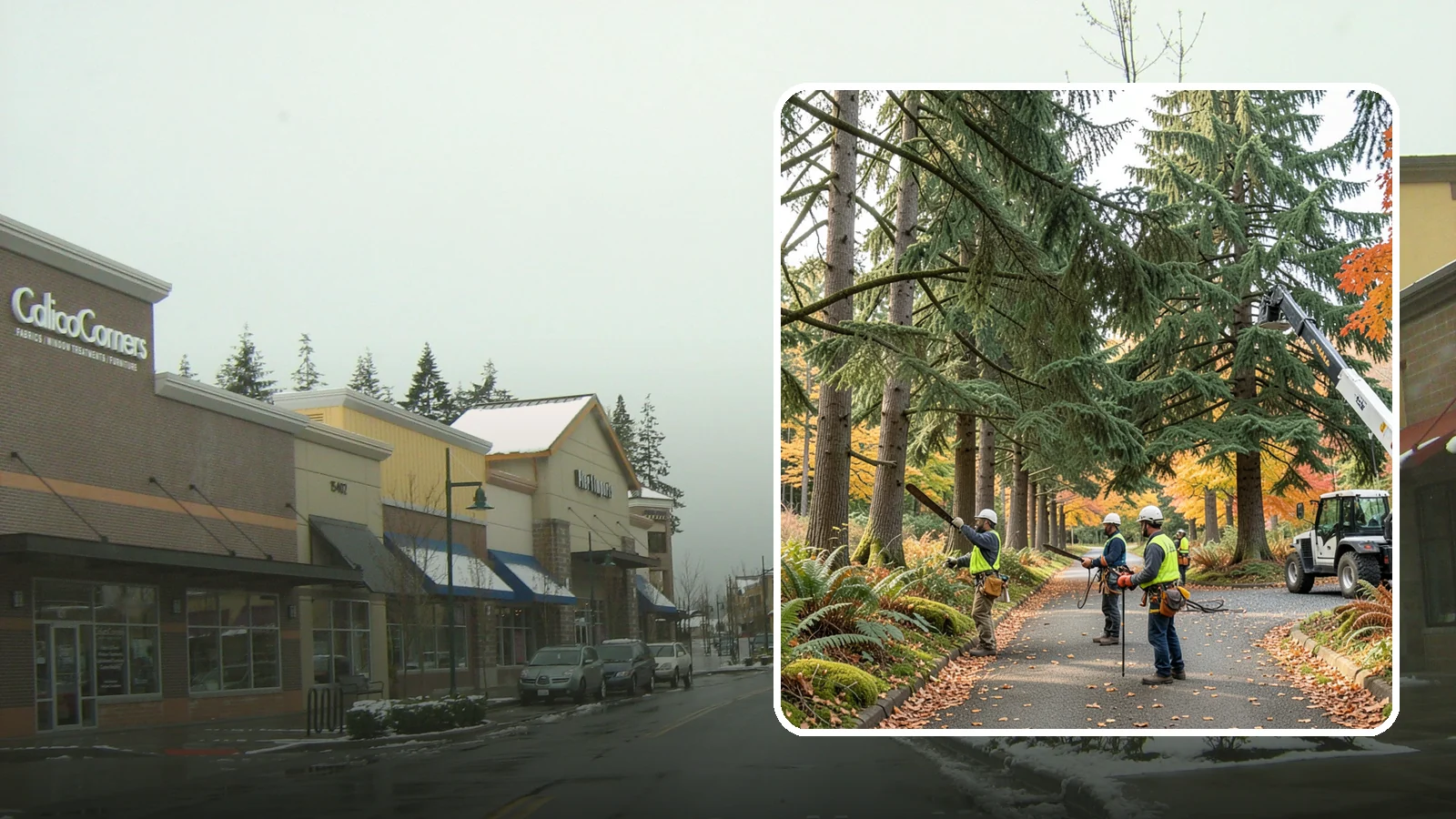
Mill Creek Municipal Tree Maintenance
Tree maintenance for public and municipal spaces.
Who trims the tree that is touching the wire to my house in Mill Creek? Usually you do. Snohomish County PUD states that it does not maintain vegetation around service lines, so the branches near that line are the owner's job to keep clear.
This page covers municipal tree maintenance: the ongoing care that keeps trees along streets, in parks and on shared property healthy and safe. Below we explain how the service line rule affects your planning and when the local rain pattern matters for scheduling.
About Municipal Tree Maintenance in Mill Creek
This specialized maintenance is designed specifically for public parks, government grounds, and other municipal spaces where tree care goes beyond simple residential trimming. Our trained crews work across these shared properties to ensure every community green stays safe, presentable, and healthy for everyone who visits or lives nearby. We handle the unique challenges of managing trees on a scale that requires careful coordination with traffic patterns and public access needs.
What Mill Creek Municipal Tree Maintenance Includes
Municipal tree maintenance focuses entirely on caring for trees located in public areas rather than private yards. Our approach includes regular inspections to spot potential issues, followed by pruning and other treatments matched to each specific species and site condition. We also manage the logistics of keeping these spaces looking their best while ensuring that work aligns with recognized arboricultural standards.
Mill Creek Municipal Tree Maintenance Process
The job begins with a thorough inventory where we assess every tree on the property to understand its current health and structural needs. Based on this assessment, we develop a customized maintenance schedule that prioritizes tasks like recurring pruning and detailed inspections throughout the year. As crews complete their work, they document everything carefully so plans can be updated for future seasons or changing conditions at the site.
Equipment We Use for Mill Creek Municipal Tree Maintenance
To handle trees in public spaces safely, our teams bring along specialized gear such as rigging equipment and inspection tools tailored to different job requirements. When a tree is too high to reach from the ground, we deploy aerial lifts with precision to access branches without damaging surrounding infrastructure. We also utilize heavy-duty chippers and hauling units to manage debris efficiently while wearing full personal protective equipment at all times.
Mill Creek Municipal Tree Maintenance Safety & Best Practices
Working in public areas requires strict safety protocols that coordinate our crew movements around pedestrians, vehicles, and other occupants of the space. We establish safe work zones before beginning any task and follow recognized standards to protect both our workers and the general public from hazards like falling branches or dropped tools. Detailed records are kept for every project to ensure full accountability and transparency regarding how safety measures were implemented on site.
Signs You Need Municipal Tree Maintenance in Mill Creek
You may know this service is needed when a municipal property faces deferred maintenance backlogs that threaten tree stability in high-traffic areas. Varied conditions across a large public site often reveal specific trees requiring immediate attention due to storm damage, disease, or structural weakness. Coordinating access around busy streets and ensuring the schedule fits with community events are also key indicators that professional management is required for these spaces.
What Affects the Cost of Municipal Tree Maintenance in Mill Creek
The investment in municipal tree maintenance depends heavily on existing deferred maintenance backlogs that may require more extensive work than routine care. Locations with heavy foot traffic or vehicle flow often need careful coordination, which can influence how resources and time are allocated to the project. Additionally, the wide variety of tree conditions found across different public sites and the complexity of accessing certain areas without disrupting daily life will shape the overall budget for the service.
Best Time of Year for Mill Creek Municipal Tree Maintenance
While we aim to keep trees healthy year-round in our local Puget Sound climate, work follows a recurring schedule aligned with recognized arboricultural standards rather than rushing through every season blindly. We plan tasks so that pruning and inspections happen when they are most effective for each species while accounting for typical weather patterns throughout the year. This approach ensures consistent care without interrupting public access or safety during peak usage times in any given month.
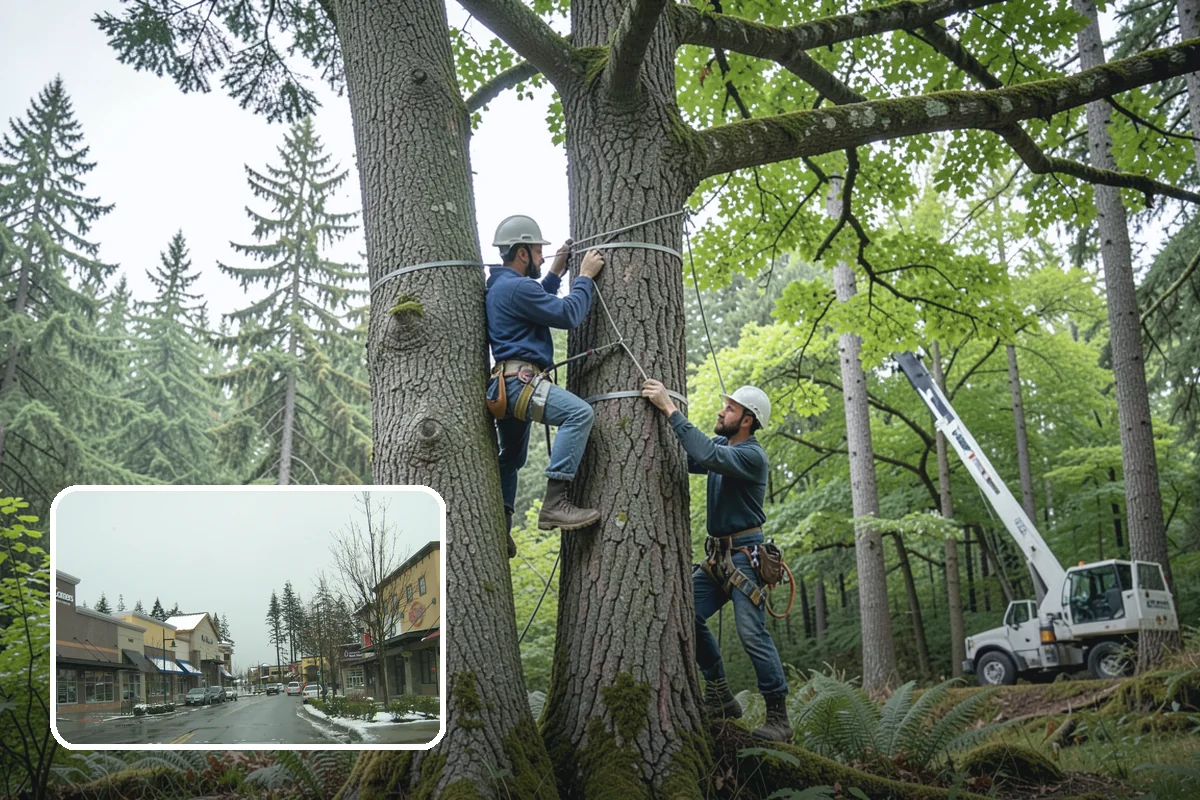
Municipal Tree Maintenance in Mill Creek: Lines, Rain and Zone
The wire to the house is yours to keep clear
Snohomish County PUD is the electric utility in Mill Creek. Its rule says it "does not maintain vegetation around service lines or standalone communication lines." The customer must keep 5 feet of clearance on all sides of the service drop, which makes a 10 foot diameter. The one exception is the first 10 feet nearest the primary line. The PUD trims that stretch.
This matters for any maintenance plan that includes trees near buildings or shared lots. The clearance is a standing duty, not a one-time job. Branches grow back toward the wire, so the zone needs regular checking. Work near energized lines is not a do-it-yourself task. Call the PUD about the section it handles, and use a qualified arborist for the rest.
Plan around the wet months
Daymet data for 2005 to 2025 shows that 79% of Mill Creek's yearly rain and snow falls from October to April. For maintenance, that means saturated soil for much of the year. Heavy equipment on wet ground can compact soil over roots, so access routes and timing deserve thought. Inspections and pruning planned for the drier months are easier on turf and on the ground around the trees.
Choose trees that suit the zone
The USDA map from 2023 places Mill Creek in plant hardiness zone 8b, with parts of the city ranging from 8b to 9a. That is a guide to winter cold, so it helps when replacing a removed tree or filling a gap in a planting. It does not say anything about the condition of any particular tree.
A typical maintenance visit starts with an assessment of structure, deadwood and clearance. Pruning then follows standard practice, such as ANSI A300 guidelines, with proper cuts and no topping. Some work, especially removal, can fall under city rules. We check with the city before work starts so you are not guessing.
If you want a site looked over, call or text 425-484-4442 for a free estimate.
Mill Creek tree conditions at a glance
| Tree canopy | Among the most heavily treed Puget Sound cities (satellite data) |
|---|---|
| USDA hardiness zone | 8b (8b to 9a across the city) |
| High and strong wind episodes, 2005-2025 | 38 in the forecast zone |
| Soils | 75% of land has hardpan or another restrictive layer within 40 in; most common series Alderwood |
Tree removal rules in Mill Creek
City tree removal page: all trees six inches or larger in diameter at 4.5 ft require a tree removal permit before removal, including diseased or hazardous trees; all trees in critical area buffers, roadway buffers or property buffers need a permit regardless of size. Many developments also have recorded tree preservation plans.
Regulated size: 6 inches diameter measured at 4.5 ft (MCMC 15.10.015 significant tree).
Official city source. Rules change; we confirm with the city before work starts.
Sources: Daymet daily weather (NASA/ORNL), NOAA Storm Events, USDA plant hardiness map 2023, NRCS soil survey, USGS elevation, WA DNR landslide inventory, USDA Forest Service aerial survey, WSDA, city tree assessments and street-tree inventories, SILVIS Lab, Arbor Day Foundation, and official city and utility pages.
Municipal Tree Maintenance Serving Mill Creek
Mill Creek
Also serving Mill Creek
- Vegetation Management in Mill Creekat Washington City Services
- Commercial Landscape Maintenance in Mill Creekat Washington Landscaping
- Retail Renovation in Mill Creekat Washington Construction
- HOA Pressure Washing in Mill Creekat Washington Pressure Washing