Where Safety Meets Expert Tree Service.

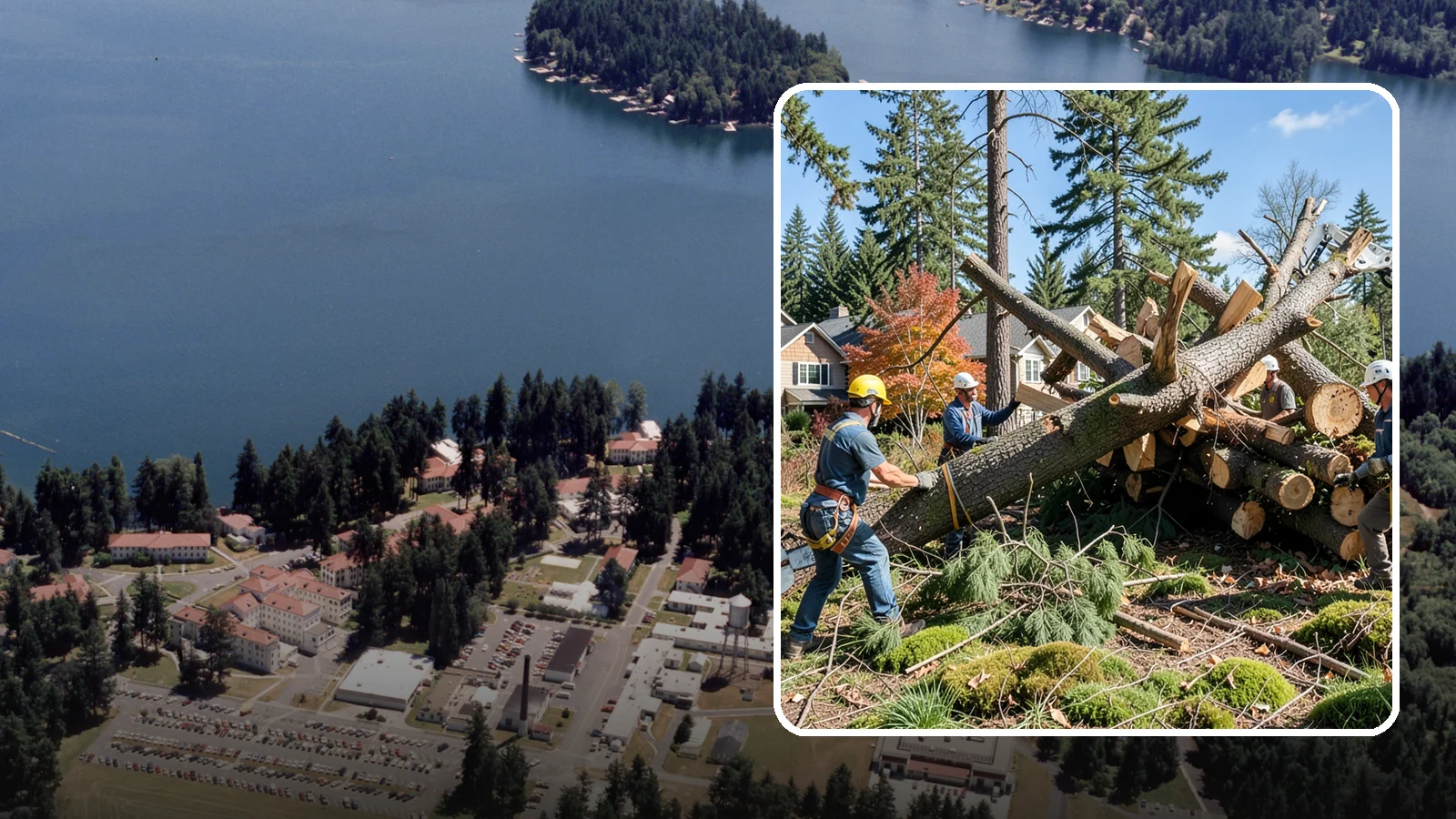
Lakewood Hazardous Tree Removal
The controlled removal of trees that pose a safety risk due to structural defects, decay, or dangerous lean.
A tree that leans more than it used to, a crack running up the trunk, dead branches in a green canopy, or mushrooms at the base can all mean the tree is failing. Soil heaved up on one side of the trunk is another sign. If any of these show up near a house, driveway or fence, act soon.
Start by photographing what you see and keeping people and vehicles out of the area under the tree. Then have the tree looked at before the next storm. Removal is sometimes the safest answer, and sometimes a smaller fix is enough.
About Hazardous Tree Removal in Lakewood
If a tree on your property shows signs of danger, our team is here to help you remove it safely. This specialized service protects people, homes, and utilities from trees that have become unstable or decayed. We work with homeowners across the region who need immediate attention for hazardous conditions.
What Lakewood Hazardous Tree Removal Includes
Hazardous tree removal involves carefully taking down trees that pose a safety risk due to structural defects, decay, or dangerous lean. This process is necessary when a tree threatens your property and cannot be made safe through simple pruning or support systems. Our crews use controlled methods matched specifically to the species of tree and conditions on your site.
Lakewood Hazardous Tree Removal Process
The work begins with an on-site assessment to evaluate hazards before establishing clear drop zones and safety perimeters. Trained professionals then rig limbs or fell the stem in a controlled sequence while processing the wood for disposal. Once the removal is complete, we clear all debris from the area to leave your property clean and safe.
Equipment We Use for Lakewood Hazardous Tree Removal
We utilize chainsaws and climbing gear along with specialized rigging equipment to handle difficult removals safely. Depending on the job site requirements, an aerial lift or crane may be used alongside a wood chipper for efficient cleanup. Ground protection measures are also in place to shield your landscaping during these operations.
Lakewood Hazardous Tree Removal Safety & Best Practices
Our crews maintain strict safety protocols by keeping drop zones clear and planning controlled fall paths away from structures. We always identify overhead utility lines before starting work and inspect trees thoroughly for hidden decay or defects. Every team member uses proper fall protection and communicates constantly with ground personnel to ensure a safe environment.
Signs You Need Hazardous Tree Removal in Lakewood
You may need this service if you notice an unpredictable lean, visible cracks in the trunk, or signs of internal rot that threaten your home. Situations where a tree is close to power lines or blocking access often require immediate professional intervention rather than simple trimming. If standard pruning cannot stabilize the situation, removal becomes the necessary step for safety.
What Affects the Cost of Hazardous Tree Removal in Lakewood
The final cost depends on factors such as the size of the tree and any hidden internal decay that complicates the work. Proximity to structures or power lines also influences pricing, as does limited access for heavy equipment at your site. Additionally, requirements for wood disposal will play a role in determining the overall expense of the project.
Best Time of Year for Lakewood Hazardous Tree Removal
While we can perform this service year-round with appropriate planning, wet seasons may require specialized rigging gear to manage slippery conditions. Operations must pause immediately if high winds threaten an unstable tree leaning dangerously toward your property or neighbors. We schedule work at times that prioritize safety while accommodating the specific needs of each site condition.
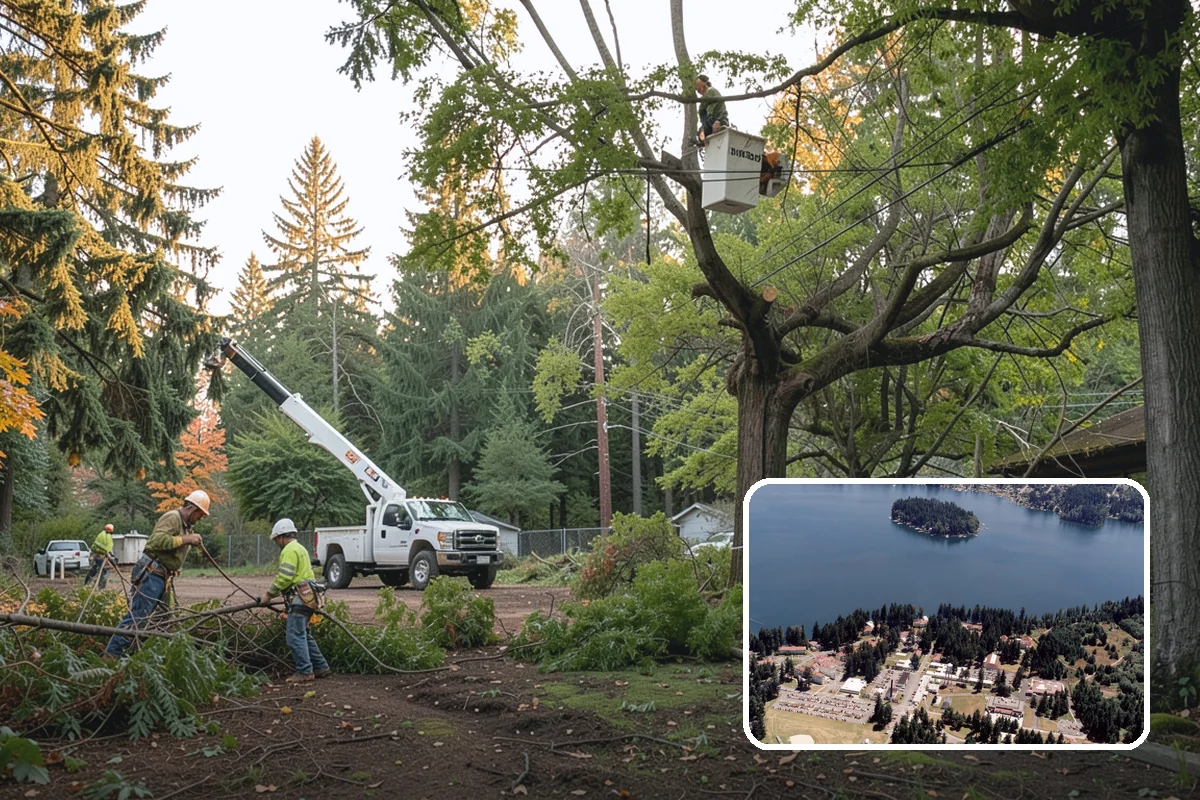
Hazardous tree removal in Lakewood: causes, local risks, process
Trees become hazardous for a few common reasons. Decay inside the trunk or roots weakens the wood. Roots can be cut or damaged by digging, grading or paving. Storms can split limbs and loosen the soil around a root plate. A tree with one of these defects and something valuable beneath it, like a roof or a parked car, is the kind that needs attention.
Local conditions add to the concern. The National Weather Service forecast zone that includes Lakewood logged 25 high and strong wind episodes from 2005 to 2025, and its strongest recorded gust since 2005 was 62 mph on October 18, 2007. That is a zone-wide record, not a reading for your yard. It does mean a weakened tree here can face real wind more than once. Also, the Washington DNR maps 15 landslides in Lakewood. If your tree stands on or below a slope, tell us. Soil movement changes how a tree is likely to fail and how the work should be planned.
Getting a clear answer on risk
If you want a formal risk assessment, the WSU Extension Pacific Northwest Gardener's Handbook advises hiring a certified arborist with the Tree Risk Assessment Qualification or a Registered Consulting Arborist. Our ISA Certified Arborist can look at the tree and explain what we see, and estimates are free.
The city rule and the work itself
The Lakewood tree code, per the city's own site, allows emergency removal of a hazard or dead tree if the City is notified the following business day, photo or video documentation is provided, and the felled tree stays on site for City inspection. For single-family use, no replacement is required. That rule covers removal only. For pruning or non-emergency situations we check with the city before work starts.
On the job, the crew sets up a drop zone and plans the cuts around the lean and any defects. Large trees are often taken down in sections and lowered with ropes when there is not room to fell them whole. Afterward the wood is cut up, and we can leave it where the city requires it for inspection. Call or text 425-484-4442 to set up a visit.
Lakewood tree conditions at a glance
| USDA hardiness zone | 8b |
|---|---|
| Tree canopy | 24% of the city (city assessment, 2024) |
| Landslides mapped by WA DNR | 15 |
| Soils | 8% of land has hardpan or another restrictive layer within 40 in; most common series Spanaway; 75% well drained |
| High and strong wind episodes, 2005-2025 | 25 in the forecast zone |
| Electric utility | Puget Sound Energy (PSE) |
Tree removal rules in Lakewood
Lots of 10,000 sq ft or more in single-family residential zones must obtain a tree removal permit before removing significant trees. On existing single-family lots, significant trees may be removed with a permit and without replacement up to: lots 10,001-30,000 sq ft: 2 per year / 4 per 5 years; lots 30,001 sq ft+: 4 per year / 8 per 5 years (Oregon white oaks regulated separately by LMC 18A.70.330).
Regulated size: 9 in diameter at 4.5 ft for evergreen and deciduous trees.
Official city source. Rules change; we confirm with the city before work starts.
Trees near the power line to your house
Puget Sound Energy (PSE): Service line (wire from PSE pole to home or meter pole): PSE does not trim it; homeowner/private arborist trims.
PSE performs a safety disconnection so the homeowner or private tree trimmer/arborist can work; Call at least 5 business days ahead to check crew availability and potential charges.
Safety disconnect: 1-888-321-7779 (5+ business days ahead). Utility page.
Any fee for a disconnect is set by the utility.
Strongest wind events near Lakewood
- Oct 18, 2007: gusts to 62 mph
- Jan 6, 2019: gusts to 61 mph
- Feb 25, 2025: gusts to 60 mph
NOAA Storm Events, forecast zone that includes Lakewood, 2005-2025.
Sources: Daymet daily weather (NASA/ORNL), NOAA Storm Events, USDA plant hardiness map 2023, NRCS soil survey, USGS elevation, WA DNR landslide inventory, USDA Forest Service aerial survey, WSDA, city tree assessments and street-tree inventories, SILVIS Lab, Arbor Day Foundation, and official city and utility pages.
Hazardous Tree Removal Serving Lakewood
Lakewood
Hazardous tree removal in nearby areas
Also serving Lakewood
- Native Plant Landscaping in Lakewoodat Washington Landscaping
- Tree Inventory in Lakewoodat Washington City Services
- Log Splitting in Lakewoodat Washington Firewood