Where Safety Meets Expert Tree Service.

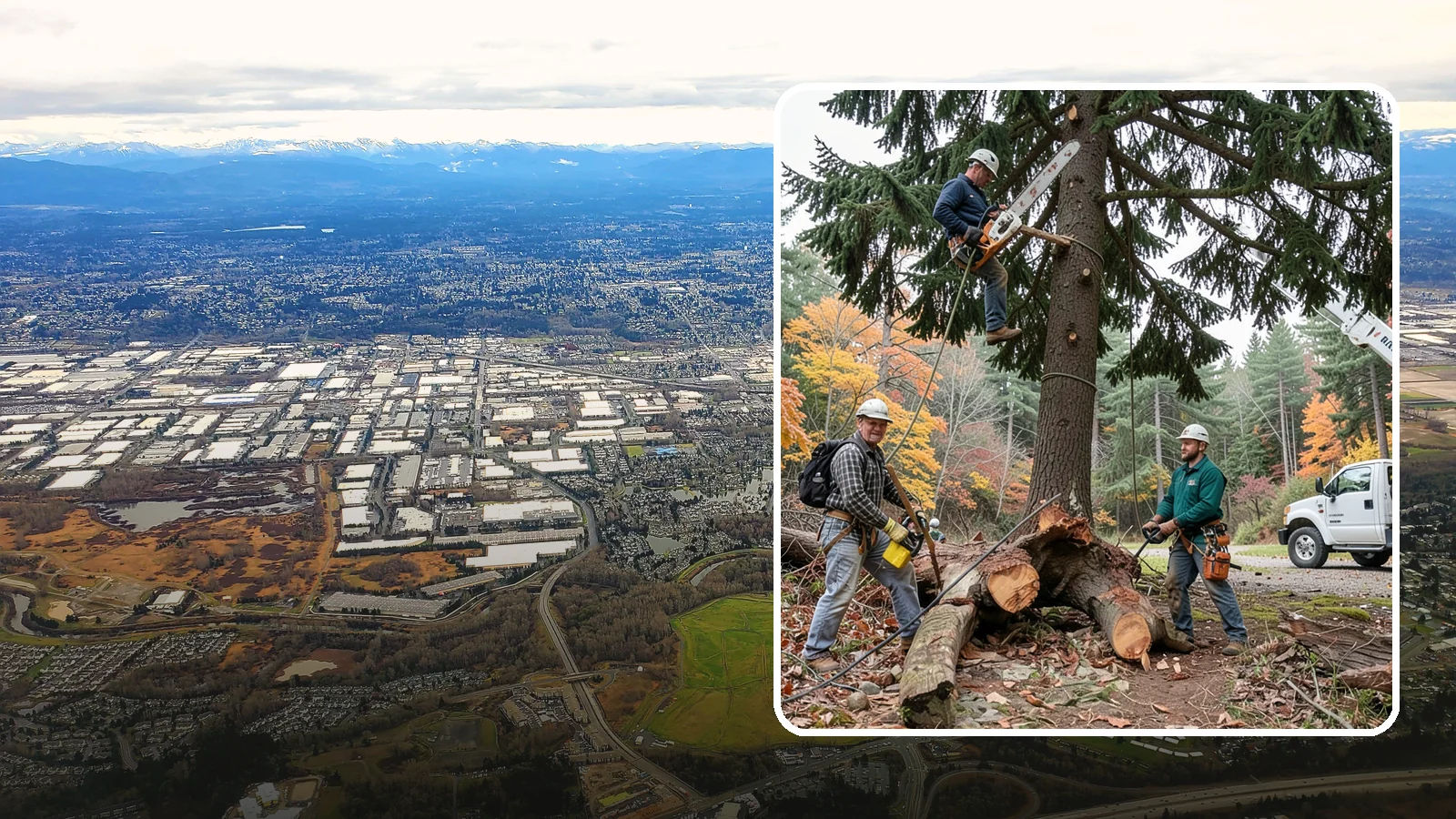
Kent Dead Tree Removal
The removal of dead trees that no longer have living tissue.
If you have a bigleaf maple with dieback in the crown, shrunken leaf clumps, or an unusually heavy seed crop, it may be in decline rather than just stressed. Those are the typical symptoms listed by WA DNR for bigleaf maple decline, and they are worth checking before you decide what to do.
A tree that looks dead in summer is sometimes only partly dead. A close look at the buds, bark and branch tips can tell you which it is. Here is how dead tree removal usually works in Kent, and what to settle before any cutting starts.
About Dead Tree Removal in Kent
If a tree on your property has lost all living tissue, our team is here to handle its safe removal for you. We understand that dealing with dead wood can feel overwhelming, so we are ready to help protect your home and landscape from falling hazards. Our goal is to clear the danger while respecting your space and peace of mind.
What Kent Dead Tree Removal Includes
This service focuses specifically on removing trees that no longer have living tissue inside them. It includes carefully taking down brittle branches or entire stems that pose a risk, as well as clearing away any debris left behind. We also work hard to stop pests from using the dead wood before they can spread disease to nearby healthy plants.
Kent Dead Tree Removal Process
Our trained crews start with an on-site assessment to evaluate risks and establish safe drop zones around your property. Using recognized arboricultural standards, we rig limbs or fell the stem in a controlled sequence that matches the tree species and site conditions. Afterward, we process the wood, haul away debris, and perform final cleanup so your yard is left clear and tidy.
Equipment We Use for Kent Dead Tree Removal
We use professional chainsaws and climbing gear to navigate difficult branches safely while removing dead trees from various heights. Depending on the size of the job or access limitations, our crews may bring in aerial lifts or cranes to assist with heavy lifting. All tools are paired with ground protection measures to keep your landscaping safe during the workday.
Kent Dead Tree Removal Safety & Best Practices
Before any climbing begins, we inspect for hidden decay and structural defects that could cause an unexpected fall. We maintain clear drop zones and controlled paths so no one is in harm’s way when limbs or trunks come down. Our team also communicates constantly between climbers on the ground to ensure every step of the removal stays safe for everyone involved.
Signs You Need Dead Tree Removal in Kent
You likely need this service if you notice a tree that has become brittle, cracked, or shows signs it has completely died. These conditions create immediate falling hazards and often attract pests looking for easy food sources near your home. Identifying these issues early helps prevent damage to structures, utilities, and the rest of your garden before they spread further.
What Affects the Cost of Dead Tree Removal in Kent
The price depends on factors like how large the tree is and whether it sits close to power lines or buildings that limit our access. Hidden internal decay can add complexity to the job, requiring more careful planning than a straightforward removal would need. Additionally, requirements for wood disposal will influence the final cost based on what needs to be hauled away from your site.
Best Time of Year for Kent Dead Tree Removal
In our local climate, dead tree removal is possible year-round since we do not wait for specific seasons to begin work. However, many homeowners prefer scheduling this during drier periods when frozen ground conditions improve stability for equipment operating on slopes or uneven terrain. We can arrange a time that fits your schedule while ensuring the best working conditions for both our crew and your property.

How dead tree removal works for Kent properties
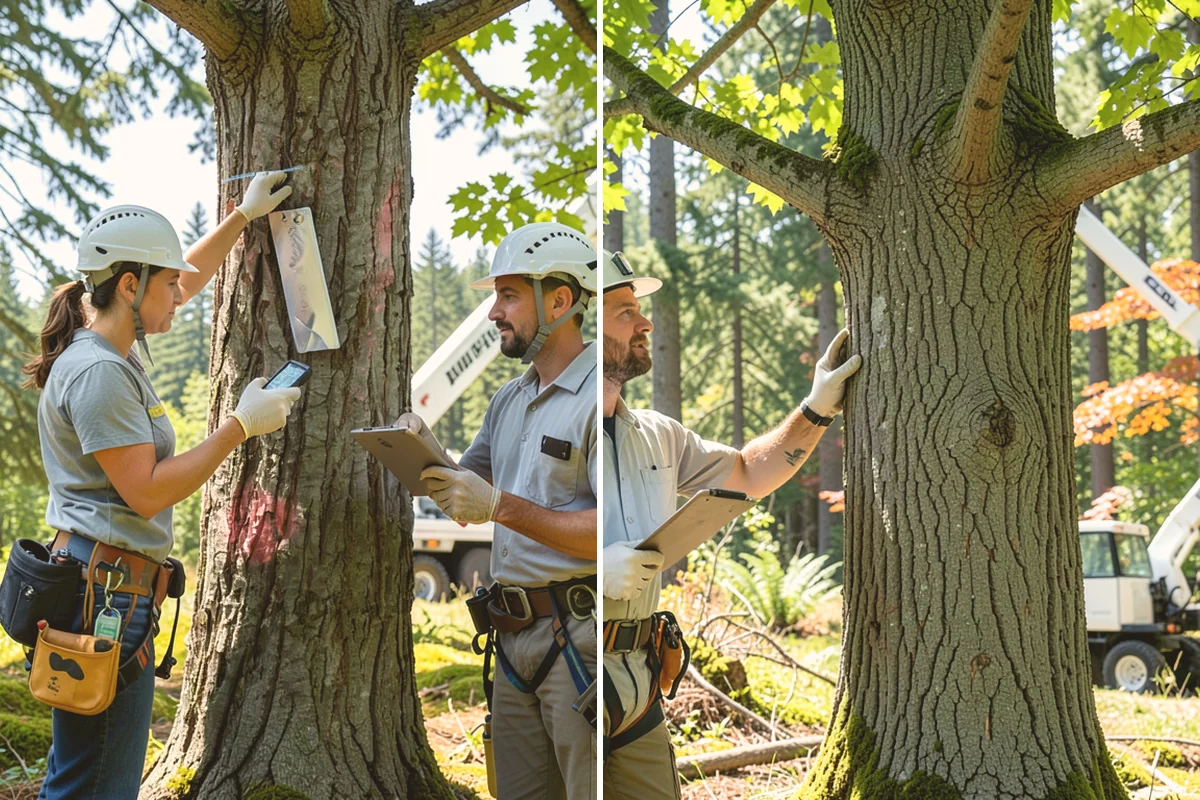
Start by confirming the tree is actually dead or beyond saving. Scratch a small twig to look for green tissue. Check for bark that is loose, fungal growth at the base, and branches that snap dry. An arborist can assess this more reliably than a quick look from the lawn.
Local survey data shows why the cause can be hard to pin down. A 2021-2025 aerial forest health survey by the USDA Forest Service and WA DNR covered forest within 10 km of Kent. This is forest land, not street or yard trees. The most common damage it mapped was 'decline, cause not identified', on 6,473 acres, including bigleaf maple. That label means dieback with no single cause found. For a yard tree, it is a reminder that decline often has several causes, so a tree that has lost much of its crown is rarely worth waiting on.
The usual steps
- Assess the tree: check for dead wood, lean, root problems and what sits beneath it, such as a house, fence or power line.
- Check the rules: Kent's published tree rules do not clearly spell out which removals need city approval, so we check with the city before work starts.
- Plan the cut: a dead tree can be brittle, so sections are often lowered in pieces rather than dropped whole.
- Clean up: branches and wood are cleared, and the stump can be ground if you want it gone.
Planning a replacement
Once the tree is out, you may want to plant again. Kent is in USDA hardiness zone 8b, with parts of the city running from 8b to 9a, according to the 2023 USDA map. That gives you a wide choice of species. Pick one that suits the space and its mature size.
If you are unsure whether your tree is dead, call or text 425-484-4442 for a free estimate.
Kent tree conditions at a glance
| USDA hardiness zone | 8b (8b to 9a across the city) |
|---|---|
| Landslides mapped by WA DNR | 2 |
| Soils | 60% of land has hardpan or another restrictive layer within 40 in; most common series Alderwood |
| High and strong wind episodes, 2005-2025 | 38 in the forecast zone |
| Electric utility | unconfirmed |
Tree removal rules in Kent
Kent’s published rules don’t spell out clearly which removals need city approval. We check with the city before work starts.
Strongest wind events near Kent
- Dec 14, 2006: gusts to 74 mph
- Feb 3, 2006: gusts to 67 mph
- Jan 12, 2021: gusts to 61 mph
NOAA Storm Events, forecast zone that includes Kent, 2005-2025.
Sources: Daymet daily weather (NASA/ORNL), NOAA Storm Events, USDA plant hardiness map 2023, NRCS soil survey, USGS elevation, WA DNR landslide inventory, USDA Forest Service aerial survey, WSDA, city tree assessments and street-tree inventories, SILVIS Lab, Arbor Day Foundation, and official city and utility pages.
Dead Tree Removal Serving Kent
Kent
Dead tree removal in nearby areas
Also serving Kent
- Evergreen Tree Planting in Kentat Washington Landscaping
- Invasive Vegetation Removal in Kentat Washington City Services
- Tree Removal for Firewood in Kentat Washington Firewood