Where Safety Meets Expert Tree Service.

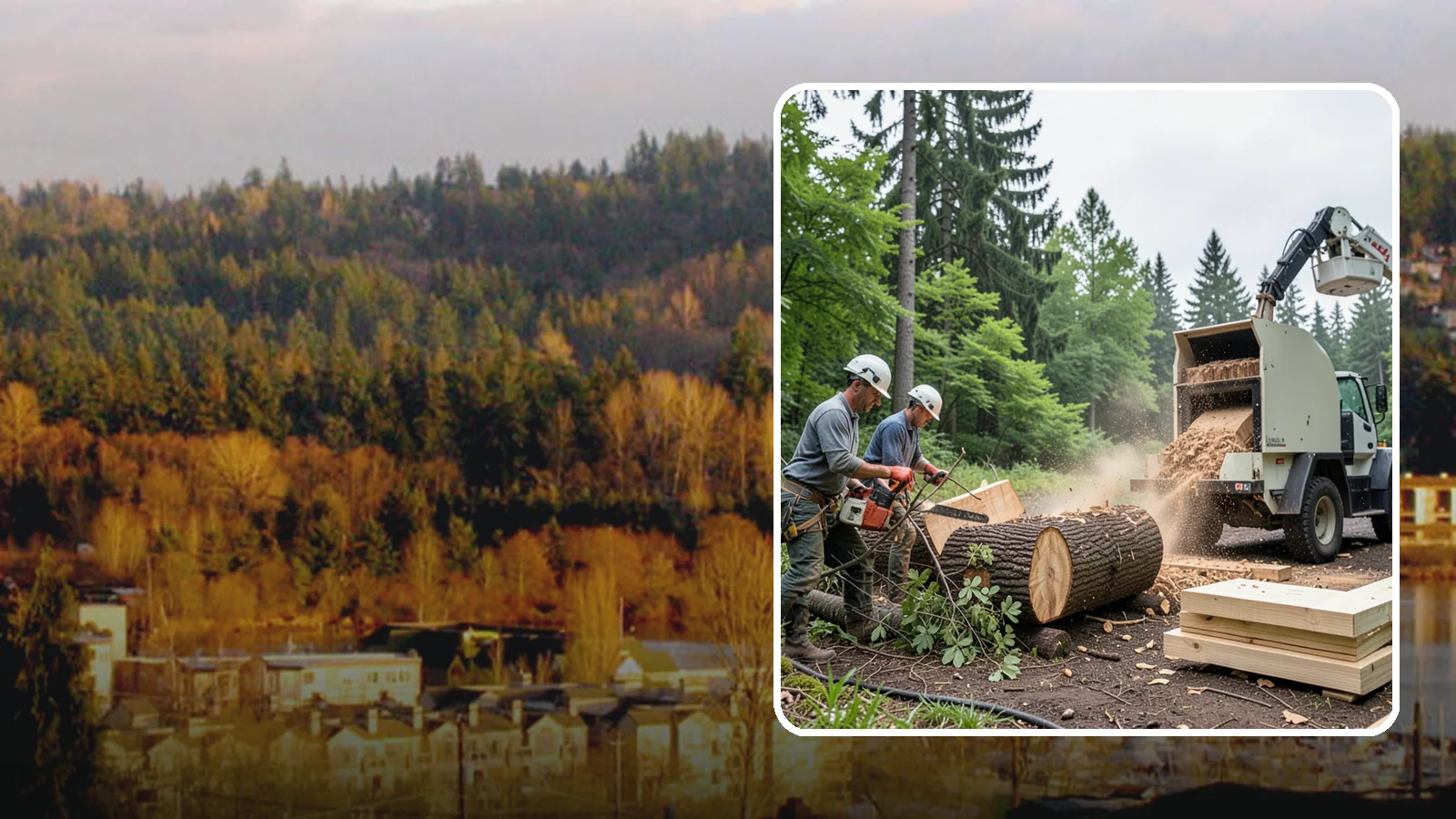
Kenmore Wood Milling
The milling of logs into usable slabs or boards.
You may be looking at a fallen or freshly cut trunk in your yard and wondering if it has to become chipped waste or firewood. Often it does not. A sound log can be milled into boards, beams, slabs or mantels.
The first questions are practical. How wide is the log, how straight is it, and is the wood clean inside? Those answers decide whether milling makes sense or whether the log is better used another way.
About Wood Milling in Kenmore
Wood milling gives removed trees a second life by turning logs into usable slabs or boards. This service is perfect for homeowners who want their yard clean while creating valuable lumber from debris we remove together. We help you see the potential in wood that might otherwise be discarded, ensuring nothing goes to waste unnecessarily.
What Kenmore Wood Milling Includes
Our team specializes in milling logs directly on site to produce high-quality slabs and boards suitable for various projects. This process is designed to keep your property tidy by converting debris into products rather than sending everything straight to a landfill. We match our methods carefully to the specific tree species, current site conditions, and available access points at your home.
Kenmore Wood Milling Process
The work begins with sorting material based on type and size before we chip, cut, or mill it as needed for your desired product. Once processed into lumber of the required quality, we either haul away excess waste or deliver finished pieces to you. We always take care to clean up the entire work area so your property is left in better shape than when we arrived.
Equipment We Use for Kenmore Wood Milling
To complete this job safely and efficiently, our crews use wood chippers, chainsaws, and specialized milling equipment as required for each log. Loaders and hauling vehicles are brought along to manage materials throughout the site, ensuring smooth movement of heavy items. Every crew member also wears necessary personal protective gear while operating these powerful tools around your property.
Kenmore Wood Milling Safety & Best Practices
We strictly keep hands and bystanders clear from feed equipment during all operations involving our machinery. Loads are secured properly before transport to prevent shifting or accidents on the way home, protecting both people and cargo. Crew members wear eye and hearing protection at all times while handling logs with proper technique and using appropriate lifting equipment.
Signs You Need Wood Milling in Kenmore
You may need wood milling when you have removed trees that could become lumber instead of just being chipped into mulch. If your project requires specific sizes or qualities of boards, this service allows us to tailor the output directly from the fallen timber we remove. Situations where embedded metal debris exists in logs also signal a need for careful sorting and processing before milling can begin.
What Affects the Cost of Wood Milling in Kenmore
The final price is influenced by factors such as log size and moisture content which affect product quality standards. Any embedded metal or other debris found inside the logs will require additional removal steps that impact overall costs. Equipment access limits at your specific job site are also considered when determining how much work we can perform efficiently.
Best Time of Year for Kenmore Wood Milling
Wood milling works best during dry seasons in our region to ensure logs have low enough moisture levels for high-quality lumber production. Attempting this service too early or late may result in wood that is not suitable for making fine boards or slabs due to natural water content changes. Planning your project around these seasonal conditions helps us deliver the highest quality finished products from every tree we remove.

Milling logs from Kenmore yard trees into lumber
Wood milling means sawing a log lengthwise into boards or slabs. It works best on logs that are straight, free of metal, and sound through the center. Trees that have been through decline, rot or old wounds often hide defects that make poor lumber. An arborist can read the ends of a cut log and tell you what the grain and any staining suggest before you commit to milling.
Size matters for what you can get out of a log. In Kenmore's street-tree inventory, the median trunk diameter is 10.0 in, and 14.0% of trees are 24 in or wider. That inventory covers street trees, not yard trees, so it does not describe your property. It does show that wide trunks exist here but are the minority. A log 24 in or wider can yield broad slabs and timbers. Smaller trunks usually suit narrower boards, and the yield is lower.
Species and condition matter too. A USDA Forest Service and WA DNR aerial survey from 2021 to 2025 mapped forest within 10 km of Kenmore. Its main damage was decline with no cause identified, covering 141 acres of western redcedar. That means dieback with no single cause found. It is forest land, not street or yard trees, so it says nothing certain about your cedar. Still, if a redcedar on your lot is thinning or dying back, we would inspect the wood before planning to mill it.
Kenmore is also among the most heavily treed Puget Sound cities we compared, according to satellite canopy data from USFS/NLCD 2025. Many lots have trees that may someday come down, so it is worth thinking early about what you want from the wood.
Planning the job starts with the felling cut. Logs cut to useful lengths and kept off wet ground are easier to mill. Seal the ends if the logs will sit, because they can check and split as they dry. Milled lumber then needs air drying or kiln drying before use. If the tree is being removed, the city may have rules about removal, so we check with Kenmore before work starts. For an estimate, call or text 425-484-4442.
Kenmore tree conditions at a glance
| Tree canopy | Among the most heavily treed Puget Sound cities (satellite data) |
|---|---|
| Land under dense tree cover (50%+ canopy) | 30% |
| Rain and snow falling October to April | 81% of the year’s total |
| Days with 0.1 in or more of rain | 108 a year |
Tree health near Kenmore
Spongy moth (WSDA 2020): WSDA trap detection(s): 2 catch record(s) listed (per-trap counts not given).
Spongy moth (WSDA 2016): WSDA trap detection(s): 1 moth(s) in 1 trap catch record(s).
- Decline, cause not identified141 ac
Forest damage mapped from the air within 10 km of Kenmore, 2021-2025 (USDA Forest Service and WA DNR). This covers forest land, not street or yard trees. “Decline, cause not identified” is dieback with no single cause found.
Sources: Daymet daily weather (NASA/ORNL), NOAA Storm Events, USDA plant hardiness map 2023, NRCS soil survey, USGS elevation, WA DNR landslide inventory, USDA Forest Service aerial survey, WSDA, city tree assessments and street-tree inventories, SILVIS Lab, Arbor Day Foundation, and official city and utility pages.
Wood Milling Serving Kenmore
Kenmore


Wood milling in nearby areas
Also serving Kenmore
- Firewood Sales in Kenmoreat Washington Firewood
- Bark Refresh in Kenmoreat Washington Landscaping