Where Safety Meets Expert Tree Service.

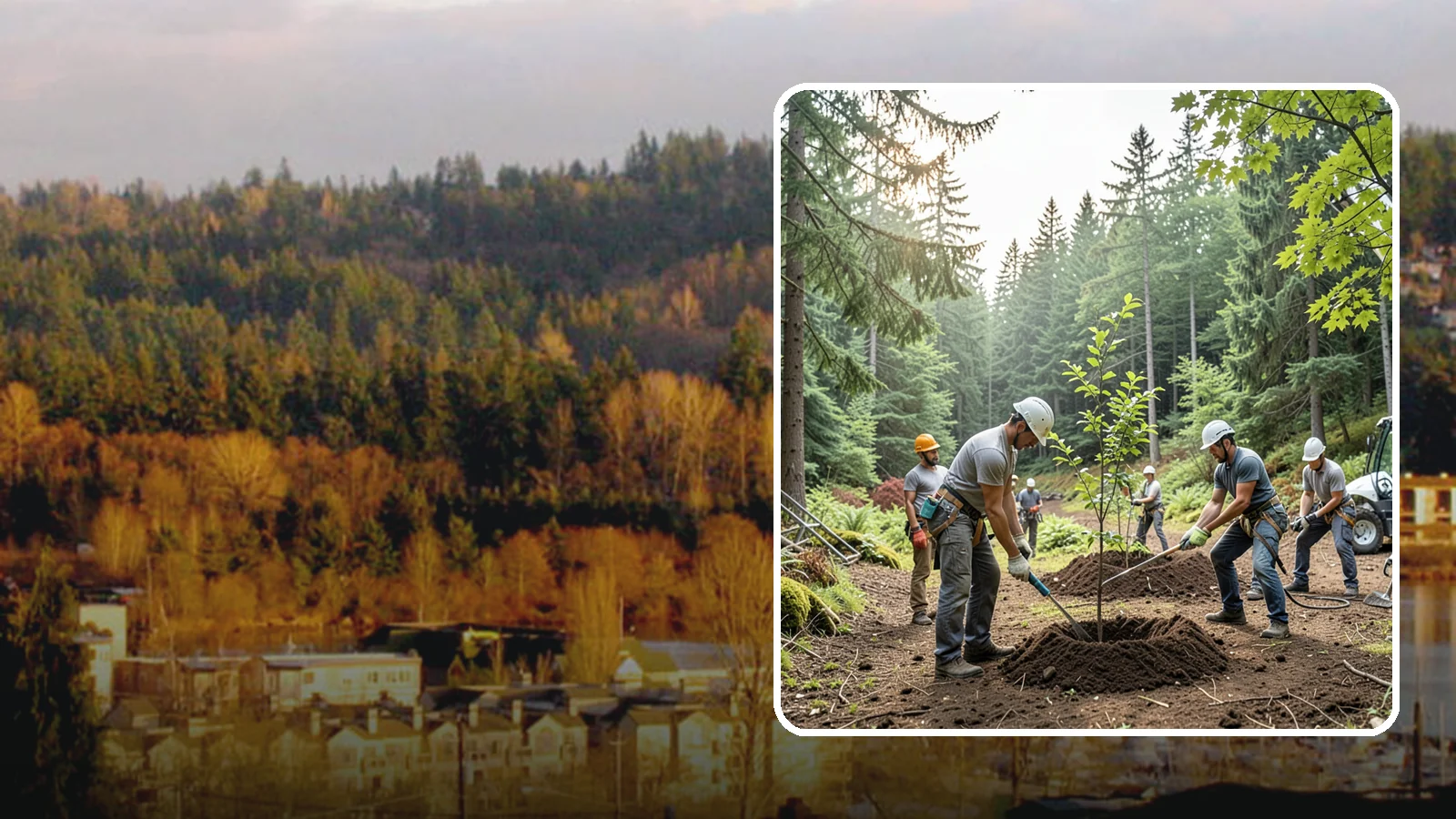
Kenmore Tree Planting
The selection and planting of new trees.
About half of Kenmore's land has a hard or restrictive layer, such as glacial hardpan, within 40 inches of the surface, according to the NRCS soil survey. Alderwood is the most common soil series. Before you pick a tree, find out whether water can drain from the spot you have in mind.
A simple test helps. Dig a hole, fill it with water, and see how long it takes to empty. Slow drainage points toward a different location or a species that tolerates wet soil. Planting well starts with that choice.
About Tree Planting in Kenmore
Our tree planting services help homeowners establish new greenery that fits their property perfectly. We work with you to bring healthy trees suited to your specific location for long-term benefit. This project is ideal if you want to expand your shade or improve the ecology of your yard.
What Kenmore Tree Planting Includes
Tree planting involves carefully selecting and placing new trees where they will thrive best. Our trained crews use methods matched to each tree species, site conditions, and access points. The goal is always to establish healthy trees that support privacy, screening, and a richer environment for wildlife.
Kenmore Tree Planting Process
We begin by assessing your site conditions to choose the right species before preparing the soil. Once ready, we plant at the correct depth and spacing, then add mulch and water in each tree. Finally, we provide guidance on establishment care to ensure your new trees get off to a strong start.
Equipment We Use for Kenmore Tree Planting
Our crews utilize digging tools, watering equipment, and staking materials as needed for every job. We also bring soil amendments and fresh mulch to support the health of newly planted specimens. All work is done with personal protective equipment to keep our team safe throughout the project.
Kenmore Tree Planting Safety & Best Practices
Before any digging begins, we locate underground utilities to prevent damage or injury during installation. We select species suited to your site to avoid future conflicts between roots and structures. Planting at the proper depth and handling trees gently protects their root systems from harm.
Signs You Need Tree Planting in Kenmore
You may need this service if you want to restore tree cover lost over time or create new shade areas. It is also a great choice when aiming to improve privacy, screening views, or enhancing your site ecology. Establishing healthy trees suited to the location helps ensure these benefits last for years to come.
What Affects the Cost of Tree Planting in Kenmore
The price of planting depends on how difficult it is to access your specific site conditions. Costs are influenced by whether soil amendments are needed for poor or compacted ground and which tree species you choose. Necessary staking materials also play a role in the final cost based on what each project requires.
Best Time of Year for Kenmore Tree Planting
In our Pacific Northwest climate, planting works best during dormant seasons to minimize transplant shock for most trees. While evergreens can often be planted year-round with proper care, timing is key to reducing stress on new specimens. We will help you choose a season that gives your new trees the best chance to establish themselves successfully.
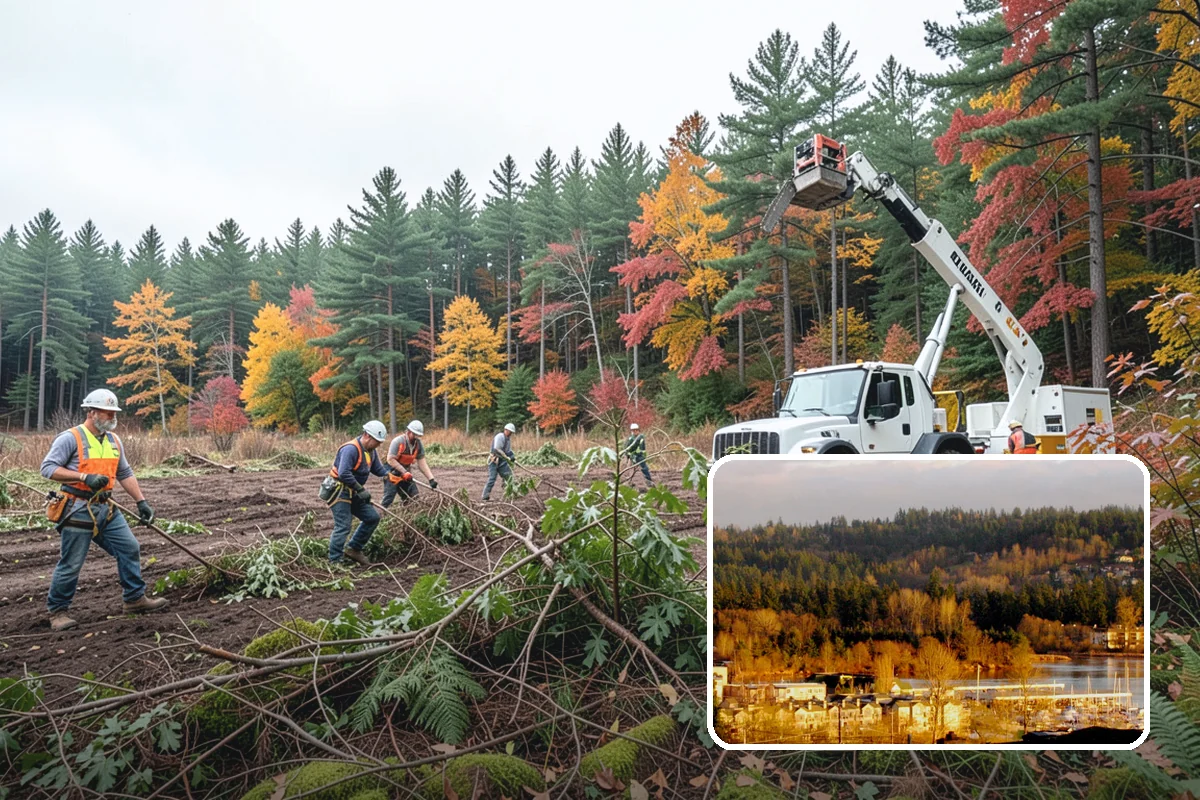
How we plant trees in Kenmore, step by step
Good planting is mostly about the site and the hole. Here is the order we work in.
1. Call before you dig
Call 811 at least two business days before digging a planting hole. The WSU Extension Pacific Northwest Gardener's Handbook gives this advice, and it keeps you clear of buried utility lines.
2. Choose the tree for the soil
The NRCS soil survey says 51% of Kenmore's land has a restrictive layer within 40 inches of the surface. A tree planted over hardpan can sit in a bowl of soggy soil. That is a good reason to test drainage first, and to favor species that handle wet ground where drainage is poor. Kenmore is mapped as USDA hardiness zone 9a, with parts of the city at 8b to 9a, so choose trees rated for that range.
3. Dig wide, not deep
The hole should be about two to three times as wide as the root ball and no deeper than the root ball's height. The root flare, where the trunk widens at the base, should sit at or slightly above the surrounding soil. Planting too deep is a common cause of slow decline.
4. Set, backfill and mulch
- Remove wire, twine and burlap from the top of the root ball.
- Backfill with the native soil you dug out, and water as you go to settle it.
- Spread mulch in a wide ring, keeping it off the trunk.
- Stake only if the tree cannot stand on its own.
5. Time it with the rain
Daymet data for 2005 to 2025 shows 81% of Kenmore's yearly rain and snow falls from October to April. Planting in that stretch lets roots settle while the ground is wet. Summer is the dry part of the year, so a young tree will need regular watering through its first dry months.
If you would like help choosing a species or a spot, our ISA Certified Arborist can look at the site. Call or text 425-484-4442 for a free estimate.
Kenmore tree conditions at a glance
| USDA hardiness zone | 9a (8b to 9a across the city) |
|---|---|
| Soils | 51% of land has hardpan or another restrictive layer within 40 in; most common series Alderwood |
| Rain and snow falling October to April | 81% of the year’s total |
| Days that freeze at night and thaw by day | 30 a year |
Tree removal rules in Kenmore
Kenmore’s published rules don’t spell out clearly which removals need city approval. We check with the city before work starts.
Most common street trees in Kenmore
- Douglas-fir11.3%
- Eastern arborvitae9.8%
- Red alder8.4%
- Western red cedar7.4%
- Bigleaf maple5.1%
- Black cottonwood4.8%
Share of 12,435 trees in the city’s street-tree inventory; median trunk diameter 10.0 in, 14.0% at 24 in or wider.
Sources: Daymet daily weather (NASA/ORNL), NOAA Storm Events, USDA plant hardiness map 2023, NRCS soil survey, USGS elevation, WA DNR landslide inventory, USDA Forest Service aerial survey, WSDA, city tree assessments and street-tree inventories, SILVIS Lab, Arbor Day Foundation, and official city and utility pages.
Tree Planting Serving Kenmore
Kenmore


Tree planting in nearby areas
Also serving Kenmore
- Garden Bed Installation in Kenmoreat Washington Landscaping
- Municipal Irrigation Installation in Kenmoreat Washington City Services