Where Safety Meets Expert Tree Service.

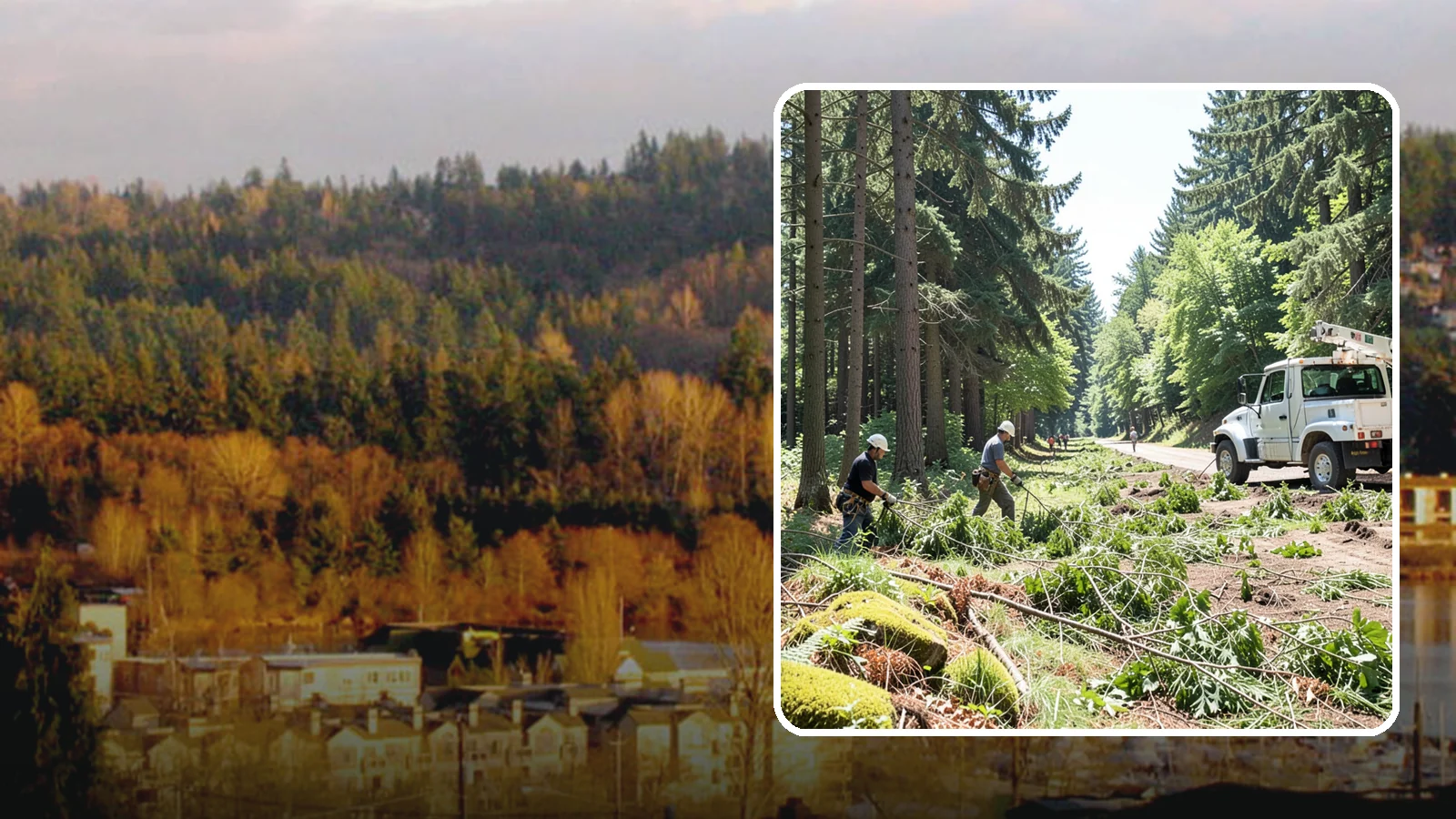
Kenmore Right-of-way Clearing
The clearing of vegetation along easements and access corridors.
If a branch is touching or hanging over the wire that runs from a Puget Sound Energy pole to your house or meter pole, the trimming is yours to arrange. PSE does not trim that service line. A private arborist does the work, and the utility may need to disconnect power first.
Right-of-way clearing means opening space around wires, driveways and access routes so growth stays clear of them. In Kenmore, the first step is working out who is responsible for which line, then planning the timing around any disconnection.
About Right-of-way Clearing in Kenmore
Right-of-way clearing helps homeowners keep their easements and access corridors safe from overgrown vegetation. Our trained crews work carefully to maintain these important pathways so they remain usable for everyone who needs them. This service is designed to reduce fire risks while preparing your land exactly as you intend it to be used.
What Kenmore Right-of-way Clearing Includes
We clear unwanted plants along designated rights-of-way using methods that match the specific tree species and site conditions on your property. Our goal is to remove thorny growth, invasive species, and dense thickets without damaging features that must stay intact. This process ensures a clean corridor while protecting retained trees and their root zones from unnecessary disturbance.
Kenmore Right-of-way Clearing Process
We begin by assessing the entire area and marking key features to ensure they are protected during work. Vegetation is then removed in a planned sequence before we grade or tidy the surface as needed for your specific goals. Finally, all debris is processed responsibly so that the land looks neat and ready for its intended purpose once our crew leaves.
Equipment We Use for Kenmore Right-of-way Clearing
Our crews use brush cutters, chainsaws, chippers, and hauling equipment to handle vegetation of any density efficiently. Hand tools are available when precision work near sensitive areas or unique tree species requires a gentler touch. We also wear full personal protective gear throughout the job to keep everyone safe while we operate these powerful machines.
Kenmore Right-of-way Clearing Safety & Best Practices
Before starting, our team identifies property lines and utility locations to avoid accidental damage during clearing operations. We stay alert for uneven terrain and hidden obstacles that could create hazards if debris is not managed properly. Every step of the work prioritizes keeping retained trees healthy and ensuring no features are compromised by heavy machinery or falling branches.
Signs You Need Right-of-way Clearing in Kenmore
You may need this service when you notice dense, thorny growth blocking your path or invasive species taking over an easement. If your land has uneven ground that feels unsafe to walk on, clearing vegetation can restore stability and visibility. Overgrown corridors also increase fire risk by creating continuous fuel loads that connect across your property boundaries.
What Affects the Cost of Right-of-way Clearing in Kenmore
The final price depends heavily on how dense the vegetation is and whether thorny plants or invasive species require special handling methods. Uneven terrain conditions add complexity to the job, as does the responsibility of properly disposing of all removed debris. We tailor our approach based on these factors rather than using a one-size-fits-all pricing structure for every site.
Best Time of Year for Kenmore Right-of-way Clearing
This work can be performed year-round in Puget Sound weather when ground conditions allow for safe operations and efficient progress. During winter months, we adjust our methods to account for wet or frozen ground that is common during the colder seasons. By planning around these seasonal changes, we ensure high-quality results regardless of whether you need service now or later this season.
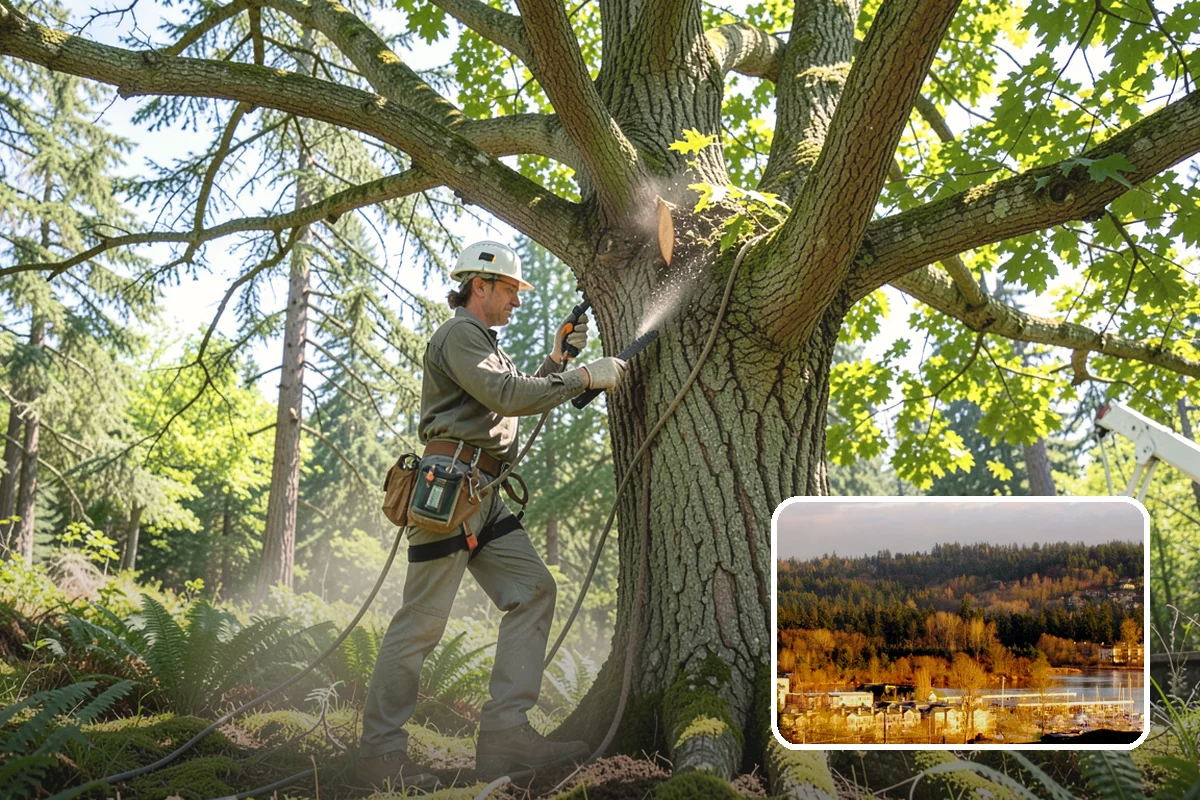
Clearing the right-of-way in Kenmore, step by step
Most clearing jobs follow the same order. Here is how it usually goes on a Kenmore property.
1. Identify the line
Look at where the wire attaches. The service line is the wire from the PSE pole to your home or to a meter pole. PSE's stated rule is that it does not trim that line, so the homeowner or a private arborist handles it. Wires higher on the pole are a different matter, and we do not work near them without confirming who is responsible.
2. Plan the disconnection
For work near a service line, PSE performs a safety disconnection so a private tree trimmer or arborist can work. PSE asks that you call at least 5 business days ahead to check crew availability and possible charges. Any fee is set by the utility, not by us. Book that call early, because it often sets the date for the whole job.
3. Assess the trees
An ISA Certified Arborist can look at which limbs are in conflict and which may become a problem later. Satellite tree-canopy data (USFS/NLCD 2025) puts Kenmore among the most heavily treed Puget Sound cities we compared. That is a citywide figure, not a reading of your trees. It does suggest that overhanging growth near lines is worth checking.
4. Prune to standard practice
Cuts follow ISA and ANSI A300 style practice: branches are removed back to a suitable parent branch or trunk collar, not stubbed or topped. The aim is clearance that lasts, without leaving the tree in worse shape.
Why timing matters
The forecast zone that includes Kenmore had 33 high and strong wind episodes from 2005 to 2025. Wind moves branches into wires, so clearing before the windy months is a sensible goal.
If removal is involved, we check with the city before work starts. Call or text 425-484-4442 for a free estimate.
Kenmore tree conditions at a glance
| Electric utility | Puget Sound Energy (PSE) |
|---|---|
| Tree canopy | Among the most heavily treed Puget Sound cities (satellite data) |
| Land under dense tree cover (50%+ canopy) | 30% |
| High and strong wind episodes, 2005-2025 | 33 in the forecast zone |
| Ice storm episodes, 2005-2025 | 2 in the forecast zone |
Trees near the power line to your house
Puget Sound Energy (PSE): Service line (wire from PSE pole to home or meter pole): PSE does not trim it; homeowner/private arborist trims.
PSE performs a safety disconnection so the homeowner or private tree trimmer/arborist can work; Call at least 5 business days ahead to check crew availability and potential charges.
Safety disconnect: 1-888-321-7779 (5+ business days ahead). Utility page.
Any fee for a disconnect is set by the utility.
Sources: Daymet daily weather (NASA/ORNL), NOAA Storm Events, USDA plant hardiness map 2023, NRCS soil survey, USGS elevation, WA DNR landslide inventory, USDA Forest Service aerial survey, WSDA, city tree assessments and street-tree inventories, SILVIS Lab, Arbor Day Foundation, and official city and utility pages.
Right-of-way Clearing Serving Kenmore
Kenmore
Right-of-way clearing in nearby areas
Also serving Kenmore
- Bamboo Removal in Kenmoreat Washington Landscaping
- Selective Demolition in Kenmoreat Washington Construction
- Knotweed Treatment in Kenmoreat Washington City Services
- On-Site Firewood Milling in Kenmoreat Washington Firewood