Where Safety Meets Expert Tree Service.


Kenmore Preventive Tree Care Plans
Proactive plans that address issues before they escalate.
What does a preventive tree care plan actually cover? It is a set of scheduled checks and small jobs, such as inspections, pruning, watering guidance and monitoring, that aim to catch problems while they are still small and cheaper to deal with than a failure.
In Kenmore, a plan works best when it follows the seasons: a look at structure before windy months, attention to water during dry spells, and a regular watch on trees that already show thinning or dieback.
About Preventive Tree Care Plans in Kenmore
Preventive tree care plans offer a proactive way to keep your trees healthy before small issues become big problems. These maintenance programs are designed for homeowners who want predictable care that reduces long-term risk and costs. By addressing concerns early through routine attention, you can enjoy safer landscapes year after year.
What Kenmore Preventive Tree Care Plans Includes
This service includes recurring inspections and necessary treatments tailored to the specific needs of your trees. Our trained crews follow recognized arboricultural standards while matching their methods to each tree species and site condition. The goal is to reduce potential failures by spreading care costs over time through a consistent schedule.
Kenmore Preventive Tree Care Plans Process
We begin by assessing your existing trees and setting clear goals for what you want to achieve with the landscape. Once we build a recurring schedule of inspections, our team performs the scheduled work according to that plan. Over time, we review the results together and adjust the program as needed to keep it effective for changing conditions.
Equipment We Use for Kenmore Preventive Tree Care Plans
Our crews use specialized pruning and inspection tools along with documentation equipment to track changes in your trees. When necessary, an aerial lift is brought on-site to safely reach higher branches or difficult areas. We also utilize chipper and hauling equipment to manage debris while ensuring all work meets safety standards.
Kenmore Preventive Tree Care Plans Safety & Best Practices
Every visit follows recognized industry standards that prioritize the protection of both people and property. Conditions are documented carefully over time so we can flag emerging hazards promptly before they escalate. If your trees change or new risks appear, we adjust the plan immediately to maintain a safe environment.
Signs You Need Preventive Tree Care Plans in Kenmore
You might need this service if you notice changing tree conditions that require more frequent attention than occasional visits allow. Missed appointments in past schedules often reduce effectiveness, making a structured recurring program essential for consistent results. Additionally, balancing your budget with the scope of care needed across many trees is easier when using a planned approach.
What Affects the Cost of Preventive Tree Care Plans in Kenmore
The total investment depends on factors like tree species and how difficult it is to access certain parts of your property. We also consider the complexity of balancing the overall program scope with any existing budget constraints you may have. This transparent approach ensures that costs are managed predictably without surprise fees or hidden charges.
Best Time of Year for Kenmore Preventive Tree Care Plans
In our local climate, these plans work best when performed year-round to address how tree conditions shift throughout the seasons. While specific tasks like pruning might be timed around dormancy periods or storm seasons for optimal results, regular checks remain valuable all season long. This flexibility allows us to respond quickly whenever weather patterns change and affect your landscape health.
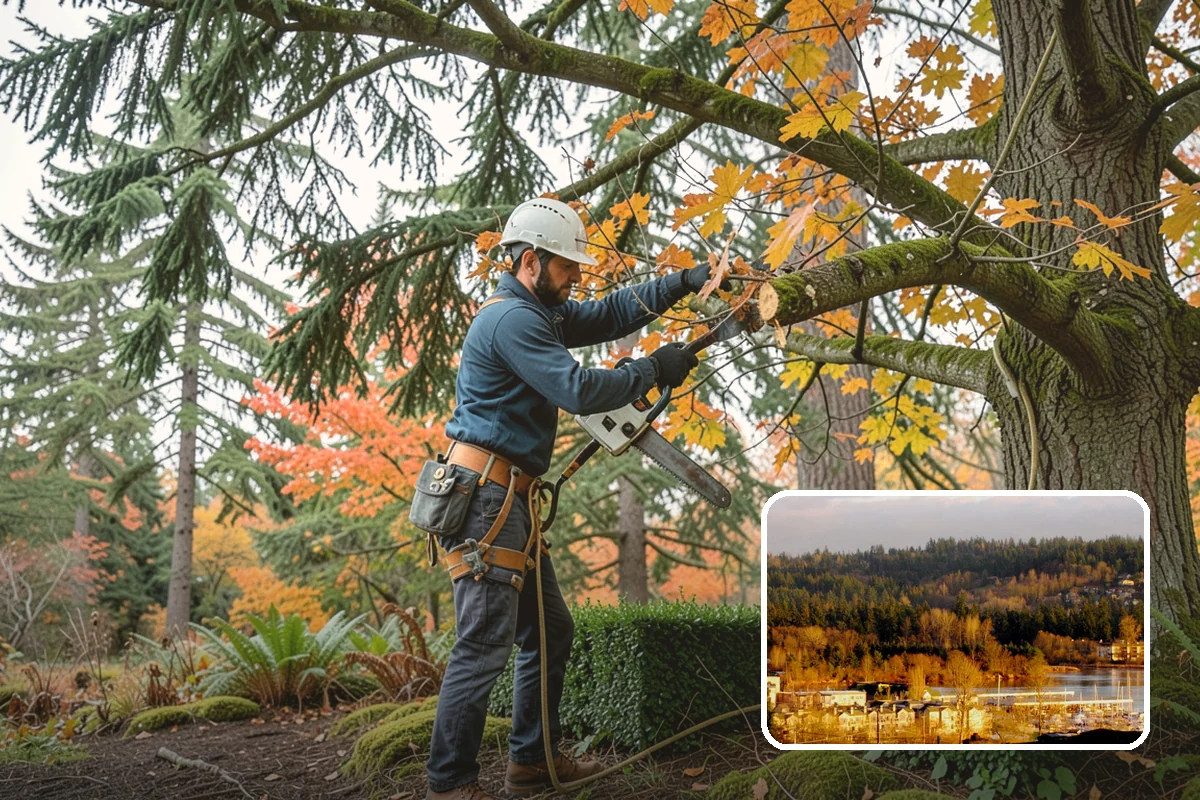
Building a preventive care plan for Kenmore trees
Plan around wind
The forecast zone that includes Kenmore logged 33 high and strong wind episodes between 2005 and 2025. That figure covers the whole zone, not one street or yard. It still tells you that wind is a repeat event here, so a plan should include a structural check for co-dominant stems, cracks, deadwood and weak branch unions. Where a defect is found, standard practice under ANSI A300 is to prune selectively to reduce weight or risk, not to cut a crown back hard. We do not recommend topping.
Plan around water
Dry-season stress is easy to miss. For maples, WSU HortSense advises that leaf scorch can be prevented by irrigating during dry periods, wetting the entire root zone without overwatering. A plan can set that up early: which trees need summer water, how deep to soak, and when to stop. Kenmore sits in USDA hardiness zone 9a, with parts of the city ranging from 8b to 9a (USDA map, 2023). That mainly tells you which plants tolerate winter lows. It says nothing about summer drought, so watering still needs attention.
Plan around decline you can see
A federal aerial survey by the USDA Forest Service and WA DNR (2021-2025) mapped forest within 10 km of Kenmore. Its main damage category was decline with no cause identified, 141 acres, in western redcedar. That is forest land, not yard trees, and it does not describe any tree on your property. It is a reminder to watch redcedars for thinning tops, browning foliage and dieback. Dieback with no single cause is hard to diagnose from the ground, so a plan should record changes year to year.
A typical visit might include:
- Inspection of trunk, roots, and canopy
- Notes on defects and a recommended pruning schedule
- Watering guidance by species
- A follow-up check on trees you are watching
If a plan leads to removal of a tree, we check city rules with Kenmore before any work starts. For an inspection and a written plan, call or text 425-484-4442. Our estimates are free.
Kenmore tree conditions at a glance
| USDA hardiness zone | 9a (8b to 9a across the city) |
|---|---|
| Soils | 51% of land has hardpan or another restrictive layer within 40 in; most common series Alderwood |
| Rain and snow falling October to April | 81% of the year’s total |
| Days with 0.1 in or more of rain | 108 a year |
| Tree canopy | Among the most heavily treed Puget Sound cities (satellite data) |
| Days that freeze at night and thaw by day | 30 a year |
Most common street trees in Kenmore
- Douglas-fir11.3%
- Eastern arborvitae9.8%
- Red alder8.4%
- Western red cedar7.4%
- Bigleaf maple5.1%
- Black cottonwood4.8%
Share of 12,435 trees in the city’s street-tree inventory; median trunk diameter 10.0 in, 14.0% at 24 in or wider.
Tree health near Kenmore
Spongy moth (WSDA 2020): WSDA trap detection(s): 2 catch record(s) listed (per-trap counts not given).
Spongy moth (WSDA 2016): WSDA trap detection(s): 1 moth(s) in 1 trap catch record(s).
- Decline, cause not identified141 ac
Forest damage mapped from the air within 10 km of Kenmore, 2021-2025 (USDA Forest Service and WA DNR). This covers forest land, not street or yard trees. “Decline, cause not identified” is dieback with no single cause found.
Sources: Daymet daily weather (NASA/ORNL), NOAA Storm Events, USDA plant hardiness map 2023, NRCS soil survey, USGS elevation, WA DNR landslide inventory, USDA Forest Service aerial survey, WSDA, city tree assessments and street-tree inventories, SILVIS Lab, Arbor Day Foundation, and official city and utility pages.
Preventive Tree Care Plans Serving Kenmore
Kenmore

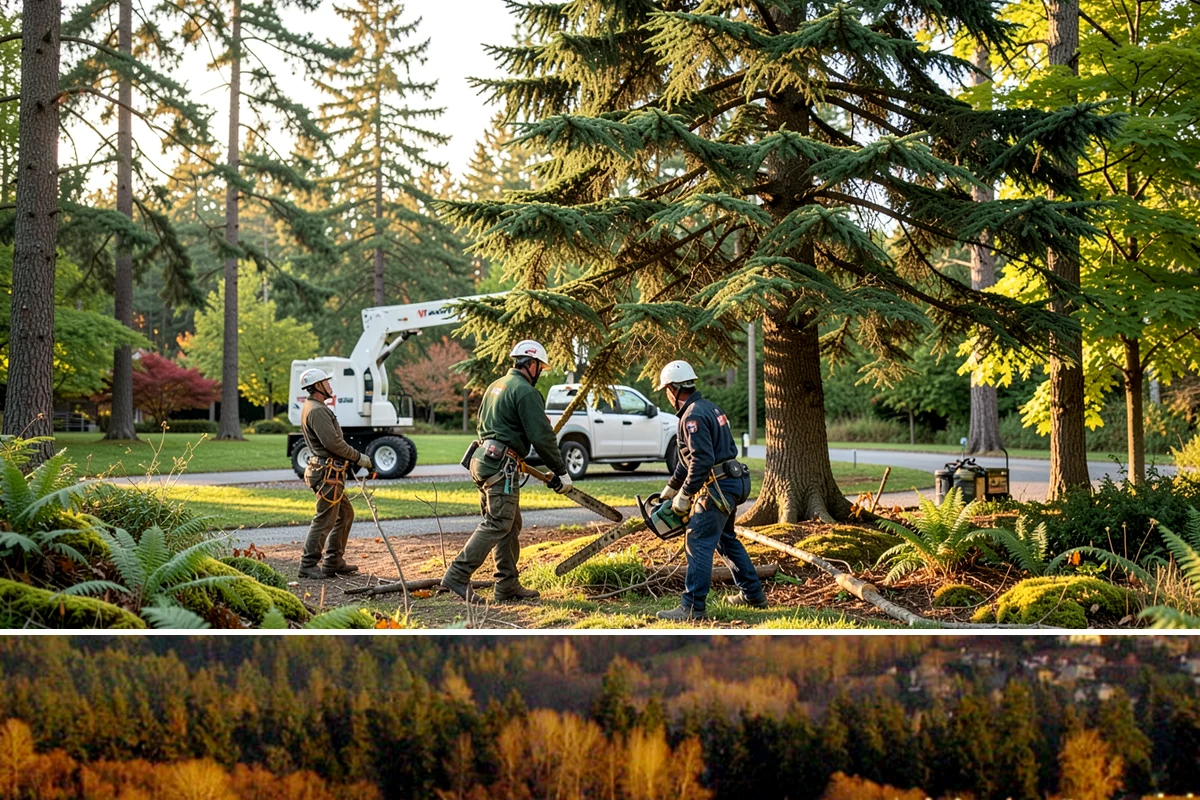
Preventive tree care plans in nearby areas
Also serving Kenmore
- Lawn Pest Control in Kenmoreat Washington Landscaping