Where Safety Meets Expert Tree Service.

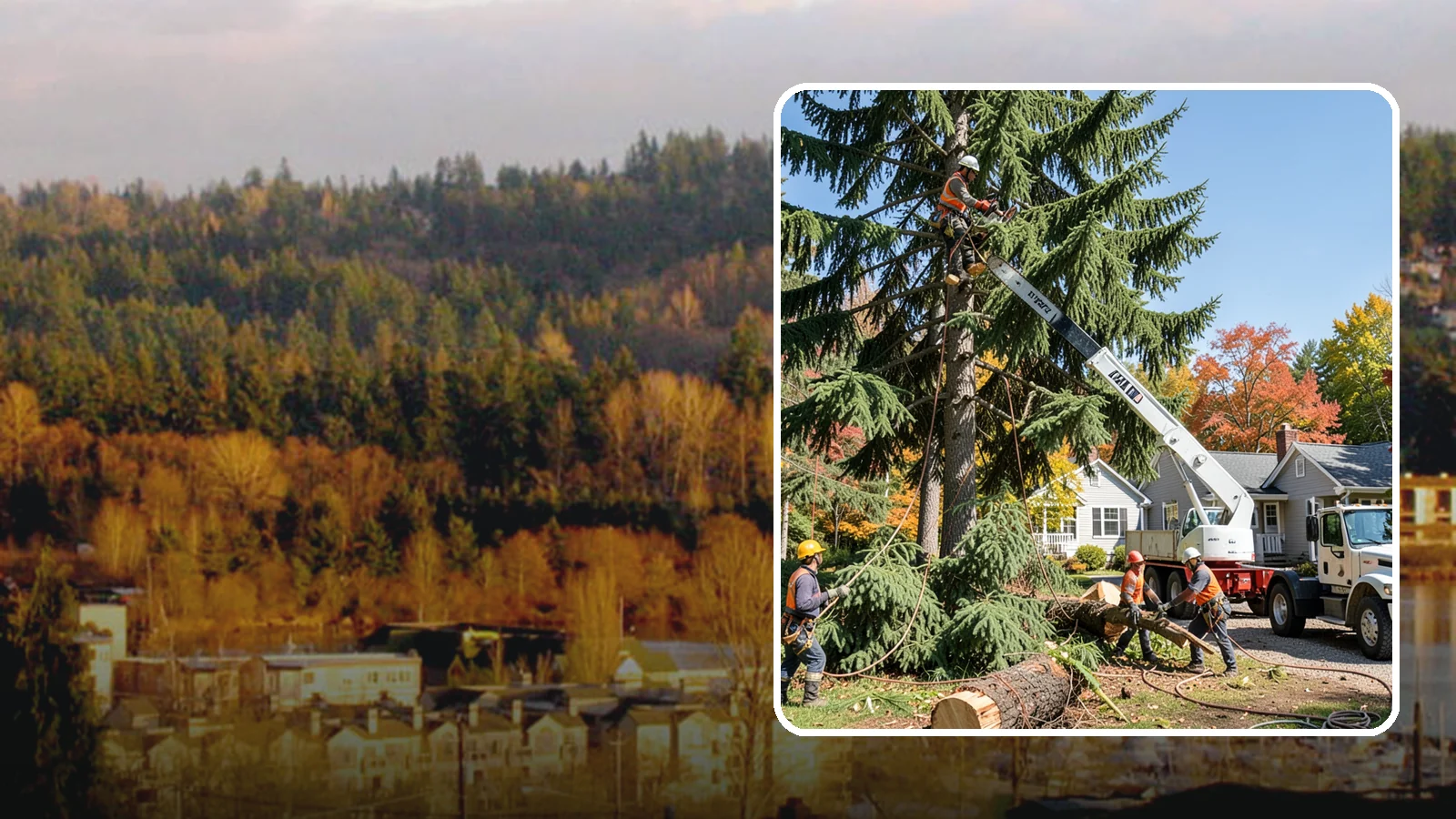
Kenmore Large Tree Removal
The sectional removal of large-diameter or tall trees.
How do you know a large tree needs to come down rather than be pruned? Start with the structure. Look for deep cracks in the trunk, fungal growth at the base, a lean that has changed, or large dead limbs high in the crown. Any of these is worth having an arborist look at soon.
Removing a big tree is not a weekend job. The trunk, the branches and the ground around it all have to be managed so nothing lands on a roof, fence or power line. Here is what to think through before you schedule the work in Kenmore.
About Large Tree Removal in Kenmore
We specialize in safely removing large-diameter or tall trees that require special attention during felling. This service is designed for homeowners who need professional help clearing mature trees from their property while protecting nearby structures. Our trained crews use recognized standards to ensure the job is completed efficiently and securely.
What Kenmore Large Tree Removal Includes
Large tree removal involves taking down substantial trees using rigging techniques or mechanical assistance when necessary. We match our methods carefully to the specific species of your tree, current site conditions, and available access points. This approach ensures that even complex jobs are handled with precision and care for your landscape.
Kenmore Large Tree Removal Process
The work begins with an on-site assessment to evaluate hazards and establish safe drop zones around the area. Our crew will then rig limbs or lower them in a controlled sequence before felling the main stem as planned. Afterward, we process the wood, haul away debris, and perform final cleanup so your property is left clear and tidy.
Equipment We Use for Kenmore Large Tree Removal
To handle these large jobs safely, our teams utilize chainsaws, climbing gear, and rigging equipment to manage heavy limbs. We bring a wood chipper on site along with ground protection mats to shield your landscaping during operations. When the tree size or location requires it, we deploy aerial lifts or cranes to assist with safe removal.
Kenmore Large Tree Removal Safety & Best Practices
Safety is our priority, so we maintain clear drop zones and follow controlled fall paths at all times. Before any work begins, we identify overhead utility lines and inspect for hidden decay that could affect structural stability. Our climbers use proper fall protection while coordinating closely with ground crew members to communicate throughout the project.
Signs You Need Large Tree Removal in Kenmore
You may need this service if you have a mature tree showing signs of internal decay or an unpredictable lean toward your home. Situations where equipment access is limited or power lines run close to the canopy also indicate when professional removal is required. These factors often mean that standard felling methods are not safe enough for your specific situation.
What Affects the Cost of Large Tree Removal in Kenmore
The cost of removing a large tree depends on variables such as hidden internal decay and how close it sits to structures like houses. If limited access requires mechanical assistance, the use of aerial lifts or cranes will also influence the overall pricing. Each job is unique, so factors like load distribution and site conditions play a significant role in determining the final expense.
Best Time of Year for Kenmore Large Tree Removal
In our Puget Sound climate, late fall or winter often provides the best time for this work once foliage has dropped. Removing leaves allows us to see defects more clearly on large-diameter trees before we begin cutting. While safety measures allow year-round operation, these seasons generally offer improved visibility and working conditions for complex removals.
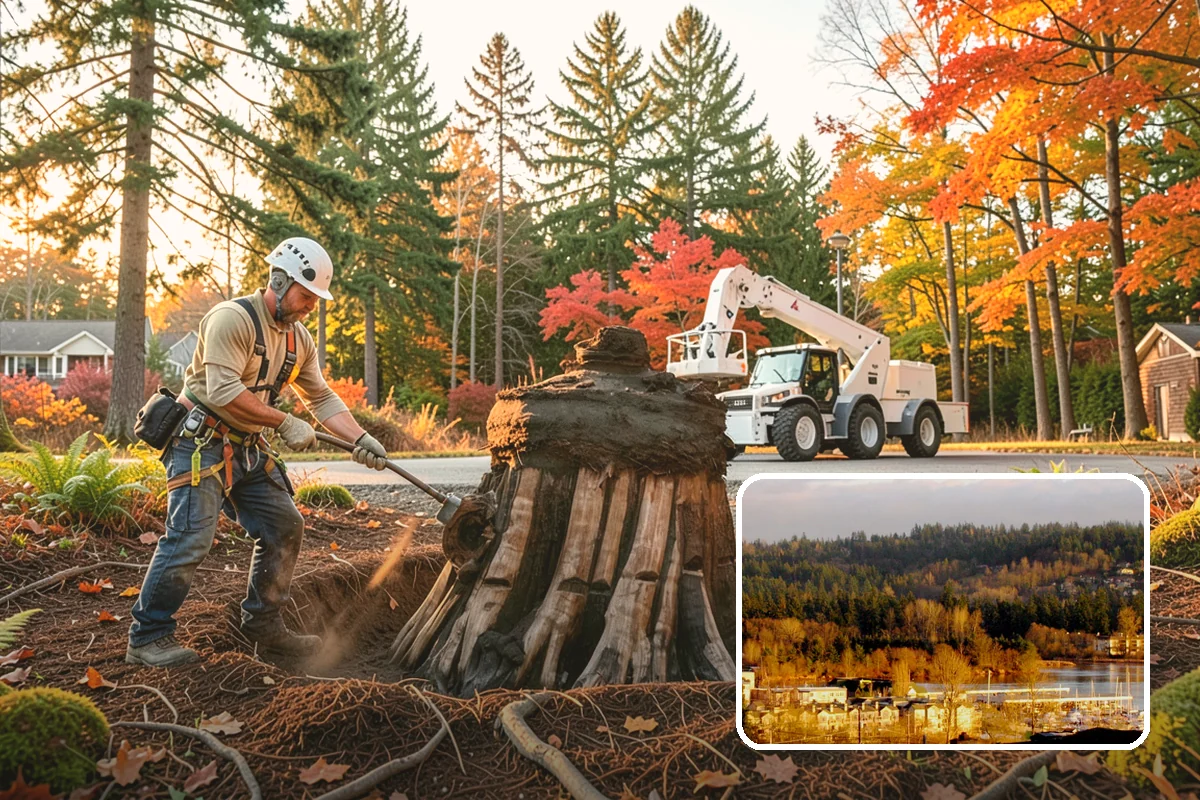
Large tree removal in Kenmore: what to check first
Confirm whether the city needs to approve it
The published Kenmore tree rules we found don't spell out clearly which removals need city approval. So we check with the city before work starts. You can do the same by calling City Hall and asking about your specific tree. Get the answer before anyone brings a saw to the property, since the rule applies to removal and the answer may depend on the tree.
Think about size and slope
Kenmore's street-tree inventory lists a median trunk diameter of 10.0 in, and 14.0% of those trees are 24 in or wider. That inventory covers street trees, not yard trees, and it says nothing about your tree. It does show that a trunk of 24 in or more is on the large end locally. A trunk that size usually means heavy sections that are lowered in pieces with rigging, rather than dropped whole.
Slope matters too. The Washington DNR maps 4 landslides in Kenmore. If your tree stands on or above a steep bank, tell us. Roots help hold soil, so removing a large tree there deserves a closer look at drainage and at what to plant afterward.
Wind history and timing
The strongest gust recorded since 2005 in the forecast zone that includes Kenmore was 72 mph, on December 17, 2010. A tree with a crack, decay or a lean is the one most at risk in a storm like that. If you already see warning signs, waiting for winter is a poor plan. Scheduling in calmer weather gives the crew better working conditions.
What to have ready
- Photos of the tree, including the base and any damage
- Locations of the house, fences, and overhead lines nearby
- Any slope, drainage or soil concerns
- Whether you want the stump ground out
Our ISA Certified Arborist can walk the site and give a free estimate. Call or text 425-484-4442.
Kenmore tree conditions at a glance
| USDA hardiness zone | 9a (8b to 9a across the city) |
|---|---|
| Tree canopy | Among the most heavily treed Puget Sound cities (satellite data) |
| Slopes | Some steep slopes |
| Landslides mapped by WA DNR | 4 |
| Soils | 51% of land has hardpan or another restrictive layer within 40 in; most common series Alderwood |
| High and strong wind episodes, 2005-2025 | 33 in the forecast zone |
| Electric utility | Puget Sound Energy (PSE) |
Tree removal rules in Kenmore
Kenmore’s published rules don’t spell out clearly which removals need city approval. We check with the city before work starts.
Trees near the power line to your house
Puget Sound Energy (PSE): Service line (wire from PSE pole to home or meter pole): PSE does not trim it; homeowner/private arborist trims.
PSE performs a safety disconnection so the homeowner or private tree trimmer/arborist can work; Call at least 5 business days ahead to check crew availability and potential charges.
Safety disconnect: 1-888-321-7779 (5+ business days ahead). Utility page.
Any fee for a disconnect is set by the utility.
Strongest wind events near Kenmore
- Dec 17, 2010: gusts to 72 mph
- Feb 7, 2012: gusts to 70 mph
- Dec 14, 2006: gusts to 68 mph
NOAA Storm Events, forecast zone that includes Kenmore, 2005-2025.
Sources: Daymet daily weather (NASA/ORNL), NOAA Storm Events, USDA plant hardiness map 2023, NRCS soil survey, USGS elevation, WA DNR landslide inventory, USDA Forest Service aerial survey, WSDA, city tree assessments and street-tree inventories, SILVIS Lab, Arbor Day Foundation, and official city and utility pages.
Large Tree Removal Serving Kenmore
Kenmore
Large tree removal in nearby areas
Also serving Kenmore
- Raised Garden Bed Construction in Kenmoreat Washington Landscaping
- Trail Clearing in Kenmoreat Washington City Services
- Log Splitting in Kenmoreat Washington Firewood