Where Safety Meets Expert Tree Service.

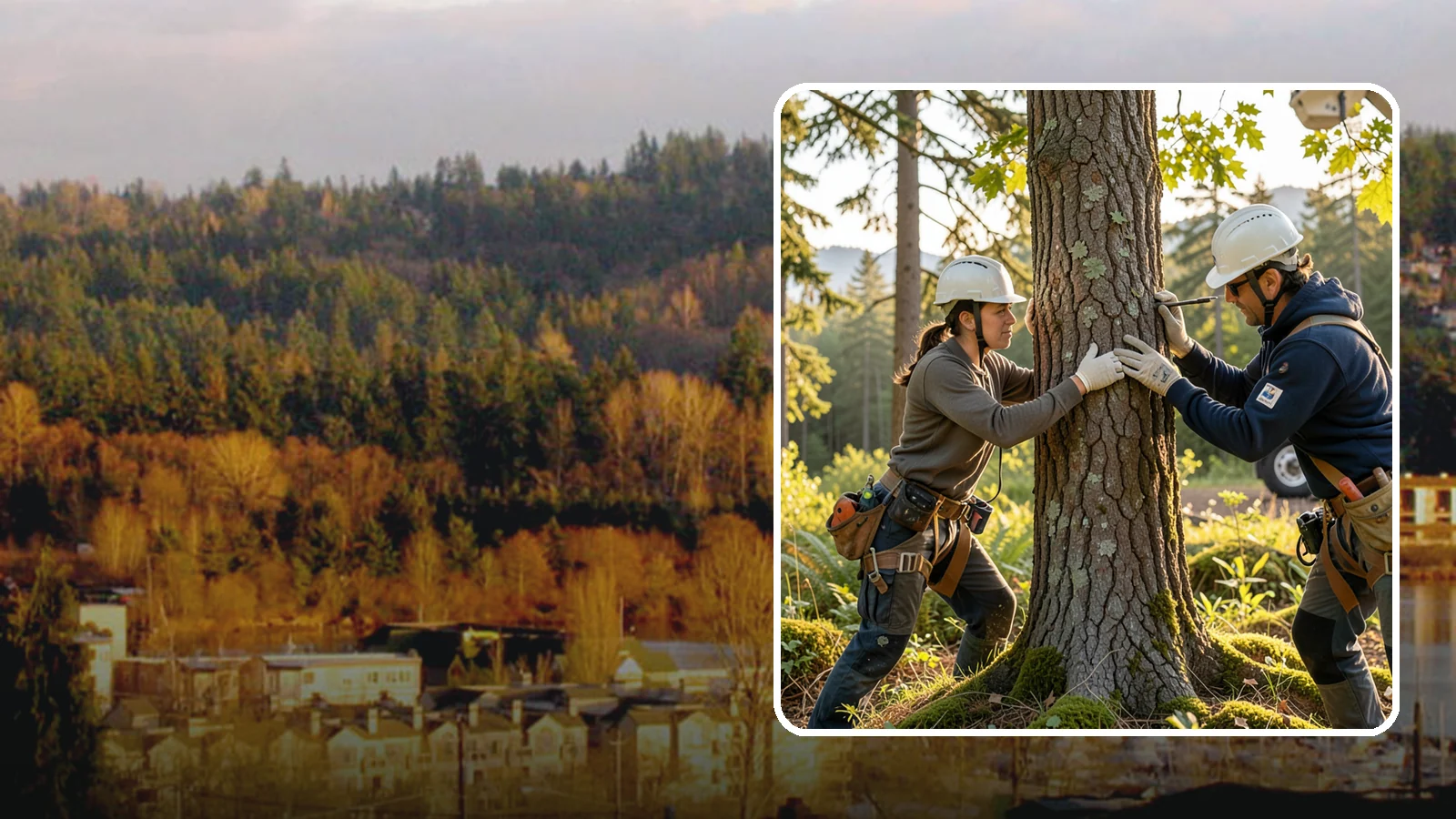
Kenmore Disease Diagnosis
The identification of fungal, bacterial, or other diseases affecting a tree.
Disease diagnosis is for Kenmore owners whose tree looks off and who can't tell why. That might be a bigleaf maple with thinning branches, a western redcedar with browning tips, or any tree with smaller, discolored leaves or dieback in part of the crown.
A diagnosis aims to name the cause before anyone cuts or treats. Dieback can come from several sources, and each one calls for a different response. Photos, the date you first noticed the change, and any recent digging or grade changes near the roots all help.
About Disease Diagnosis in Kenmore
Our disease diagnosis service helps you understand exactly what is troubling your trees so we can act quickly to protect them. This care focuses on identifying fungal or bacterial issues before they become serious problems for the whole landscape. We work with homeowners who want clear answers about their tree health and a plan to keep their valued plants stable.
What Kenmore Disease Diagnosis Includes
This service identifies specific diseases affecting a tree, whether caused by fungi, bacteria, or other factors. It helps us determine why your trees are declining and what treatment steps will restore them properly. Our trained crews use recognized standards to match methods with the unique species of each tree and its site conditions.
Kenmore Disease Diagnosis Process
We begin by inspecting the tree along with its surrounding environment to find contributing issues like soil quality or pest activity. After identifying these factors, we recommend and apply treatments that fit your specific situation while documenting our findings for future reference. This process ensures you receive accurate information about follow-up care needed to support long-term stability.
Equipment We Use for Kenmore Disease Diagnosis
Our crews bring diagnostic tools alongside specialized kits for taking soil samples when necessary. We also use injection or application equipment to deliver treatments safely, along with air excavation tools if access requires careful maneuvering around roots. All work is done while wearing personal protective equipment to ensure the safety of our team and your property.
Kenmore Disease Diagnosis Safety & Best Practices
When applying any products during diagnosis or treatment, we strictly follow label guidelines to protect both the soil and nearby plantings. We take great care to avoid damaging tree trunks or root systems while performing inspections or sampling in tight spaces. Accurate documentation of site conditions is part of our safety protocol to ensure consistent results over time.
Signs You Need Disease Diagnosis in Kenmore
You may need this service if you notice sudden decline, poor growth, or signs that past construction has affected your trees’ roots and soil. Compacted ground, girdling roots, or visible pest activity are common situations where a professional diagnosis provides the clarity needed for recovery. Catching these problems early allows us to improve root conditions before they escalate into major health issues.
What Affects the Cost of Disease Diagnosis in Kenmore
The price of this service depends on factors such as the specific species of your tree and how difficult it is to access its roots or trunk. Site conditions like steep slopes or limited space can also influence the complexity required to identify contributing soil or pest issues accurately. We tailor our approach to ensure you get a thorough evaluation without unnecessary expense for simple cases.
Best Time of Year for Kenmore Disease Diagnosis
While we can perform disease diagnosis year-round in this region, certain times may be better depending on which pathogens are active at that moment. Some treatments work best when applied during specific seasons to match the life cycle of the tree and its potential threats. We will advise you on the ideal window for observation or application based on current symptoms and treatment needs.
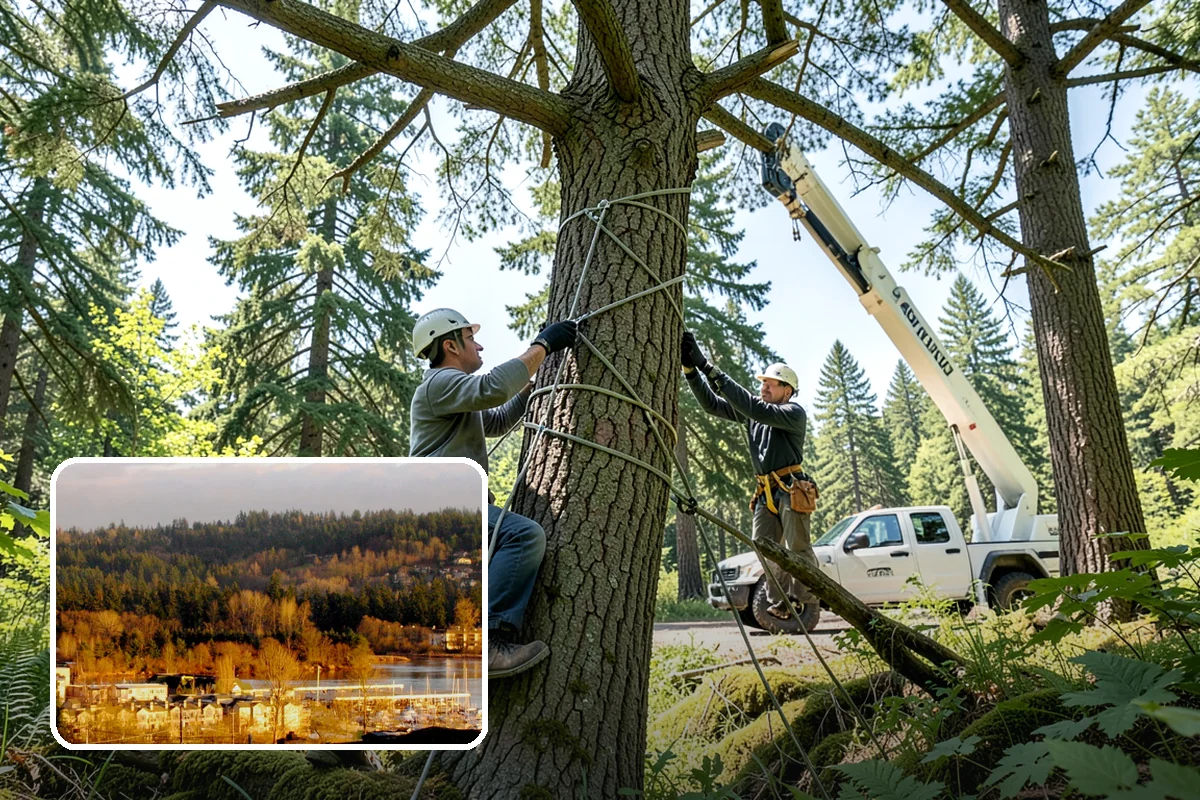
Diagnosis options for declining trees in Kenmore
Owners usually choose between three approaches. The right one depends on how far the symptoms have spread and how much is at stake if the tree fails.
Watch and record
If a few leaves look off but the crown is mostly full, you can photograph the tree every few weeks and note changes. This costs nothing. It works best when the tree is away from the house, driveway, and play areas.
Targeted inspection
If you see crown dieback, leaf loss, or smaller, discolored leaves, an on-site inspection makes sense. The WA DNR Forest Health and Resiliency Division lists those symptoms for declining bigleaf maple, among other signs. An inspection looks at the crown, trunk, root flare, and soil, and it can include a sample for lab testing when the cause isn't clear from the tree alone.
Inspection plus risk review
If the tree is near a structure or a path, the question is not only what is wrong but whether the tree is safe. Diagnosis and a structural assessment together give you the basis for deciding to treat, monitor, or remove.
What local conditions favor
Daymet figures for 2005 to 2025 show 81% of Kenmore's yearly rain and snow falls from October to April. Wet soil through that long season can favor root and fungal problems, so we look at drainage and soil near the roots. Dry summers can then stress trees that have wet-season root damage.
A federal aerial survey of forest within 10 km of Kenmore (USDA Forest Service and WA DNR, 2021-2025) mapped 141 acres of western redcedar in decline with no cause identified. That means dieback with no single cause found. It covers forest land, not yard trees, but it shows that redcedar dieback can be hard to pin down.
Call or text 425-484-4442 to schedule a free estimate and have an ISA Certified Arborist look at the tree.
Kenmore tree conditions at a glance
| USDA hardiness zone | 9a (8b to 9a across the city) |
|---|---|
| Soils | 51% of land has hardpan or another restrictive layer within 40 in; most common series Alderwood |
| Rain and snow falling October to April | 81% of the year’s total |
| Days with 0.1 in or more of rain | 108 a year |
| Tree canopy | Among the most heavily treed Puget Sound cities (satellite data) |
| Days that freeze at night and thaw by day | 30 a year |
Most common street trees in Kenmore
- Douglas-fir11.3%
- Eastern arborvitae9.8%
- Red alder8.4%
- Western red cedar7.4%
- Bigleaf maple5.1%
- Black cottonwood4.8%
Share of 12,435 trees in the city’s street-tree inventory; median trunk diameter 10.0 in, 14.0% at 24 in or wider.
Tree health near Kenmore
Spongy moth (WSDA 2020): WSDA trap detection(s): 2 catch record(s) listed (per-trap counts not given).
Spongy moth (WSDA 2016): WSDA trap detection(s): 1 moth(s) in 1 trap catch record(s).
- Decline, cause not identified141 ac
Forest damage mapped from the air within 10 km of Kenmore, 2021-2025 (USDA Forest Service and WA DNR). This covers forest land, not street or yard trees. “Decline, cause not identified” is dieback with no single cause found.
Sources: Daymet daily weather (NASA/ORNL), NOAA Storm Events, USDA plant hardiness map 2023, NRCS soil survey, USGS elevation, WA DNR landslide inventory, USDA Forest Service aerial survey, WSDA, city tree assessments and street-tree inventories, SILVIS Lab, Arbor Day Foundation, and official city and utility pages.
Disease Diagnosis Serving Kenmore
Kenmore


Disease diagnosis in nearby areas
Also serving Kenmore
- Tree Watering Service in Kenmoreat Washington Landscaping
- Landscape Inspections in Kenmoreat Washington City Services