Where Safety Meets Expert Tree Service.

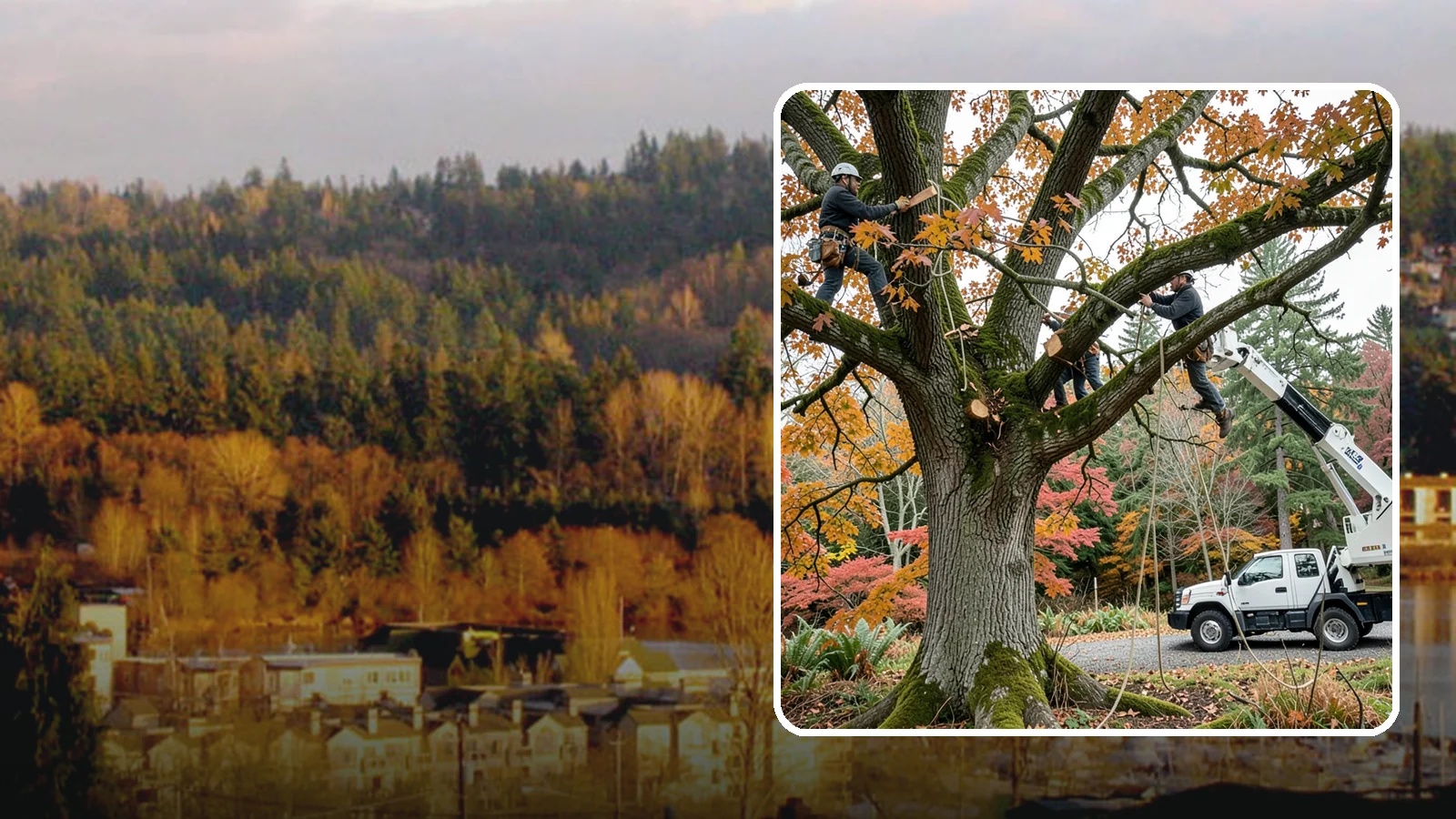
Kenmore Crown Raising
The removal of lower branches to raise the height of the crown.
Kenmore's street-tree inventory lists 12,435 trees, and Douglas-fir is the most common at 11.3%. Western red cedar and bigleaf maple also appear in the top five. If you have conifers or maples near a driveway, walkway or roofline, crown raising is often the first pruning job to consider.
Crown raising removes the lowest branches so there is clearance underneath. It can open a path for vehicles, ease mowing, and let more light reach the ground. Walk the property and note where branches hang below head height or brush a roof or a car.
About Crown Raising in Kenmore
Crown raising is a helpful tree care option that clears space under your trees for people walking by or cars driving past. Our trained crews can remove lower branches to give you the clearance you need while keeping your landscape looking its best. This service benefits homeowners who want safer sightlines and better access around their property without harming the health of their trees.
What Kenmore Crown Raising Includes
We perform crown raising by carefully removing lower limbs to lift the main canopy higher off the ground. The work is designed to provide necessary clearance for pedestrians, vehicles, buildings, or clear views while following recognized arboricultural standards. Each job uses methods that match your specific tree species and site conditions to ensure a clean result.
Kenmore Crown Raising Process
Our team starts by assessing the current condition of your canopy and defining exactly what pruning objectives you have in mind. We then select precise cuts suited for your tree’s type and season, ensuring we do not remove too much live tissue at once. After making these clean cuts at proper points, our crew processes the removed material and leaves your work area tidy.
Equipment We Use for Kenmore Crown Raising
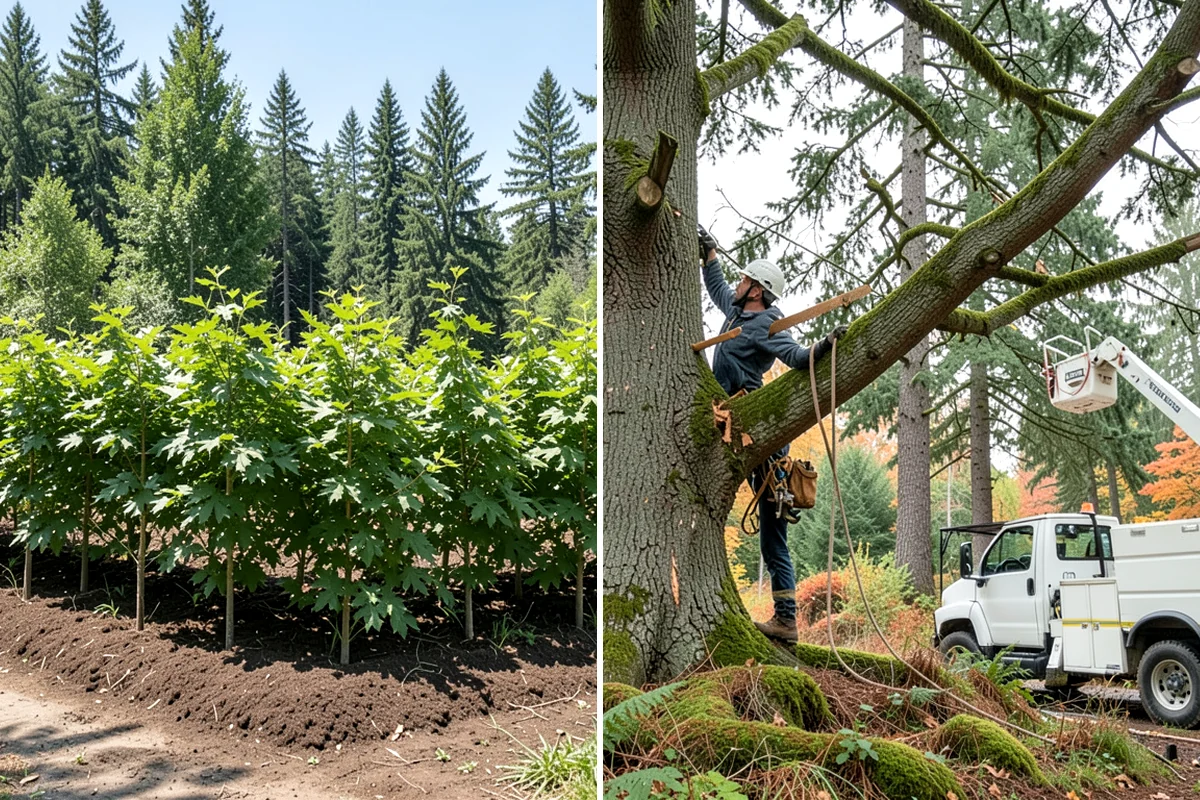
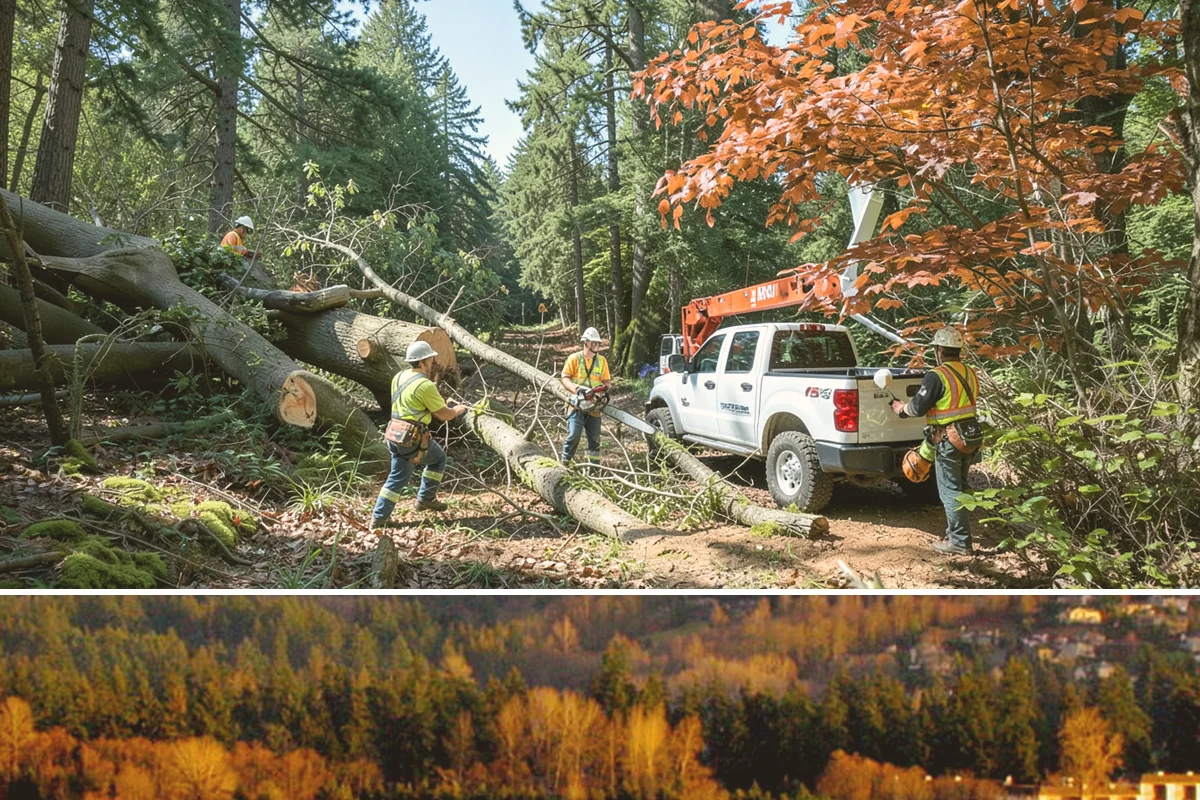
To complete this job safely and efficiently, we use hand saws, pole saws, chainsaws, and wood chippers to handle branches of various sizes. Depending on access needs, some projects may require climbing gear with fall protection or an aerial lift to reach higher limbs. All crew members wear personal protective equipment while working around overhead lines and unstable limbs.
Kenmore Crown Raising Safety & Best Practices
We follow recognized pruning standards to avoid making cuts that could stress your tree or cause branch failure later on. Our safety protocol includes limiting removal to healthy amounts of live tissue and watching closely for any signs of weak unions in the canopy. When climbing aloft, we always use proper fall protection to keep everyone secure throughout the job.
Signs You Need Crown Raising in Kenmore
You might need crown raising if lower branches are blocking paths for pedestrians or interfering with your driveway and garage doors. This service is also useful when tree limbs obstruct important sightlines at intersections or hide views of nearby structures. Deadwood hanging low near walkways or unstable unions that pose a risk to people below are other clear indicators this work is needed.
What Affects the Cost of Crown Raising in Kenmore
The price for crown raising depends on the overall size of your trees and how complex it will be to access them from the ground. Factors like species-specific timing sensitivities and the volume of wood we need to remove and dispose of also influence the final cost. We tailor our approach to match these variables so you get a fair estimate based on your specific site conditions.
Best Time of Year for Kenmore Crown Raising
It is best to schedule this work outside of late summer or early fall, when trees are actively moving nutrients back into their roots for winter storage. We will avoid working during freezing conditions that could damage the fresh cuts we make in the canopy. Planning around these seasonal windows helps ensure your tree recovers well and maintains its long-term vigor after pruning.

How crown raising works on Kenmore properties
Crown raising is selective pruning of lower limbs. It is not thinning the whole tree, and it is not topping. Here is how the work usually goes.
Step by step
- Decide the clearance you need, such as a set height over a driveway, sidewalk or lawn.
- Choose which lower branches to remove. Small ones come off first, and the largest limbs are judged one at a time.
- Cut each branch just outside the branch collar, so the tree can seal the wound on its own.
- Leave enough live crown on the tree. Standard practice (ISA/ANSI A300) is to keep most of the tree's height in foliage, so a tall clearance goal may need to be done over more than one visit.
Why the species mix matters
The city's street-tree inventory is a count of public trees, not of the trees on your lot. Still, it shows what grows well here. Douglas-fir and Western red cedar often carry low branches that hang over paths. Bigleaf maple and red alder grow quickly and can send up new low shoots, so you may want to check them again after a season or two. Eastern arborvitae, at 9.8% of the inventory, is often grown as a screen. Raising its crown can leave gaps in that screen, so decide first whether privacy matters more than clearance.
Climate and timing
The USDA map from 2023 places Kenmore in hardiness zone 9a, with parts of the city from 8b to 9a. That is a mild range for winter cold. It tells us little about the best week to prune, so we pick timing by species and the condition of the tree.
Permits
The published Kenmore tree rules we found don't clearly spell out which removals need city approval. Crown raising removes branches, not the tree, but we check with the city before work starts so you know where you stand. If the tree is in a public right-of-way, tell us when you call.
For a free estimate, call or text 425-484-4442. An ISA Certified Arborist can look at the trees with you and mark the branches that would come off.
Kenmore tree conditions at a glance
| USDA hardiness zone | 9a (8b to 9a across the city) |
|---|---|
| Rain and snow falling October to April | 81% of the year’s total |
| Tree canopy | Among the most heavily treed Puget Sound cities (satellite data) |
| Days that freeze at night and thaw by day | 30 a year |
| Electric utility | Puget Sound Energy (PSE) |
Trees near the power line to your house
Puget Sound Energy (PSE): Service line (wire from PSE pole to home or meter pole): PSE does not trim it; homeowner/private arborist trims.
PSE performs a safety disconnection so the homeowner or private tree trimmer/arborist can work; Call at least 5 business days ahead to check crew availability and potential charges.
Safety disconnect: 1-888-321-7779 (5+ business days ahead). Utility page.
Any fee for a disconnect is set by the utility.
Most common street trees in Kenmore
- Douglas-fir11.3%
- Eastern arborvitae9.8%
- Red alder8.4%
- Western red cedar7.4%
- Bigleaf maple5.1%
- Black cottonwood4.8%
Share of 12,435 trees in the city’s street-tree inventory; median trunk diameter 10.0 in, 14.0% at 24 in or wider.
Sources: Daymet daily weather (NASA/ORNL), NOAA Storm Events, USDA plant hardiness map 2023, NRCS soil survey, USGS elevation, WA DNR landslide inventory, USDA Forest Service aerial survey, WSDA, city tree assessments and street-tree inventories, SILVIS Lab, Arbor Day Foundation, and official city and utility pages.
Crown Raising Serving Kenmore
Kenmore
Crown raising in nearby areas
Also serving Kenmore
- Pear Tree Pruning in Kenmoreat Washington Landscaping
- Roof Algae Treatment in Kenmoreat Washington Roofing
- Tree Risk Assessments in Kenmoreat Washington City Services