Where Safety Meets Expert Tree Service.


Kenmore Commercial Tree Maintenance
Ongoing tree maintenance for commercial properties.
The best time to schedule commercial tree maintenance in Kenmore is late summer into early fall, before the wetter months set in. Crown work done then lets you find weak limbs, dead branches and clearance problems while the trees are fully leafed and easy to assess, and before winter storms test them.
Property managers, HOAs and business owners often wait until a branch falls. A planned walk-through each year costs less disruption than an emergency call, and it gives you time to budget and to schedule work around tenants, deliveries and customers.
About Commercial Tree Maintenance in Kenmore
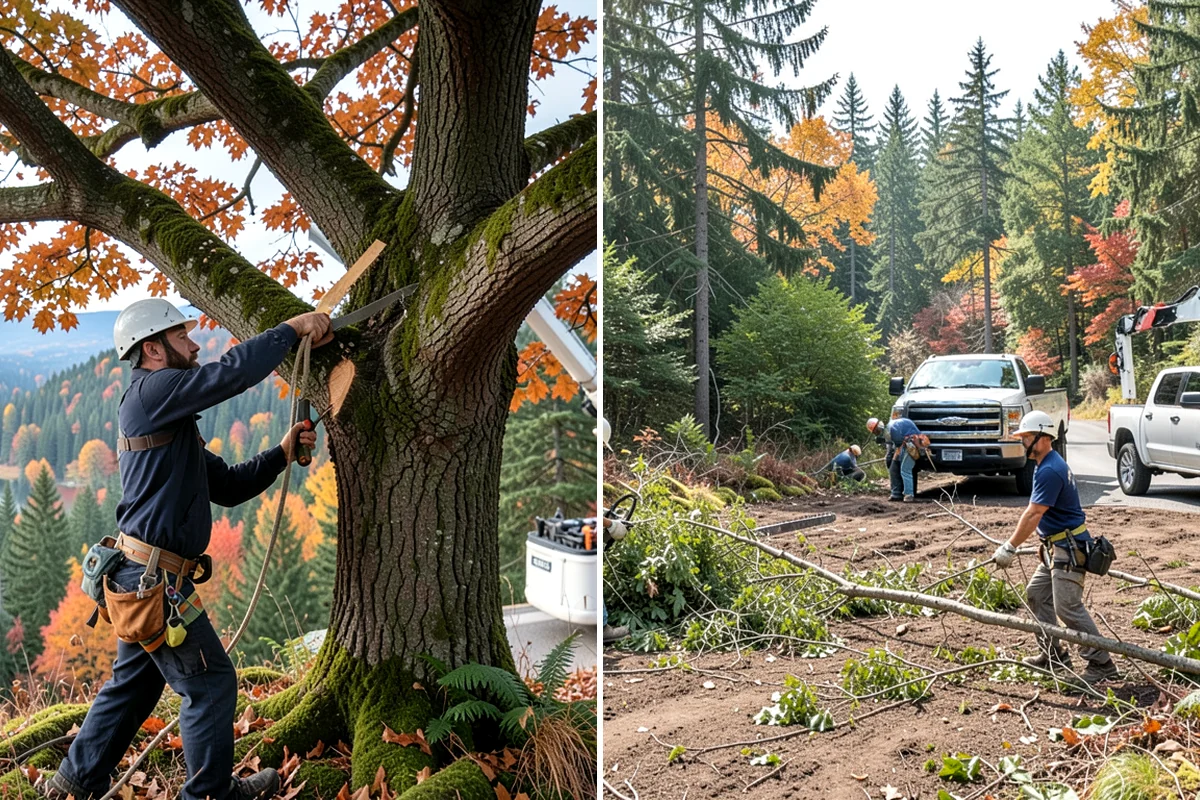
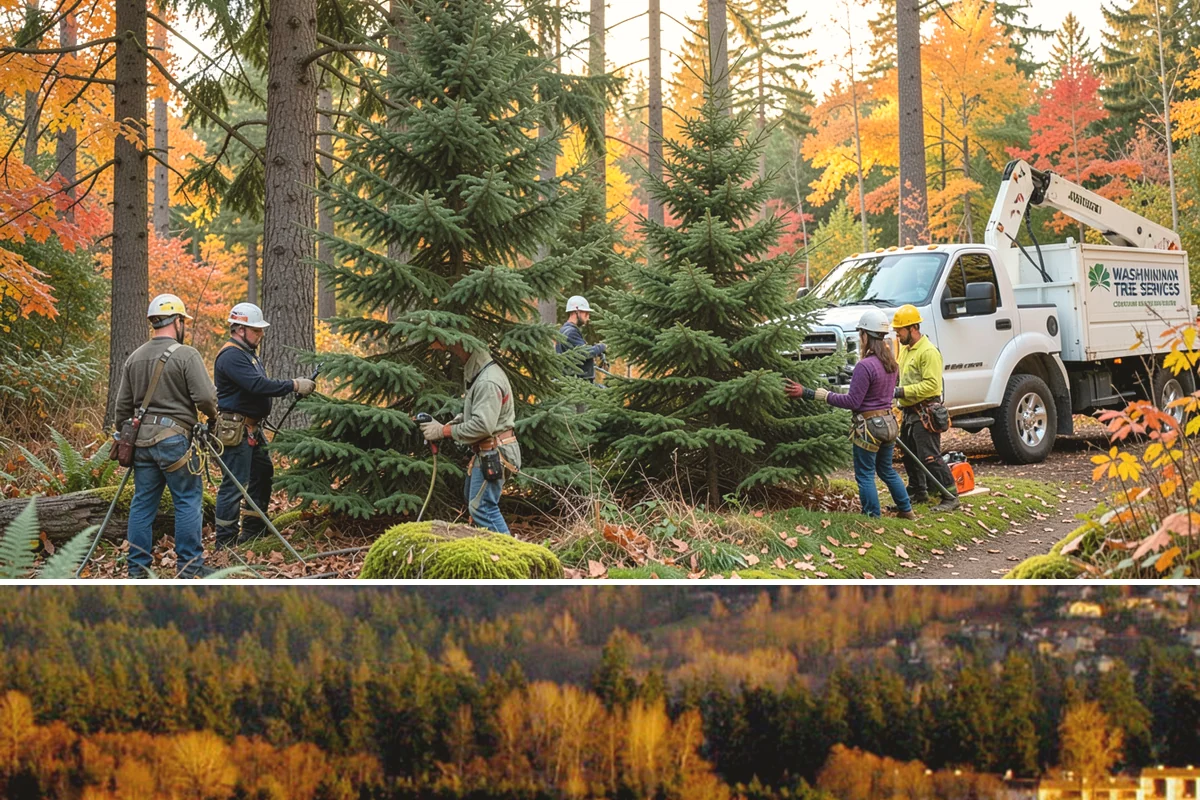
This ongoing tree maintenance is designed specifically for commercial properties that need their landscapes kept safe and presentable. Our trained crews work alongside your team to ensure consistent care without disrupting daily operations or traffic flow. We help businesses maintain a professional appearance while reducing potential liability risks associated with large trees on site.
What Kenmore Commercial Tree Maintenance Includes
Commercial tree maintenance includes recurring pruning, inspections, and general care tailored to the specific species and conditions of each tree. Our methods are matched carefully to your unique site layout and access points to provide effective results every time. This service supports a budget-friendly approach by addressing deferred backlogs and keeping high-traffic areas secure for everyone.
Kenmore Commercial Tree Maintenance Process
The work begins with an inventory and assessment of all trees across the property to identify priorities and develop a customized schedule. We then perform the necessary pruning, inspections, and care tasks while documenting our progress to keep your plan up to date. This cycle ensures that varied tree conditions are managed consistently throughout large sites without causing unnecessary delays.
Equipment We Use for Kenmore Commercial Tree Maintenance
Our crews utilize specialized pruning and rigging gear along with aerial lifts when needed to reach difficult branches safely. We bring inspection tools, chippers, hauling equipment, and full personal protective gear to handle every job efficiently. Having the right machinery on hand allows us to navigate complex access challenges while keeping work zones clear for occupants.
Kenmore Commercial Tree Maintenance Safety & Best Practices
Every project starts by coordinating our activities around building occupants and active traffic patterns to maintain a safe environment. We strictly follow recognized arboricultural standards and keep detailed records in public areas to ensure full accountability at all times. Maintaining these safety protocols helps protect workers, visitors, and the property itself from potential hazards during maintenance work.
Signs You Need Commercial Tree Maintenance in Kenmore
You may need this service if you notice deferred maintenance backlogs building up or see varied tree conditions affecting different parts of your site. High-traffic areas that require extra attention to keep them safe are also a clear indicator that professional care is needed now. If coordinating access and scheduling has become difficult due to the size or complexity of your property, this service can help streamline those challenges.
What Affects the Cost of Commercial Tree Maintenance in Kenmore
The investment for commercial tree maintenance depends on factors like existing deferred backlogs and the specific requirements of high-traffic areas within your site. Varied conditions across a large property and coordination challenges related to access will also influence how much care is needed overall. By addressing these elements proactively, you can support consistent, budget-friendly care that preserves your property value over time.
Best Time of Year for Kenmore Commercial Tree Maintenance
Work on commercial landscapes continues year-round based on specific pruning needs rather than being limited to a single fixed season. Safety priorities dictated by recognized arboricultural standards guide our schedule whenever weather or tree health requires immediate attention. This flexible approach ensures that critical tasks are completed when they matter most for your property’s safety and appearance.

Planning commercial tree care in Kenmore
Start with a walk of the property. Note trees over parking lots, entries, walkways, signs, light poles and roofs. These targets matter most, because a failed limb there means injury or damage. Photos and a simple site map help us scope the work with you.
What affects scope
Scope depends on tree size, species, condition, and what sits underneath. Pruning near a busy entrance may need traffic control or work outside business hours. Dead wood removal, crown cleaning, and clearance pruning are common tasks. Our work follows ISA and ANSI A300 pruning practice, which means cutting at proper branch collars and avoiding topping.
Wind is one reason to plan ahead. The National Weather Service forecast zone that includes Kenmore logged 33 high and strong wind episodes between 2005 and 2025. That figure covers the whole zone, not your lot, but it shows that storms are a recurring test for any tree with defects. Fixing a weak union or removing a dead limb before fall is simpler than cleanup afterward.
Kenmore is also home to Inglewood Golf Club, according to OpenStreetMap. Properties like golf courses, with large mature trees near play areas and paths, are a good example of sites that need regular risk checks.
Removals are a separate question. The published Kenmore rules we found don't clearly say which removals need city approval, so we check with the city before work starts. If your plan includes taking a tree out, allow time for that step.
What to expect on the day
The crew sets up cones or barriers, reviews the plan with your contact, and marks off work zones. Branches are cut, lowered or chipped, and debris is hauled away. Our ISA Certified Arborist can answer questions about the trees on site, and you can reach us at 425-484-4442 for a free estimate.
Practical tip: keep a dated log of each tree you have pruned or flagged. It makes next year's budget easier and shows a clear record of care.
Kenmore tree conditions at a glance
| Tree canopy | Among the most heavily treed Puget Sound cities (satellite data) |
|---|---|
| USDA hardiness zone | 9a (8b to 9a across the city) |
| High and strong wind episodes, 2005-2025 | 33 in the forecast zone |
| Soils | 51% of land has hardpan or another restrictive layer within 40 in; most common series Alderwood |
Tree removal rules in Kenmore
Kenmore’s published rules don’t spell out clearly which removals need city approval. We check with the city before work starts.
Most common street trees in Kenmore
- Douglas-fir11.3%
- Eastern arborvitae9.8%
- Red alder8.4%
- Western red cedar7.4%
- Bigleaf maple5.1%
- Black cottonwood4.8%
Share of 12,435 trees in the city’s street-tree inventory; median trunk diameter 10.0 in, 14.0% at 24 in or wider.
Sources: Daymet daily weather (NASA/ORNL), NOAA Storm Events, USDA plant hardiness map 2023, NRCS soil survey, USGS elevation, WA DNR landslide inventory, USDA Forest Service aerial survey, WSDA, city tree assessments and street-tree inventories, SILVIS Lab, Arbor Day Foundation, and official city and utility pages.
Commercial Tree Maintenance Serving Kenmore
Kenmore
Commercial tree maintenance in nearby areas
Also serving Kenmore
- Utility Line Clearance in Kenmoreat Washington City Services
- Retail Landscape Maintenance in Kenmoreat Washington Landscaping
- Retail Buildout in Kenmoreat Washington Construction
- Loading Dock Cleaning in Kenmoreat Washington Pressure Washing