Where Safety Meets Expert Tree Service.


Kenmore Brush Clearing
The removal of brush and light vegetation.
Brush clearing is for Kenmore owners with overgrown blackberry, scotch broom, salal or young saplings crowding a fence line, driveway, backyard slope or the edge of a wooded lot. It also fits properties where the brush has hidden what is underneath, like old stumps, debris or property markers.
The right method depends on what is growing, how steep the ground is and what you want the area to look like afterward. Below are the main approaches and how Kenmore conditions can favor one over another.
About Brush Clearing in Kenmore
Brush clearing helps homeowners manage overgrown areas by removing light vegetation that can hinder access or increase fire risk. Our trained crews work carefully to prepare your site while protecting the features you want to keep. This service is ideal for anyone looking to reduce fuel loads and regain control of their land.
What Kenmore Brush Clearing Includes
This category focuses on clearing brush and thinning out dense, light vegetation across a property. The goal is to improve usability by creating clear pathways and removing invasive plants that might otherwise take over. We tailor our methods to match the specific tree species and conditions found at your site.
Kenmore Brush Clearing Process
We begin by assessing the area and marking important features like trees or structures that need protection. Crews then remove vegetation in a planned sequence, processing and hauling away debris responsibly as they go. Finally, we grade or tidy the cleared zone so it is ready for its intended use without leaving hazards behind.
Equipment We Use for Kenmore Brush Clearing
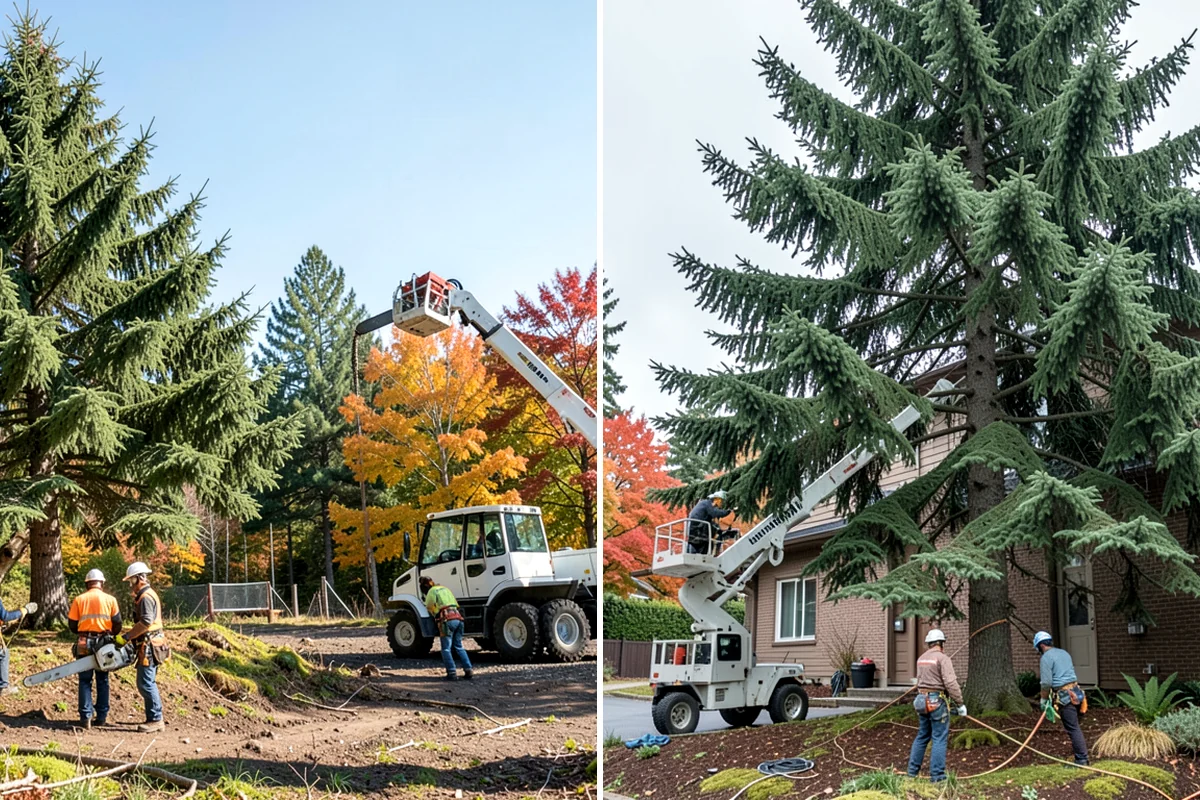
Our teams utilize brush cutters, chainsaws, chippers, and hand tools to handle various types of growth efficiently. Hauling equipment ensures that all removed material is transported away from the property promptly. We also wear full personal protective gear to keep everyone safe while operating these powerful machines.
Kenmore Brush Clearing Safety & Best Practices
Safety starts with identifying utility lines, uneven terrain, and hidden obstacles before any work begins. Our crews take extra care to manage debris properly so it does not create new hazards or damage retained trees. By respecting property boundaries and root zones, we ensure the site remains secure throughout the clearing process.
Signs You Need Brush Clearing in Kenmore
You may need this service if you notice dense thorny growth making your yard difficult to navigate. Signs that include invasive species regrowing quickly or wet ground complicating access also indicate a time for intervention. If overgrown vegetation is threatening nearby structures or increasing fire risk, brush clearing can help restore safety and order.
What Affects the Cost of Brush Clearing in Kenmore
The price of this work depends on how dense the vegetation is and whether the plants are thorny or invasive. Uneven terrain conditions that require special care will also influence the overall cost of the project. Additionally, any specific features at your site that must be protected during clearing can affect the final estimate.
Best Time of Year for Kenmore Brush Clearing
While brush clearing can happen year-round in our region, we always check ground conditions before starting work. Wet or muddy weather common to the Puget Sound climate may require us to adjust schedules for better access and safety. Planning around these seasonal factors ensures that your crew can move efficiently without damaging the site.

Choosing a brush clearing approach in Kenmore
Most brush jobs come down to three approaches. Each suits different ground and different goals.
- Selective clearing: we remove invasive or unwanted plants and leave native shrubs and young trees you want to keep.
- Full clearing: we cut everything in the area down to ground level, usually to prepare for landscaping, a fence or construction.
- Cut and maintain: we cut the growth back now and plan a repeat visit, since many brush species resprout from the roots.
How Kenmore conditions affect the choice
About 30% of Kenmore's land is under dense tree cover, meaning 50% canopy or more, according to satellite data. That is a citywide figure, not a measure of any one lot. It does suggest that many properties have shade and tree roots mixed in with the brush. In those spots, selective clearing is usually the better fit. Heavy cutting around tree roots can damage the trees you want to keep, so hand work is often safer than machinery near them.
USGS elevation data shows Kenmore has some steep slopes, though fewer than the hilliest Puget Sound cities. On a slope, full clearing can leave bare soil that washes out in heavy rain. If your brush grows on a grade, we would usually cut it above the soil line and leave roots in place, or replant soon after, rather than strip the ground.
The SILVIS Lab 2020 analysis puts about 4% of Kenmore's homes in the wildland-urban interface, where homes meet wildland vegetation. That is a small share, so for most owners the main reasons to clear are access, drainage, appearance and keeping invasive plants from spreading. If your home is near a wooded edge, though, thinning dense brush close to the house is worth considering.
Where a critical area, buffer or protected tree might be involved, we check with the city before work starts. Call or text 425-484-4442 for a free estimate, and we can walk the site and talk through which approach fits.
Kenmore tree conditions at a glance
| Homes in the wildland-urban interface | 4% |
|---|---|
| Land under dense tree cover (50%+ canopy) | 30% |
| Slopes | Some steep slopes |
| Landslides mapped by WA DNR | 4 |
| Rain and snow falling October to April | 81% of the year’s total |
Tree removal rules in Kenmore
Kenmore’s published rules don’t spell out clearly which removals need city approval. We check with the city before work starts.
Tree health near Kenmore
Spongy moth (WSDA 2020): WSDA trap detection(s): 2 catch record(s) listed (per-trap counts not given).
Spongy moth (WSDA 2016): WSDA trap detection(s): 1 moth(s) in 1 trap catch record(s).
- Decline, cause not identified141 ac
Forest damage mapped from the air within 10 km of Kenmore, 2021-2025 (USDA Forest Service and WA DNR). This covers forest land, not street or yard trees. “Decline, cause not identified” is dieback with no single cause found.
Sources: Daymet daily weather (NASA/ORNL), NOAA Storm Events, USDA plant hardiness map 2023, NRCS soil survey, USGS elevation, WA DNR landslide inventory, USDA Forest Service aerial survey, WSDA, city tree assessments and street-tree inventories, SILVIS Lab, Arbor Day Foundation, and official city and utility pages.
Brush Clearing Serving Kenmore
Kenmore

Brush clearing in nearby areas
Also serving Kenmore
- Large-Scale Landscape Construction in Kenmoreat Washington Landscaping
- Site Clearing in Kenmoreat Washington Construction
- Ivy Removal in Kenmoreat Washington City Services
- Firewood Recycling in Kenmoreat Washington Firewood