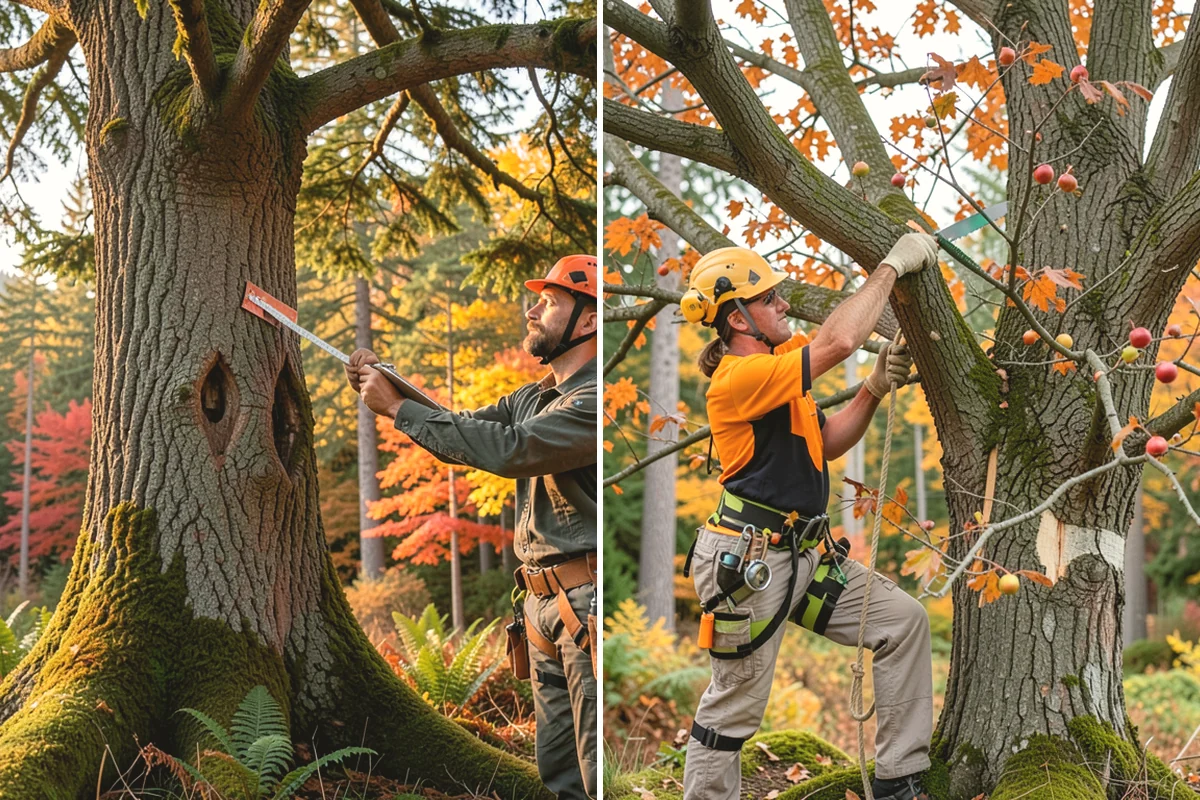
Where Safety Meets Expert Tree Service.

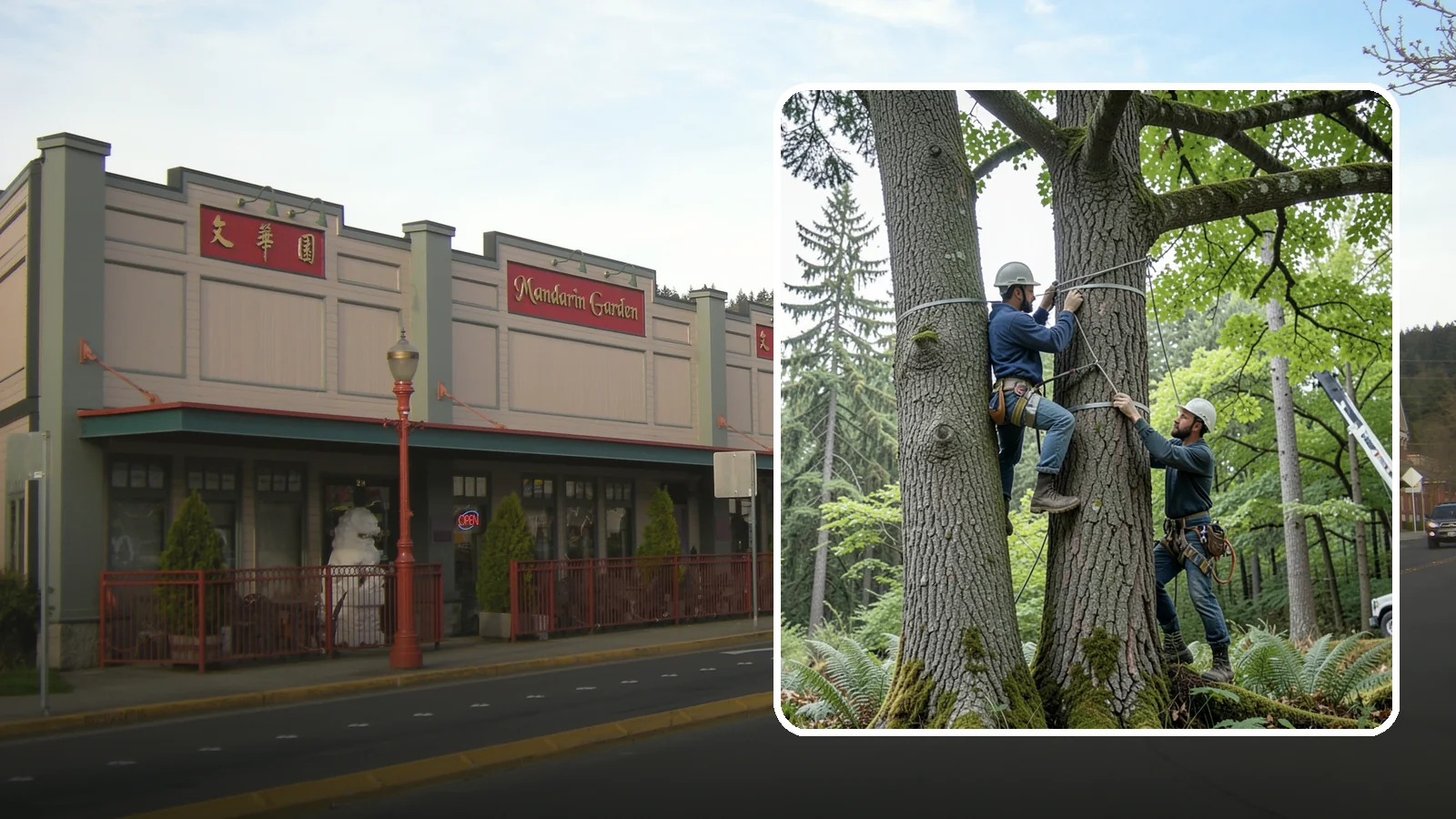
Issaquah Limb Support Systems
Support hardware installed to reduce the risk of limb failure.
The National Weather Service forecast zone that includes Issaquah logged 33 high and strong wind episodes between 2005 and 2025, and its strongest recorded gust since 2005 was 72 mph on December 17, 2010. A tree with a weak union or a heavy, spreading limb takes that kind of load repeatedly over its life.
A limb support system is one way to reduce the strain on a defective tree you want to keep. If you have a tree with a split crotch, a long over-extended limb, or a codominant stem, a support system may be worth a closer look before the next windy season.
About Limb Support Systems in Issaquah
We install limb support systems to help protect your valued trees from breaking under heavy loads or stress. This service is ideal for homeowners who want to preserve significant specimens that have weak unions or overextended branches. Our trained crews use recognized standards to ensure the hardware works effectively with your specific tree species and site conditions.
What Issaquah Limb Support Systems Includes
Limb support systems involve installing specialized cabling and bracing hardware designed to reduce the risk of limb failure. We focus on heavy limbs worth saving, using methods that match the unique needs of each tree at its location. The goal is to strengthen weak points while maintaining the natural beauty and health of your landscape trees.
Issaquah Limb Support Systems Process
Our team begins by assessing structural defects and load paths to determine where support is most needed. Once a system is selected, we install hardware at correct positions using climbing gear or aerial lifts as required. We document every installation clearly and set up an inspection schedule so you know when the next check-up should happen.
Equipment We Use for Issaquah Limb Support Systems
The work relies on high-quality cabling and bracing hardware along with professional installation tools for secure attachment. Our crews bring necessary climbing and rigging gear, plus personal protective equipment to keep everyone safe during the job. An aerial lift is used whenever site access conditions require extra reach or stability while working in your tree canopy.
Issaquah Limb Support Systems Safety & Best Practices
We install support systems only where they will be truly appropriate and effective for reducing failure risk. All hardware we use is correctly rated, and we inspect these systems periodically to ensure they remain secure over time. If a situation changes or the system ages too much, our experts recognize when removal becomes the safer option for your tree.
Signs You Need Limb Support Systems in Issaquah
You may need this service if you notice included-bark unions, cracks in the trunk, or limbs that have grown too long and heavy. Overextended branches often put extra strain on weak spots called codominant stems, which can lead to dangerous breakage later. Aging hardware from previous installations also needs regular inspection to catch any wear before it becomes a problem.
What Affects the Cost of Limb Support Systems in Issaquah
The price of installing support systems is influenced by the specific species of tree you have and how difficult access is at your site. Complexity plays a major role in cost, especially when working with heavy limbs or those that are significantly overextended. These factors determine the amount of specialized hardware needed and the time required for our trained crews to complete the job safely.
Best Time of Year for Issaquah Limb Support Systems
This service can generally be performed year-round here in Puget Sound weather without waiting for a specific season. However, we require careful planning during colder months to avoid installing supports that might suffer from ice loading before they are fully tested. We will coordinate with you to find the best time to work around your schedule and current weather conditions.

How limb support systems work for Issaquah trees
A support system adds a connection between parts of a tree so they move together instead of pulling apart. Installation generally follows standard practice from the ANSI A300 pruning and support guidelines. It is not a cure for a tree that is already failing.
The basic steps
- Inspect the whole tree, including the union, the wood around it, the roots and the canopy.
- Decide whether the tree is a good candidate or whether pruning or removal makes more sense.
- Prune lightly where needed to reduce the weight at the end of the limb.
- Install a cable, or a brace rod where there is a crack, at the right height on the stems.
- Re-inspect on a regular schedule, because hardware and tree growth both change over time.
Why wind and ice history matters here
The wind figures are for the forecast zone that includes Issaquah, not for any single yard. Still, 33 episodes over twenty years show that repeated wind loading is normal here. The same zone had 2 ice storm episodes in that period. Ice adds weight to every branch, which is the kind of load a cable is meant to help share.
Support hardware does not make a tree storm-proof. It also does not replace pruning. A tree with decay, a leaning root plate or heavy dead wood may need a different plan.
Keep, support or remove
After a storm, it is tempting to take down anything that was damaged. Washington DNR's Tree Link article, Making Urban Forests Stronger, Part 2 - After the Storm, advises against removing storm-damaged trees without weighing the risk, noting that some recover with pruning. A support system can be part of that decision.
If your tree is large or the cabling would sit near a structure, our ISA Certified Arborist can assess it and give you a free estimate. Call or text 425-484-4442. If the work could involve a removal, we check with the city of Issaquah before anything starts.
Issaquah tree conditions at a glance
| High and strong wind episodes, 2005-2025 | 33 in the forecast zone |
|---|---|
| Ice storm episodes, 2005-2025 | 2 in the forecast zone |
| Average snowfall | 7.8 in a season |
| Soils | 45% of land has hardpan or another restrictive layer within 40 in; most common series Alderwood; 33% well drained |
| Slopes | More steep ground than most Puget Sound cities |
Strongest wind events near Issaquah
- Dec 17, 2010: gusts to 72 mph
- Feb 7, 2012: gusts to 70 mph
- Dec 14, 2006: gusts to 68 mph
NOAA Storm Events, forecast zone that includes Issaquah, 2005-2025.
Sources: Daymet daily weather (NASA/ORNL), NOAA Storm Events, USDA plant hardiness map 2023, NRCS soil survey, USGS elevation, WA DNR landslide inventory, USDA Forest Service aerial survey, WSDA, city tree assessments and street-tree inventories, SILVIS Lab, Arbor Day Foundation, and official city and utility pages.
Limb Support Systems Serving Issaquah
Issaquah