Where Safety Meets Expert Tree Service.

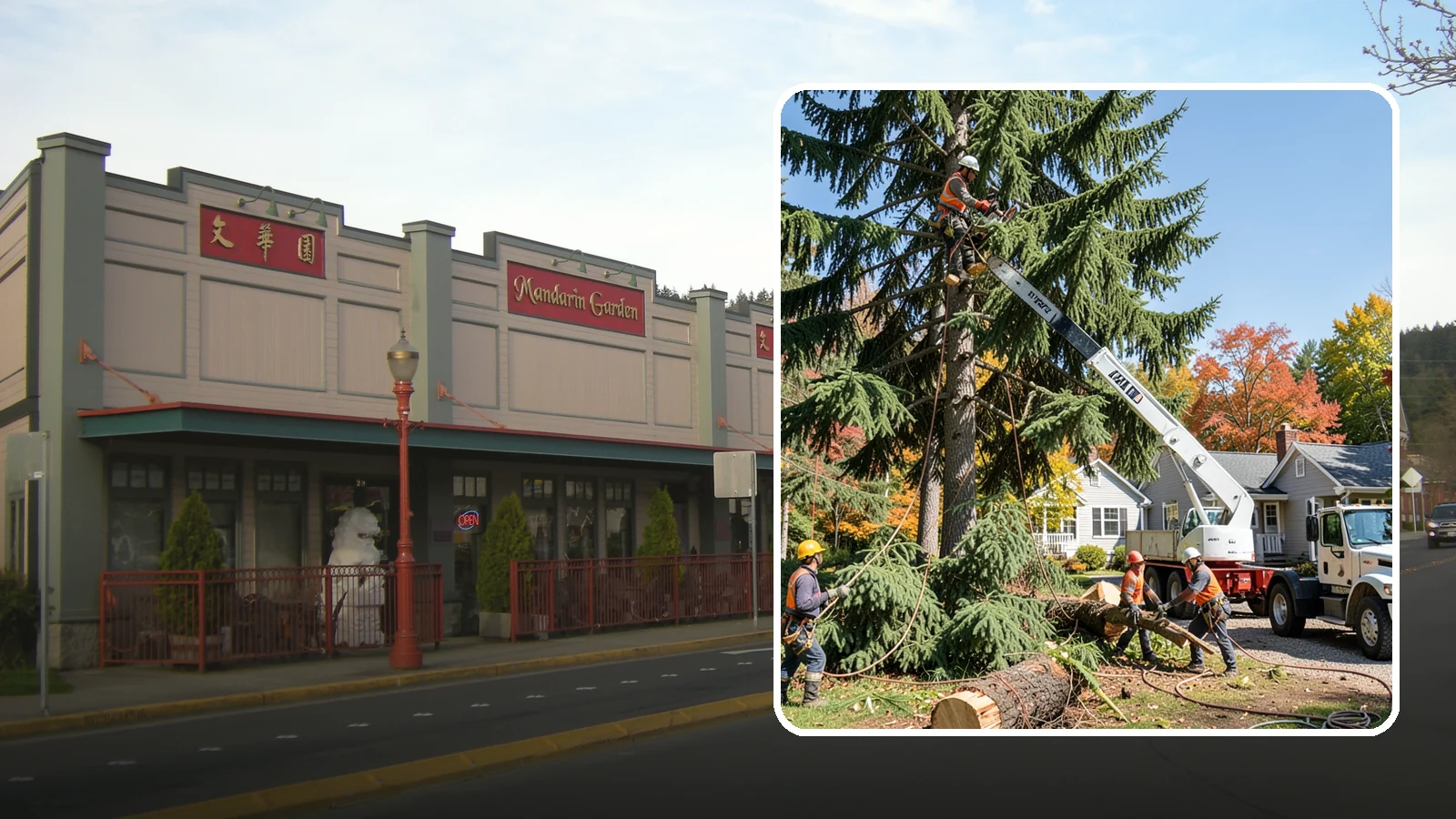
Issaquah Large Tree Removal
The sectional removal of large-diameter or tall trees.
In Issaquah, a tree with a trunk 6 inches or more across at chest height is generally treated as significant, and removing one calls for a Tree Permit. For alder and cottonwood the line is 8 inches. A large tree is well past either number, so plan for the permit step before you pick a date.
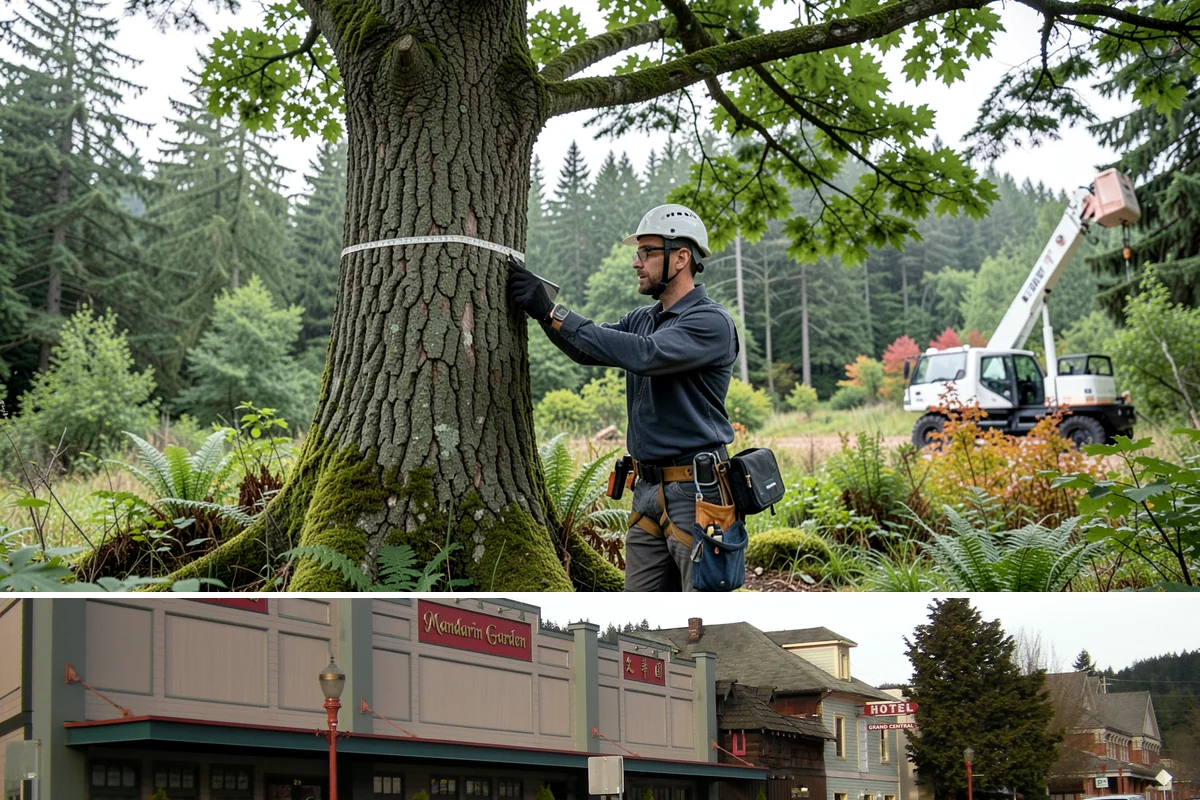
Start by measuring the trunk and noting where the tree stands: near the house, a driveway, a slope, or power lines. Those details decide how the removal is planned and what the city may ask to see.
About Large Tree Removal in Issaquah
We specialize in safely removing large-diameter or tall trees that require special attention during felling. This service is designed for homeowners who need professional help clearing mature trees from their property while protecting nearby structures. Our trained crews use recognized standards to ensure the job is completed efficiently and securely.
What Issaquah Large Tree Removal Includes
Large tree removal involves taking down substantial trees using rigging techniques or mechanical assistance when necessary. We match our methods carefully to the specific species of your tree, current site conditions, and available access points. This approach ensures that even complex jobs are handled with precision and care for your landscape.
Issaquah Large Tree Removal Process
The work begins with an on-site assessment to evaluate hazards and establish safe drop zones around the area. Our crew will then rig limbs or lower them in a controlled sequence before felling the main stem as planned. Afterward, we process the wood, haul away debris, and perform final cleanup so your property is left clear and tidy.
Equipment We Use for Issaquah Large Tree Removal
To handle these large jobs safely, our teams utilize chainsaws, climbing gear, and rigging equipment to manage heavy limbs. We bring a wood chipper on site along with ground protection mats to shield your landscaping during operations. When the tree size or location requires it, we deploy aerial lifts or cranes to assist with safe removal.
Issaquah Large Tree Removal Safety & Best Practices
Safety is our priority, so we maintain clear drop zones and follow controlled fall paths at all times. Before any work begins, we identify overhead utility lines and inspect for hidden decay that could affect structural stability. Our climbers use proper fall protection while coordinating closely with ground crew members to communicate throughout the project.
Signs You Need Large Tree Removal in Issaquah
You may need this service if you have a mature tree showing signs of internal decay or an unpredictable lean toward your home. Situations where equipment access is limited or power lines run close to the canopy also indicate when professional removal is required. These factors often mean that standard felling methods are not safe enough for your specific situation.
What Affects the Cost of Large Tree Removal in Issaquah
The cost of removing a large tree depends on variables such as hidden internal decay and how close it sits to structures like houses. If limited access requires mechanical assistance, the use of aerial lifts or cranes will also influence the overall pricing. Each job is unique, so factors like load distribution and site conditions play a significant role in determining the final expense.
Best Time of Year for Issaquah Large Tree Removal
In our Puget Sound climate, late fall or winter often provides the best time for this work once foliage has dropped. Removing leaves allows us to see defects more clearly on large-diameter trees before we begin cutting. While safety measures allow year-round operation, these seasons generally offer improved visibility and working conditions for complex removals.
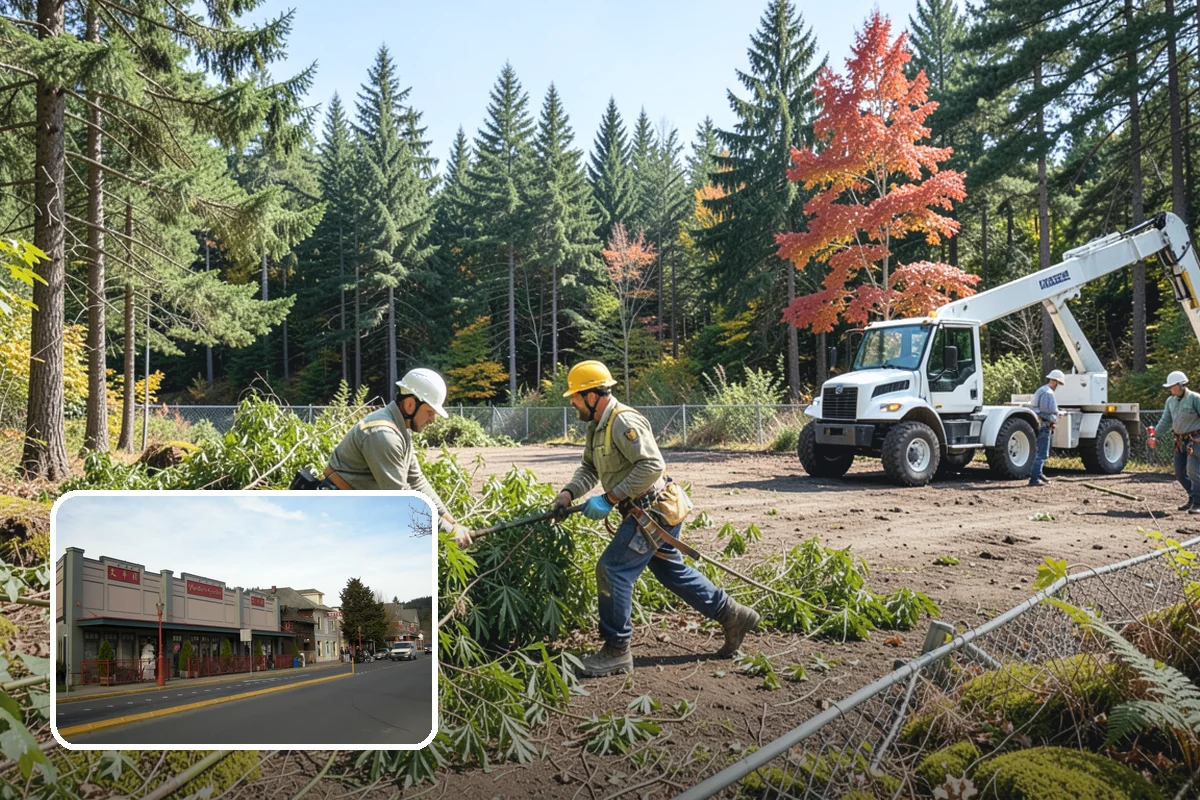
Large tree removal in Issaquah: permit, slopes and wind
The city's rule for private property says a Tree Permit is required to remove significant trees. The size covered is 6 inches or more in diameter at breast height, or 8 inches or more for alder and cottonwood. Species on the King County Noxious Weed List are excluded. The listed exemptions include nonsignificant trees that aren't otherwise protected, pruning that is not excessive, and work by public agencies or utilities in rights-of-way and easements. The rule is about removal, so it does not tell you what applies to other work. If your situation is unclear, we check with the city before any cutting starts.
How a large removal usually goes
- Look at the tree: its lean, dead limbs, decay at the base, and what sits underneath it.
- Confirm the permit question with the city.
- Plan the drop zone and rigging. Large trees near buildings are typically taken down in sections, with pieces lowered under control instead of dropped.
- Cut and lower the sections, then take down the trunk.
- Clean up the debris and, if you want, grind the stump.
Why slopes and wind matter here
The Washington Department of Natural Resources maps 39 landslides in Issaquah. That is a state mapping record for the city as a whole, not a finding about your lot. Still, if your tree is on or above a slope, tell us. Roots help hold soil, so what happens to the ground after removal is worth discussing before the work is scheduled.
Wind is the other consideration. The strongest gust recorded since 2005 in the forecast zone that includes Issaquah was 72 mph, on December 17, 2010. A large tree that is leaning, hollow, or cracked is a reason to act before winter storms rather than after.
Our ISA Certified Arborist can assess the tree, and estimates are free. Call or text 425-484-4442 and send a photo if you can.
Issaquah tree conditions at a glance
| USDA hardiness zone | 8b (8b to 9a across the city) |
|---|---|
| Tree canopy | Among the most heavily treed Puget Sound cities (satellite data) |
| Slopes | More steep ground than most Puget Sound cities |
| Landslides mapped by WA DNR | 39 |
| Soils | 45% of land has hardpan or another restrictive layer within 40 in; most common series Alderwood; 33% well drained |
| High and strong wind episodes, 2005-2025 | 33 in the forecast zone |
| Electric utility | Puget Sound Energy (PSE) |
Tree removal rules in Issaquah
A Tree Permit is required to remove significant trees; the only exemptions are removal of nonsignificant trees not otherwise protected, pruning that is not 'excessive', public agency/utility work in ROW/easements, and mineral extraction. Each removal must meet approval criteria in IMC 18.812.050 (e.g., nuisance trees, replacing dead significant trees, dying or diseased trees with qualified arborist recommendations).
Regulated size: 6 in.+ DBH, or alder/cottonwood 8 in.+ DBH, excluding King County Noxious Weed List species (per search-index text of city tree-code document.
Official city source. Rules change; we confirm with the city before work starts.
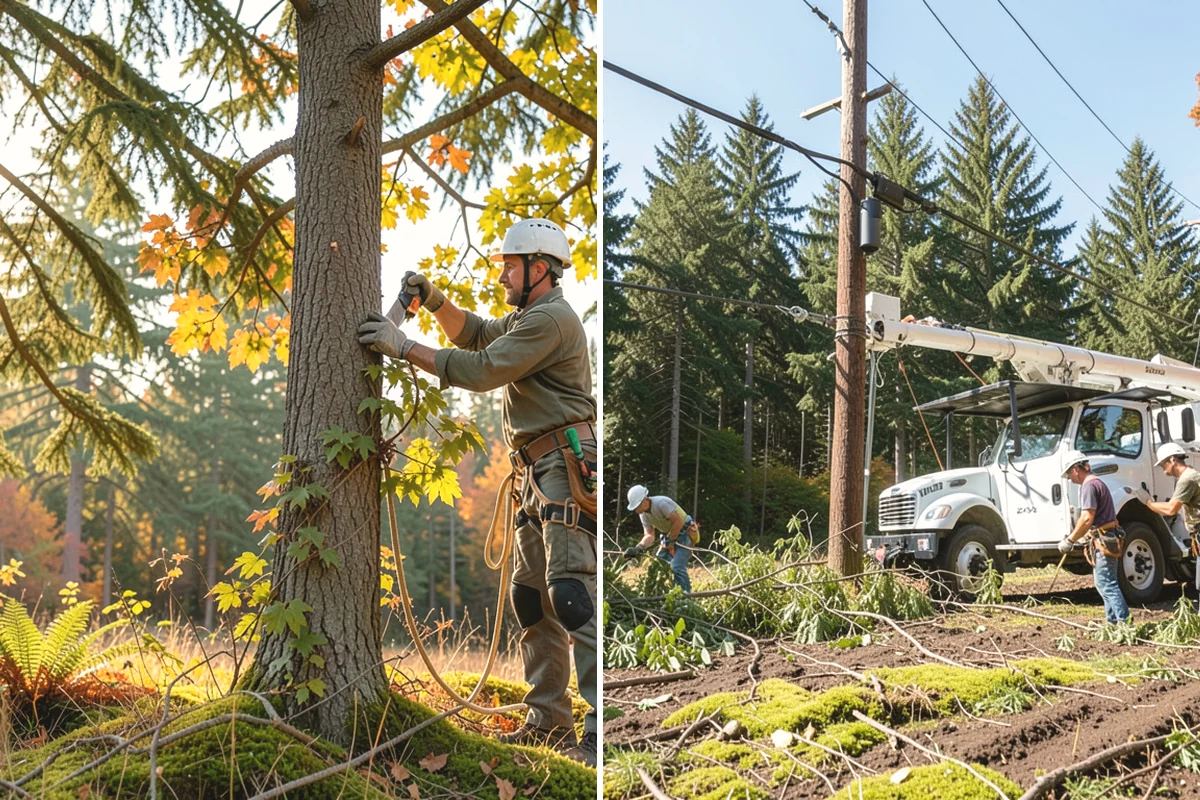
Trees near the power line to your house
Puget Sound Energy (PSE): Service line (wire from PSE pole to home or meter pole): PSE does not trim it; homeowner/private arborist trims.
PSE performs a safety disconnection so the homeowner or private tree trimmer/arborist can work; Call at least 5 business days ahead to check crew availability and potential charges.
Safety disconnect: 1-888-321-7779 (5+ business days ahead). Utility page.
Any fee for a disconnect is set by the utility.
Strongest wind events near Issaquah
- Dec 17, 2010: gusts to 72 mph
- Feb 7, 2012: gusts to 70 mph
- Dec 14, 2006: gusts to 68 mph
NOAA Storm Events, forecast zone that includes Issaquah, 2005-2025.
Sources: Daymet daily weather (NASA/ORNL), NOAA Storm Events, USDA plant hardiness map 2023, NRCS soil survey, USGS elevation, WA DNR landslide inventory, USDA Forest Service aerial survey, WSDA, city tree assessments and street-tree inventories, SILVIS Lab, Arbor Day Foundation, and official city and utility pages.
Large Tree Removal Serving Issaquah
Issaquah
Large tree removal in nearby areas
Also serving Issaquah
- Flower Bed Design in Issaquahat Washington Landscaping
- Tree Watering in Issaquahat Washington City Services
- Storm Wood Processing in Issaquahat Washington Firewood