Where Safety Meets Expert Tree Service.

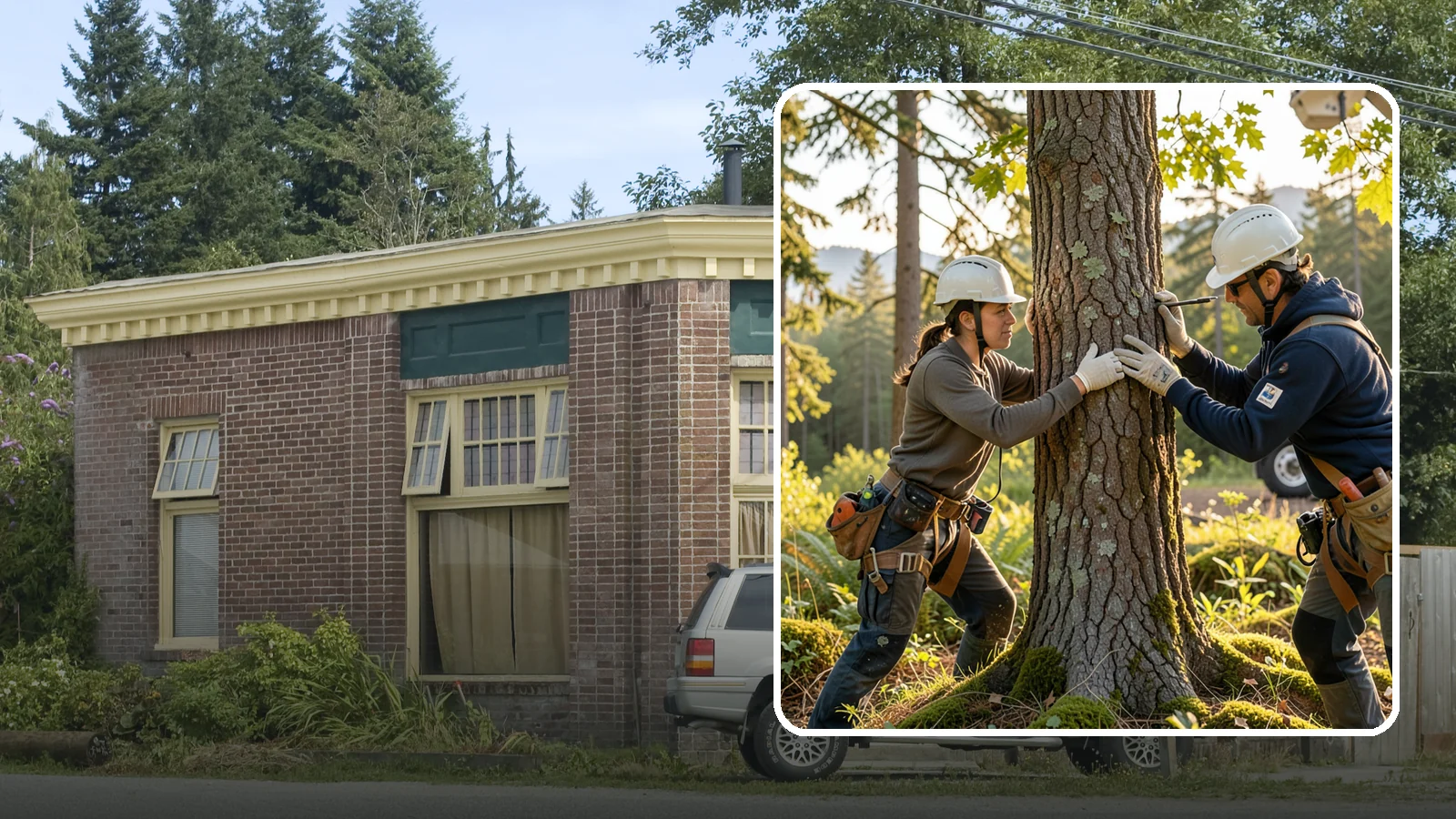
Hamilton Disease Diagnosis
The identification of fungal, bacterial, or other diseases affecting a tree.
How do I know if my tree is sick or just stressed? Start by noting what changed and where. Look for dead or thinning leaves in one part of the crown, oozing or cracked bark, fungus at the base, or needles that turned color out of season. A sick tree often shows a pattern. A stressed tree often shows a general decline.
Take dated photos of the whole tree, the trunk, and any close-up symptoms. Note whether the change was sudden or slow. Diagnosis means finding the cause before choosing treatment, pruning, or removal, so those details help narrow it down.
About Disease Diagnosis in Hamilton
Our disease diagnosis service helps you understand exactly what is troubling your trees so we can act quickly to protect them. This care focuses on identifying fungal or bacterial issues before they become serious problems for the whole landscape. We work with homeowners who want clear answers about their tree health and a plan to keep their valued plants stable.
What Hamilton Disease Diagnosis Includes
This service identifies specific diseases affecting a tree, whether caused by fungi, bacteria, or other factors. It helps us determine why your trees are declining and what treatment steps will restore them properly. Our trained crews use recognized standards to match methods with the unique species of each tree and its site conditions.
Hamilton Disease Diagnosis Process
We begin by inspecting the tree along with its surrounding environment to find contributing issues like soil quality or pest activity. After identifying these factors, we recommend and apply treatments that fit your specific situation while documenting our findings for future reference. This process ensures you receive accurate information about follow-up care needed to support long-term stability.
Equipment We Use for Hamilton Disease Diagnosis
Our crews bring diagnostic tools alongside specialized kits for taking soil samples when necessary. We also use injection or application equipment to deliver treatments safely, along with air excavation tools if access requires careful maneuvering around roots. All work is done while wearing personal protective equipment to ensure the safety of our team and your property.
Hamilton Disease Diagnosis Safety & Best Practices
When applying any products during diagnosis or treatment, we strictly follow label guidelines to protect both the soil and nearby plantings. We take great care to avoid damaging tree trunks or root systems while performing inspections or sampling in tight spaces. Accurate documentation of site conditions is part of our safety protocol to ensure consistent results over time.
Signs You Need Disease Diagnosis in Hamilton
You may need this service if you notice sudden decline, poor growth, or signs that past construction has affected your trees’ roots and soil. Compacted ground, girdling roots, or visible pest activity are common situations where a professional diagnosis provides the clarity needed for recovery. Catching these problems early allows us to improve root conditions before they escalate into major health issues.
What Affects the Cost of Disease Diagnosis in Hamilton
The price of this service depends on factors such as the specific species of your tree and how difficult it is to access its roots or trunk. Site conditions like steep slopes or limited space can also influence the complexity required to identify contributing soil or pest issues accurately. We tailor our approach to ensure you get a thorough evaluation without unnecessary expense for simple cases.
Best Time of Year for Hamilton Disease Diagnosis
While we can perform disease diagnosis year-round in this region, certain times may be better depending on which pathogens are active at that moment. Some treatments work best when applied during specific seasons to match the life cycle of the tree and its potential threats. We will advise you on the ideal window for observation or application based on current symptoms and treatment needs.

Diagnosing Tree Disease in Hamilton, Skagit County
Why the cause matters
Dieback can come from fungus, insects, root decay, drought, or soil problems. Each one calls for a different response. Treating the wrong problem wastes time and can leave a hazard standing. A diagnosis looks at the crown, trunk, root flare and soil, then ties what we see to a likely cause. Our ISA Certified Arborist can do this on a free estimate visit, and we will tell you when a lab sample or a second opinion makes sense.
What the nearby forests show
A federal aerial survey by the USDA Forest Service and WA DNR, covering 2021 to 2025, mapped forest within 10 km of Hamilton. This is forest land, not street or yard trees, so it does not tell us what is wrong with a tree on your property. It does show what is active in the surrounding woods. The main mapped damage was bears at 3,985 acres, Douglas-fir beetle at 1,061 acres, and root disease or bears at 691 acres, all in Douglas-fir. If you have a Douglas-fir with thinning or fading needles, we look for beetle galleries under the bark and signs of root problems, and we also check for animal damage.
Wet seasons and what to watch
Daymet data for 2005 to 2025 shows that 82% of Hamilton's yearly rain and snow falls from October to April. Long wet months favor fungi and can keep soil saturated around roots. So check the base of your trees for conks, soft wood, or leaning in winter and spring. Hamilton sits in USDA hardiness zone 8b, with parts of the city between 8a and 8b, which is a general guide to plant selection and not a diagnosis.
If you have a maple, one more item applies. Sooty bark disease, caused by Cryptostroma corticale, is an emerging Pacific Northwest concern that mainly affects maples, according to the WSU Urban Forest Health Lab. Peeling bark with dark, sooty spore masses is worth reporting.
- Photos of the whole tree and the problem area
- When you first noticed the change
- Recent digging, grade changes, or construction near the roots
Send these to 425-484-4442 by call or text. If a tree needs removal, we check with the city before any work starts.
Hamilton tree conditions at a glance
| USDA hardiness zone | 8b (8a to 8b across the city) |
|---|---|
| Soils | 9% of land has hardpan or another restrictive layer within 40 in; most common series Larush; 97% well drained |
| Rain and snow falling October to April | 82% of the year’s total |
| Days with 0.1 in or more of rain | 132 a year |
| Tree canopy | Among the most heavily treed Puget Sound cities (satellite data) |
| Days that freeze at night and thaw by day | 40 a year |
Tree health near Hamilton
- Bears3,985 ac
- Douglas-fir beetle1,061 ac
- Root disease or bears691 ac
Forest damage mapped from the air within 10 km of Hamilton, 2021-2025 (USDA Forest Service and WA DNR). This covers forest land, not street or yard trees. “Decline, cause not identified” is dieback with no single cause found.
Sources: Daymet daily weather (NASA/ORNL), NOAA Storm Events, USDA plant hardiness map 2023, NRCS soil survey, USGS elevation, WA DNR landslide inventory, USDA Forest Service aerial survey, WSDA, city tree assessments and street-tree inventories, SILVIS Lab, Arbor Day Foundation, and official city and utility pages.
Disease Diagnosis Serving Hamilton
Hamilton
Disease diagnosis in nearby areas
Also serving Hamilton
- Evergreen Pruning in Hamiltonat Washington Landscaping
- Municipal Landscape Maintenance in Hamiltonat Washington City Services