Where Safety Meets Expert Tree Service.

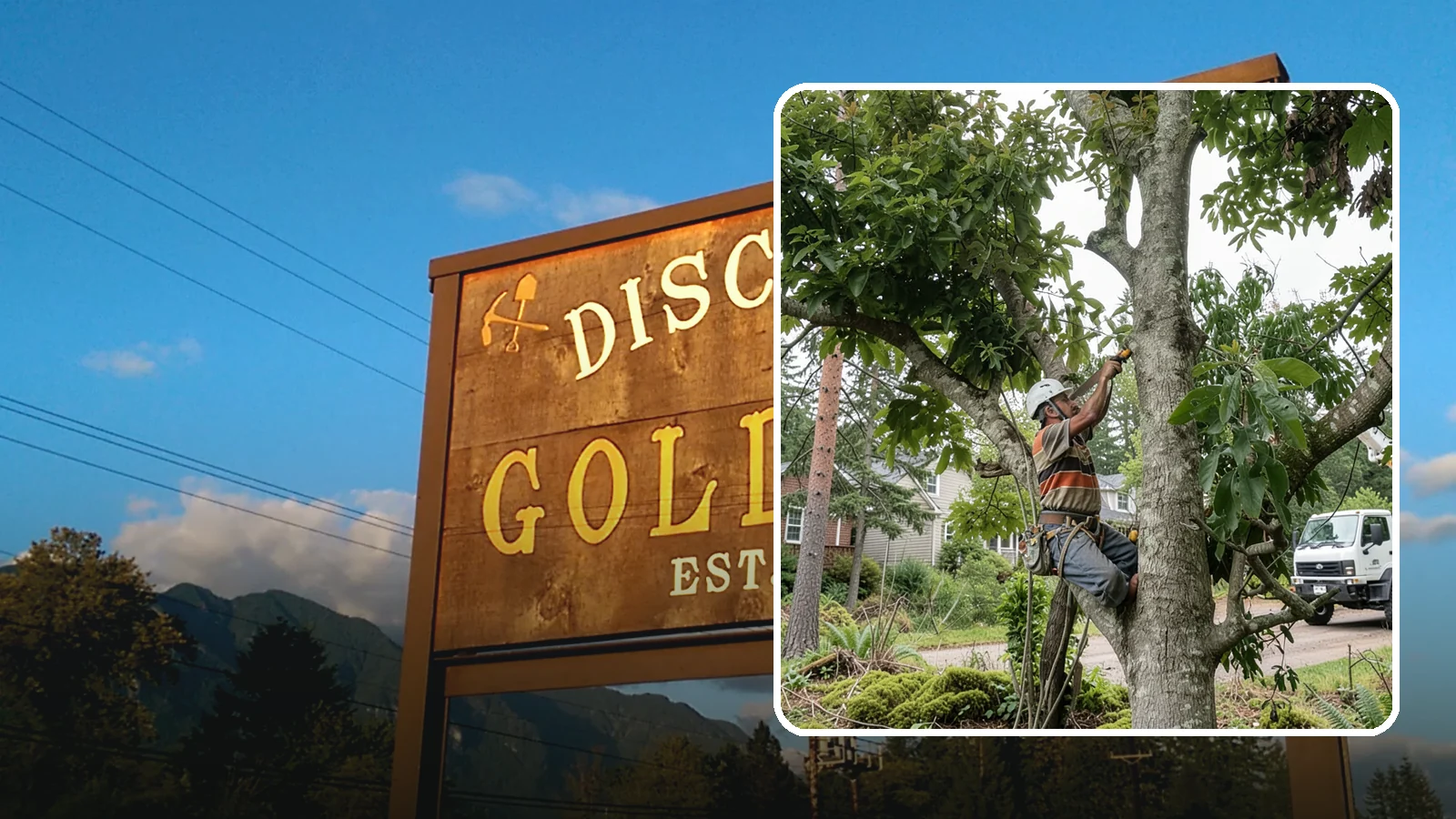
Gold Bar Tree Pruning
The removal of specific branches to improve a tree’s structure, health, and safety.
When should you prune trees in Gold Bar? For most trees, late winter is a good answer. The dormant season, after leaf fall and before bud break, is usually a good time to cut, and late winter after the worst cold is generally better.
Pruning is more than trimming back whatever feels too long. Each cut decides how the branch heals and how the tree grows afterward. Below is how timing, cut placement and storm season affect the work on a Gold Bar property.
About Tree Pruning in Gold Bar
Tree pruning helps homeowners maintain healthy, strong trees that fit well within their landscape. Our trained crews work carefully to remove specific branches while keeping your property safe and attractive year-round. We focus on improving the overall structure of your tree without causing unnecessary stress.
What Gold Bar Tree Pruning Includes
This service involves removing selected branches to enhance a tree’s health, appearance, and safety around structures or power lines. It targets defective growth like deadwood and weak unions to support a robust framework for future seasons. Every cut is planned to match the specific needs of your tree species and site conditions.
Gold Bar Tree Pruning Process
We begin by assessing the canopy condition and defining clear goals for what you want to achieve with each tree. Our team selects precise cuts that follow recognized arboricultural standards, ensuring we never remove too much live tissue at once. After making clean incisions at proper points, we lower branches safely, process the wood material, and leave your work area tidy.
Equipment We Use for Gold Bar Tree Pruning
To complete this job effectively, our crews use hand saws, pole saws, chainsaws, and various climbing or rigging gear as needed. Depending on access requirements, an aerial lift may be brought in to reach higher branches safely. We also utilize a wood chipper for processing cut material and wear full personal protective equipment throughout the project.
Gold Bar Tree Pruning Safety & Best Practices
Safety is our priority, so we always follow recognized pruning standards to avoid making harmful cuts that could weaken your tree. Our workers watch closely for overhead power lines and unstable limbs before starting any work aloft or on the ground. We limit removal to healthy amounts of live tissue and use fall protection whenever anyone climbs a tree.
Signs You Need Tree Pruning in Gold Bar
You may need this service if you notice deadwood, weak branch unions, or branches interfering with your home’s structures or utility lines. Over-pruning from previous attempts or improper cuts can cause stress that shows up as declining health in the canopy. If sightlines are blocked by low-hanging limbs or clearance issues exist near walkways, pruning is a good solution.
What Affects the Cost of Tree Pruning in Gold Bar
The investment for this work depends on factors like your tree species and how large its canopy has grown over time. Access requirements might change if equipment such as an aerial lift is needed to reach certain branches safely. Additionally, the volume of wood material that must be removed and processed will influence the overall cost of the project.
Best Time of Year for Gold Bar Tree Pruning
The best time for pruning follows recognized arboricultural standards matched to our local Puget Sound climate conditions. We aim to schedule work during natural dormant periods preferred by each specific tree species in your landscape. Timing is critical because cutting at the wrong season can harm the tree or delay its ability to heal properly.
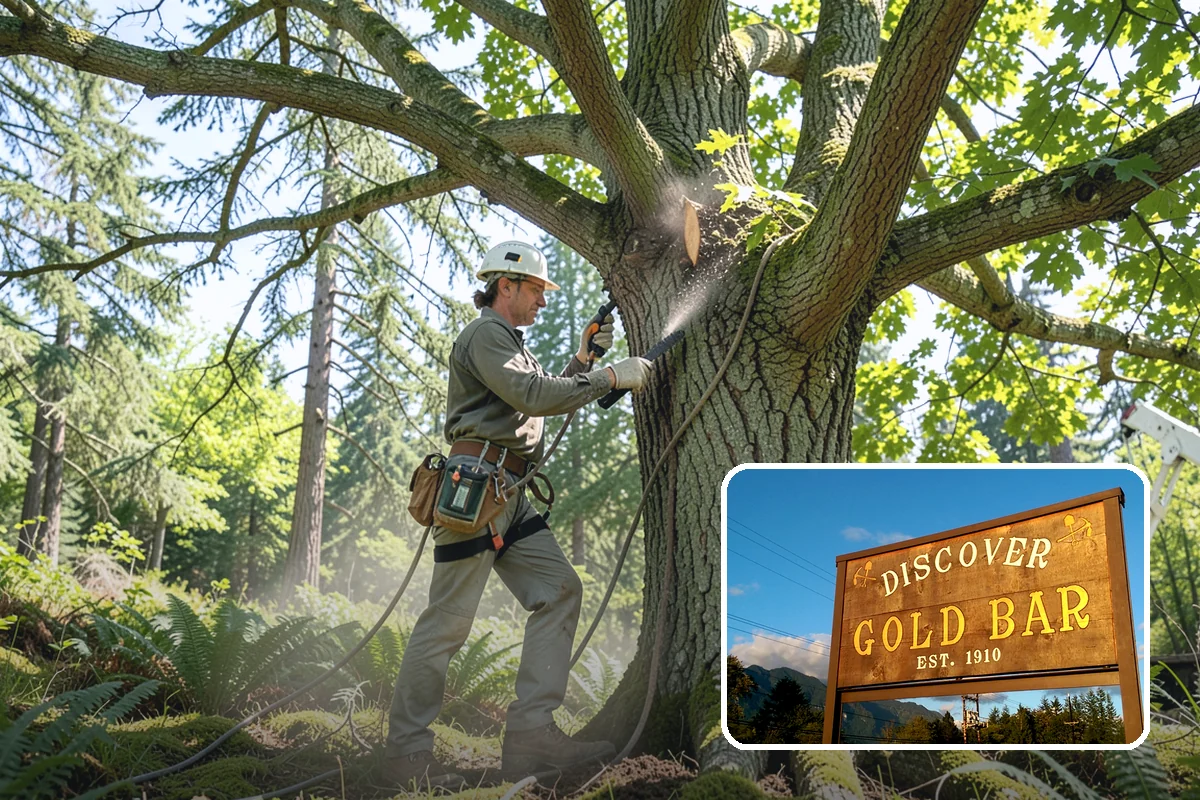
Pruning Trees in Gold Bar: Timing, Cuts and Storm Season
Timing around a wet season
Daymet climate data for 2005-2025 shows that 81% of Gold Bar's yearly rain and snow falls from October to April. That overlaps with the dormant season, so the practical question is when the ground and the weather allow safe work. Late winter after the worst cold is the window the WSU Extension handbook generally favors. Wet ground can limit access for crews and equipment, so a dry stretch in that window is worth watching for. If you want to pick a time, call early and we can plan around the weather.
Where the cut goes matters
The WSU Extension Pacific Northwest Gardener's Handbook says reduction cuts should go back to a lateral at least one-third the diameter of the branch removed. In plain terms, when a branch is shortened, it is cut back to a side branch large enough to take over as the new growing tip. A cut made partway along a limb, with no suitable lateral, tends to leave a stub that heals poorly and sprouts weak shoots. When you look at a tree you want pruned, point out the branches that worry you, and ask where each cut would land.
Storm season and branch structure
The National Weather Service forecast zone that includes Gold Bar logged 38 high and strong wind episodes from 2005 to 2025. That figure covers the wider zone, not a specific yard, but it is a reason to look at branch structure before winter. Useful pruning here includes:
- Removing dead, cracked or broken branches.
- Shortening long, heavy limbs with proper reduction cuts.
- Clearing branches that rub each other or hang over a roof.
We do not recommend topping. It leaves large wounds and fast, weakly attached regrowth. If you are unsure what a tree needs, our ISA Certified Arborist can look at it and give a free estimate. Call or text 425-484-4442.
Gold Bar tree conditions at a glance
| USDA hardiness zone | 8b |
|---|---|
| Rain and snow falling October to April | 81% of the year’s total |
| Days that freeze at night and thaw by day | 44 a year |
| Electric utility | Snohomish County PUD |
Trees near the power line to your house
Snohomish County PUD: PUD "does not maintain vegetation around service lines or standalone communication lines." Customer must keep 5 ft clearance on all sides of the service drop (10 ft diameter), except the first 10 ft nearest the primary line which the PUD trims.
Customer Service Regulations list tree trimming as a non-routine disconnection/reconnection of residential service;00 each on overtime. Customers must not cut/disconnect the drop themselves (tampering charge).
Tree/vegetation questions: 425-783-5579 (Mon-Fri 7am-3pm) or [email protected]. Utility page.
Any fee for a disconnect is set by the utility.
Sources: Daymet daily weather (NASA/ORNL), NOAA Storm Events, USDA plant hardiness map 2023, NRCS soil survey, USGS elevation, WA DNR landslide inventory, USDA Forest Service aerial survey, WSDA, city tree assessments and street-tree inventories, SILVIS Lab, Arbor Day Foundation, and official city and utility pages.
Tree Pruning Serving Gold Bar
Gold Bar
Tree Pruning in nearby areas
Also serving Gold Bar
- Apple Tree Pruning in Gold Barat Washington Landscaping
- Roof Disinfecting in Gold Barat Washington Roofing
- Root Pruning in Gold Barat Washington City Services