Where Safety Meets Expert Tree Service.


Fife Tree Dismantling / Sectional Removal
The piece-by-piece dismantling of a tree from the top down.
Sectional removal can be done in most months, but the dry season is often easier on a Fife yard. Daymet records for 2005-2025 show 82% of the year's rain and snow falls from October to April. Wet ground from fall through spring can mean soft turf, ruts and slower footing around a tree being taken down in pieces.
If the tree is close to the house, a fence or a wire, dismantling means cutting it down in sections and lowering each piece under control instead of felling it whole. Planning it for a drier stretch gives you more choice about where equipment and cut wood can go.
About Tree Dismantling / Sectional Removal in Fife
When a tree cannot be safely lowered in one piece due to nearby structures or power lines, our sectional removal team can help clear the area without risk. This specialized approach is perfect for homeowners who need precise control over how their property looks after work is complete. We focus on keeping your home and landscape safe while removing unwanted trees from difficult sites.
What Fife Tree Dismantling / Sectional Removal Includes
Tree dismantling involves taking apart a tree piece by piece, starting from the top down rather than felling it all at once. Our trained crews follow recognized arboricultural standards to match their methods with the specific species of tree and conditions on your site. This process effectively removes safety hazards, frees up usable space, and helps prevent pests or disease from spreading to healthy neighbors.
Fife Tree Dismantling / Sectional Removal Process
We begin every job with an on-site assessment to identify potential dangers and establish clear drop zones around your property. Once safe boundaries are set, our crew will rig the tree to lower limbs carefully before removing the stem in a controlled sequence. After all wood is processed and debris hauled away, we finish by clearing the site so you can enjoy your yard again.
Equipment We Use for Fife Tree Dismantling / Sectional Removal
To handle these complex jobs safely, we use chainsaws along with specialized climbing and rigging gear designed for precision work. Depending on access needs at your location, an aerial lift or crane may be brought in to assist with lowering heavy sections. We also utilize wood chippers for processing the timber and ground protection equipment to keep your lawn intact during operations.
Fife Tree Dismantling / Sectional Removal Safety & Best Practices
Your safety is our priority, so we always identify overhead utility lines before starting any work on a tree near power infrastructure. Our team maintains strict control over drop zones and fall paths while using personal protective equipment throughout the entire project. We also inspect every tree for hidden decay or structural defects before climbing to ensure no one gets hurt during removal.
Signs You Need Tree Dismantling / Sectional Removal in Fife
You likely need this service if you have a large tree leaning unpredictably toward your house, driveway, or favorite seating area. Situations where limited access prevents standard equipment from reaching the trunk often require us to dismantle the tree section by section. If hidden internal decay makes a single fall dangerous for people below, our sectional method provides the necessary caution and control.
What Affects the Cost of Tree Dismantling / Sectional Removal in Fife
The final price depends on factors such as the overall size of the tree and how difficult it is to access your property with equipment. Trees located very close to structures will require additional rigging gear, which influences the total cost of the project. Disposal requirements for the wood also play a role in determining what you pay for this essential service.
Best Time of Year for Fife Tree Dismantling / Sectional Removal
While we can work year-round given our local climate conditions, extra precautions are taken during wet seasons when hidden decay might be more likely to cause issues. Ice formation on branches is another time that requires us to take additional safety steps before beginning any dismantling work. Planning ahead ensures your team can proceed efficiently while maintaining the highest standards of care for your property.
Planning a sectional tree removal in Fife
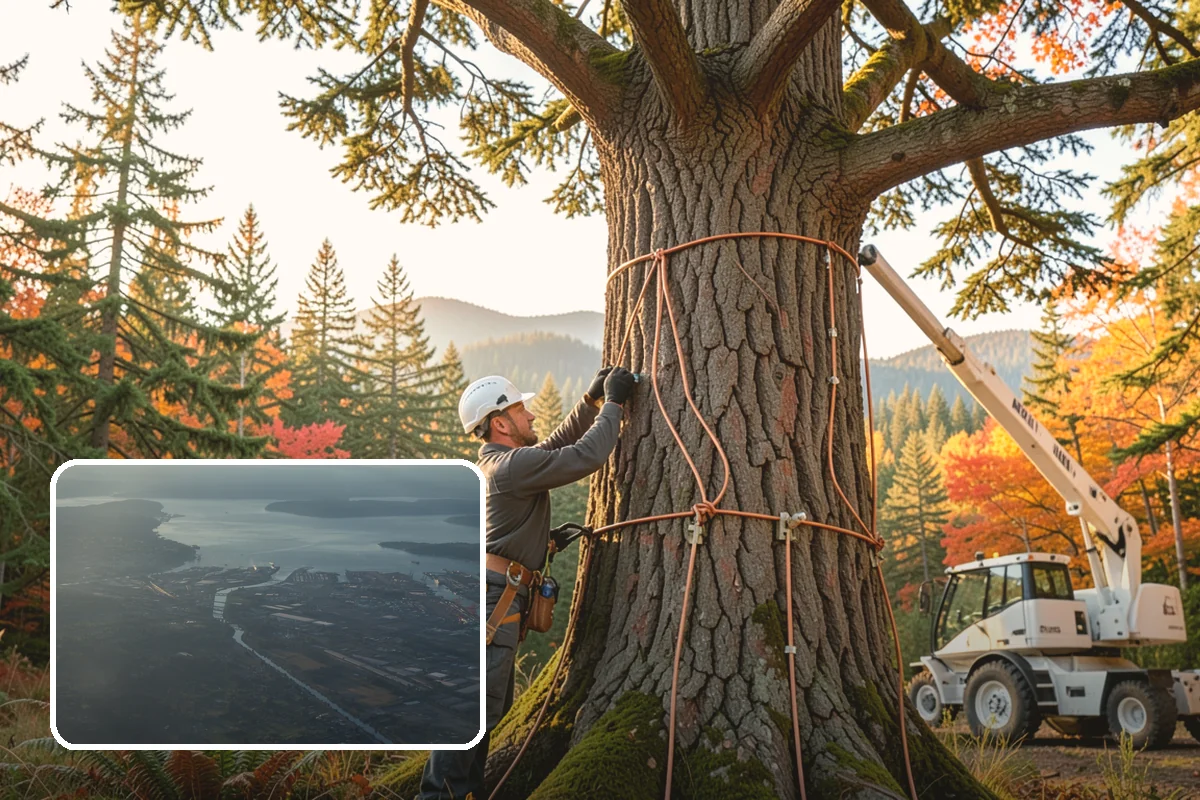
Sectional removal suits trees that cannot fall in one piece because something is in the way. That may be a roof, a neighbor's fence, a patio or a service wire. A climber works from the top down, cutting limbs and then the trunk into manageable lengths. Rigging ropes control each piece so it does not drop onto what is below.
What affects the scope
Access is the big one. A tree in a back yard with a narrow side gate needs more hand-carrying than one beside a driveway. Size, lean, decay and how many limbs overhang structures all change the time the job takes. Wet turf also matters, which is why that October to April rainfall share is worth keeping in mind when choosing a date.
Power lines are the other factor. In Fife the electric utility is Tacoma Power. Its Customer Service Policies, effective April 1, 2026, say the customer is responsible for trimming and removing trees and other vegetation away from the overhead service wire on their property. Its FAQ says it will not trim trees on private property between the utility pole and the home. So if a tree you want removed is touching or near that wire, the work falls to you to arrange, and it should be planned with the wire in mind from the start.
City rules can also apply to removals. Fife's requirements are not something to guess at, so we check with the city before work starts.
What to expect on the day
The crew walks the site first and agrees on drop zones and rigging points. Vehicles and garden items near the tree are moved out of the way. Then the tree comes down in sections, and the wood is cut up, hauled or left as you arranged beforehand. Stump grinding is a separate job unless it is agreed in advance.
One practical tip: before the estimate visit, walk the route from the street to the tree and note any gates, low branches or irrigation lines. Tell us about them. It helps the plan match the real site.
Fife tree conditions at a glance
| USDA hardiness zone | 8b |
|---|---|
| Soils | 1% of land has hardpan or another restrictive layer within 40 in; most common series Sultan |
| High and strong wind episodes, 2005-2025 | 25 in the forecast zone |
| Electric utility | Tacoma Power |
Tree removal rules in Fife
No standalone tree removal permit for existing single-family lots was found in the Fife Municipal Code. Significant-tree retention, protection and replacement in FMC 19.64.140 apply to development, including clearing and grading activities (new development/redevelopment must retain as many significant trees and groves as possible). Topping restrictions apply to significant trees in public rights-of-way and commercial, business park or industrial zones.
Regulated size: Significant trees = healthy evergreen trees 10 ft tall or more, and healthy deciduous trees with a minimum caliper of 6 in measured at DBH.
Official city source. Rules change; we confirm with the city before work starts.
Trees near the power line to your house
Tacoma Power: Customer Service Policies (eff. Apr 1 2026): "The Customer will be responsible for trimming and removing trees and other vegetation away from the Overhead Service wire(s) on the Customer's property." FAQ: "We will not trim trees on private property that are between the utility pole and the home.".
Tacoma Power coordinates a disconnect for tree trimming; call at least ten business days in advance.
Tree Trimming & Removal line / tree-trimming disconnects: 253-502-8729. Utility page.
Any fee for a disconnect is set by the utility.
Strongest wind events near Fife
- Oct 18, 2007: gusts to 62 mph
- Jan 6, 2019: gusts to 61 mph
- Feb 25, 2025: gusts to 60 mph
NOAA Storm Events, forecast zone that includes Fife, 2005-2025.
Sources: Daymet daily weather (NASA/ORNL), NOAA Storm Events, USDA plant hardiness map 2023, NRCS soil survey, USGS elevation, WA DNR landslide inventory, USDA Forest Service aerial survey, WSDA, city tree assessments and street-tree inventories, SILVIS Lab, Arbor Day Foundation, and official city and utility pages.
Tree Dismantling / Sectional Removal Serving Fife
Fife
Also serving Fife
- Garden Bed Installation in Fifeat Washington Landscaping
- Emergency Tree Removal in Fifeat Washington City Services
- Tree Removal for Firewood in Fifeat Washington Firewood