Where Safety Meets Expert Tree Service.


Everett Fruit Tree Pruning
The pruning of fruit trees for structure, health, and productivity.
This service is for Everett owners with apple, pear, plum or cherry trees that have grown tall, crowded or shaded inside, and for anyone who inherited an older orchard tree and isn't sure where to start. It also fits young trees that need their first structural cuts.
Pruning fruit trees is mostly about timing and the goal you choose. You can aim for lower, easier-to-pick branches, better light and airflow inside the canopy, or a gradual cleanup of a neglected tree. Each goal calls for a different plan.
About Fruit Tree Pruning in Everett
Fruit tree pruning helps maintain your orchard’s structure, health, and productivity while improving light penetration for better fruit quality. Our trained crews work carefully to support the long-term vigor of your trees without causing unnecessary stress. This service is ideal for homeowners who want their fruit-bearing trees to thrive in our local climate conditions.
What Everett Fruit Tree Pruning Includes
We perform precise cuts designed specifically for each tree species and its current season needs. The process includes assessing canopy condition, selecting proper cut locations, and removing deadwood or weak unions safely. After the work is complete, we lower all material and clean up the entire area to leave your property tidy.
Everett Fruit Tree Pruning Process
Our team begins by evaluating which branches need attention based on recognized arboricultural standards for fruit trees. We make clean cuts at the right points without over-pruning, ensuring each tree receives only healthy amounts of live tissue removal. Once the pruning is finished, we process and remove all cut material while restoring your work area to its original state.
Equipment We Use for Everett Fruit Tree Pruning
To complete this job safely and efficiently, our crews use hand saws, pole saws, chainsaws, and wood chippers as needed for each tree’s size. We also utilize climbing gear, rigging equipment, or aerial lifts when site access requires working at height or from a distance. All personnel wear appropriate personal protective equipment throughout the project to ensure everyone stays safe on-site.
Everett Fruit Tree Pruning Safety & Best Practices
Safety is our priority, so we strictly follow standards that prevent harmful cuts and limit removal to what trees can handle well. We take extra care around overhead power lines and unstable limbs while using fall protection whenever anyone works aloft. By adjusting methods for specific site conditions, we avoid stressing your trees during critical growth or dormancy periods.
Signs You Need Fruit Tree Pruning in Everett
You may need this service if you notice reduced air movement within the canopy or interference with nearby structures and sightlines. Deadwood present in weak unions or signs of over-pruning from previous attempts are clear indicators that professional attention is required. If fruit quality has declined due to poor light penetration, pruning can help restore your trees’ ability to produce well.
What Affects the Cost of Fruit Tree Pruning in Everett
The final cost depends on the size of each tree and how complex its canopy structure requires specific cuts for proper species care. Factors such as difficult site access conditions and the volume of processed cut material that needs disposal also influence pricing. We tailor our approach to match individual site constraints rather than applying a one-size-fits-all solution to every property.
Best Time of Year for Everett Fruit Tree Pruning
In our Puget Sound climate, we adjust pruning schedules based on each fruit tree species’ specific sensitivities to seasonal changes. Our goal is to avoid stressing your trees during their active growth periods or deep dormancy phases by timing cuts correctly for the season. We follow recognized arboricultural standards that ensure every cut supports long-term health regardless of when you request service.
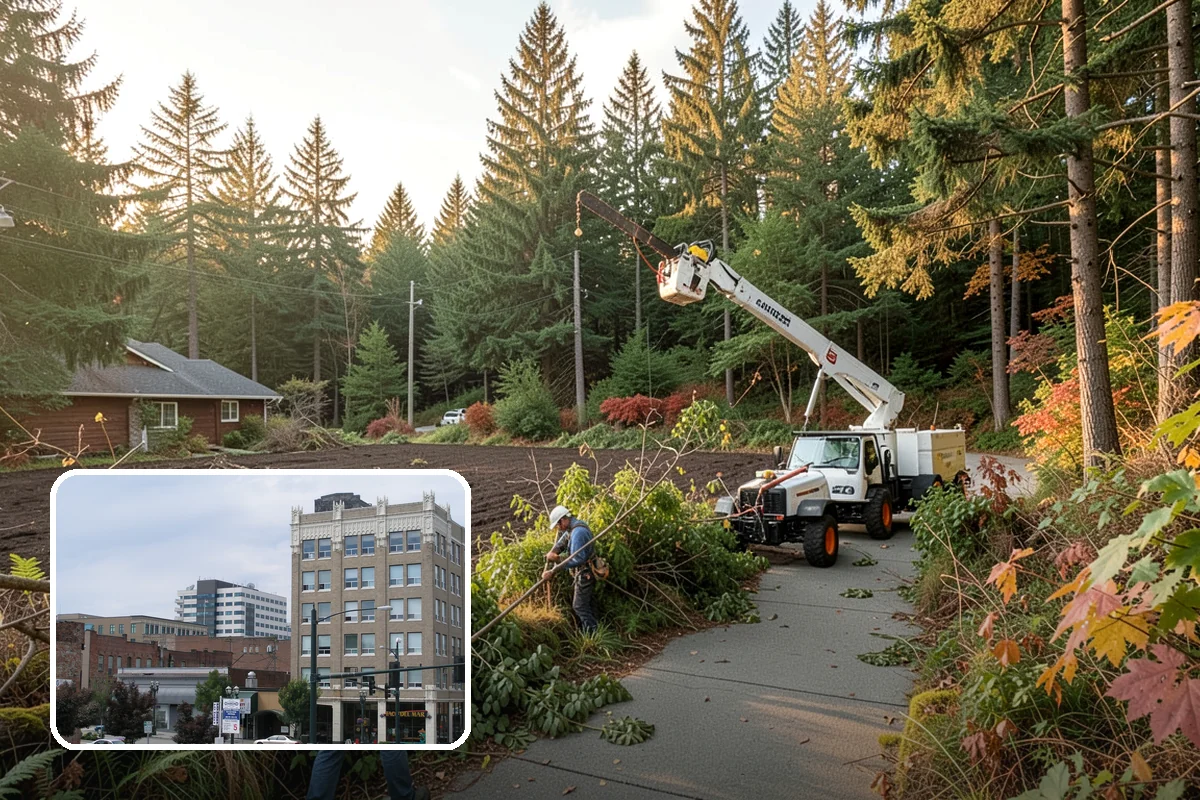
Choosing a pruning approach for fruit trees in Everett
Most fruit trees fit one of three approaches. The right one depends on the tree's age, its condition and what you want from it.
- Structural pruning for young trees: a few cuts to pick a strong central leader or open framework and space the main branches.
- Maintenance pruning for established trees: thinning crowded branches, removing dead or crossing wood, and opening the canopy so light reaches the fruit.
- Gradual renovation of neglected trees: spreading heavy cuts over more than one season instead of removing most of the canopy at once.
Timing: dormant season, late winter
The WSU Extension Pacific Northwest Gardener's Handbook (Chapter 23, Pruning Woody Landscape Plants) says the dormant season, after leaf fall and before bud break, is usually a good time to prune. It also says late winter, after the worst cold, is generally better. In Everett, the USDA map (2023) places the city in hardiness zone 8b, with parts of it from 8b to 9a. That is a general climate guide, not a reading on any one tree, but it suggests winters here are mild enough that late winter work is practical in most years.
Rain matters too. Daymet data for 2005 to 2025 shows 78% of Everett's yearly rain and snow falls from October to April. That overlaps the dormant season, so we plan around dry spells. Wet weather also makes it harder to work safely on ladders and soft ground.
Handling the clippings
Snohomish County is inside the WSDA apple maggot quarantine. Homegrown fruit and yard waste may not be moved out of the quarantine area into pest-free areas. If you plan to haul prunings or fallen fruit anywhere, check where it is going first. Keep this in mind when deciding what to do with the debris from a large cleanup.
If you are unsure which approach suits your tree, call or text 425-484-4442. Our ISA Certified Arborist can look at the tree and talk through options, and estimates are free.
Everett tree conditions at a glance
| USDA hardiness zone | 8b (8b to 9a across the city) |
|---|---|
| Rain and snow falling October to April | 78% of the year’s total |
| Days that freeze at night and thaw by day | 37 a year |
| Tree City USA | 33 years |
| Electric utility | Snohomish County PUD |
Trees near the power line to your house
Snohomish County PUD: PUD "does not maintain vegetation around service lines or standalone communication lines." Customer must keep 5 ft clearance on all sides of the service drop (10 ft diameter), except the first 10 ft nearest the primary line which the PUD trims.
Customer Service Regulations list tree trimming as a non-routine disconnection/reconnection of residential service;00 each on overtime. Customers must not cut/disconnect the drop themselves (tampering charge).
Tree/vegetation questions: 425-783-5579 (Mon-Fri 7am-3pm) or [email protected]. Utility page.
Any fee for a disconnect is set by the utility.
Sources: Daymet daily weather (NASA/ORNL), NOAA Storm Events, USDA plant hardiness map 2023, NRCS soil survey, USGS elevation, WA DNR landslide inventory, USDA Forest Service aerial survey, WSDA, city tree assessments and street-tree inventories, SILVIS Lab, Arbor Day Foundation, and official city and utility pages.
Fruit Tree Pruning Serving Everett
Everett

Fruit tree pruning in nearby areas
Also serving Everett
- Ornamental Tree Pruning in Everettat Washington Landscaping
- Roof Preservation in Everettat Washington Roofing
- Memorial Tree Planting in Everettat Washington City Services