Where Safety Meets Expert Tree Service.


Edmonds Campus Tree Management
Tree management for campuses and institutional grounds.
The best time to plan campus tree work in Edmonds is before the busy season on your grounds, not during it. Late fall through winter is when most deciduous trees are dormant, so structure is easier to read and fewer people are crossing the grounds. Evergreens can be assessed any month.
A campus is different from a single yard. Paths, parking, entrances and building edges all share space with tree canopies. A walk-through with a written plan lets you schedule work around classes, appointments or shifts instead of reacting after a limb drops.
About Campus Tree Management in Edmonds
Campus tree management provides professional care for large institutional properties like schools or community centers. Our trained crews help keep your grounds safe, presentable, and aligned with recognized arboricultural standards while respecting the unique needs of each site. This service is designed to support consistent maintenance across expansive campus landscapes without disrupting daily operations.
What Edmonds Campus Tree Management Includes
This service covers comprehensive tree management tailored specifically for campuses and other institutional grounds. We match our methods to local tree species and specific site conditions, ensuring that every task from pruning to inspection fits the environment perfectly. The goal is to maintain a healthy canopy while managing access challenges common in high-traffic areas around buildings and walkways.
Edmonds Campus Tree Management Process
Work begins with an inventory and assessment of all trees on your property to establish priorities for care. We then develop a customized maintenance schedule that includes recurring pruning, inspections, and necessary treatments. Throughout the project, we document our work and regularly update the plan to address deferred issues or changing conditions across the site.
Equipment We Use for Edmonds Campus Tree Management
Our crews utilize specialized gear such as rigging equipment, inspection tools, and personal protective equipment for every job. Depending on the height of your trees and access points, we may bring in aerial lifts to reach difficult branches safely. We also use chippers and hauling equipment to remove debris efficiently while minimizing disruption to campus activities.
Edmonds Campus Tree Management Safety & Best Practices
Safety is a top priority as we coordinate all work around building occupants and active traffic patterns. We maintain strict safe work zones in public areas and follow recognized standards to protect both our team and your community members. Detailed records are kept for accountability, ensuring that every step of the process meets high safety expectations.
Signs You Need Campus Tree Management in Edmonds
You may need this service if you face a backlog of deferred maintenance or struggle with varied tree conditions across different parts of your campus. High-traffic areas often require extra attention to ensure trees remain safe and do not interfere with daily movement around the property. Coordinating schedules around these complex site conditions is another common reason institutions seek our help for institutional grounds management.
What Affects the Cost of Campus Tree Management in Edmonds
The investment depends largely on the total size of your campus property and how many acres or buildings are included in the scope. Access challenges within high-traffic zones can influence pricing, as well as the specific timing required to work around varied tree conditions across the site. We aim to provide budget-friendly care that supports consistent maintenance without unexpected financial surprises for institutional budgets.
Best Time of Year for Edmonds Campus Tree Management
Our schedules follow local Puget Sound weather patterns to ensure trees receive care when they need it most. Inspections are typically prioritized during dormancy, while pruning is timed according to species-specific needs and any specific constraints of your institution. This approach allows us to maintain a steady rhythm of work that respects both the biology of your trees and the operational calendar of your campus.
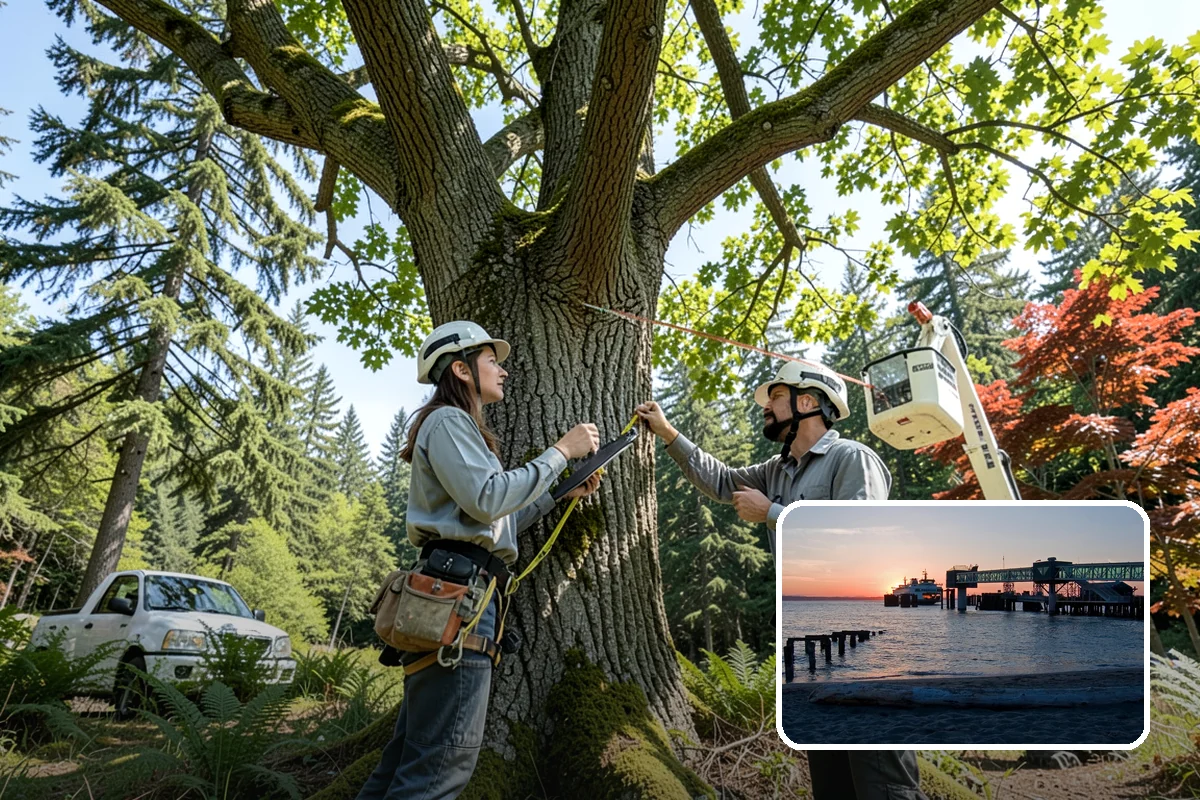
Planning campus tree care in Edmonds
Start with a tree walk of the whole property. We note species, size, condition and what sits underneath each tree: walkways, vehicle lanes, patient or student entrances, utility lines and roofs. That map lets you rank work by risk and by how much use the area gets.
What affects scope
Scope depends on how many trees you have, how close they are to buildings and traffic, and how much of the area must stay open while crews work. Edmonds has medical and institutional sites, and OpenStreetMap lists the Swedish Medical Center Edmonds Campus among them. Sites like that often need quiet hours, clear emergency routes and careful staging. If your campus is similar, tell us those limits early so the work is sequenced around them.
Climate matters for species choice and planting. The USDA map from 2023 places Edmonds in hardiness zone 9a, with parts of the city ranging from 8b to 9a. That is a mild range, so it supports a wide palette of replacement trees. It does not tell you how any one tree on your grounds is doing, so condition still has to be judged in person.
Permits are the other piece. The published Edmonds rules we found do not spell out clearly which removals need city approval. So before any removal starts, we check with the city. Pruning and removal are handled as separate questions, and we do not assume one answer covers both.
What to expect on the day
Crews set up cones, barriers and signage around each work zone first. Pruning follows standard practice for ANSI A300 style work: cuts made at proper branch junctions, no topping, and no removing more live canopy than a tree can reasonably tolerate. Debris is chipped or hauled, and walkways are cleared as each zone finishes. Larger removals may be done in sections so nothing lands on buildings or cars.
A free estimate starts with the walk-through, and you can reach us at 425-484-4442 by call or text.
Practical tip: keep a simple tree log with photos and dates after each visit. Next year you can see what changed and spot problems sooner.
Edmonds tree conditions at a glance
| USDA hardiness zone | 9a (8b to 9a across the city) |
|---|---|
| High and strong wind episodes, 2005-2025 | 38 in the forecast zone |
| Soils | 80% of land has hardpan or another restrictive layer within 40 in; most common series Alderwood |
Tree removal rules in Edmonds
Edmonds’s published rules don’t spell out clearly which removals need city approval. We check with the city before work starts.
Sources: Daymet daily weather (NASA/ORNL), NOAA Storm Events, USDA plant hardiness map 2023, NRCS soil survey, USGS elevation, WA DNR landslide inventory, USDA Forest Service aerial survey, WSDA, city tree assessments and street-tree inventories, SILVIS Lab, Arbor Day Foundation, and official city and utility pages.
Campus Tree Management Serving Edmonds
Edmonds


Also serving Edmonds
- Trail Clearing in Edmondsat Washington City Services
- Monthly Landscape Maintenance in Edmondsat Washington Landscaping
- Commercial Kitchen Construction in Edmondsat Washington Construction
- Office Building Washing in Edmondsat Washington Pressure Washing