Where Safety Meets Expert Tree Service.

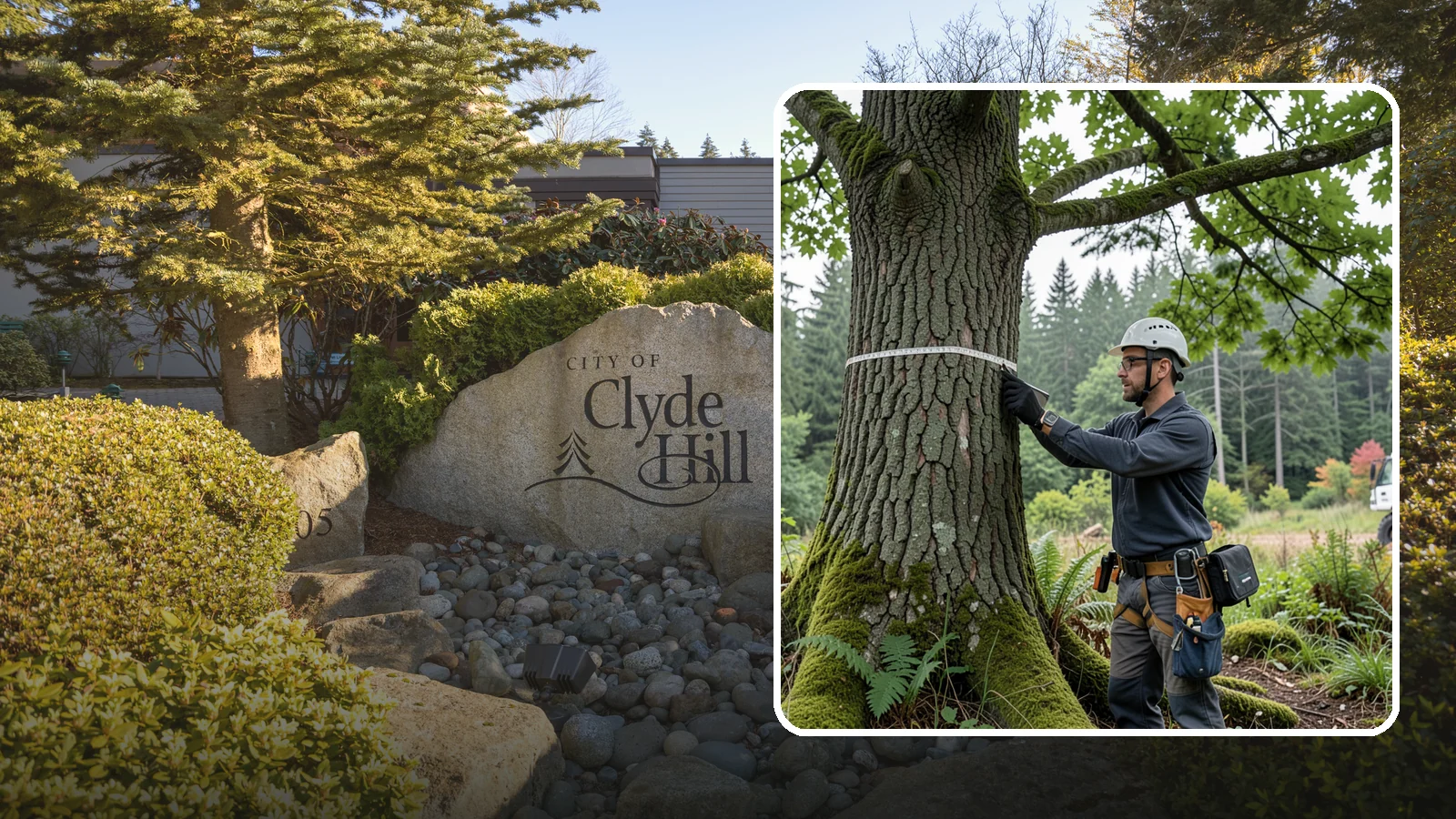
Clyde Hill Arborist Consultations
A professional consultation with a qualified arborist.
The wetter months are a good time to book an arborist consultation in Clyde Hill. Daymet records for 2005 to 2025 show that 81% of the city's yearly rain and snow falls from October to April. Saturated soil and wet crowns are when weak roots, leaning trunks and heavy limbs tend to show their problems.
A visit before that stretch lets you see what is worth acting on while the weather is still dry enough to work. Late summer and early fall are good for walking the property with an arborist and setting a plan.
About Arborist Consultations in Clyde Hill
Our arborist consultations offer a professional evaluation of your trees to help you plan appropriate care for your property. This service is designed for homeowners who need expert guidance on tree health or those preparing documentation for permits and insurance claims. We provide objective insights that support informed decisions about the future of your landscape.
What Clyde Hill Arborist Consultations Includes
An arborist consultation involves a qualified professional inspecting specific trees to assess their current condition and needs. The work follows recognized standards, with methods tailored to match each tree species, site conditions, and access points on your property. You will receive clear recommendations or reports that help prioritize care plans and manage budgets effectively.
Clyde Hill Arborist Consultations Process
We begin by gathering detailed information about your site and the trees in question before moving to an inspection phase. The arborist analyzes these findings against established objectives and standards to develop a tailored approach for each situation. Finally, we review our clear recommendations or reports with you to ensure everyone understands the proposed care plan.
Equipment We Use for Clyde Hill Arborist Consultations
Our team utilizes diagnostic and measurement tools to gather accurate data during your consultation. Depending on what is needed, we may also employ mapping and imaging tools to get a better view of complex structures. We use specialized documentation software to create precise records while ensuring all crew members wear necessary personal protective equipment.
Clyde Hill Arborist Consultations Safety & Best Practices
All findings are based strictly on observed evidence and recognized industry standards to ensure reliability for your project. If there is any uncertainty regarding an assessment, we will clearly disclose those limitations rather than guessing the outcome. We also recommend follow-up steps where conditions cannot be fully determined during a single visit.
Signs You Need Arborist Consultations in Clyde Hill
You may need this service if you notice hidden defects or lack complete information about your site history that could affect tree safety. Competing objectives for care plans, such as balancing aesthetics with structural stability, often require professional analysis to resolve. Additionally, varying regulatory requirements in different jurisdictions can make a consultation essential before starting any work on your trees.
What Affects the Cost of Arborist Consultations in Clyde Hill
The cost of this service is influenced by the complexity of the site and tree information provided during our initial gathering phase. Hidden defects that require advanced diagnostic tools or competing objectives within your care plan will also impact pricing. Furthermore, differing regulatory requirements across various jurisdictions can add factors to consider when budgeting for a consultation.
Best Time of Year for Clyde Hill Arborist Consultations
Consultations can be performed year-round in our local climate, offering flexibility whenever you need an assessment. However, many homeowners find it beneficial to schedule these visits during the dormant seasons. This timing allows us to better assess structural integrity without leaf cover obscuring branches and providing a clearer view of your trees.
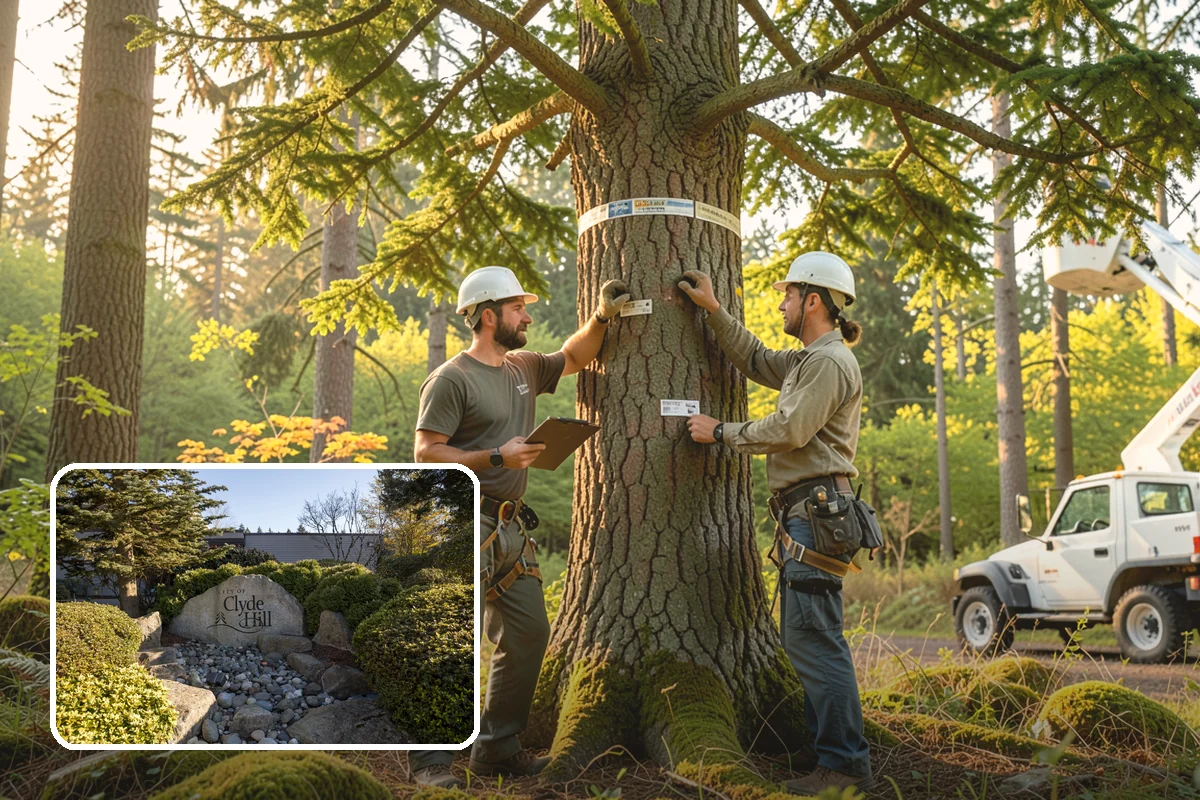
Planning an arborist consultation in Clyde Hill
A consultation is an assessment, not a work order. The arborist looks at the trees you are concerned about, explains what they see, and talks through options. Those options might include pruning, cabling, monitoring, or removal.
Planning ahead
Before the visit, walk your property and note which trees worry you. Look for dead branches, cracks, fungus at the base, heaved soil, or limbs over the roof, driveway or a neighbor's fence. Photos of past damage help. If you plan any construction, grading or trenching near a tree, say so, because roots matter for that.
What affects scope
The number of trees, their size, and how close they are to buildings and utilities all change how long an assessment takes. So does the question you are asking. A single tree with a lean is a different job from a full property review.
Climate also plays a part in what we suggest. The USDA map from 2023 places Clyde Hill mostly in hardiness zone 9a, with parts of the city in 8b. That tells us which species are likely to cope with winter cold, which matters if you are thinking about replacement planting after a removal.
Removals raise a separate question. The published Clyde Hill rules we found don't clearly say which removals need city approval. So we check with the city before any work starts, rather than guessing.
On the day
Expect to walk the property with the arborist. They will look at the crown, trunk, root flare and the soil around each tree you point out, and they may use simple tools to probe or sound a suspect area. You can ask questions as you go. Afterward you get a plain explanation of what they found and what they would suggest. Free estimates are available if you decide to move ahead with any work.
Practical tip: mark the trees you want looked at with ribbon before the visit, and keep a short list of questions. It keeps the time focused on what matters to you.
Clyde Hill tree conditions at a glance
| Soils | 72% of land has hardpan or another restrictive layer within 40 in; most common series Arents |
|---|---|
| Tree canopy | Among the most heavily treed Puget Sound cities (satellite data) |
| High and strong wind episodes, 2005-2025 | 33 in the forecast zone |
| USDA hardiness zone | 9a (8b to 9a across the city) |
Tree removal rules in Clyde Hill
Clyde Hill’s published rules don’t spell out clearly which removals need city approval. We check with the city before work starts.
Sources: Daymet daily weather (NASA/ORNL), NOAA Storm Events, USDA plant hardiness map 2023, NRCS soil survey, USGS elevation, WA DNR landslide inventory, USDA Forest Service aerial survey, WSDA, city tree assessments and street-tree inventories, SILVIS Lab, Arbor Day Foundation, and official city and utility pages.
Arborist Consultations Serving Clyde Hill
Clyde Hill
Arborist consultations in nearby areas
Also serving Clyde Hill
- Landscape Consultation in Clyde Hillat Washington Landscaping