Where Safety Meets Expert Tree Service.

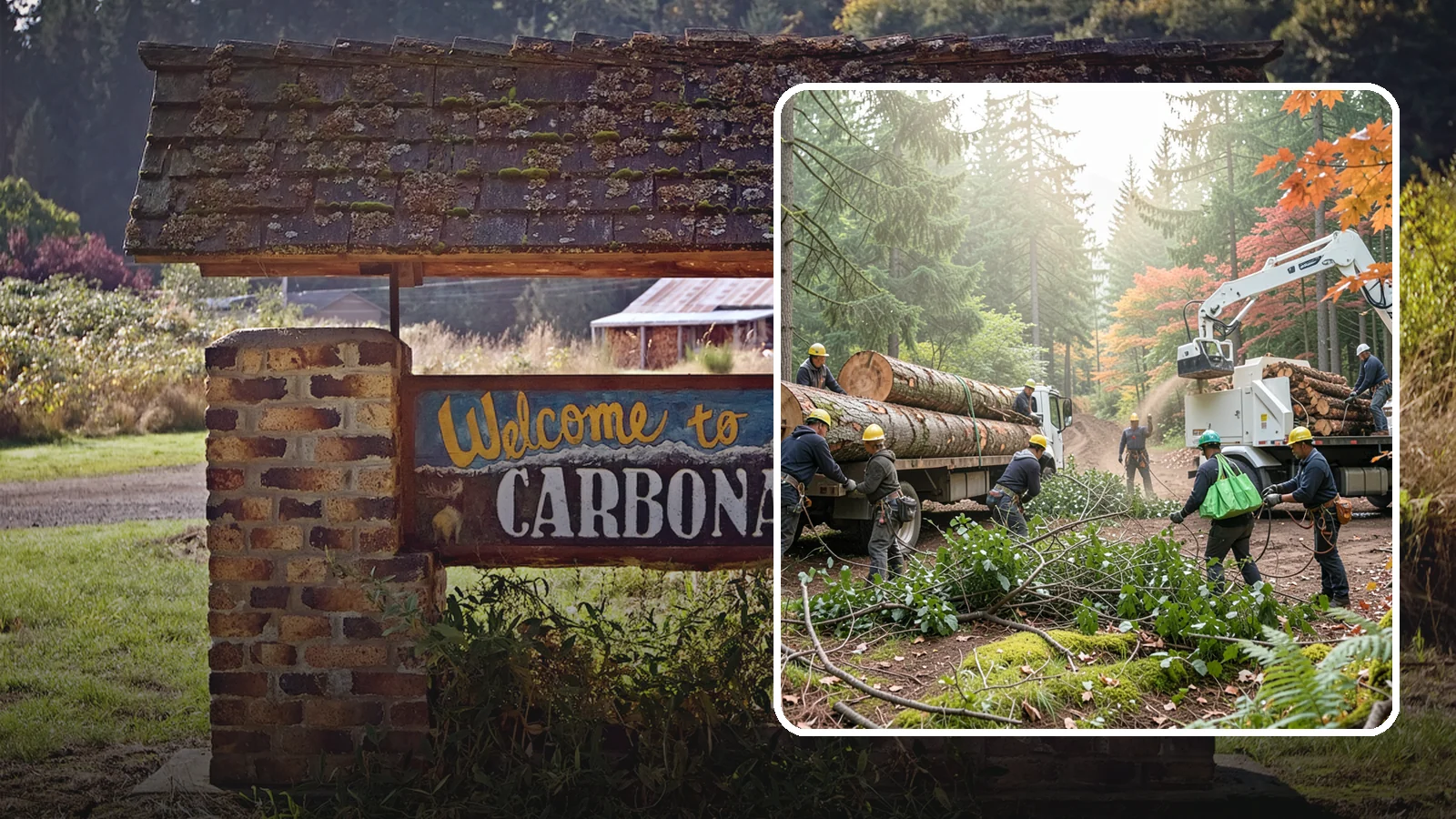
Carbonado Log Hauling
The loading and hauling of logs off-site.
Carbonado has some steep slopes, according to USGS elevation data, though fewer than the hilliest Puget Sound cities. If felled or bucked logs are sitting on a slope, the first thing to decide is how they can be moved out safely, and that shapes the whole haul.
Log hauling is the removal of cut trunk sections from a property after a tree comes down or is bucked. Before anyone calls, it helps to note where the logs lie, how steep the ground is around them, and whether a truck can get close.
About Log Hauling in Carbonado
We offer log hauling services designed to help you manage large-diameter wood on your property after removal or trimming. Our trained crews work carefully to turn removed material into usable products while keeping your site clean and safe. This service supports responsible reuse by ensuring debris is processed correctly rather than simply discarded.
What Carbonado Log Hauling Includes
Log hauling involves the professional loading and off-site transport of logs from your location. We sort materials by type and size, then cut, mill, or chip them as appropriate to meet your needs before hauling away or delivering the finished product. This process effectively reduces disposal burdens and turns waste into valuable resources for other uses.
Carbonado Log Hauling Process
Our team begins by assessing site conditions and tree species to match methods that ensure efficient removal without damage. We secure loads properly for transport, clean up the work area thoroughly, and handle logs using proper technique throughout every step. Each stage is managed with care to protect both your property and the quality of the wood products created.
Equipment We Use for Carbonado Log Hauling
To perform this service safely and effectively, we utilize chainsaws, wood chippers, loaders, and hauling vehicles as needed. We also bring milling equipment when required for specific projects and ensure every crew member wears necessary personal protective gear. Our tools are selected to handle various log sizes while respecting access limits on your property.
Carbonado Log Hauling Safety & Best Practices
Safety is a priority during all operations, so we keep hands and bystanders clear of feed equipment at all times. Crew members wear eye and hearing protection while handling logs with the correct technique and specialized equipment. We also take extra care to secure loads for transport and manage any embedded metal or debris found within the wood.
Signs You Need Log Hauling in Carbonado
You may need this service when you have large-diameter wood that requires removal from your property after tree work. Signs include a desire to turn removed material into usable products rather than leaving it on-site, or needing help managing access limits for heavy equipment. If moisture levels are affecting product quality or if metal debris is embedded in the logs, our team can address these specific challenges.
What Affects the Cost of Log Hauling in Carbonado
The cost of log hauling varies based on factors such as the size and quantity of the logs you have removed. Moisture content plays a significant role because it affects how well the wood dries for milling or chipping purposes. Additionally, any embedded metal debris requires extra handling time, and equipment access limits can influence pricing decisions.
Best Time of Year for Carbonado Log Hauling
The best timing for this service depends on seasonal moisture levels that impact drying rates for your specific project goals. We adapt our operations to local weather conditions in the Puget Sound region to ensure wood quality remains high throughout the year. Our crews adjust their schedules based on these environmental factors to deliver optimal results regardless of the season.
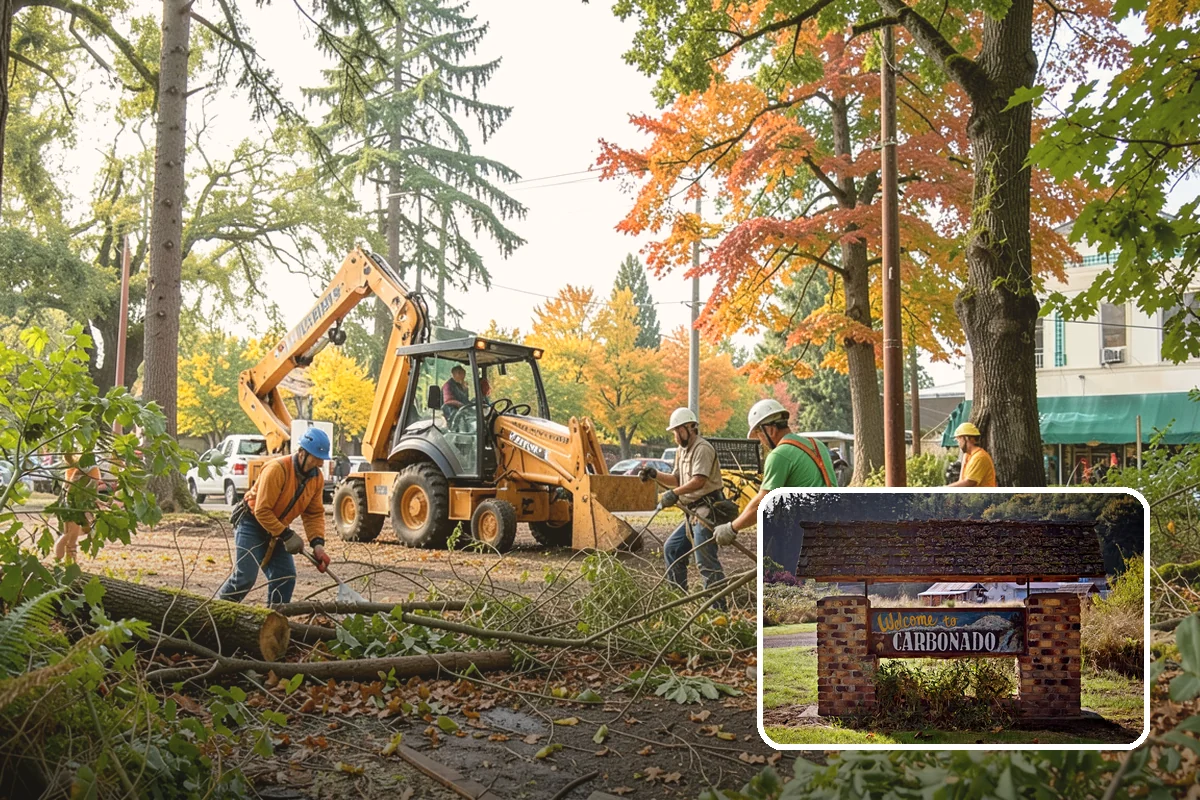
Hauling logs off Carbonado properties: slope, access and where they go
Hauling logs is mostly a question of access and ground. Logs that rest on a slope can roll or shift when moved, so the work starts by looking at how each piece is lying and which way it could travel. Because Carbonado has some steep slopes, we look at the ground first and plan the route before anything is lifted.
How the work usually goes
- Look at the site: log size, slope, soil, and the path to the truck.
- Cut long pieces into lengths that can be moved and loaded safely.
- Move the sections to a loading spot, by hand, by cart, or by machine where the ground allows.
- Load, secure, and haul them away.
- Rake up or clear the loose debris left at the site.
Why the log's condition matters
A federal aerial survey (USDA Forest Service and WA DNR, 2021 to 2025) mapped damage in forest within 10 km of Carbonado. This is forest land, not yard trees, so it says nothing about any one tree on your lot. Still, the main damage it mapped was bear damage on 8,076 acres of Douglas-fir, with 1,139 acres of root disease or bear damage and 878 acres of Douglas-fir engraver beetle. If your logs are Douglas-fir, it is worth telling us whether the tree looked stressed or had bark damage before it came down. That can affect how we handle the wood and where it ends up.
Moving wood out of the area
Pierce County is inside the WSDA apple maggot quarantine. Homegrown fruit and yard waste may not be moved from the quarantine area into pest-free areas. If your pile includes fruit trees or mixed yard debris, tell us up front so we can check the rules for where it can go. Plain logs and fruit-bearing material may not be treated the same way.
If you are not sure whether the logs are safe to move or whether the site needs a closer look, call or text 425-484-4442 for a free estimate.
Carbonado tree conditions at a glance
| Tree canopy | Among the most heavily treed Puget Sound cities (satellite data) |
|---|---|
| Land under dense tree cover (50%+ canopy) | 38% |
| Rain and snow falling October to April | 79% of the year’s total |
| Days with 0.1 in or more of rain | 144 a year |
Tree health near Carbonado
- Bears8,076 ac
- Root disease or bears1,139 ac
- Douglas-fir engraver878 ac
Forest damage mapped from the air within 10 km of Carbonado, 2021-2025 (USDA Forest Service and WA DNR). This covers forest land, not street or yard trees. “Decline, cause not identified” is dieback with no single cause found.
Sources: Daymet daily weather (NASA/ORNL), NOAA Storm Events, USDA plant hardiness map 2023, NRCS soil survey, USGS elevation, WA DNR landslide inventory, USDA Forest Service aerial survey, WSDA, city tree assessments and street-tree inventories, SILVIS Lab, Arbor Day Foundation, and official city and utility pages.
Log Hauling Serving Carbonado
Carbonado
Log hauling in nearby areas
Also serving Carbonado
- Firewood Consultation in Carbonadoat Washington Firewood
- Compost Application in Carbonadoat Washington Landscaping